
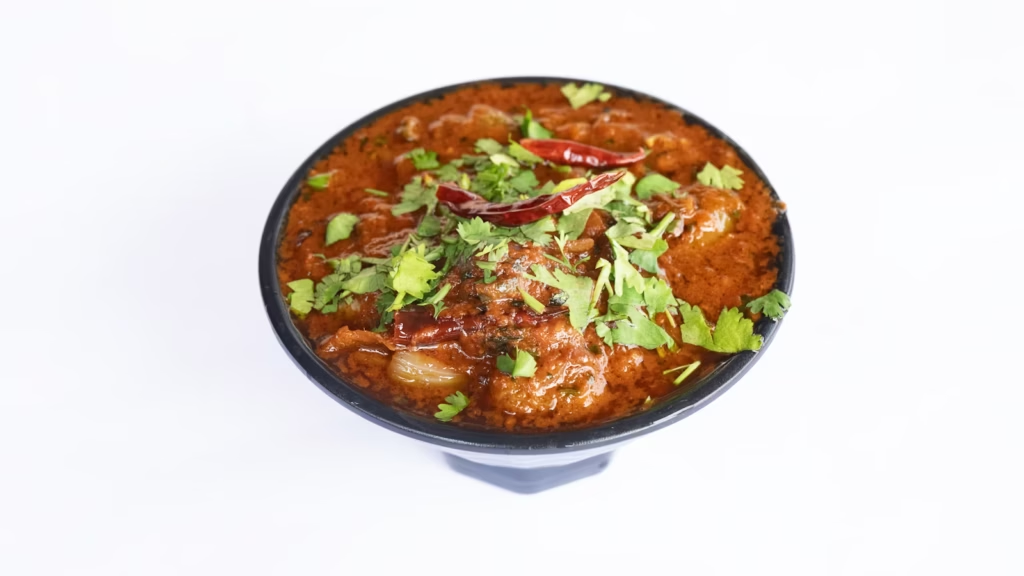
This Madras recipe gives you the hot, tangy, tomato-red chicken curry associated with British Indian restaurant menus, but it builds the sauce from whole ingredients rather than a mystery ladle. Chicken thighs, browned onions, garlic, ginger, ground spices, tomatoes, and tamarind simmer into a curry with real depth behind the chili. It is spicy, yes, but heat is the punctuation—not the entire conversation.
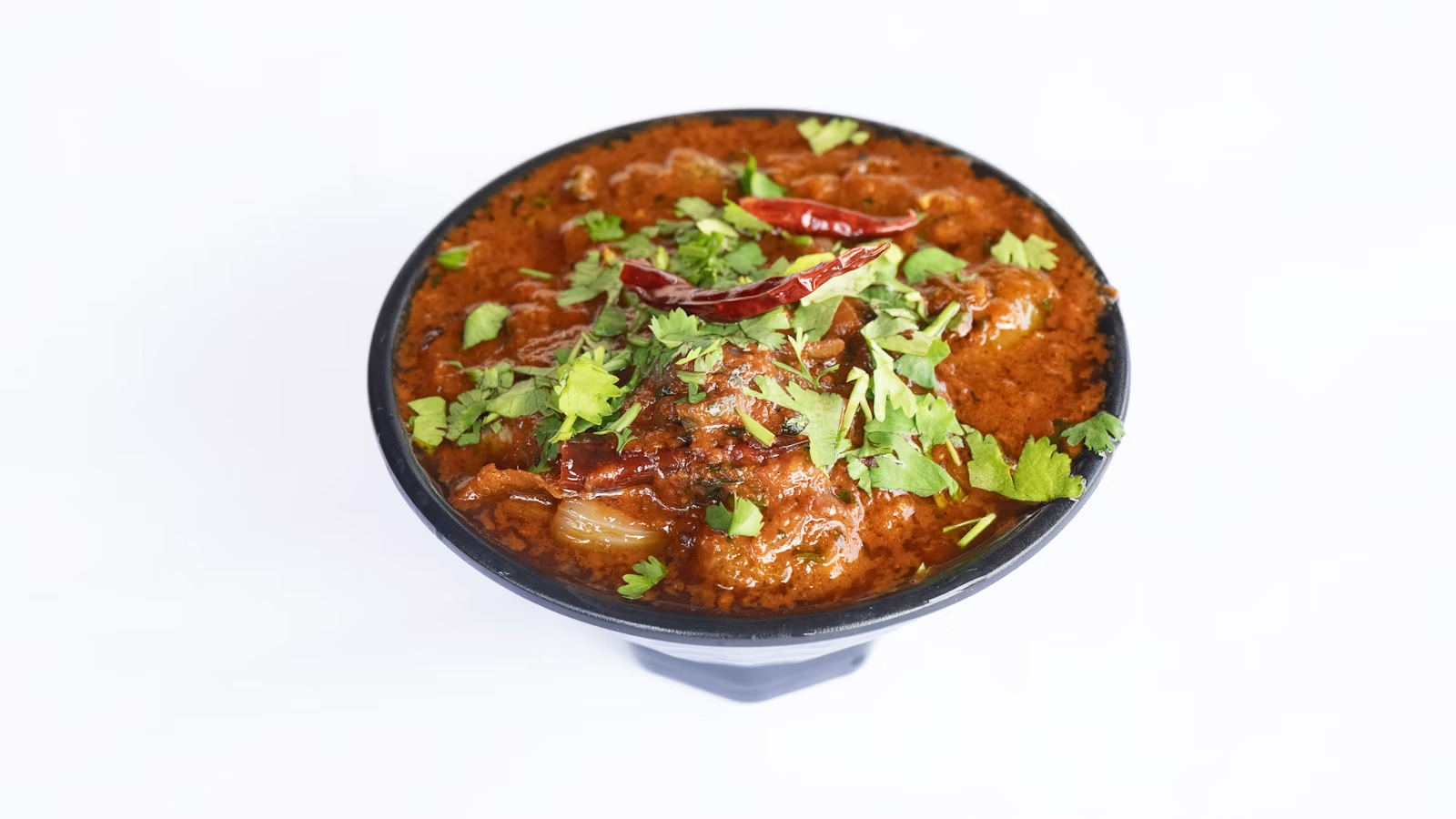
A good Madras warms your forehead, but it should still let the coriander, tomato, and tamarind introduce themselves.
What a Madras recipe means
“Madras” is not the name of one traditional curry from Chennai, the city formerly called Madras. The restaurant dish developed through Anglo-Indian and British curry-house cooking, where the name came to signal a hot, red, slightly sour sauce. That history does not make it fake; it makes it a specific British Indian style rather than a tidy summary of South Indian food.
Recipes vary, but onion, tomato, garlic, ginger, chili, cumin, coriander, and turmeric are common. Some cooks use commercial Madras curry powder; others build the blend. I prefer the second approach because you can control the heat and freshness. Tamarind provides the dark, fruity sourness that lemon alone cannot quite imitate.
Build flavor before adding liquid
Brown the chicken in batches rather than crowding the pan. You are not cooking it through yet; you are creating browned edges and leaving savory bits for the sauce. Move the chicken to a plate, then give the onion enough time to turn properly golden. A pale onion makes a thin-tasting curry, however impressive the spice drawer.
Add garlic and ginger only after the onion is soft so they do not burn. Ground spices need about 30 seconds in the oil to wake up, followed by tomato paste. Keep everything moving. If the pan looks dry, add a splash of stock—not another heroic pour of oil.
How hot should chicken Madras be?
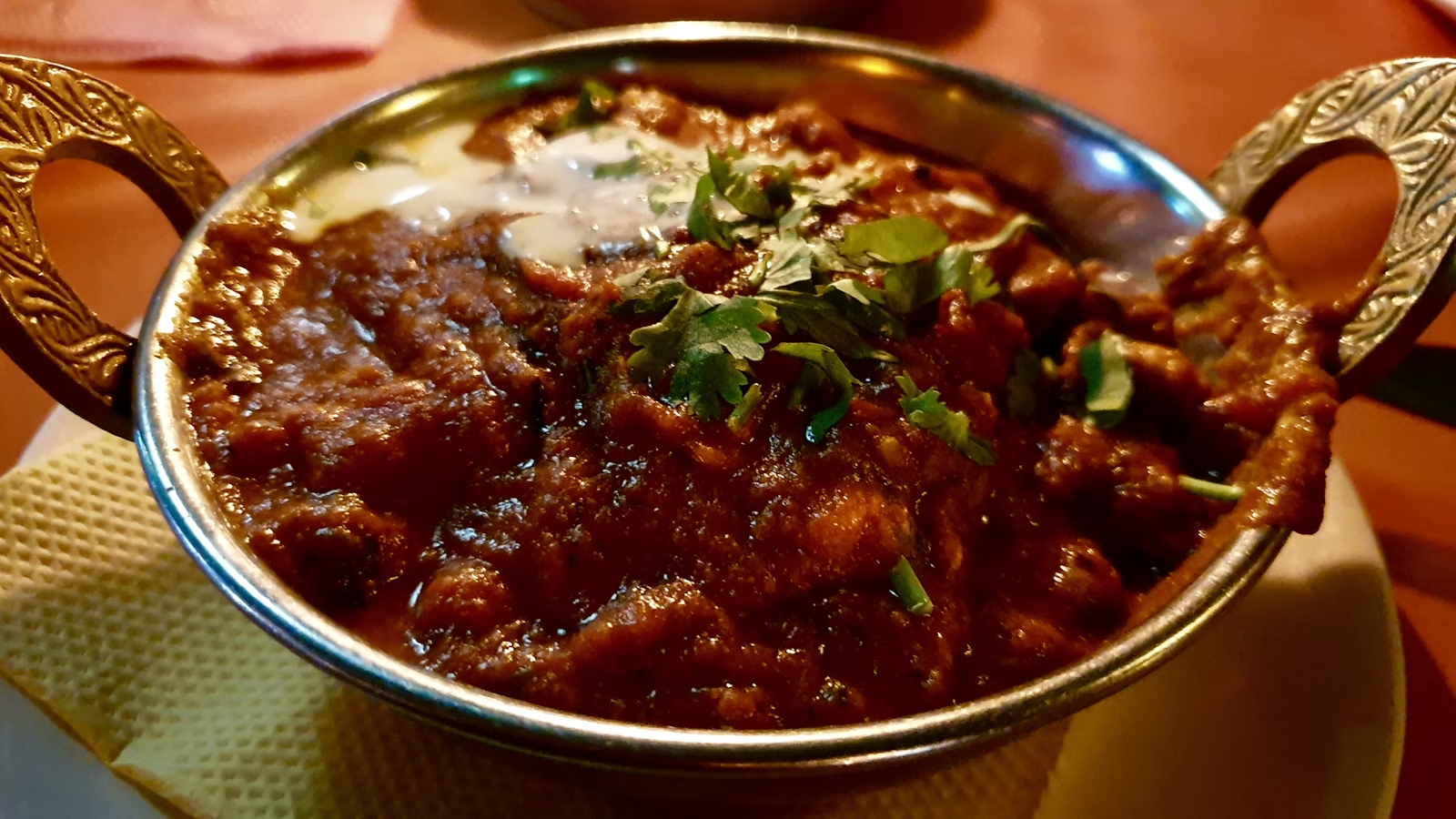
Hot enough to feel deliberate, not so hot that the meal becomes endurance theater. Chili powders vary enormously. Start with half a teaspoon if yours is fierce or unfamiliar; use the full teaspoon for a confident medium-hot curry. You can add cayenne at the end, but you cannot interview every grain and ask it to leave.
Heat also needs acid and salt. Add tamarind early enough to soften into the sauce, then taste again after the chicken is cooked. A little more tamarind may be better than more chili because it sharpens the tomato and keeps the curry from feeling heavy. Garam masala goes in near the end so its aroma stays clear.
Madras Recipe

Ingredients
- 1 1/2 pounds boneless skinless chicken thighs cut into 1 1/2-inch pieces
- 2 tablespoons neutral oil
- 1 large yellow onion finely chopped
- 4 cloves garlic finely grated
- 1 tablespoon fresh ginger finely grated
- 2 teaspoons ground coriander
- 1 1/2 teaspoons ground cumin
- 1 teaspoon hot chili powder use 1/2 teaspoon for milder curry
- 1 teaspoon sweet paprika
- 1/2 teaspoon ground turmeric
- 1/2 teaspoon ground fennel
- 1/2 teaspoon black pepper
- 2 tablespoons tomato paste
- 1 can crushed tomatoes 14 ounces
- 3/4 cup low-sodium chicken stock
- 1 tablespoon tamarind paste plus more to taste
- 1 teaspoon fine salt plus more to taste
- 1 teaspoon garam masala
- 1/4 cup fresh cilantro chopped
Equipment
- 1 wide heavy pan or Dutch oven
- 1 Instant-read thermometer
Instructions
- Pat the chicken dry and season lightly with a pinch of the measured salt. Heat 1 tablespoon oil in a wide heavy pan over medium-high heat. Brown the chicken in two batches for 2 to 3 minutes per side; transfer to a plate.
- Lower the heat to medium, add the remaining oil and onion, and cook for 8 to 10 minutes until soft and deeply golden. Stir in the garlic and ginger for 1 minute.
- Add the coriander, cumin, chili powder, paprika, turmeric, fennel, and black pepper. Stir for 30 seconds, then add the tomato paste and cook for 1 minute until it darkens slightly.
- Add the crushed tomatoes, stock, tamarind, and remaining salt. Scrape up the browned bits, return the chicken and any juices, and simmer partly covered for 18 to 22 minutes, until the sauce thickens and the chicken reaches 165°F (74°C).
- Stir in the garam masala and half the cilantro. Taste for salt, tamarind, and chili. Rest off the heat for 5 minutes, then scatter with the remaining cilantro and serve.
Nutrition
Video
Notes
Tried this recipe?
Let us know how it turned out!Chicken choices and texture fixes
Boneless thighs are ideal because they stay juicy during the simmer and bring enough fat to round out the tomatoes. Breast meat works, but cut it into large pieces and begin checking earlier. Whichever cut you use, the USDA safe minimum for poultry is 165°F (74°C). Keep raw-chicken tools away from serving utensils; our cross-contamination guide covers the unglamorous but important details.
If the sauce is thin, simmer uncovered for five minutes after removing the cooked chicken, then return it. If it is too thick, add hot stock a tablespoon at a time. If it tastes flat, try salt first, tamarind second, and garam masala third. Throwing in more chili is rarely the repair people hope it will be.
What to serve with Madras curry
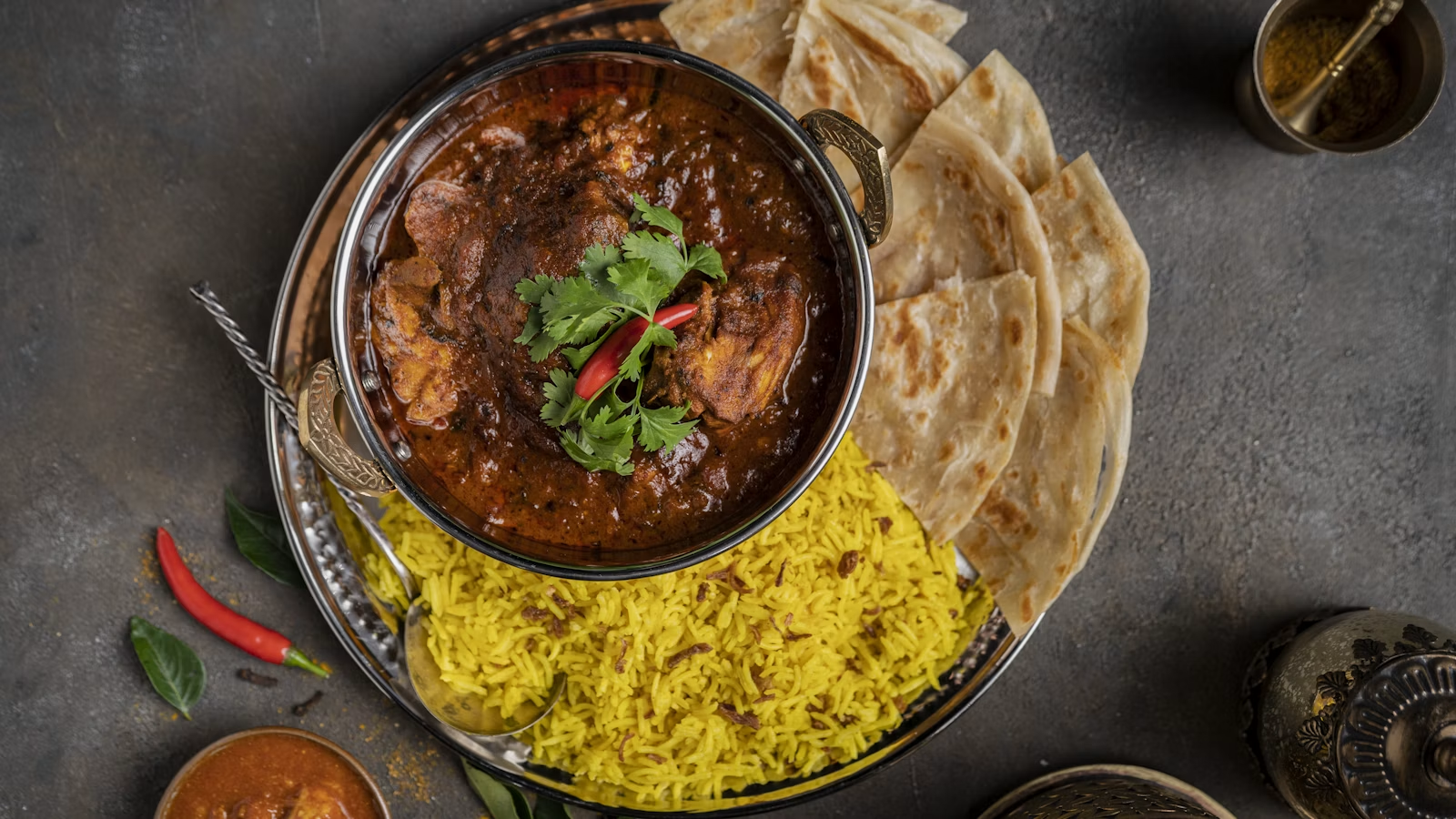
Serve the curry with basmati rice, naan, or both if dinner has had a long day. A cucumber raita made with plain yogurt cools the chili without dulling the spices. Lime wedges, fresh cilantro, and a crisp onion salad keep the plate lively. Sweet mango chutney is optional but very good against the tamarind.
Refrigerate leftovers within two hours and use them within three days. The curry often tastes even better the next day because the spices settle into the sauce. Reheat gently until steaming throughout, loosening with stock if necessary. Freeze in meal-size containers for up to three months; add fresh cilantro only after thawing. I also pack rice separately, which keeps both the grain and the sauce in much better shape for lunch.
Sources
- BBC Good Food: Chicken Madras
- British Curry Day: Madras
- Food & Wine: The Real Story of Curry
- USDA FSIS: Safe Minimum Internal Temperature Chart
Hi, I’m Laura, the voice behind Tastiva. I’ve always believed that eating well should feel enjoyable, comforting, and realistic—not like another complicated rule to follow. I love creating recipes that fit into everyday life, sharing simple nutrition ideas, and finding small ways to make meals feel a little better without losing the pleasure of good food.