
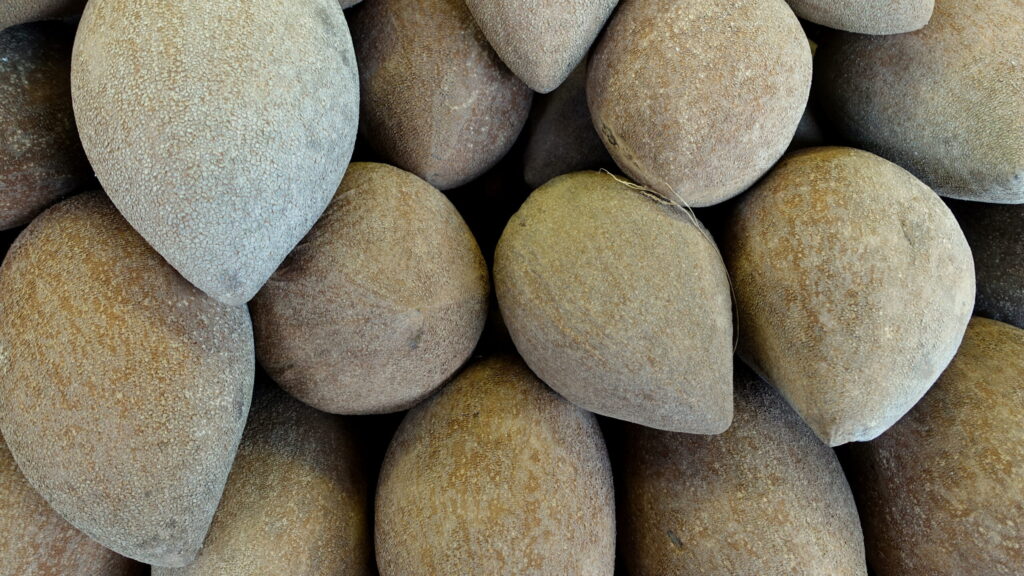
Mamey's rough brown skin gives little warning of the warm orange or reddish flesh inside. Mamey sapote is a sweet tropical fruit, Pouteria sapota, that should soften before you eat it. The useful skill is recognizing ripeness: cutting into a hard fruit too early can leave you with firm flesh instead of the creamy texture you were hoping for.
Give mamey time to soften, then start with a plain spoonful before deciding what else to add.
What mamey looks and tastes like
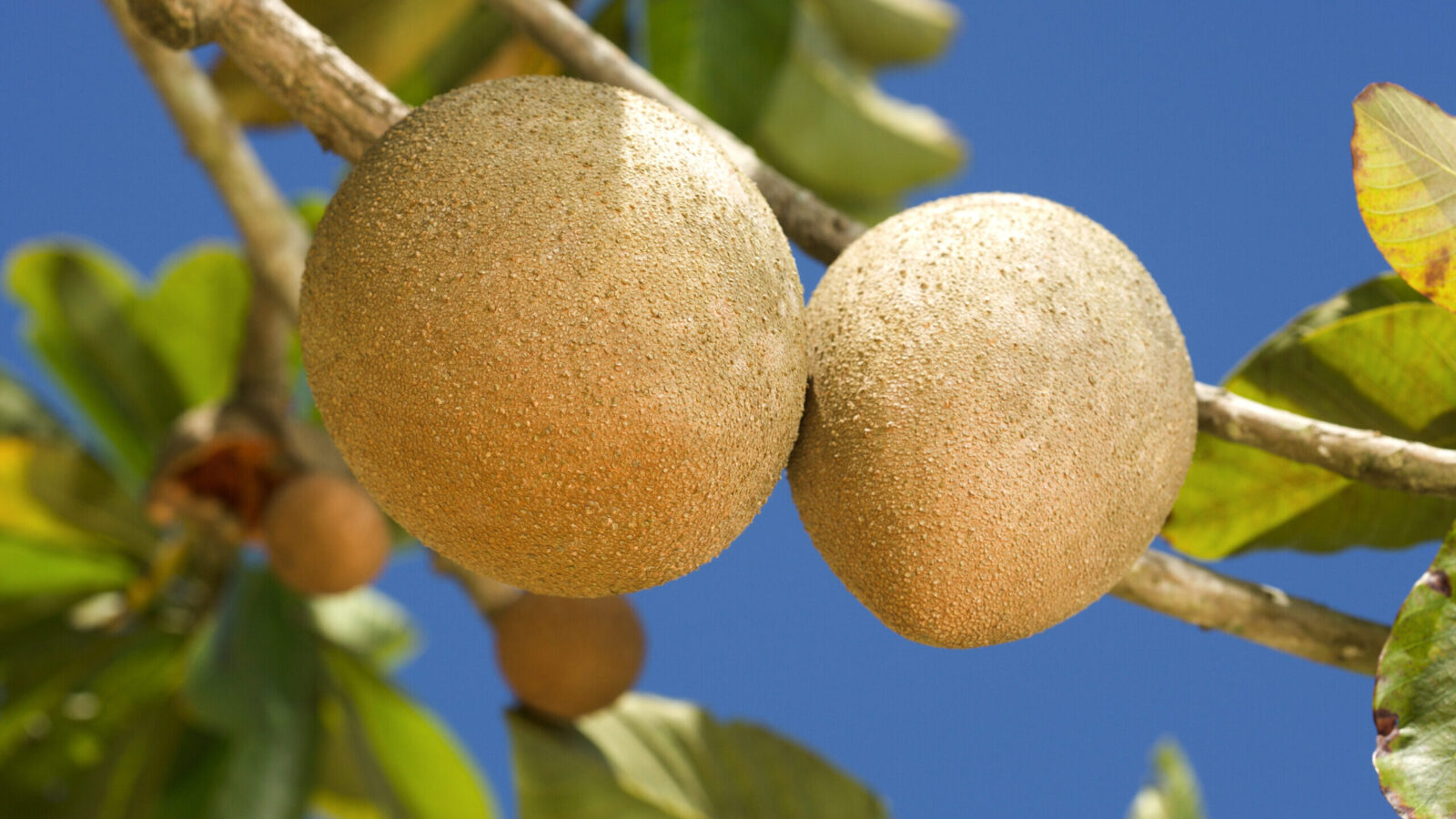
Mamey sapote is native to Mexico and Central America and is also grown in South Florida. The skin is thick and brown, while the flesh can range from salmon-colored to deeper reddish tones depending on the variety. Inside, you'll usually find one large, glossy brown seed, though some fruit have more than one.
UF/IFAS describes the ripe flesh as sweet, with an almond-like flavor and a smooth to finely granular texture. Sellers sometimes compare it to sweet potato or pumpkin pie, but those comparisons are guides rather than a promise that every fruit tastes like a finished dessert. Variety and ripeness make a difference.
| What you're checking | Useful clue | What it tells you |
|---|---|---|
| Product name | Mamey sapote or Pouteria sapota | Helps distinguish it from other fruits called sapote |
| Skin | Naturally rough and brown | Brown skin alone doesn't mean it's spoiled |
| Firmness | Softness across the fruit when ripe | More useful than guessing from color alone |
| Cut flesh | Orange, salmon, or reddish shades | Color varies by variety |
| Center | One or more large seeds | Remove them before serving the pulp |
I would use the full name when buying it for the first time. Black sapote, white sapote, and other similarly named fruits aren't interchangeable with mamey. A clear label or a knowledgeable produce seller is more helpful than a broad “tropical fruit” sign.
Let ripeness, not the calendar, guide you
Fruit picked at an appropriate stage can soften after harvest, while fruit picked too immature may never ripen properly. UF/IFAS describes softening over several days to about a week, depending on the fruit. That's a useful expectation, not a deadline that makes every hard mamey ready on the seventh day.
Miami Fruit advises letting its mamey ripen at room temperature and checking for softness all over before opening. Handle it gently rather than repeatedly squeezing one spot. A soft patch on an otherwise hard fruit can be damage rather than even ripening, so look at the overall condition as well as the feel.
- Ask whether the fruit is ready today or needs time, especially if you're buying it for a particular meal.
- Follow the seller's ripening guidance for the fruit you receive, and keep it where you can check it regularly.
- Don't cut a small inspection hole into fruit you still need to store intact; ask the seller about any existing harvest check marks.
- If it stays hard, develops decay, or smells fermented or otherwise unpleasant, don't assume waiting indefinitely will fix it.
Once it's ready, make a plan to eat it soon. Ripening a fruit for several days and then forgetting it on the counter defeats the useful part of the wait. If you want more flexibility, a labeled frozen pulp product can be another option, with its own storage and ingredient checks.
Open it carefully and keep the first serving simple
Wash the exterior under running water before cutting, even though you won't eat the skin. Use a stable board and a clean knife, cut around the large seed, and open the fruit carefully. Remove every seed and spoon the flesh away from the skin; this guide concerns the edible pulp, not seed preparations.
Try a little ripe flesh plain before adding sweeteners or other flavors. That gives you a clearer sense of its sweetness and texture, and it helps you decide whether the rest of the fruit belongs in a smoothie, a bowl, or another recipe. I like that small pause with an unfamiliar fruit: it keeps the first experience from getting buried under several ingredients.
- Spoon pulp into a bowl and serve it in an amount that suits your appetite.
- Pair it with plain yogurt or another suitable cultured food if you enjoy a tangy contrast.
- Blend it with a chosen milk or beverage, adding liquid gradually because the pulp can make a thick drink.
- Use a recipe developed for mamey when making ice cream, custard, or baked goods; its moisture and sweetness won't automatically match another fruit.
Remove seeds before blending rather than expecting the blender to handle them. Keep preparation simple and deliberate, especially with a fruit whose pit can be larger than expected. For another unfamiliar produce option with a very different texture, see our pitaya fruit guide.
Fresh fruit and frozen pulp need different decisions
A whole mamey lets you choose ripeness and see the flesh, but it also requires timing. Frozen pulp can make smoothies more convenient when the fruit isn't locally available. Check that the package names mamey and read whether it contains added sugar or other ingredients rather than assuming every frozen fruit preparation is plain pulp.
Refrigerate cut fruit promptly in a clean covered container, and follow the supplier's guidance on keeping or freezing the pulp. If freezing portions, label them with the fruit name and date and remove seeds first. Freeze only sound fruit; freezing doesn't restore quality or make spoiled food safe.
- Portion pulp according to how you expect to use it, so you don't need to thaw an entire container for one drink.
- Account for the milk, sweeteners, and other additions when comparing a smoothie with plain fruit.
- Treat mamey as one enjoyable fruit choice, without attaching unsupported promises about weight loss or disease treatment.
- If ordering fruit online, consider delivery timing and ripening instructions before choosing a large quantity. A manageable amount gives you room to learn the fruit without racing through a box.
Sources
- UF/IFAS: Mamey Sapote in the Florida Home Landscape
- Miami Fruit: Mamey Sapote and Ripening Guidance
- FoodSafety.gov: Four Steps to Food Safety

Hi, I’m Laura, the voice behind Tastiva. I’ve always believed that eating well should feel enjoyable, comforting, and realistic—not like another complicated rule to follow. I love creating recipes that fit into everyday life, sharing simple nutrition ideas, and finding small ways to make meals feel a little better without losing the pleasure of good food.