
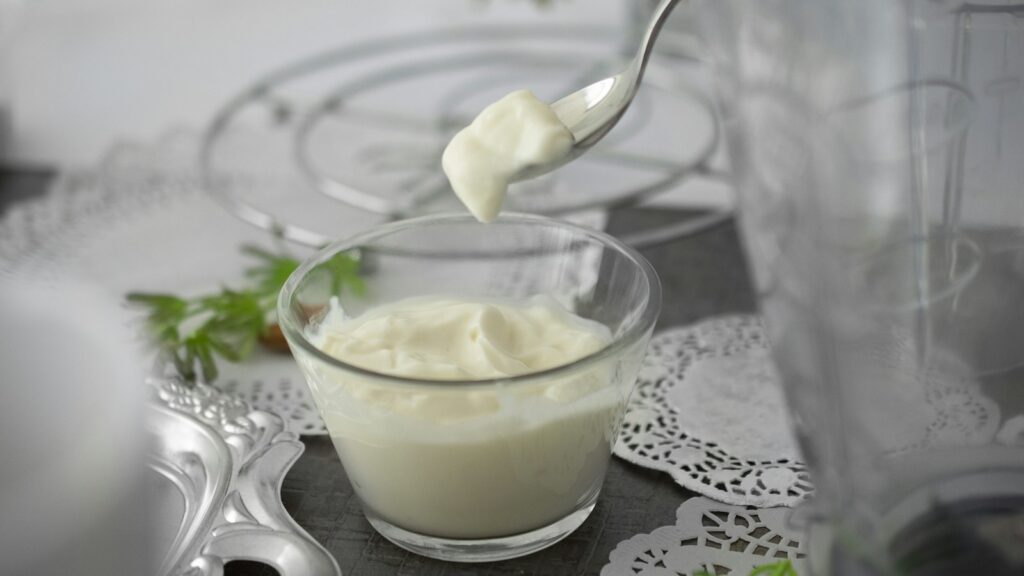
Skyr can look like yogurt at first glance, then feel noticeably thick when you lift a spoonful. It's an Icelandic cultured dairy food made by fermenting milk and concentrating it through straining. Many versions are rich in protein, but fat level, sweetness, and serving size vary, so the name alone doesn't tell you everything about the tub.
Choose skyr by the texture and ingredients you need, then let the label fill in the nutrition details.
What makes skyr different from ordinary yogurt?
Straining removes some liquid and produces a concentrated, spoonable texture. Skyr shares that practical feature with strained yogurts such as Greek yogurt, although products and production traditions differ. In the refrigerator aisle, you'll often find it alongside yogurt because people use it in similar ways: breakfast bowls, snacks, dips, and sauces.
Traditional skyr is associated with skim milk, but today's products include different fat levels and flavors. Don't assume every tub is nonfat, unsweetened, or nutritionally identical. The label tells you whether cream or sweeteners have been added, and a flavored product may suit a different use from a plain one.
| Form | What to check | A useful role |
|---|---|---|
| Plain nonfat skyr | Protein, serving size, and ingredients | A base you can season or top yourself |
| Plain skyr with more milk fat | Fat level and texture | Dips, toppings, or a richer-tasting bowl |
| Fruit or vanilla skyr | Added sugars and flavor ingredients | A ready-flavored snack or breakfast component |
| Dairy-free product styled as skyr | Its plant base and nutrition panel | An alternative that needs its own comparison |
I wouldn't choose one by trying to settle whether skyr is “better” than every yogurt. A more useful question is whether you want a thick spoonful, a milder flavor, a particular protein amount, or something that works with the food you're making.
Read one real label, then compare your own
Siggi's plain nonfat skyr currently lists 16 grams of protein and 90 calories per 5.3-ounce, 150-gram cup. That same cup lists 4 grams of total sugars and no added sugars. Those figures describe one specific product and size, not a guaranteed nutrient profile for every skyr on the shelf.
The distinction between total and added sugars is helpful for plain dairy foods. Milk contains naturally occurring lactose, so no added sugar doesn't mean no sugar at all. Likewise, a high-protein product can still differ from another in calories, fat, calcium, or the portion you actually eat.
- Match serving weights before comparing two tubs with different portion sizes.
- Read the ingredients to see whether the flavor comes from fruit, sugar, sweeteners, or a combination.
- Check the fat level if you want a particular texture or have a reason to limit saturated fat.
- Use the current package for nutrition information when it differs from a website or older shopping list.
Our low-fat yogurt guide explains the broader milk-fat comparison. With skyr, I would make that decision alongside taste and the intended use rather than treating a single nutrient as the only thing that matters.
Put its thick texture to work
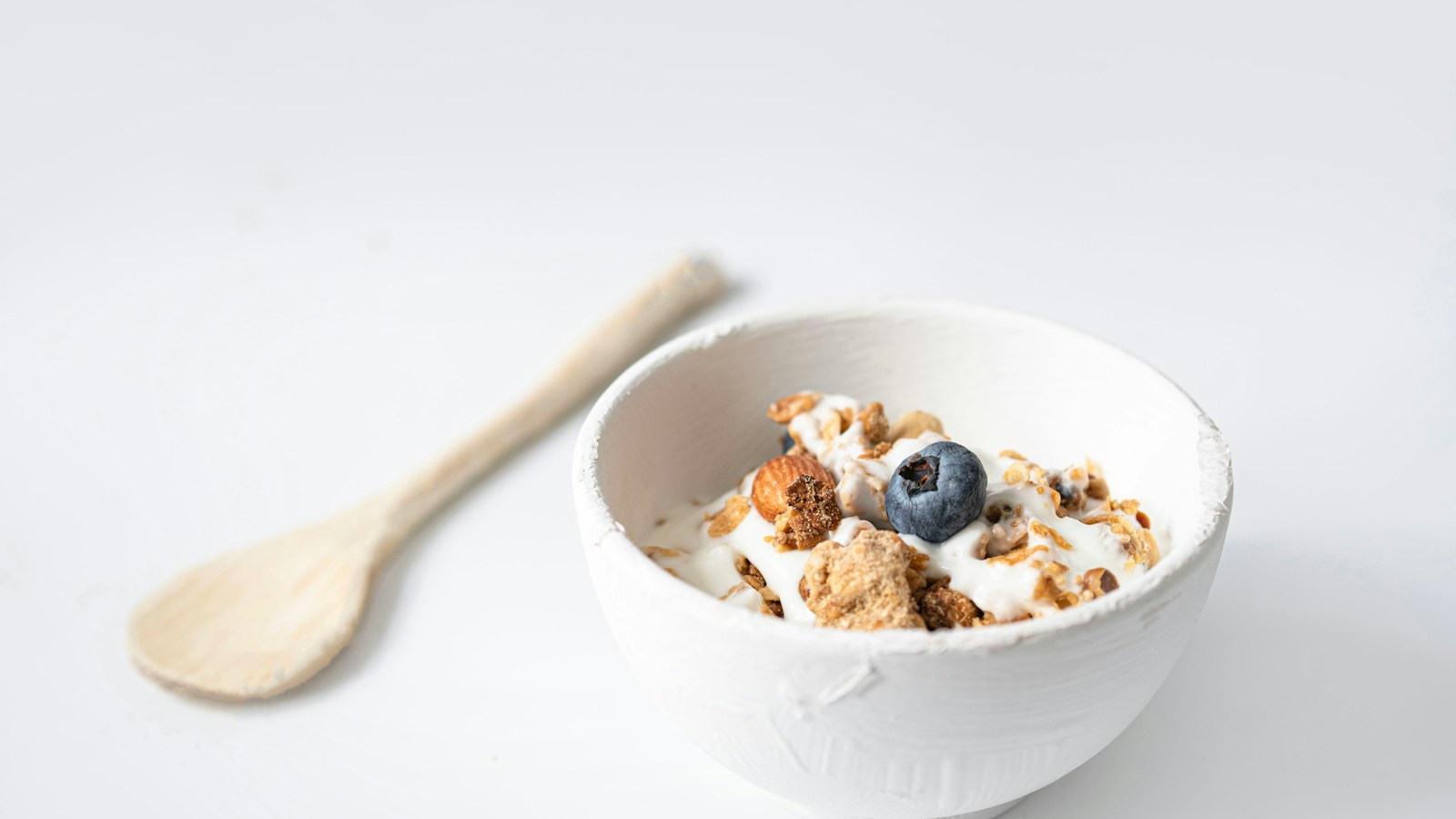
Plain skyr is a flexible starting point because you can take it in a sweet or savory direction. Fruit and a crunchy topping make one kind of bowl; herbs and a little lemon make a very different accompaniment. Add liquid gradually if you're thinning it, since it's easier to loosen a thick mixture than to thicken an over-diluted one.
For baking, use a recipe written for skyr or a tested substitution from its author. Replacing milk, cream, or a thinner yogurt can change moisture, acidity, and fat balance. A spoonful on top of a finished dish is a simpler experiment than a full substitution in a cake whose structure depends on precise proportions.
- Serve it with fruit and nuts or seeds, choosing toppings that suit any allergies or dietary needs.
- Stir herbs into plain skyr for a dip, tasting before adding more acidity or seasoning.
- Spoon it onto a finished dish when you want a cool, tangy contrast, rather than assuming it will stay smooth through vigorous boiling.
- Blend a small amount into a smoothie, then adjust the liquid to the consistency you want.
- Keep sweetened or vanilla varieties for uses where their flavor makes sense; they aren't neutral substitutes in a savory sauce.
The spoon test is a useful kitchen cue: before using a new brand in a dip, see how firmly it holds its shape. That tells you more about how much thinning you may need than the word skyr printed on the lid.
Lactose, live cultures, and keeping it fresh
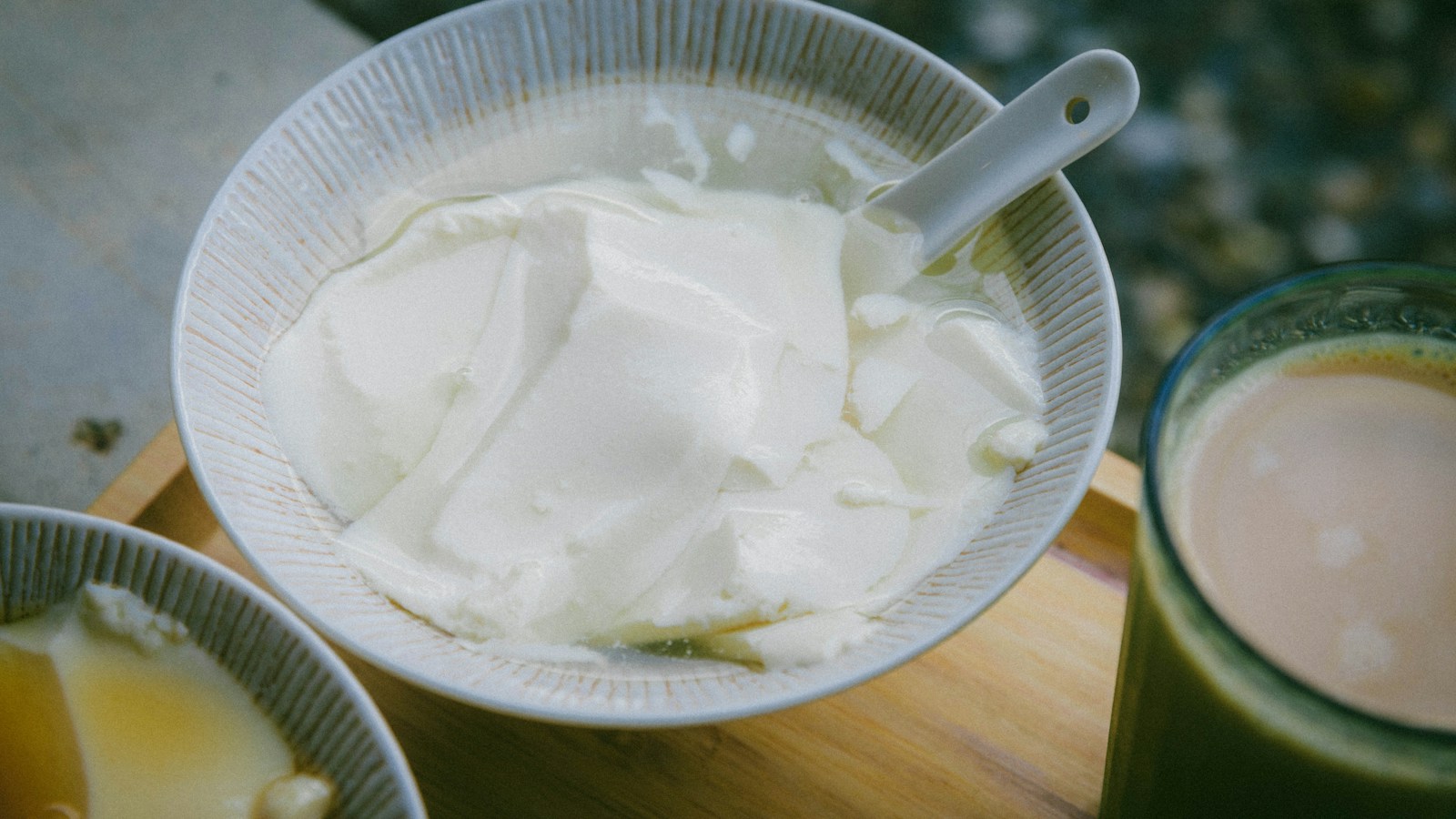
Standard dairy skyr contains milk protein and isn't suitable for a milk allergy. Fermentation and straining also don't establish that every product is lactose-free. If lactose is your concern, look for an explicit suitable claim and your own tolerance; our lactose-free yogurt guide keeps those questions separate.
Live-culture information is another specific label detail. A list of cultures doesn't support a promise that every skyr will treat digestive symptoms or provide the same probiotic effect. Choose it as a food you enjoy, and evaluate any health claim on its own evidence rather than transferring claims between products.
Keep skyr refrigerated and follow its use-by and after-opening guidance. Use a clean spoon, close the tub promptly, and discard it if mold or other spoilage appears. A little separated liquid can occur in cultured dairy, but appearance alone can't confirm safety; the product's storage history matters, too. Buying a tub size you can finish is often the easiest way to make the habit work.
Sources
- Siggi's: Plain Nonfat Skyr, Ingredients and Nutrition
- Icelandic Provisions: Plain Skyr
- FDA: Added Sugars on the Nutrition Facts Label
- NIH Office of Dietary Supplements: Probiotics

Hi, I’m Laura, the voice behind Tastiva. I’ve always believed that eating well should feel enjoyable, comforting, and realistic—not like another complicated rule to follow. I love creating recipes that fit into everyday life, sharing simple nutrition ideas, and finding small ways to make meals feel a little better without losing the pleasure of good food.