
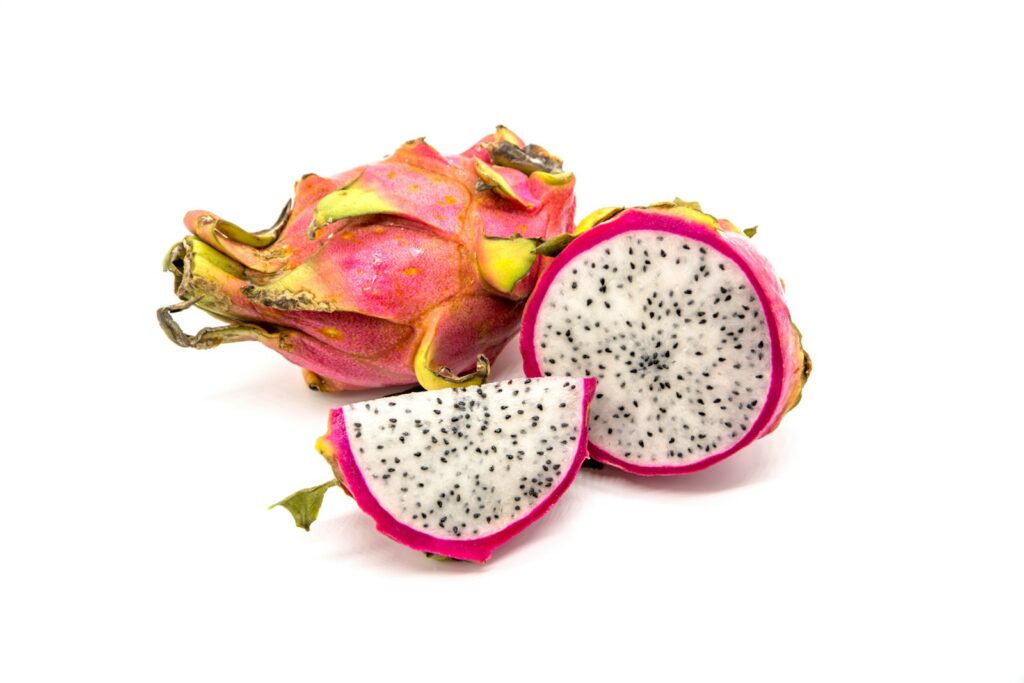
Pitaya fruit is often sold as dragon fruit: a cactus fruit with vivid skin, soft flesh, and tiny edible seeds. Here, we're talking about the dragon fruit found in grocery stores and frozen smoothie packs. Its dramatic appearance can suggest an equally dramatic flavor, but the taste is usually gentle. Start with a spoonful on its own before deciding what to add.
The pink skin gets your attention, but ripeness and variety shape what you taste. A beautiful dragon fruit doesn't always have bright pink flesh inside.
What you're buying when you choose pitaya
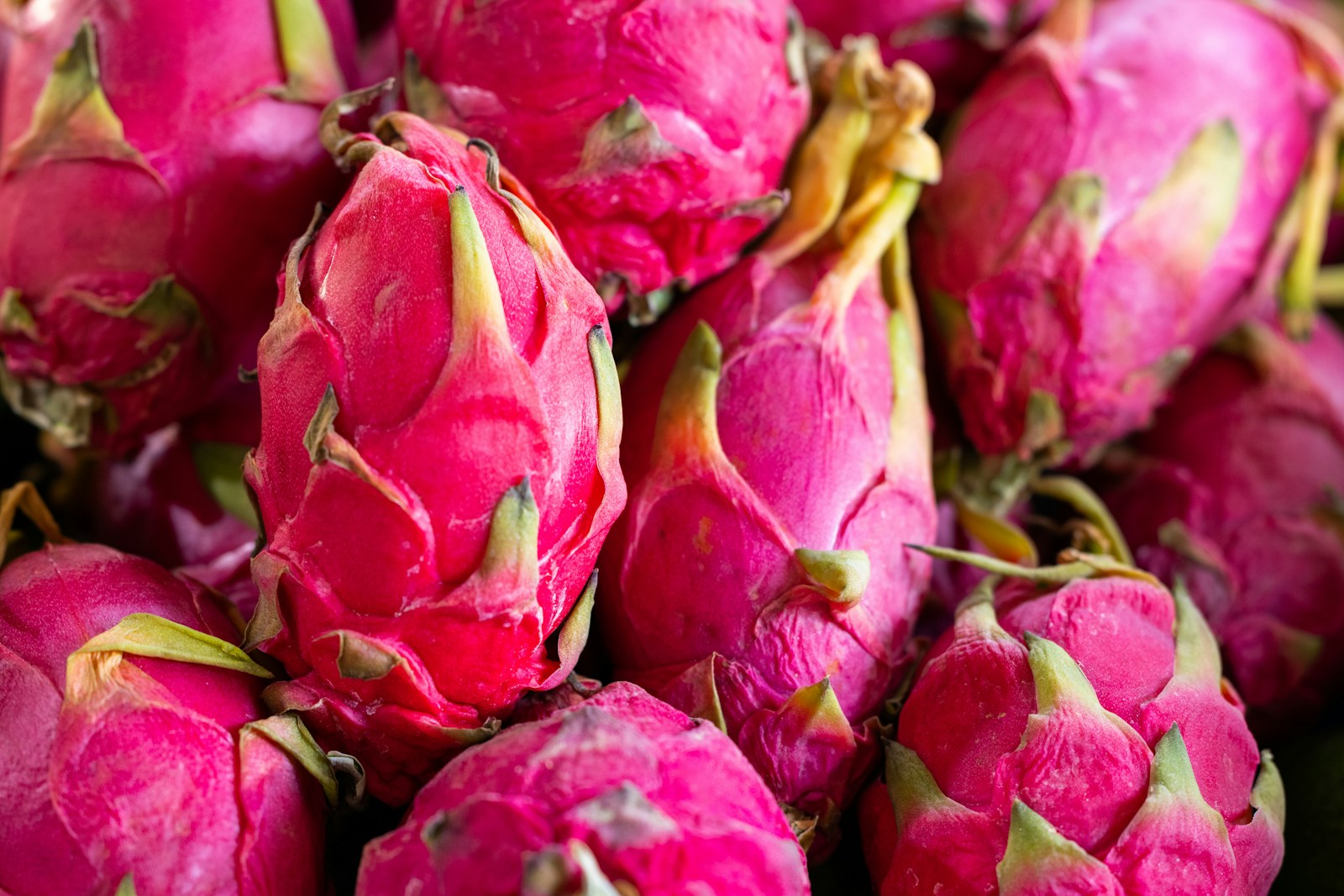
Dragon fruit comes from several related cactus species, with roots in tropical parts of the Americas. UF/IFAS describes pitaya's different types and growing characteristics. The peel may be pink, red, or yellow, while the flesh can be white or shades of red and magenta. The little dark seeds are part of the edible flesh; there's no central stone to work around.
| What it looks like | What you may find inside | A useful shopping note |
|---|---|---|
| Pink or red skin with green-tipped scales | White or red-to-magenta flesh, depending on the variety | Skin color alone doesn't identify the flesh color |
| Yellow skin | Usually white flesh with dark seeds | Ask the seller which variety is available |
| Frozen cubes or purée | Often vivid magenta, but products differ | Check the ingredient list and whether sugar is added |
The texture is soft with a slight seed crunch. Harvard Health describes the flavor as reminiscent of pear and kiwi, though sweetness varies. I would buy one fresh fruit to get acquainted rather than commit to a large box based on its color. If a smoothie recipe needs a vivid pink result, confirm that you're buying red-fleshed fruit or the appropriate frozen purée.
How to choose a fruit worth cutting
Look for an intact fruit that feels substantial for its size, without shriveling, leaking, or obvious bruising. A ripe fruit should have a little give rather than feel rock-hard or collapse under gentle pressure. Harvard's buying guidance makes that texture check especially useful. Handle it gently; repeatedly squeezing several fruits doesn't improve the one you finally bring home.
Read the produce sign and ask questions when the variety isn't clear. “Dragon fruit” can cover more than one experience, and a photograph on a smoothie advertisement isn't a promise about the whole fruit beside it. Fresh availability and selection also depend on where you shop. If the fruit on display looks tired, frozen unsweetened pitaya can be a more practical choice for blending.
For a first purchase, these questions are enough:
- Is the flesh white or red? Choose according to whether flavor, appearance, or both matter for your dish.
- Will you eat it soon? Buy an amount that fits your plans instead of stretching storage to justify a bulk purchase.
- Is the frozen product plain fruit? A smoothie base may include other ingredients, so read beyond the front label.
- Do you need neat cubes? Fresh fruit suits that job differently from a purée packet.
- Does the fruit look sound? Skip specimens with visible decay, significant damage, or leaking flesh.
How to cut pitaya and store the pieces
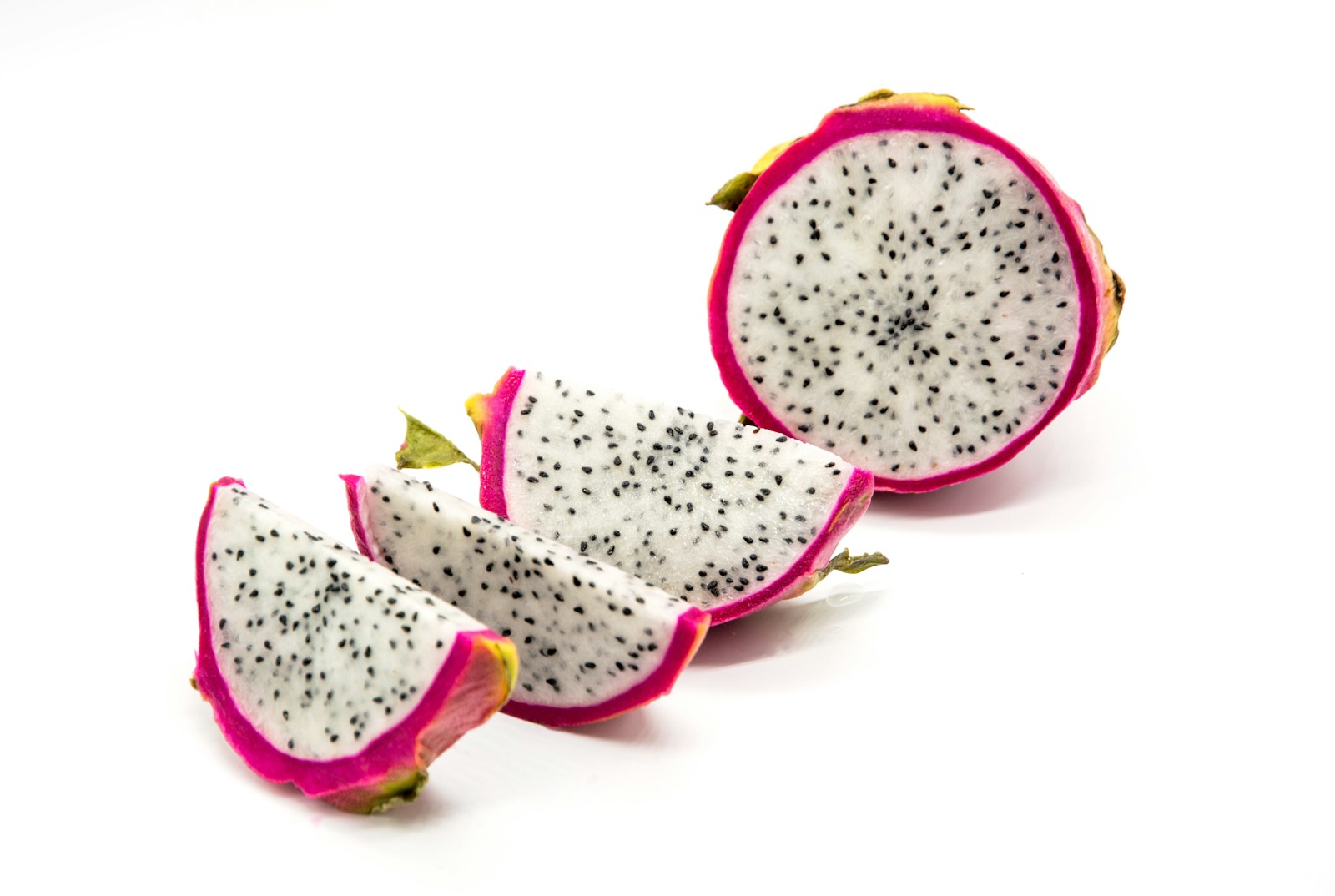
Wash your hands, rinse the whole fruit under running water, and use a clean board and knife. Rinsing still matters when you won't eat the peel: cutting can carry material from the surface into the flesh. The FDA's produce guidance recommends running water, not soap or detergent. Dry the outside so it is easier to handle securely.
- Set the fruit on a stable cutting board and slice it lengthwise into two halves.
- Run a spoon between the flesh and the thick peel, lifting out the edible center.
- Place the flesh flat-side down and cut it into slices or cubes, or eat it directly from the half with a spoon.
- Keep the tiny seeds with the flesh and discard the peel for this preparation.
- Transfer any portion you won't serve immediately to a clean, covered container in the refrigerator.
Keep cut fruit at 40°F/4°C or below, and avoid letting it sit out beyond two hours, or one hour in temperatures above 90°F/32°C. Use refrigerated pieces promptly rather than judging safety from color alone. For a mixed fruit platter, prepare the other fruit on the same clean-workspace principle; our pineapple cutting guide is useful if you want contrasting shapes and a brighter, sharper flavor alongside pitaya.
Easy ways to use it without a superfood pitch
Pitaya supplies fiber and other nutrients, but it doesn't need extraordinary health claims to earn a place in a fruit bowl. Harvard's nutrition discussion emphasizes its place within a varied eating pattern. A serving of fruit and a large shop-made bowl covered with sweetened toppings are different foods to evaluate. If you want product-specific amounts, use the nutrition label on your frozen packet rather than a number that supposedly fits every variety and preparation.
For serving ideas, let its mild flavor guide the company it keeps:
- Spoon small cubes over plain yogurt and add a little chopped pistachio for contrast.
- Pair slices with pineapple and a squeeze of lime, then taste before adding any sweetener.
- Fold a handful of cubes into a fruit salad just before serving so you can enjoy their distinct texture.
- Blend frozen pitaya with an unsweetened milk or fortified plant drink, adding liquid gradually to control thickness.
- Serve chilled slices simply, especially the first time, so you can decide whether you enjoy that variety on its own.
You don't need every topping at once. Choose one preparation that fits what you already have, and keep the rest of the meal familiar. If the first fruit tastes milder than expected, that doesn't mean you prepared it incorrectly. Try another variety or use the remainder in a simple bowl. The goal is an enjoyable piece of fruit, not a complicated ritual built around its color.
Sources
- UF/IFAS Extension: Pitaya in the Florida Home Landscape
- Harvard Health: How to Enjoy Dragon Fruit
- FDA: Selecting and Serving Produce Safely

Hi, I’m Laura, the voice behind Tastiva. I’ve always believed that eating well should feel enjoyable, comforting, and realistic—not like another complicated rule to follow. I love creating recipes that fit into everyday life, sharing simple nutrition ideas, and finding small ways to make meals feel a little better without losing the pleasure of good food.