
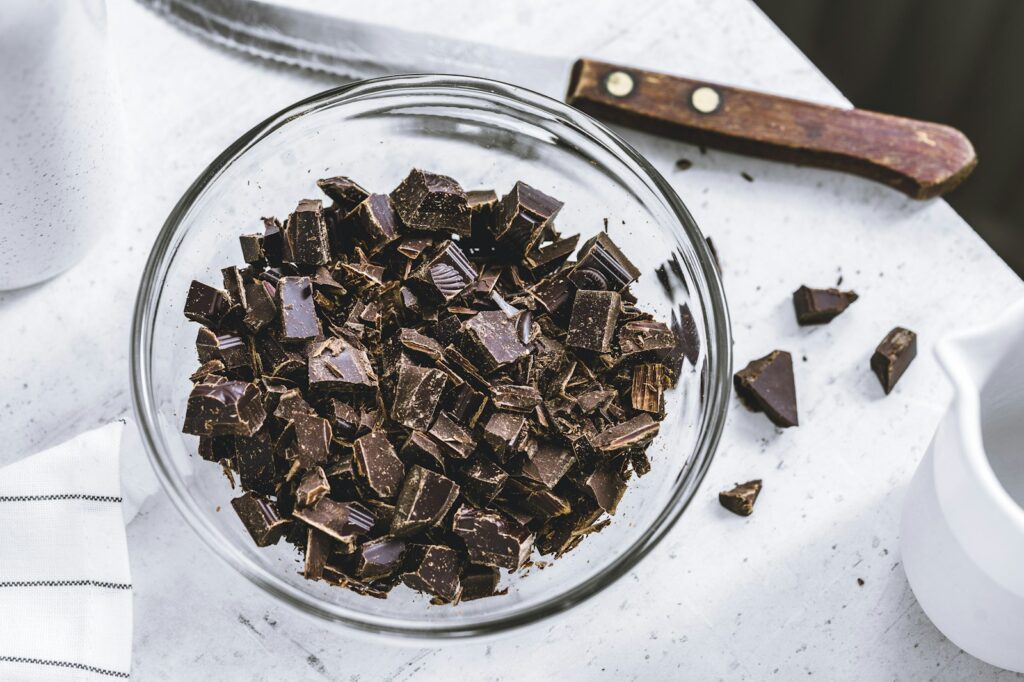
In the United States, sugar-free chocolate must contain less than 0.5 gram of sugars per labeled serving and per FDA reference amount. That does not mean it is carbohydrate-free, calorie-free, or automatically better for everyone. Cocoa butter, milk, nuts, fiber, and replacement sweeteners can still contribute carbs, fat, or calories.
Sugar free answers one question about a serving; it does not reveal the total carbs, calories, portion, or how well you will tolerate the sweetener.
What “Sugar Free” Means on a U.S. Label
FDA applies the same rules to “sugar free,” “zero sugar,” “no sugar,” and similar wording. The food generally cannot contain a sugar ingredient unless the label identifies it as adding only a trivial amount. Because values below 0.5 gram may be rounded to zero, the claim is not a promise of absolute zero in every bite.
Sugar-free is not the same as low-calorie. Unless the product also qualifies as low- or reduced-calorie, the package must add wording such as “not a reduced calorie food” or “not for weight control.” Cocoa fat and some replacement sweeteners still supply calories.
“No added sugar” is a different claim: it means qualifying sugars were not added during processing, but naturally occurring sugar may remain. “Unsweetened chocolate” is different again; it is the naturally bitter cacao product also called chocolate liquor. I read the ingredient list before I let any front-panel promise do the talking.
What Is Actually in Sugar-Free Chocolate?

The cacao foundation remains familiar: chocolate liquor or cocoa mass supplies cocoa solids and fat, while cocoa butter creates melt and texture. Despite its name, chocolate liquor contains no beverage alcohol. Milk powder, nuts, vanilla, lecithin, and added fibers may appear depending on the style. What changes most is the sweetening system.
| Sweetener type | Names you may see | What it does |
|---|---|---|
| Sugar alcohols, or polyols | Maltitol, erythritol, sorbitol, xylitol | Add sweetness and bulk; usually provide fewer calories than sugar, but still sit within Total Carbohydrate |
| High-intensity sweeteners | Stevia leaf extract, monk fruit extract, sucralose | Provide strong sweetness in tiny amounts and contribute few or no calories; often paired with a bulking ingredient |
| Allulose | Allulose | Supplies sugar-like bulk; under current FDA guidance it is excluded from Total and Added Sugars and counted at 0.4 calorie per gram |
No one sweetener makes a universally “best” bar. Maltitol can give chocolate a familiar body; erythritol may taste cooling; stevia or monk fruit can bring a lingering sweetness. Flavor, texture, digestive comfort, allergens, and price are all fair reasons to prefer one formula over another.
Sugar Alcohols and Digestive Tolerance
Sugar alcohols are carbohydrates, despite being neither table sugar nor drinking alcohol. They are absorbed differently from one another and often only partly. In larger amounts, polyols can pull water into the gut and be fermented by intestinal bacteria, leading to gas, bloating, cramping, or loose stools. Research describes these effects as dose-dependent, and people with irritable bowel syndrome may be especially sensitive.
This is why a few squares can feel different from finishing a large bag. Ingredients are listed by weight, so maltitol near the beginning usually signals that it is a major part of the formula.
For a new product, start with one labeled serving rather than treat “sugar free” as permission to double the portion. Tolerance varies by sweetener, amount, and person. If symptoms recur, compare ingredient lists and choose a smaller serving or another formula; persistent digestive trouble belongs in a conversation with a clinician or registered dietitian.
How to Compare Labels and Choose a Portion
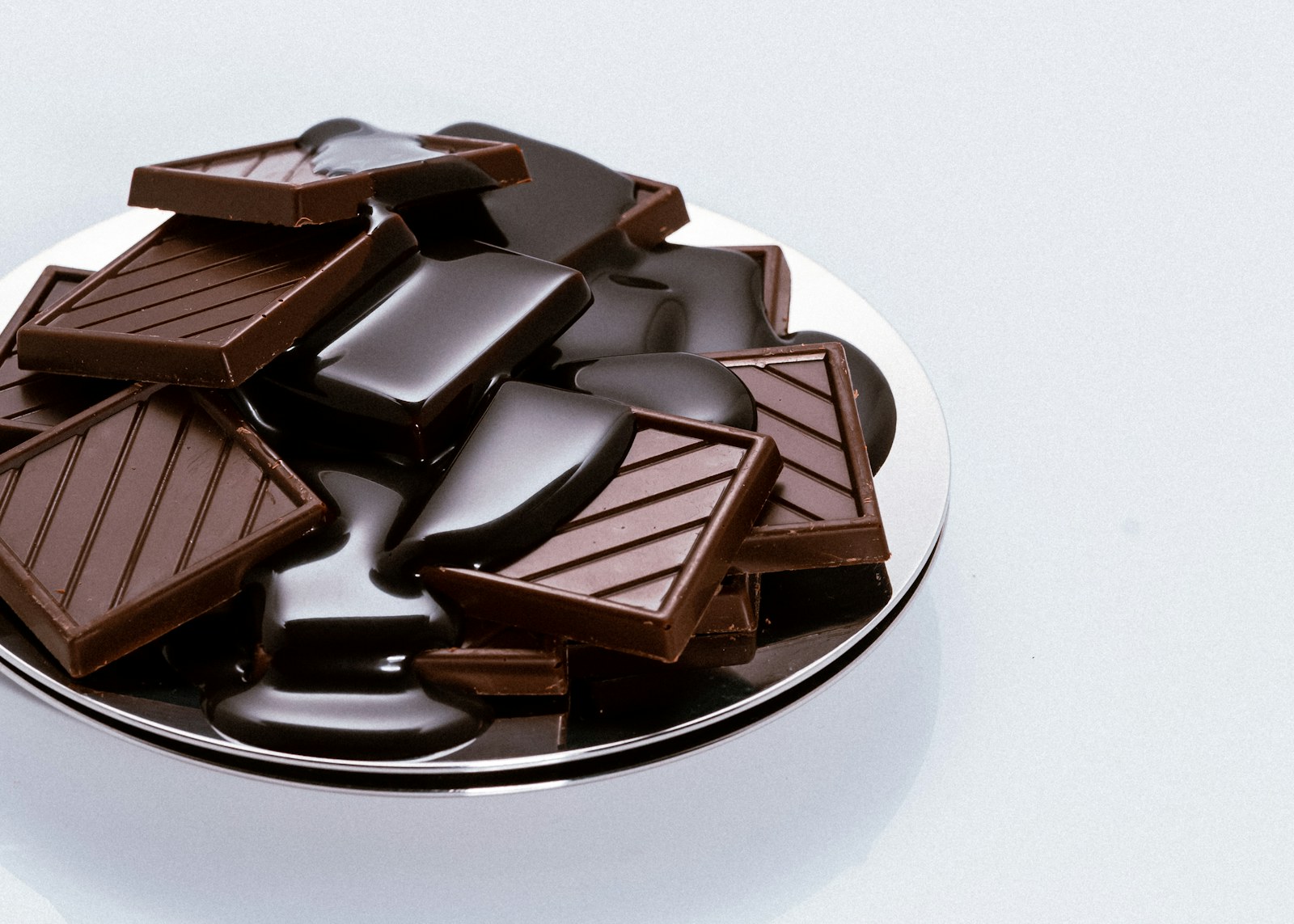
My quickest check is to compare products at the same gram weight, since serving sizes may differ. Serving size is the basis for the label, not a personalized recommendation. Then look beyond Total Sugars:
| Label line | Why it matters |
|---|---|
| Servings per container | A small pouch or bar may contain more than one serving |
| Calories and saturated fat | Sugar removal does not remove cocoa butter, dairy fat, or nut fat |
| Total Carbohydrate | Includes more than sugar, including sugar alcohols and fiber |
| Sugar alcohol and ingredient list | Identifies the sweetener system and helps you track tolerance |
| Allergen statement | Milk, soy, peanuts, and tree nuts are common possibilities |
For diabetes, “sugar free” does not mean glucose-neutral. The American Diabetes Association recommends using Total Carbohydrate; “net carbs” has no FDA legal definition, and subtracting all fiber or sugar alcohol can mislead because some is absorbed. Monitor as your care plan directs, and ask your clinician about medication decisions. FDA says sugar alcohols themselves do not promote tooth decay, but that does not make every sugar-free bar cavity-proof or replace fluoride toothpaste and dental care.
Keep every chocolate product away from pets. FDA notes that xylitol may be used in sugar-free chocolate bars and can cause life-threatening poisoning in dogs; chocolate itself is also unsafe for them. If a dog eats a xylitol product, call a veterinarian or animal poison-control service immediately. For people, my bottom line is simpler: choose a bar whose label fits your needs, then enjoy a modest portion as chocolate—not as a free food. For another dessert-label comparison, our healthy ice cream guide walks through the same kind of front-versus-back-package check.
Sources
- Electronic Code of Federal Regulations: 21 CFR § 101.60, Sugar Content Claims
- Electronic Code of Federal Regulations: 21 CFR § 101.9, Nutrition Labeling
- Electronic Code of Federal Regulations: 21 CFR § 101.4, Ingredient Lists
- Electronic Code of Federal Regulations: 21 CFR Part 163, Cacao Products
- FDA: High-Intensity Sweeteners
- FDA: Declaration of Allulose and Calories from Allulose
- American Diabetes Association: Get to Know Carbs
- National Library of Medicine: Systematic Review of Polyols and Gastrointestinal Health
- FDA: Paws Off Xylitol; It’s Dangerous for Dogs

Hi, I’m Laura, the voice behind Tastiva. I’ve always believed that eating well should feel enjoyable, comforting, and realistic—not like another complicated rule to follow. I love creating recipes that fit into everyday life, sharing simple nutrition ideas, and finding small ways to make meals feel a little better without losing the pleasure of good food.