
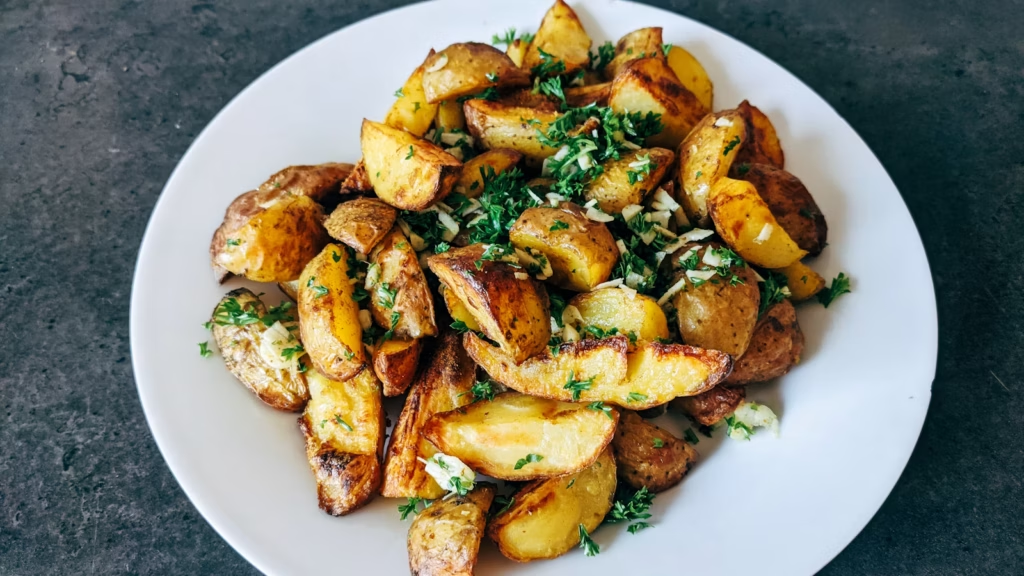
Parmentier potatoes are the elegant little cousin of roast potatoes: neat cubes with crisp bronze edges, fluffy centers, and enough garlic and rosemary to announce themselves without taking over the plate. They look restaurant-polished, but the method is wonderfully practical—parboil, roughen, then roast on a hot tray.
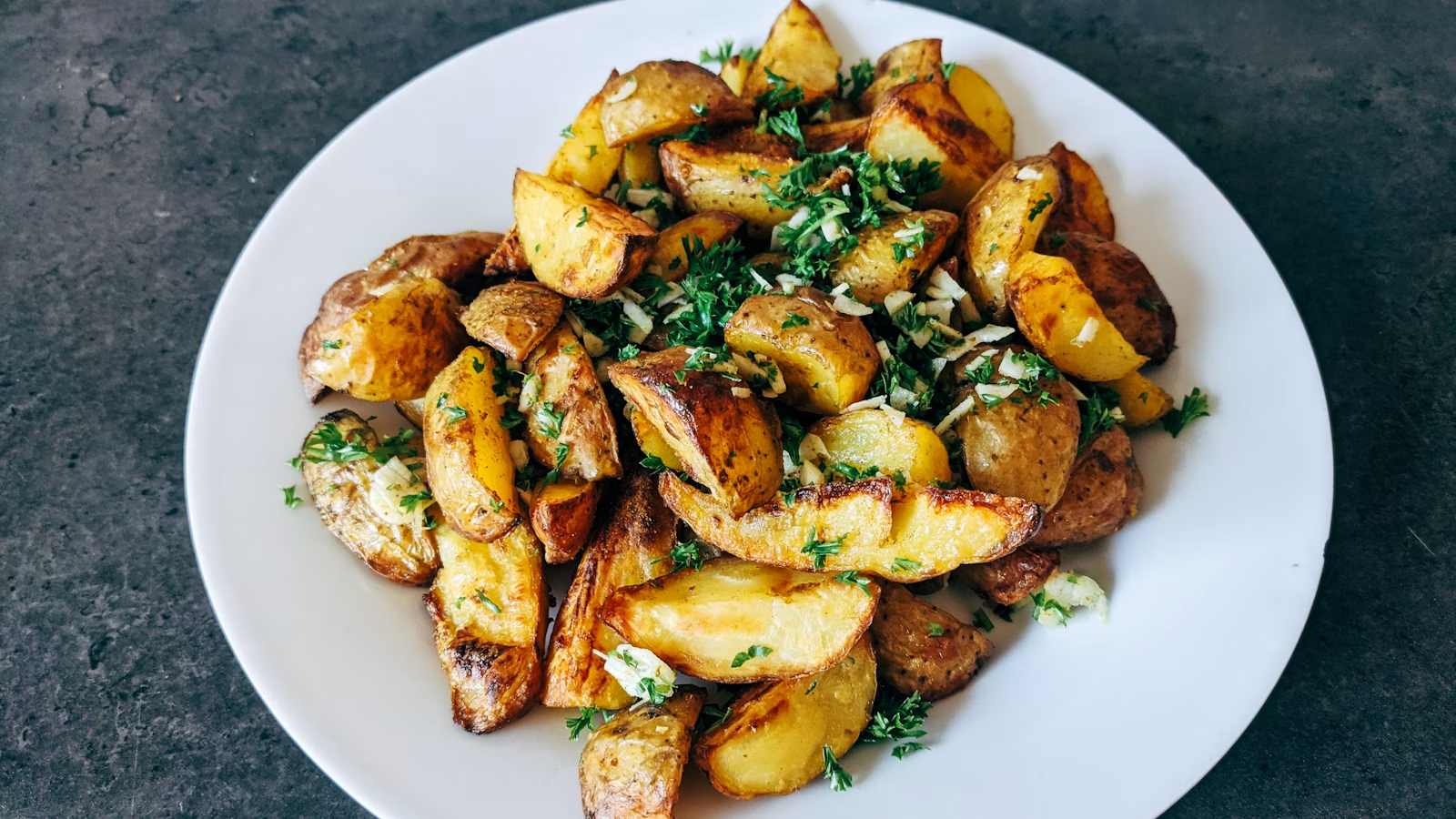
Parboil the cubes, let the steam escape, and roughen the edges—that craggy surface is where the crispness begins.
What makes Parmentier potatoes different?
In French cooking, “Parmentier” signals a dish involving potatoes, honoring Antoine-Augustin Parmentier, the pharmacist and agronomist who championed the potato in 18th-century France. The Château de Versailles describes how his wartime captivity introduced him to the tuber and how he later promoted its nutritional value. The surname went on to label everything from potato-leek soup to mashed and cubed potato preparations.
For this side dish, the distinguishing detail is the tidy cube. The pieces are smaller than classic roast potatoes, so every serving has a high ratio of crisp surface to soft center. Garlic and rosemary are traditional companions. I add them after the potatoes have started roasting; early garlic can turn bitter long before the potatoes are properly golden.
If the name brings soup to mind, our vichyssoise guide explores another potato dish connected to French technique. Here, however, the goal is dry heat and crunch rather than silkiness.
Choose and cut the potatoes evenly
Use Yukon Gold potatoes for creamy centers and reliable browning, or choose a floury variety such as russet or Maris Piper for a lighter, fluffier interior. Waxy red potatoes will hold their shape, but they do not roughen as dramatically. Peel them for the classic look, or scrub them well and leave the skins on for a more rustic result.
Cut the potatoes into 1-inch cubes. Precision matters more here than it does with wedges: tiny pieces burn while large ones remain pale and firm. Square off rounded sides if you want particularly even cubes, but save the trimmings for soup rather than sending perfectly good potato to the bin.
- Start the cubes in cold, well-salted water so they heat evenly.
- Keep them close to the same size for consistent cooking.
- Do not rinse after parboiling; the surface starch helps form the crust.
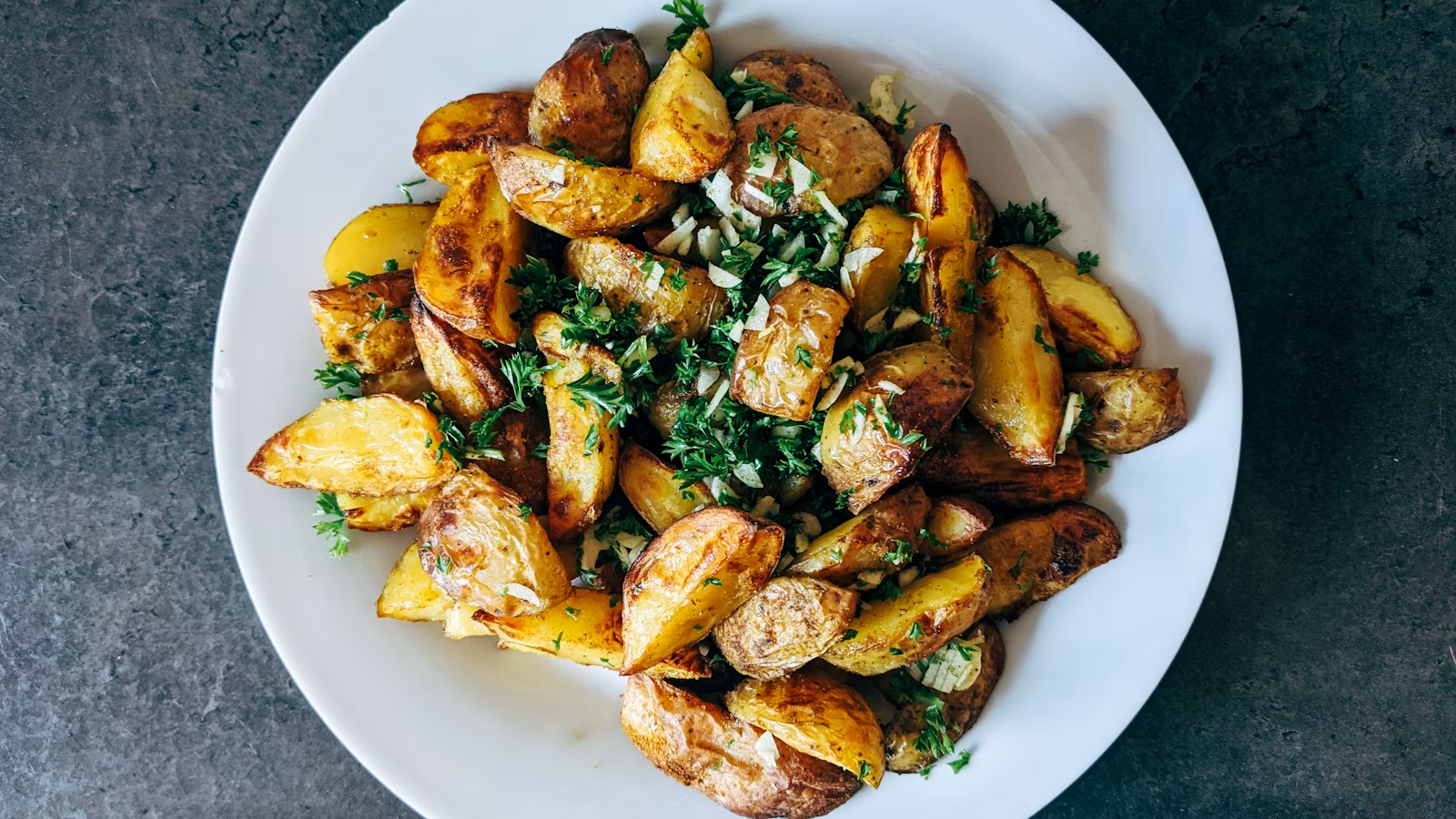
Parboil, roughen, and roast for crisp edges
Five minutes of simmering softens the outer layer without cooking the cubes through. Drain them thoroughly, leave them to steam-dry, then shake the colander gently. The goal is a floury film and roughed-up corners, not broken potatoes. Water trapped on the surface creates steam; dry, starchy edges absorb a thin coat of oil and brown.
A preheated metal sheet gives the bottoms an immediate sizzle. Spread the cubes in one layer with a little space between them. If they are crowded, use two trays. Roast for 20 minutes before turning, then add the chopped garlic and rosemary for the final 12 to 15 minutes. That timing keeps the herbs fragrant and the garlic golden instead of scorched.
- Pale potatoes: the pan may be crowded or the oven too cool.
- Burned garlic: add it later and chop it finely rather than leaving tiny dry fragments.
- Potatoes sticking: let a crust form before attempting to turn them.
- Soft leftovers: reheat on a hot sheet pan or in an air fryer, not the microwave.
Give the tray a real turn rather than a timid stir: a thin metal spatula can release the browned sides cleanly. Darker corners are welcome, but black rosemary needles are a warning that the aromatics went in too soon.
Parmentier Potatoes Recipe

Ingredients
- 2 pounds Yukon Gold or floury potatoes peeled and cut into 1-inch cubes
- 3 tablespoons olive oil
- 3 cloves garlic finely chopped
- 1 tablespoon fresh rosemary finely chopped
- 1 teaspoon kosher salt plus more for the cooking water and to taste
- 1/4 teaspoon freshly ground black pepper
- 2 tablespoons fresh parsley finely chopped
- 1 teaspoon fresh lemon juice optional, to finish
Equipment
- 1 Large saucepan
- 1 large rimmed baking sheet
- 1 Colander
Instructions
- Heat the oven to 425°F (220°C). Place a large rimmed baking sheet in the oven while it heats.
- Put the potato cubes in a saucepan, cover with cold water, and salt the water. Bring to a boil, then simmer for 5 minutes; the edges should soften while the centers remain firm.
- Drain well in a colander and let the potatoes steam-dry for 3 minutes. Shake the colander gently to roughen the surfaces.
- Carefully remove the hot baking sheet. Toss the potatoes with the olive oil, salt, and pepper, spread them in one layer, and roast for 20 minutes.
- Turn the potatoes, add the garlic and rosemary, and roast for 12 to 15 minutes more, until deeply golden and crisp. Toss with parsley and the optional lemon juice, then serve hot.
Nutrition
Video
Notes
- Keep the cubes close to 1 inch so they cook at the same rate.
- Add garlic and rosemary after the first roast so they do not scorch.
- Refrigerate leftovers within 2 hours in a shallow covered container and use within 3 to 4 days.
- Nutrition is an estimate per serving.
Tried this recipe?
Let us know how it turned out!What to serve with Parmentier potatoes
These potatoes belong beside roast chicken, steak, baked fish, mushroom dishes, or a sharp green salad. Parsley freshens the rosemary, and a teaspoon of lemon juice wakes up the whole tray. For a casual dinner, serve them with eggs and sautéed greens. For an all-potato comparison, our air-fryer jacket potato is softer and more substantial.
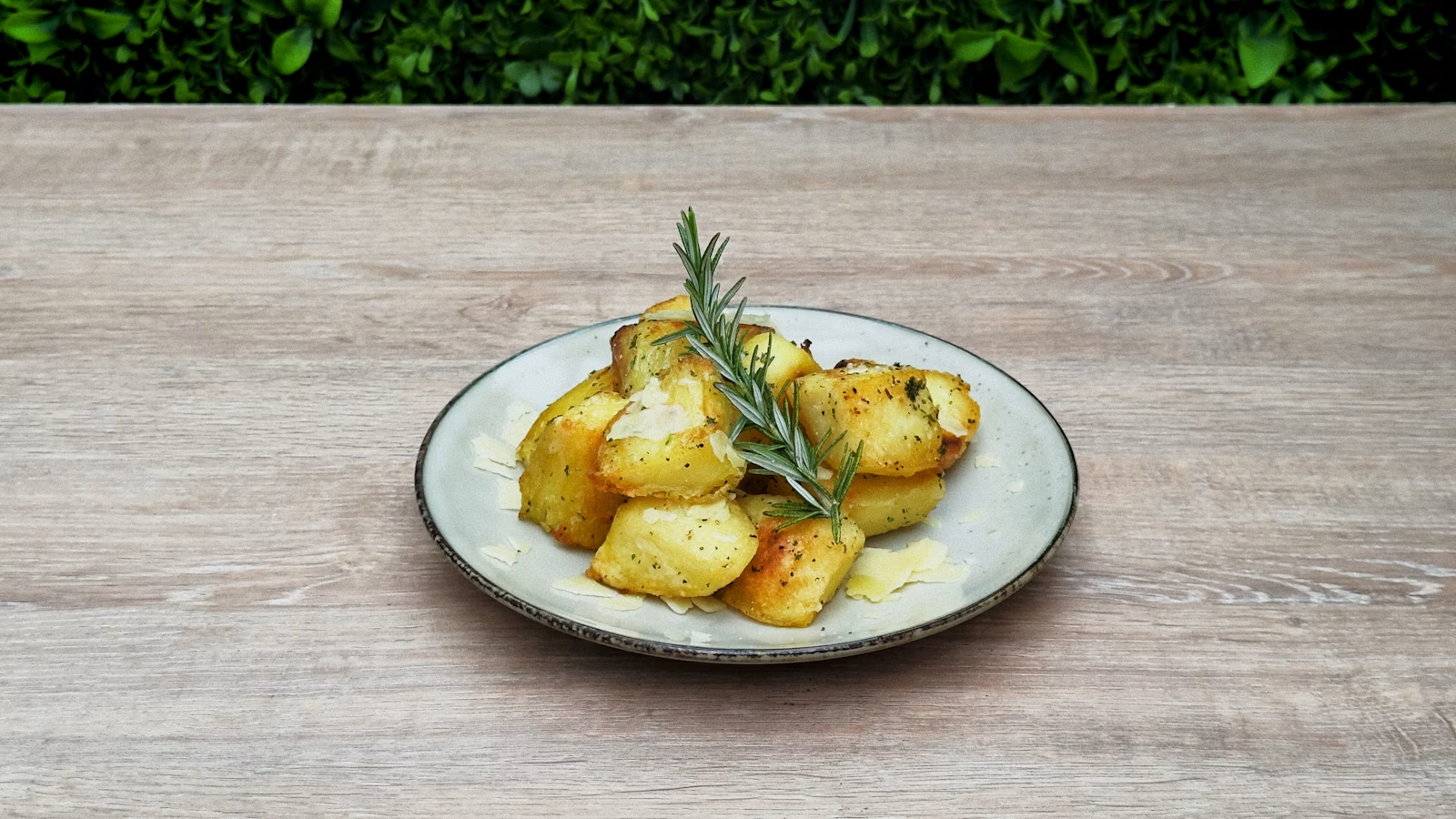
Serve Parmentier potatoes straight from the oven while the edges are at their crispest. Refrigerate leftovers within two hours in a shallow covered container and use them within three to four days. Reheat at 400°F until hot and crisp, spreading the cubes apart so they roast instead of steaming.
Sources
- Château de Versailles: Antoine-Augustin Parmentier
- BBC Good Food: Parmentier potatoes
- FoodSafety.gov: safe handling of leftovers
- FoodSafety.gov: cold food storage chart
Hi, I’m Laura, the voice behind Tastiva. I’ve always believed that eating well should feel enjoyable, comforting, and realistic—not like another complicated rule to follow. I love creating recipes that fit into everyday life, sharing simple nutrition ideas, and finding small ways to make meals feel a little better without losing the pleasure of good food.