
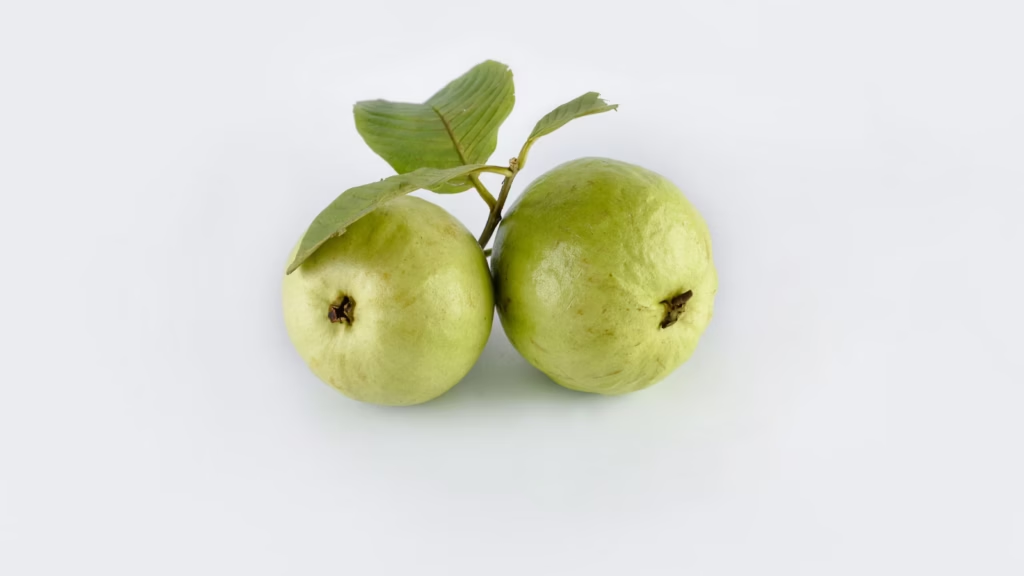
Guava is the tropical fruit that makes itself known before you cut it. A ripe one can perfume the kitchen with notes of strawberry, pear, citrus, and something gently musky. Under its green or yellow skin, the flesh may be white, pale yellow, salmon, or vivid pink, with edible seeds clustered through the center.
Let aroma and a gentle give—not color alone—tell you when guava is ready to eat.
What does guava taste like?
Common guava, Psidium guajava, is a tropical fruit in the myrtle family. Flavor changes with variety and ripeness. Pink-fleshed fruit is often lush, floral, and berry-like; white-fleshed guava can be crisper and more tart. Neither description is a promise, because cultivated varieties range from small and intensely aromatic to large, mild, and pear-crisp.
The skin is edible and can taste pleasantly tangy or slightly bitter. The seeds are edible too, although some are hard enough that vigorous chewing is a poor bargain. Bite around them, swallow them with the pulp, or strain blended guava when a silky texture matters. This is a more fragrant fruit than pitaya and less creamy than mamey, so it brings real personality to a fruit plate.
How to choose a ripe guava
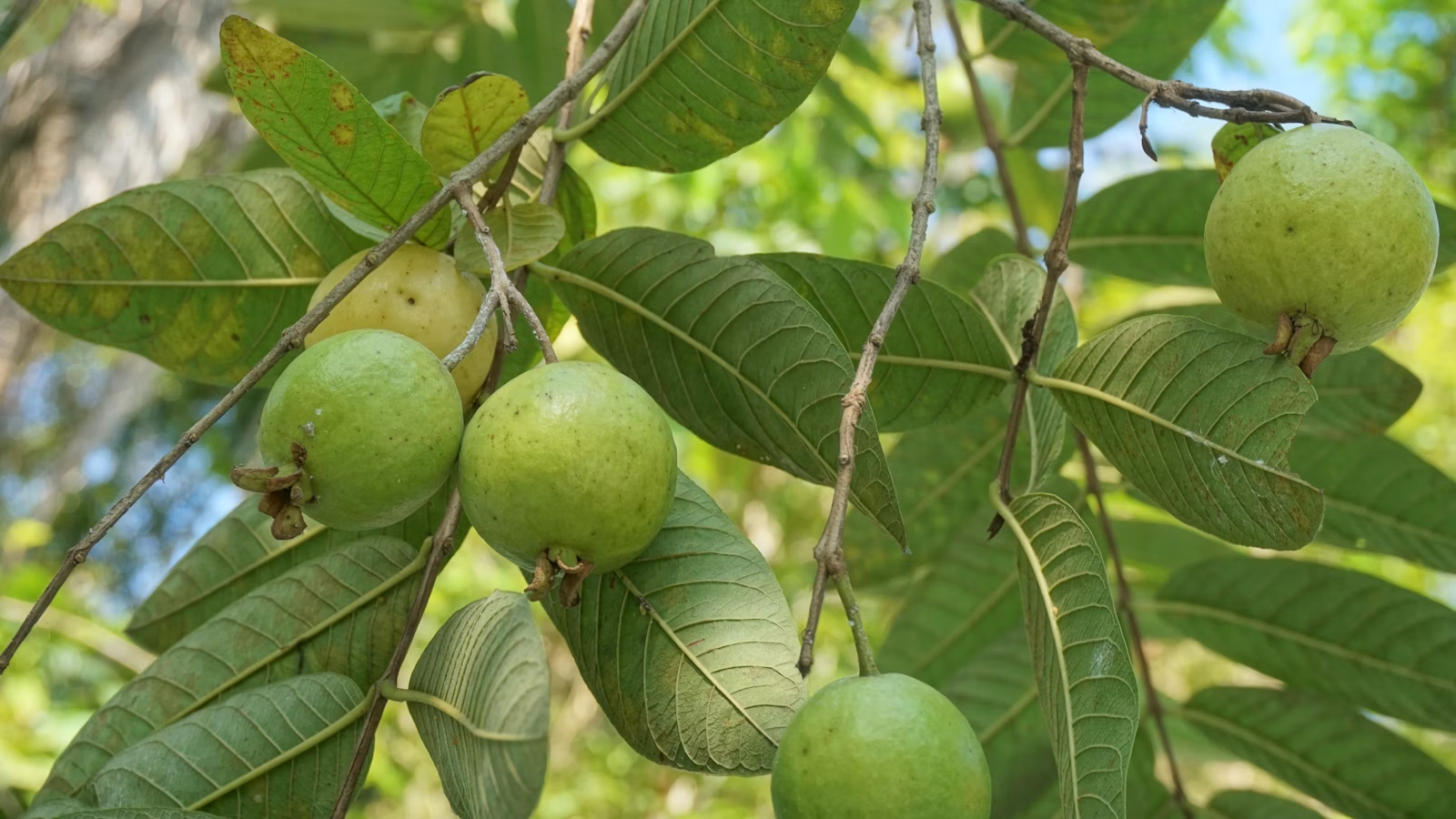
Start with fragrance. A ripe guava should smell sweet and floral near the blossom end. Press very gently with your thumb: ready fruit gives slightly, much like a ripe pear. Rock-hard guava needs time; very soft fruit with leaking spots, fermented aromas, or sunken bruises has gone too far.
- Firm and green: keep at room temperature for a few days.
- Fragrant with slight give: eat now or refrigerate briefly.
- Soft with clean, sweet aroma: use promptly in purées, drinks, or sauces.
- Sour or alcoholic smell: discard it.
Color helps, but it is not universal. Some guavas stay green when ripe, while others turn yellow. Buy by feel and smell rather than waiting for one prescribed shade. A few superficial marks are normal; avoid cracked fruit if the exposed flesh looks dry or contaminated.
If every fruit in the display is hard, choose one without bruises and ripen it on the counter. A paper bag can trap some of its natural ethylene and speed softening; check daily, because the distance between fragrant and overripe can be surprisingly short.
How to cut and eat guava
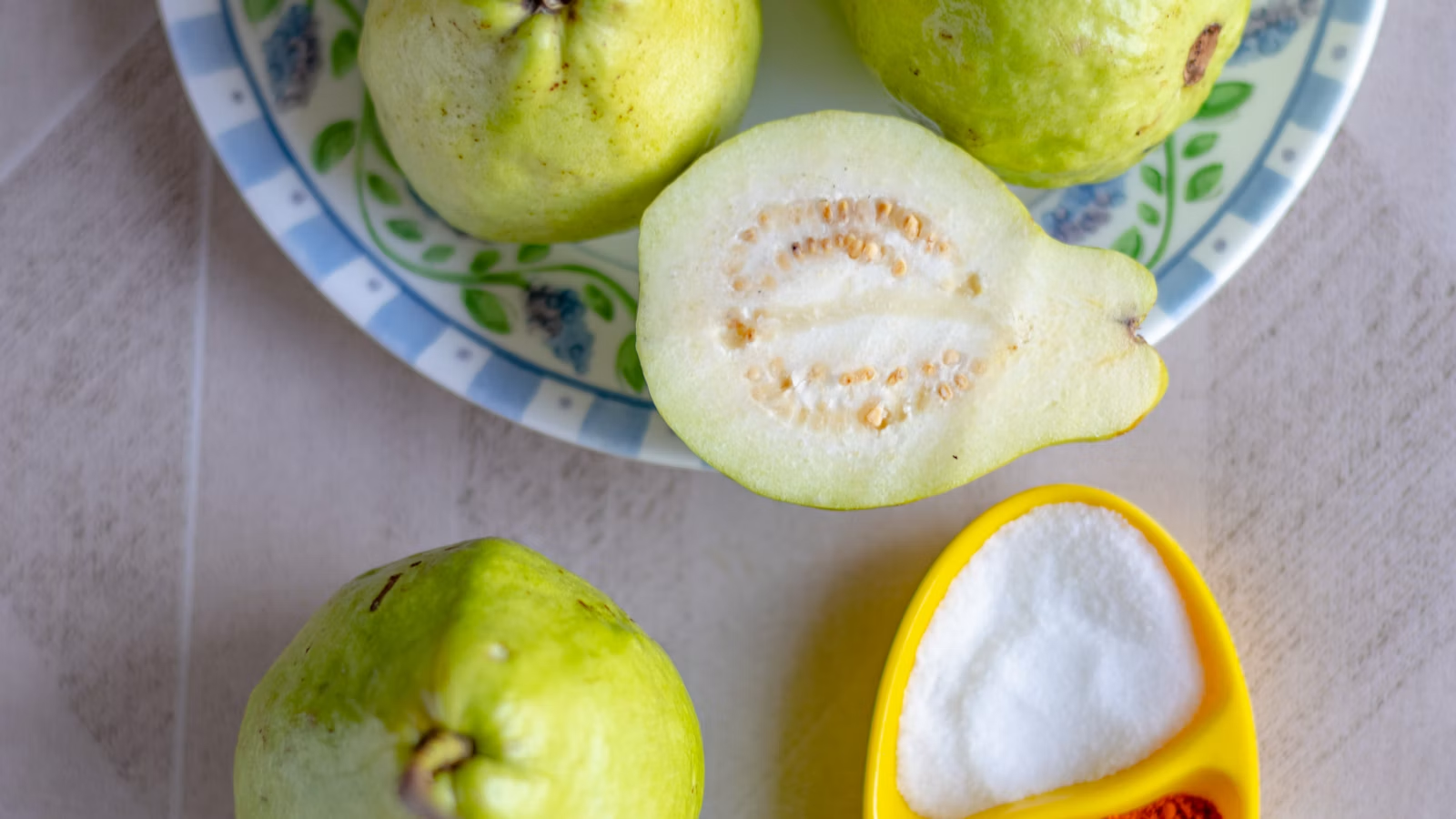
Rinse the whole fruit under cool running water and dry it before cutting, even if you plan to peel it. FoodSafety.gov advises washing produce with water rather than soap, bleach, or commercial disinfectants. Trim the ends, slice the guava in half, and inspect the flesh. From there, cut wedges, spoon out the center, or eat thin slices with the skin attached.
Fresh guava is lovely plain, but it also welcomes salt, lime, and chile. The combination sharpens the fruit instead of burying it. If the seeds bother you, blend the chopped flesh with a small splash of water and press the purée through a fine sieve. That strained pulp is ready for drinks, sorbet, yogurt, vinaigrette, or a glaze.
Ways to use and store guava
Pair guava with yogurt, oats, coconut, pineapple, lime, soft cheese, chile, or herbs such as mint and cilantro. Dice firm fruit into salsa, fold ripe pieces into fruit salad, simmer it into jam, or blend it for agua fresca. Guava paste is concentrated and much sweeter than fresh fruit, so treat it more like jam or quince paste than a one-for-one substitute.
At room temperature, firm guava continues to soften. Once ripe, refrigerate it in a breathable produce bag and use it within a few days. Store cut fruit covered in the refrigerator, and freeze purée in small portions when you have more than you can use. For another small fruit you can eat skin and all, see our kumquat guide.
Guava contributes fiber, vitamin C, and other micronutrients, but exact amounts vary with the variety, portion, and database entry. USDA FoodData Central is the best place to check specific values. Whole fruit also behaves differently from juice: blending or juicing changes texture and can make a large portion much easier to drink quickly.
Food creator Matt Taylor shows how he eats Mexican white guava and describes its texture and flavor. His fruit is one variety; pink-fleshed and other guavas can taste and feel different.
Sources
- USDA FoodData Central: food composition data
- FoodSafety.gov: safe ways to handle and clean produce
- FoodSafety.gov: four steps to food safety
- University of Kansas: the guava plant and fruit

Hi, I’m Laura, the voice behind Tastiva. I’ve always believed that eating well should feel enjoyable, comforting, and realistic—not like another complicated rule to follow. I love creating recipes that fit into everyday life, sharing simple nutrition ideas, and finding small ways to make meals feel a little better without losing the pleasure of good food.