
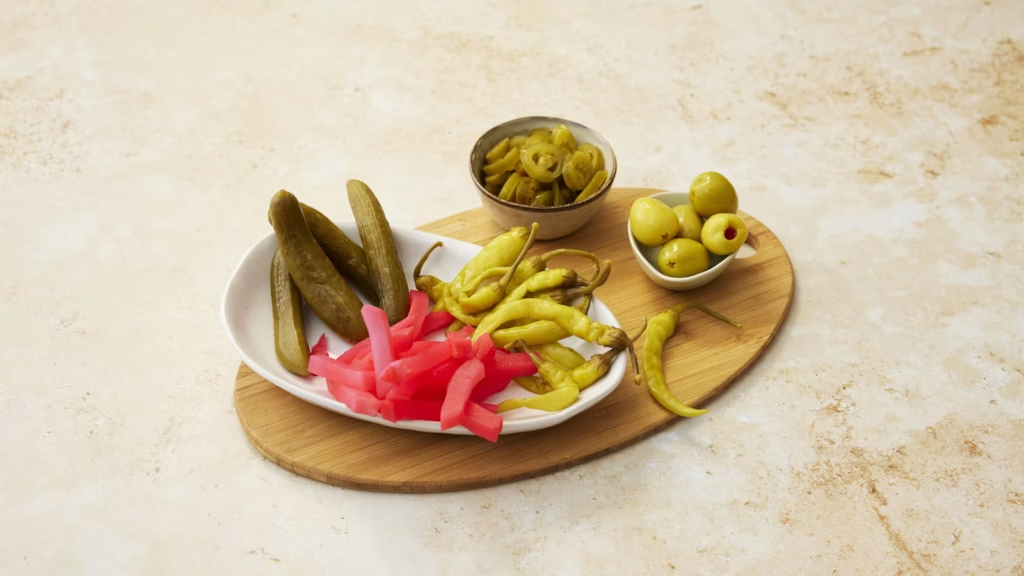
Piccalilli is the sunshine-yellow jar on a British pickle shelf: chopped crunchy vegetables held in a sharp, lightly sweet mustard sauce stained gold with turmeric. It is tangier than chutney, chunkier than ordinary relish, and extremely good at rescuing a beige lunch. A spoon beside mature cheddar, cold ham, or a pork pie brings acidity, spice, and enough crunch to make leftovers feel deliberate.
Piccalilli is what happens when the pickle jar puts on a yellow coat and develops strong opinions.
What is piccalilli made from?
British piccalilli usually begins with cauliflower, onion or shallot, cucumber, and sometimes green beans, courgette, carrot, or peppers. The vegetables are cut into small pieces, salted to draw out water, rinsed, and cooked briefly in vinegar. They should soften just enough to absorb flavor while keeping an audible bite.
The sauce typically contains mustard powder or prepared mustard, mustard seeds, turmeric, vinegar, sugar, and warming spices such as ginger, coriander, or cumin. Flour or cornstarch thickens the liquid so it clings to every floret. Turmeric provides the famous color; mustard supplies most of the heat. Despite its electric appearance, a good jar tastes balanced rather than fiery.
How piccalilli became a British favorite
Piccalilli grew from Britain’s long, complicated encounter with South Asian pickles. British cooks adapted the spice, vinegar, and mixed-vegetable idea to local produce and tastes. Hannah Glasse included a recipe called “Paco-Lilla, or India Pickle” in the 1758 edition of The Art of Cookery Made Plain and Easy, using mustard seed, turmeric, vinegar, garlic, ginger, and whatever vegetables or fruits were in season.
Over time, the British version became thicker, sweeter, and more mustard-forward. Cauliflower emerged as its most recognizable vegetable, and the condiment found a natural home beside cold meats, pies, and cheese. Calling it simply an “Indian pickle” misses that history: modern piccalilli is a British adaptation shaped by trade and empire, not a traditional pickle from one region of India.
What does it taste like?
The first impression is vinegar and mustard, followed by mild sweetness and earthy spice. Cauliflower and onion contribute their own savoriness, while cucumber keeps the texture juicy. Commercial jars range from brisk and crunchy to soft and quite sweet. I prefer the sort that makes your cheeks tighten slightly before the sugar rounds things out.
Piccalilli is not the same as mango chutney, which is usually fruitier and sweeter, or dill pickle relish, which is more finely chopped and cucumber-led. American chow-chow can be close, especially when made with cabbage, green tomato, and mustard, but recipes vary widely by region. The label matters less than the ingredient list and the balance you enjoy.
How to eat piccalilli
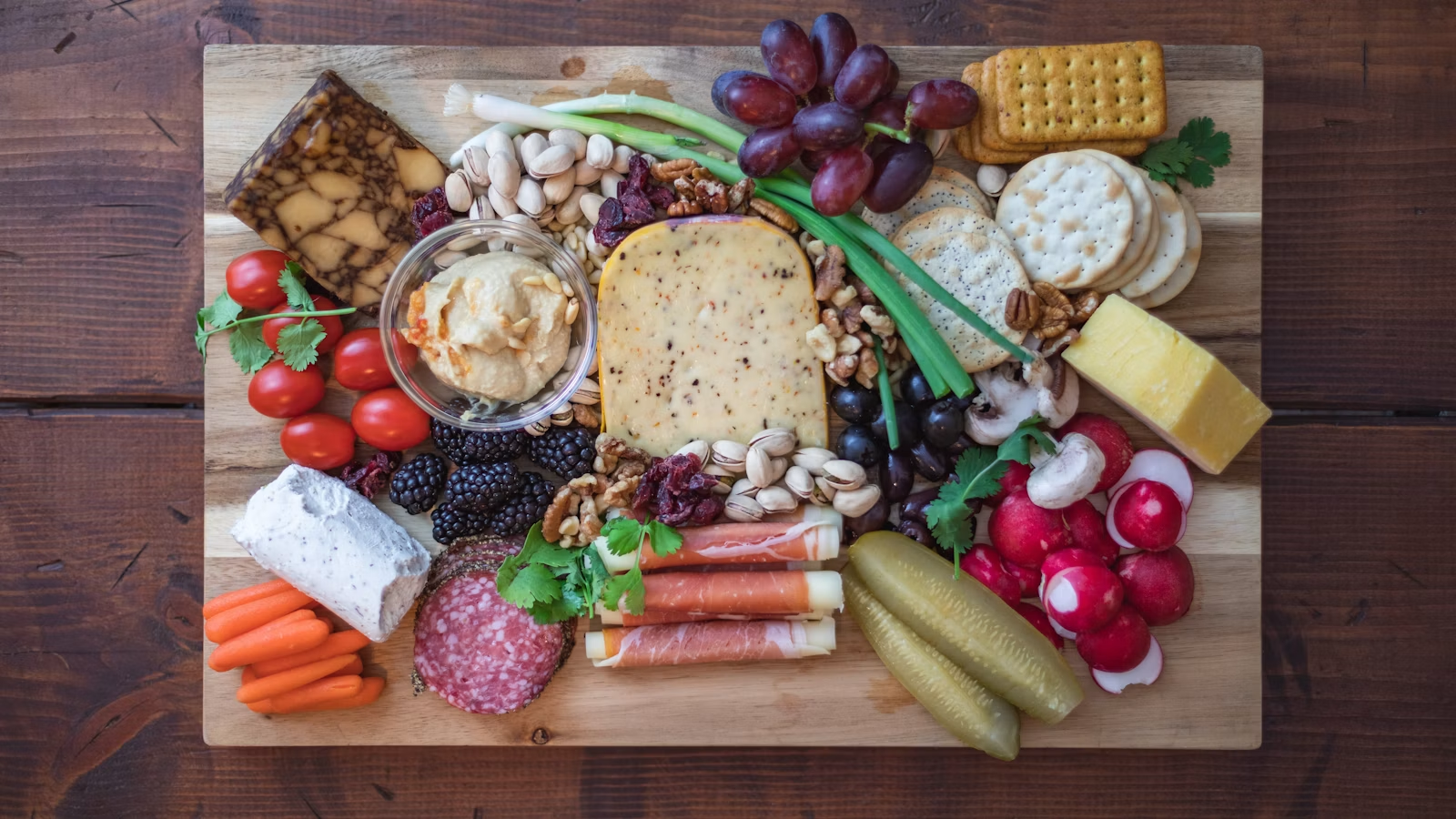
Start with a teaspoon beside sharp cheddar, a ploughman’s lunch, sausage rolls, scotch eggs, or leftover roast meat. It is particularly good with rich pork because the vinegar cuts through fat. Try it next to a cooked gammon hock, inside a ham sandwich, or stirred into mayonnaise for a mustardy potato-salad dressing.
A little also wakes up grain bowls and roasted vegetables. Chop any large pieces before spreading it on toast or burgers. You can whisk a spoonful with olive oil for a quick dressing, much as a sweet vinegar changes a vinaigrette in our balsamic vinegar guide. Taste before adding salt; pickles already bring plenty.
Buying, storing, and making it safely
For the crunchiest jar, look for recognizable vegetable pieces and a sauce thick enough to coat them without resembling paste. Mustard and turmeric should appear clearly on the ingredient list. Some jars contain wheat flour as a thickener, so anyone avoiding gluten needs to check rather than assume a vegetable pickle is gluten-free.
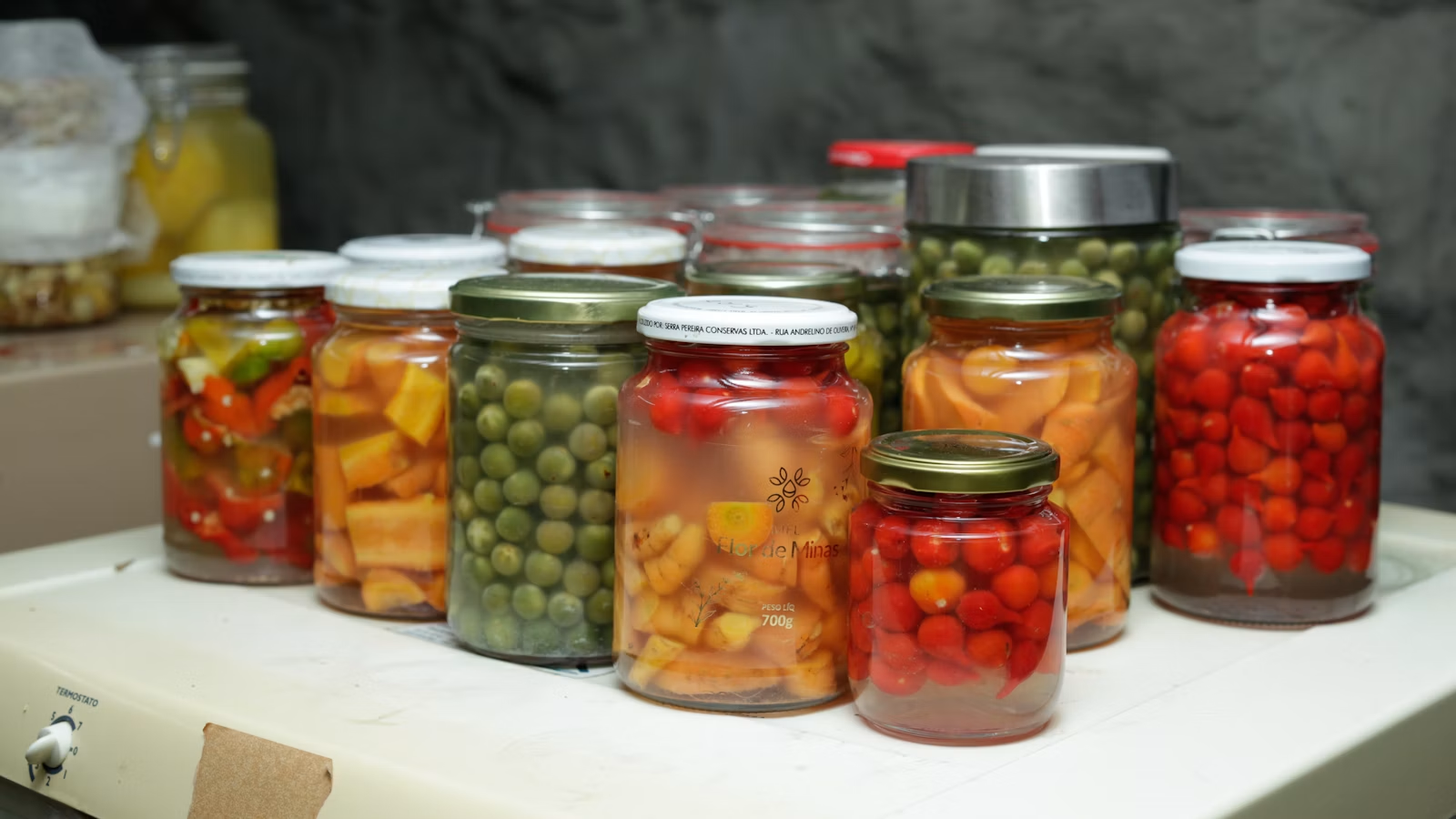
Keep an unopened commercial jar according to its label, then refrigerate after opening and use a clean spoon. Keep the vegetables under their sauce and follow the maker’s stated time limit. Homemade refrigerator piccalilli is not automatically shelf-stable. Safe canning depends on tested acidity, proportions, jar size, and processing time; improvising with extra vegetables or less vinegar can change the result.
If a lid bulges, the jar spurts or fizzes unexpectedly, or the pickle smells wrong, discard it without tasting. Proper piccalilli should smell sharply vinegary and mustardy. Its color may mellow with time, but that first crunchy, sour-sweet bite should still be cheerfully impossible to ignore.
Ema of This Little Plate shows a practical way to use piccalilli in a ploughman’s sandwich with ham, cheddar and apple. This is a serving idea using prepared pickle, not a home-canning method; follow your jar’s storage instructions and keep the finished sandwich chilled until serving.
Sources
- BBC Good Food: Easy Piccalilli
- Calders Kitchen: The Origins of Traditional Piccalilli
- National Center for Home Food Preservation: General Information on Pickling
- USDA FSIS: Keep Food Safe

Hi, I’m Laura, the voice behind Tastiva. I’ve always believed that eating well should feel enjoyable, comforting, and realistic—not like another complicated rule to follow. I love creating recipes that fit into everyday life, sharing simple nutrition ideas, and finding small ways to make meals feel a little better without losing the pleasure of good food.