
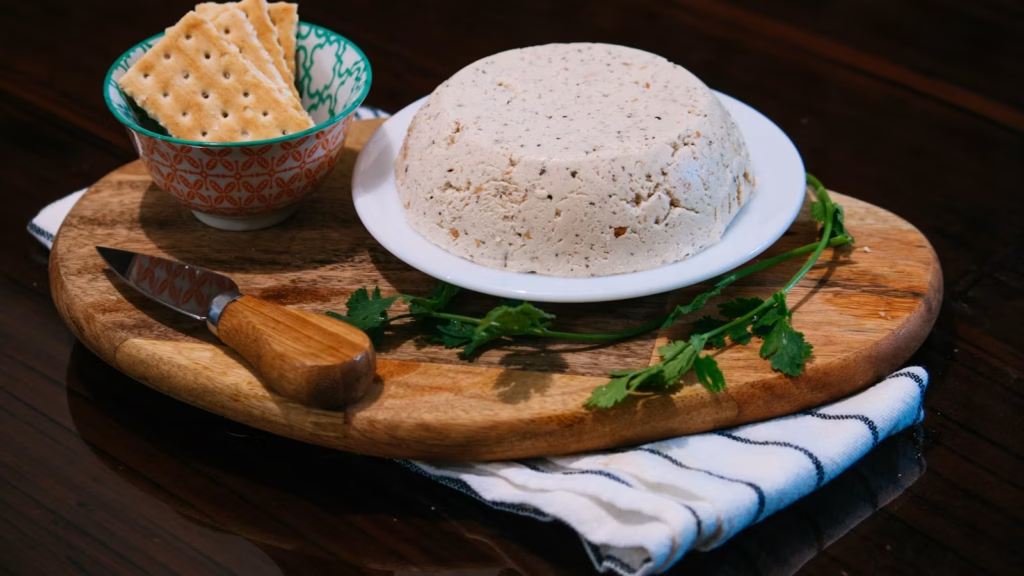
Pate is a broad family of seasoned meat, poultry, game, fish, or vegetable mixtures that are ground or puréed, cooked, chilled, and served in slices or as a spread. The word is usually written “pâté,” but the unaccented English spelling is common. Texture can range from the coarse, mosaic-like cut of a country terrine to an almost whipped chicken-liver mousse. Understanding the label tells you far more than assuming every pate is a smooth liver spread.
Pate is not one recipe but a spectrum: rustic or refined, sliceable or spreadable, simple or elaborately layered.
What pate is—and what it is not
The Académie Française defines pâté as a seasoned mince of meat or fish, molded and cooked in a terrine, then served cold. Historically, pâté could also mean a filling enclosed in pastry. That crusted form survives as pâté en croûte. In everyday English, however, the term covers both sliceable meat preparations and smooth spreads, especially those made from liver.
Pate is not automatically foie gras. Foie gras refers specifically to the enlarged liver of a duck or goose and can be served whole, made into a terrine, or incorporated into other preparations. This guide to foie gras explains the labeling and texture differences. Many affordable pates use pork, chicken liver, or a mixture of meat and fat instead.
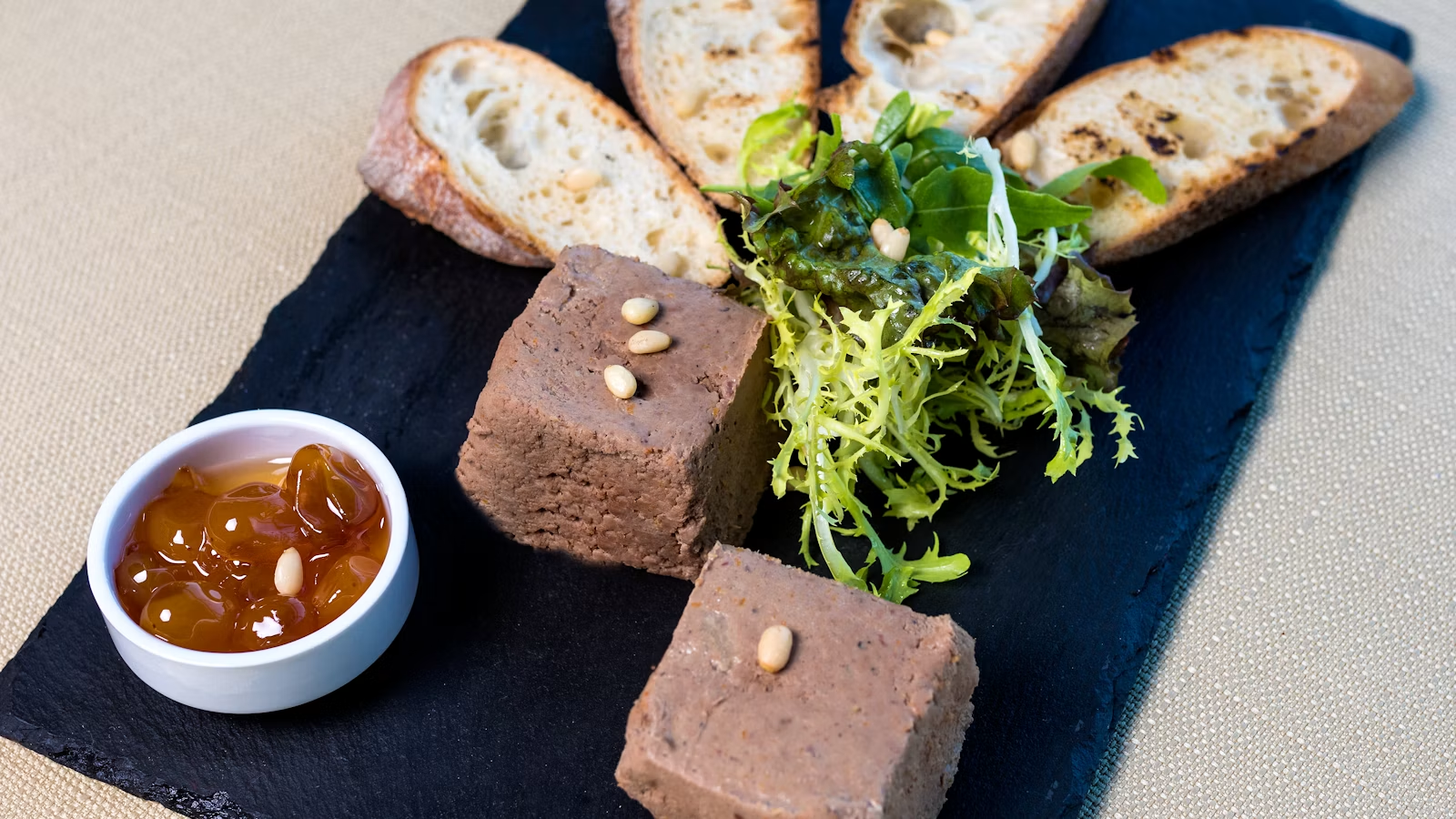
Pate, terrine, mousse, and rillettes
A terrine is both the deep mold and, by extension, the food cooked in it. A country terrine or pâté de campagne is usually coarse, sliceable, and built from pork, liver, herbs, spices, and sometimes visible pieces of lean meat. Mousse is finer and lighter, often enriched with butter or cream and passed through a sieve. Rillettes are different again: meat is slowly cooked in fat, shredded, and packed rather than ground into a forcemeat.
Labels are not perfectly consistent outside France, so use the package and appearance. “Country,” “campagne,” or “terrine” suggests a firm slice. “Mousse” or “parfait” suggests a smooth spread. “Liver pate” may fall anywhere between. If chicken is the base, this guide to chicken liver covers its flavor, nutrition, and careful cooking.
What pate tastes like
Flavor depends on both the protein and the grind. Pork country pate is savory, peppery, and meaty, with a firm bite. Chicken-liver mousse is mineral-rich yet mellowed by butter, shallot, and often brandy. Duck versions are deeper and sweeter; fish pate can be bright and smoky. Good pate should taste seasoned rather than simply salty, with enough fat to carry aromatics without leaving a greasy coating.
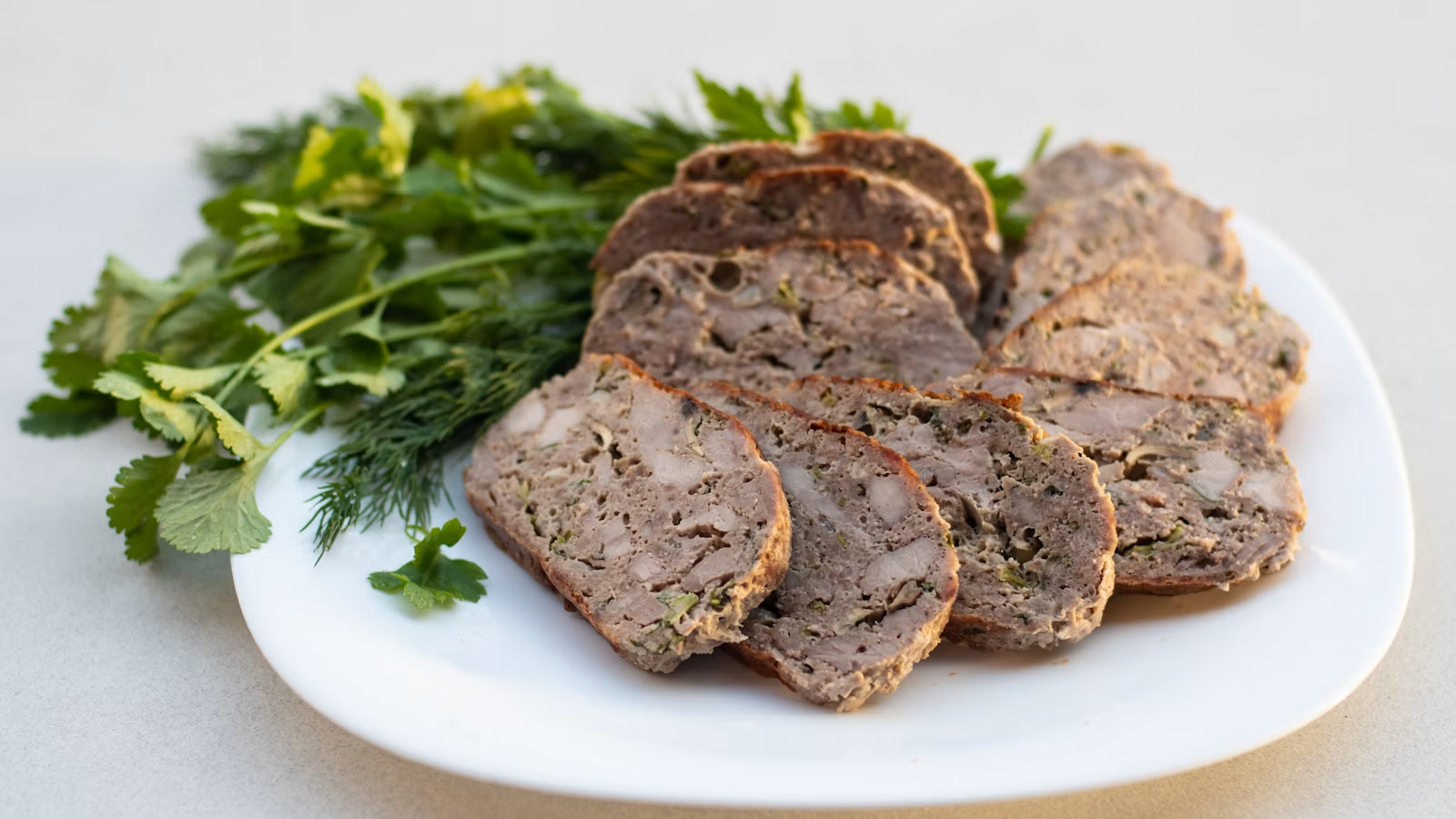
How to serve pate well
Take refrigerated pate out about 15 minutes before serving so its aroma and texture open slightly, but do not leave it at room temperature for an extended period. Slice firm terrines with a thin knife dipped in hot water and wiped dry. Spread mousse with a small knife. Toast, baguette, or plain crackers provide crunch; cornichons, mustard, pickled onions, and tart fruit cut through richness.
For a board, serve modest portions—roughly 1½ to 2 ounces per person when other foods are present. Keep strong blue cheese or heavily smoked meats a little distance away so they do not overwhelm a delicate mousse. Return unused pate to the refrigerator promptly, covered tightly and using a clean utensil.
Storage and the Listeria caution
Refrigerated ready-to-eat pate requires extra attention because Listeria monocytogenes can grow at refrigerator temperatures. Follow the package date, keep the refrigerator at 40°F (4°C) or below, and discard pate that was left out for more than two hours. Do not rely on smell alone to judge safety. Homemade pate should be cooled quickly, stored covered, and used within the recipe’s tested window.
The CDC advises people who are pregnant, age 65 or older, or immunocompromised to avoid refrigerated pate and meat spreads; shelf-stable versions are the safer alternative until opened. Once a shelf-stable package is opened, it becomes perishable and must be refrigerated according to its label. If you are serving guests, keeping the original packaging nearby makes ingredients, allergens, storage directions, and use-by dates easy to check.
Whole Foods Market demonstrates chef Sonya Cote’s mushroom pâté, showing the vegetable-based side of this broad family. This version contains goat cheese and pecans, so it is vegetarian rather than vegan and needs the same attention to allergens and refrigeration as other perishable spreads.
Sources
- Académie Française: Definition of pâté
- Office québécois de la langue française: Pâté de campagne
- CDC: Preventing Listeria infection
- USDA FSIS: Listeria questions and answers

Hi, I’m Laura, the voice behind Tastiva. I’ve always believed that eating well should feel enjoyable, comforting, and realistic—not like another complicated rule to follow. I love creating recipes that fit into everyday life, sharing simple nutrition ideas, and finding small ways to make meals feel a little better without losing the pleasure of good food.