
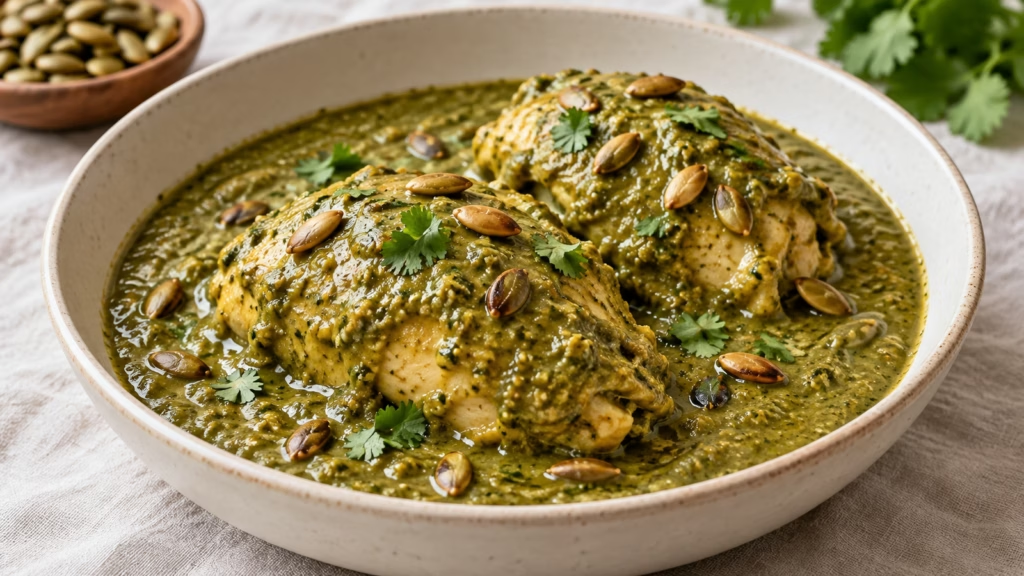
A pan of pumpkin seeds can go from quiet to popping surprisingly quickly. For pipián verde, that is the moment to pay attention: a light toast builds the sauce’s nutty character, while dark, scorched seeds can take over the entire pot. This chicken version blends hulled pepitas with tomatillos, serrano and cilantro, then loosens the sauce with the chicken’s own cooking broth.
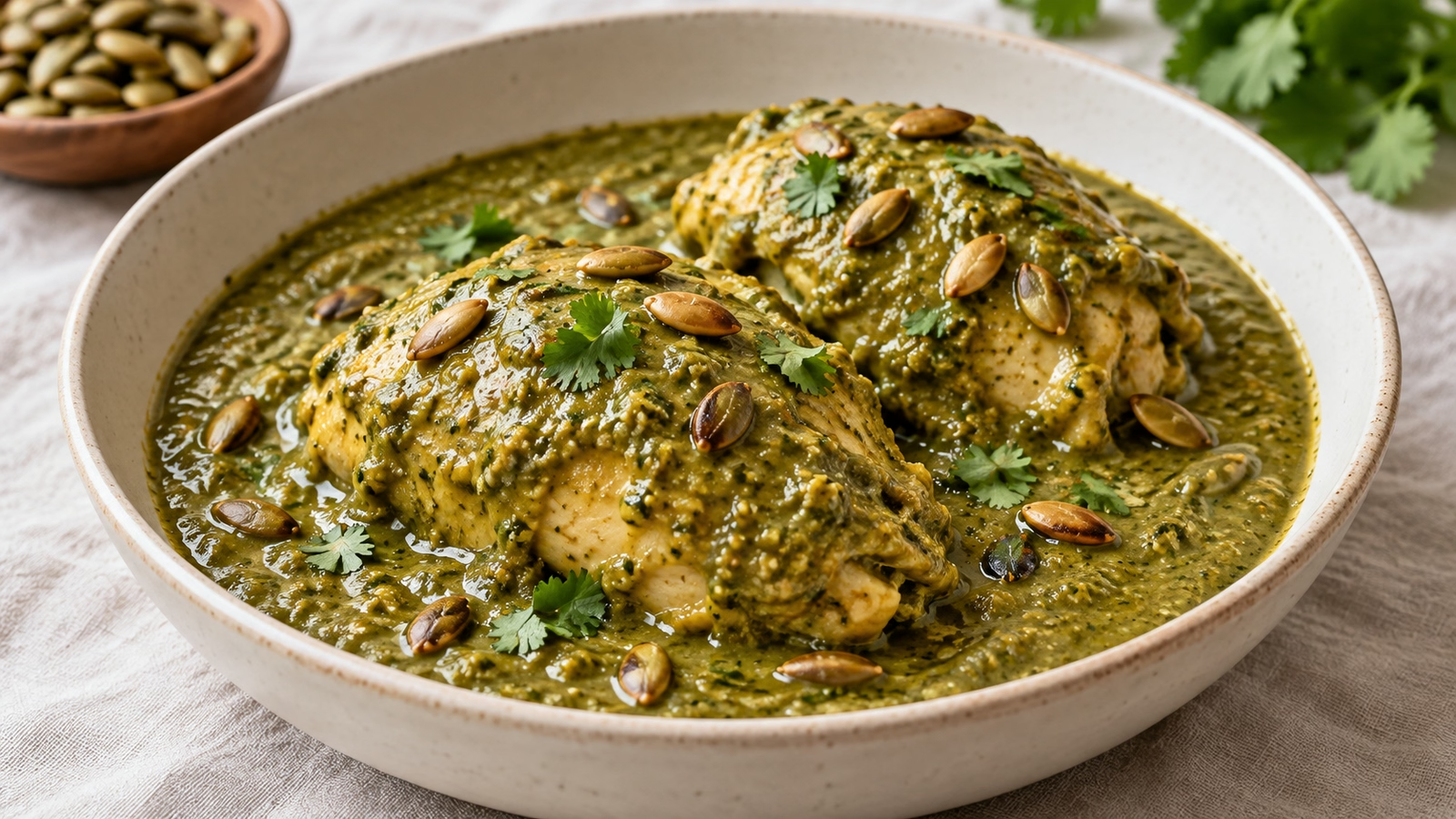
Toast the pepitas lightly, blend them finely, and keep enough broth nearby for a sauce that coats without clumping.
The seeds are the center of pipián verde
Pipián is a seed-based Mexican sauce with many versions, and the green one here gets its color from tomatillos, cilantro and green chile. The pepitas provide body as well as flavor. Rick Bayless’s green pumpkin seed sauce is a useful reference for that combination, though this recipe uses its own measured formula and boneless chicken thighs.
I would put more care into buying the right seeds than into finding a decorative serving bowl. You need the flat green kernels sold as pepitas, not the pale shell-on seeds scooped straight from a carving pumpkin. Tastiva’s guide to raw pumpkin seeds and their shells explains that shopping distinction.
- Choose plain seeds: raw, hulled and unsalted pepitas let you control the toast and seasoning. Salted snack mixes are not an interchangeable ingredient.
- Keep the chicken simple: skinless, boneless thighs cook in water with onion, garlic and salt. Check the package for added solution, which can change the sodium.
- Use actual tomatillos: peel away the papery husks and rinse off the sticky coating. Green unripe tomatoes bring a different flavor and are not the same ingredient.
Watch the skillet, then give the blender time
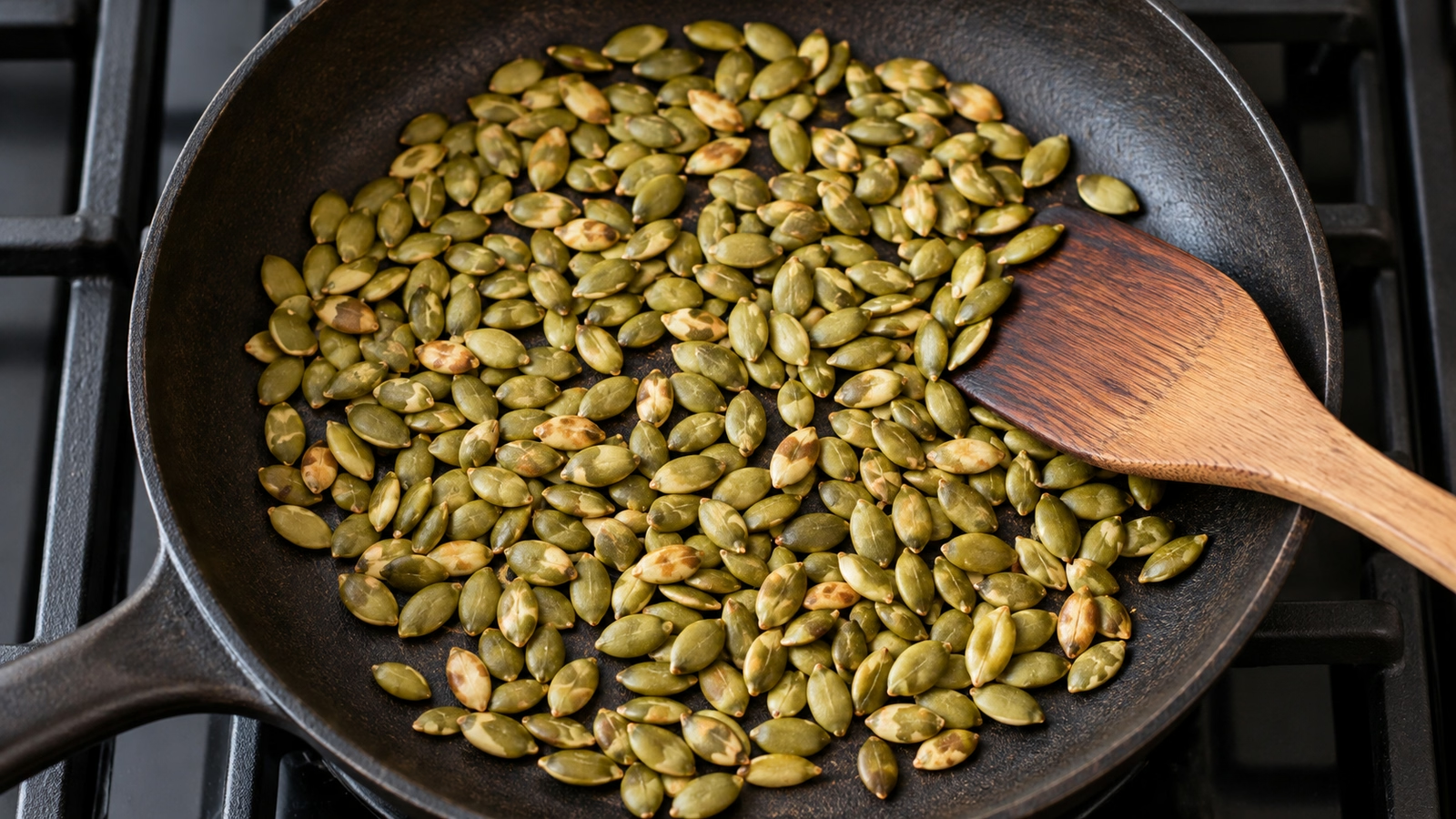
Toast the seeds over medium-low heat, moving them so the ones against the pan do not race ahead. Some may puff and pop; look for a little gold and a fresh nutty smell rather than deep brown patches. Tip them onto a plate when they are ready, because a hot pan keeps cooking after the burner is off.
- Reserve a small garnish: set aside 10 grams of the toasted seeds before blending. You will have a little crunch without needing a second batch.
- Soften the tomatillos: simmer until they change color and yield, then drain. They should be tender enough to blend without a long, aggressive boil.
- Start with enough liquid: broth helps the blender circulate the seeds. Stop and scrape down as needed; a dry mound riding above the blades will not become smooth.
- Keep hot liquids safe: cool ingredients if your equipment does not permit hot blending. Follow its capacity and venting instructions.
- Expect a fine texture: the sauce can retain a slight seed texture. Large hard bits mean it needs more blending, not more time scorching in the pot.
How to keep the sauce loose and green
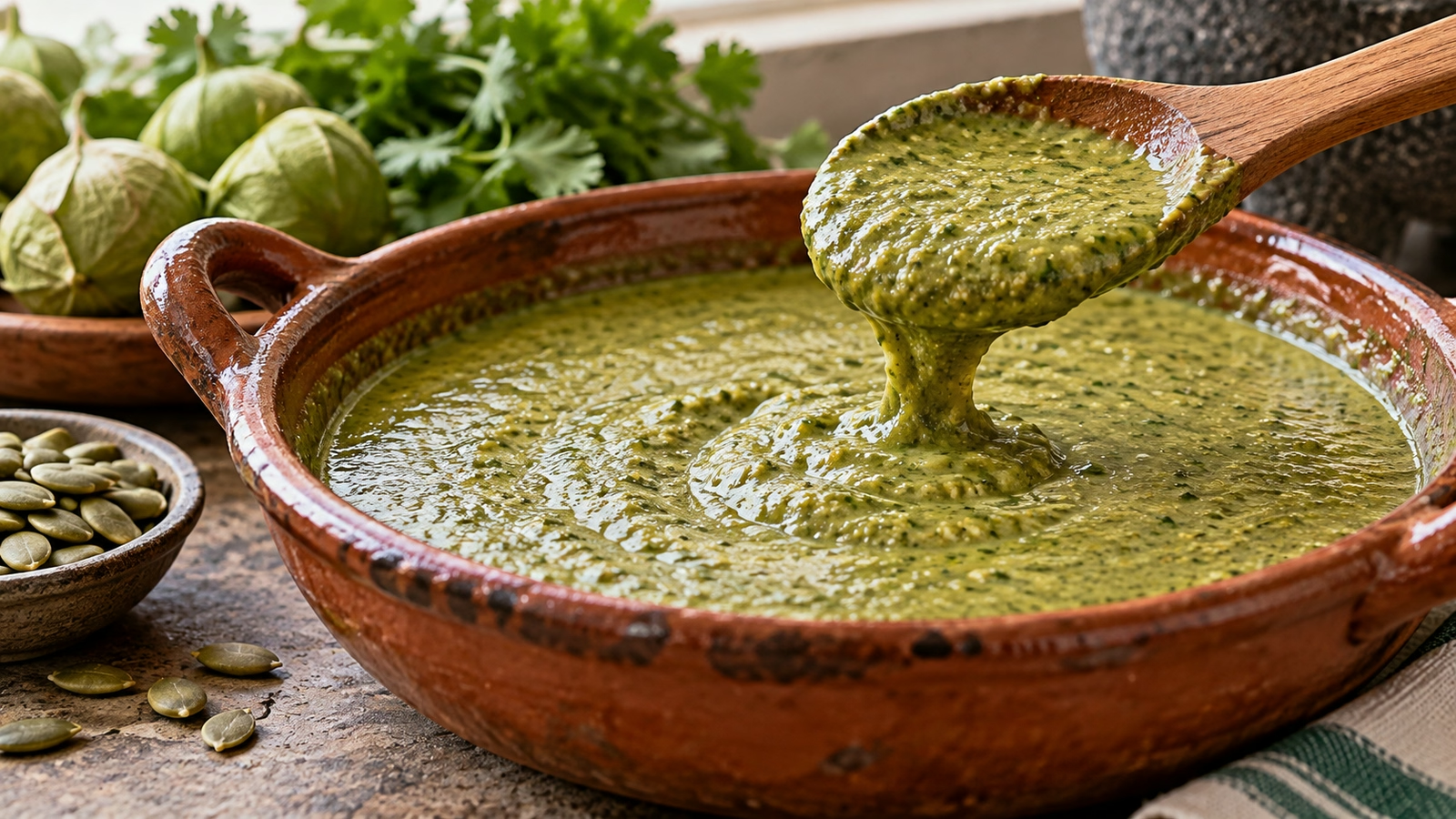
Once the sauce reaches the pan, lower the drama. Stir along the bottom and keep it at a gentle simmer; the seed mixture thickens as it heats and rests. I prefer a sauce that slips from a spoon in a broad ribbon, rather than one that sits in a stiff mound on the chicken.
The color may settle from bright green to a softer olive as it cooks. That is not a reason to add more cilantro indefinitely or chase an unnaturally vivid finish. The more useful checks are the thickness, seasoning and chicken temperature.
- If it thickens too far: stir in reserved broth or water a little at a time, then check again after it is evenly incorporated.
- If it looks thin: simmer gently while stirring before adding anything else. Do not reach for flour; the pepitas already provide the thickening.
- If heat is a concern: start with less serrano. Chile heat varies, and removing seeds alone cannot guarantee a mild sauce.
- Before serving: return the cooked chicken and heat it thoroughly to 165°F. Measure in the thickest part rather than judging by the sauce’s bubbling.
- Season at the end: adjust with the remaining salt only after the sauce reaches the texture you intend to serve.
What to serve alongside and what to save
Plain rice or warm corn tortillas give the sauce somewhere useful to go. I would keep the side dishes simply seasoned so the pepitas and tart tomatillos stay easy to notice. Spoon sauce over each portion, then add the reserved seeds and cilantro leaves.
The sauce will probably be thicker after refrigeration. Treat that as a cue to add liquid during reheating, not as a sign that the recipe needs extra oil. Rice and tortillas are separate from the card’s nutrition calculation.
- Portion promptly: transfer leftovers into shallow containers and refrigerate within two hours, or one hour above 90°F.
- Keep cold: store at 40°F or below for three to four days. Do not leave the covered pot on the counter overnight.
- Reheat with care: add a splash of water, stir to distribute heat and bring every portion to 165°F.
- Know the estimate: nutrition includes the measured seeds, chicken and sauce ingredients, with no assumed bowl of rice. Toasting does not remove the seeds’ fat; they contribute both flavor and richness.
Pipián Verde Recipe

Ingredients
- 900 g boneless skinless chicken thighs about 2 lb, raw, without added solution
- 1000 ml water about 4 1/4 cups, plus more for tomatillos and adjusting the sauce
- 100 g white onion about 1/2 medium onion, divided
- 12 g garlic about 4 peeled cloves, divided
- 6 g fine salt about 1 tsp, divided
- 180 g raw hulled pumpkin seeds about 6 1/3 oz, unsalted; reserve 10 g after toasting
- 500 g tomatillos about 1.1 lb, husked and rinsed
- 20 g serrano chile stem removed; reduce for less heat
- 40 g fresh cilantro washed leaves and tender stems; reserve a few leaves
- 10 g canola oil about 2 tsp
Equipment
- 1 Large saucepan
- 1 Heavy skillet
- 1 Wide heavy pot
- 1 Blender
- 1 Kitchen scale
- 1 Instant-read thermometer
Instructions
- Place chicken, 1 liter water, half the onion, half the garlic and 4 g salt in a saucepan. Bring to a gentle simmer and cook 20–25 minutes, until the thickest part of each piece reaches 165°F. Move the chicken to a clean dish and retain the broth, onion and garlic.
- Meanwhile, toast the pepitas in a dry skillet over medium-low heat for 4–6 minutes, stirring, until some puff and turn lightly golden. Transfer to a plate immediately. Reserve 10 g for the garnish.
- In another saucepan, simmer the tomatillos in water to cover for 6–8 minutes, until softened and changed in color. Drain. Cool ingredients before blending if your blender does not permit hot liquids.
- Blend the remaining toasted pepitas, tomatillos, serrano, cilantro except the reserved leaves, remaining raw onion and garlic, cooked onion and garlic from the broth, and 400 ml of the broth. Process until finely ground, stopping to scrape down as needed.
- Heat the oil in a wide pot over medium-low heat. Add the sauce carefully and cook 8 minutes, stirring along the bottom. Add 300 ml more broth and simmer gently 12–15 minutes. Add remaining broth or water as needed until the sauce coats a spoon but still flows.
- Return the chicken to the sauce and heat about 5 minutes, or until the chicken and sauce are 165°F throughout. Add up to the remaining 2 g salt as needed. Serve six portions with the reserved pepitas and cilantro.
Nutrition
Notes
Tried this recipe?
Let us know how it turned out!Sources
- Rick Bayless: chicken in green pumpkin seed sauce
- FoodSafety.gov: safe poultry temperatures
- USDA: safe leftover storage
- USDA FoodData Central: ingredient composition
Hi, I’m Laura, the voice behind Tastiva. I’ve always believed that eating well should feel enjoyable, comforting, and realistic—not like another complicated rule to follow. I love creating recipes that fit into everyday life, sharing simple nutrition ideas, and finding small ways to make meals feel a little better without losing the pleasure of good food.