
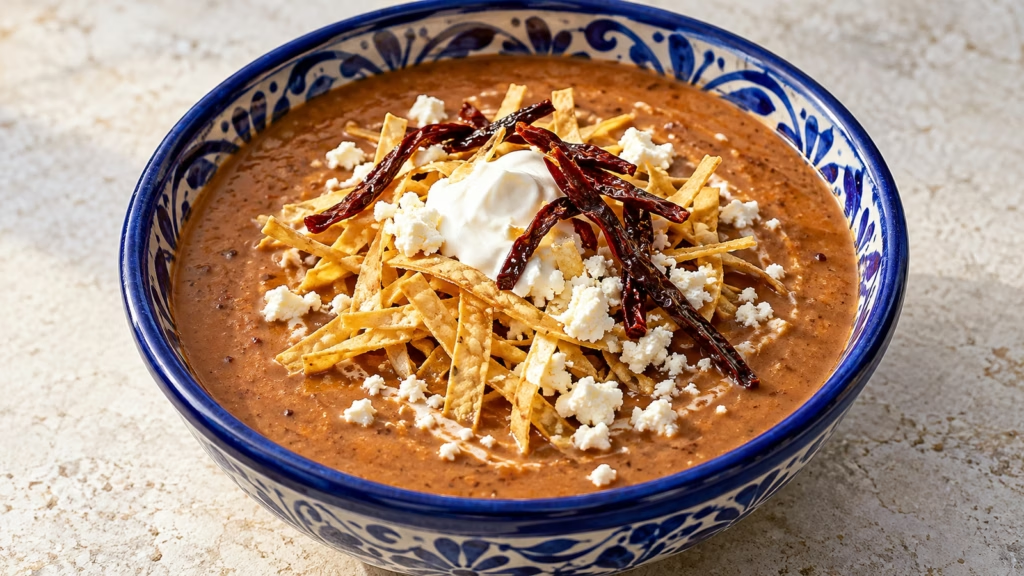
The best part of a bowl of sopa tarasca can disappear before the first spoonful if the tortilla strips go in too early. This pinto bean soup pairs a smooth, gently spicy base with a crisp finish: tortilla and ancho strips, crumbled queso fresco and a little sour cream. Make the soup first, keep the toppings apart, and assemble each bowl when you are ready to eat.
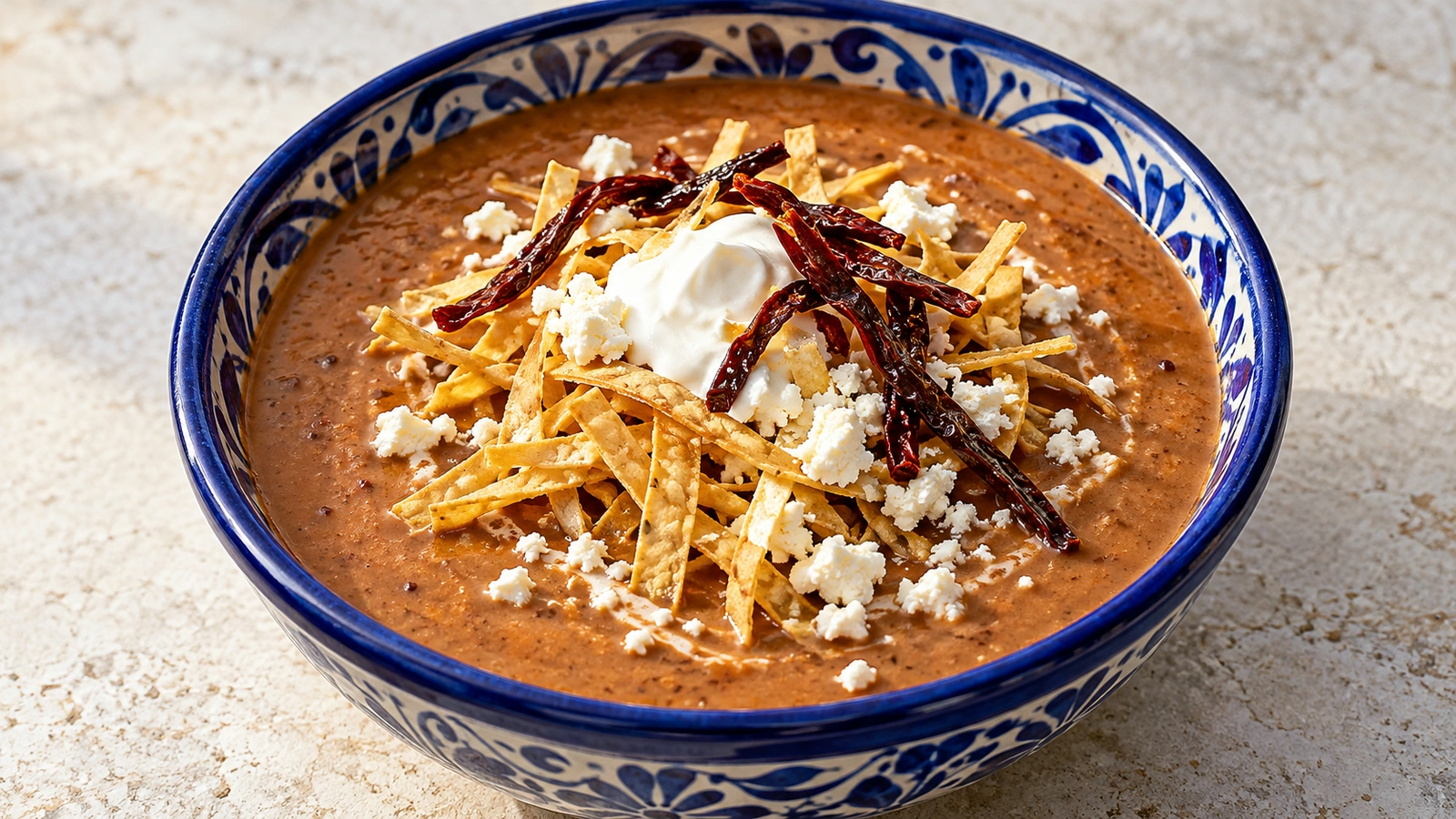
Blend the beans until smooth, but save the tortilla strips for the moment the soup reaches the table.
What this sopa tarasca brings to the bowl
Sopa tarasca is associated with Michoacán, where the state tourism office describes a bean-and-roasted-tomato soup finished with chile, cream, cheese and golden tortilla pieces. Recipes vary. This one uses cooked pinto beans for a substantial, smooth base and ancho chile for a warm, earthy flavor.
I like the contrast more than a mountain of toppings. You should still see and taste the soup beneath them. A measured spoonful of cream and some salty cheese can finish the bowl without turning every mouthful into the same texture.
- Cooked beans are the starting point: the 600 grams in the card is drained cooked weight, not a quantity of dried beans to pour into the blender.
- Pinto beans set the character: other beans will change the color and flavor. They may make a useful soup, but expect a different result.
- Ancho appears twice: one portion blends into the base, while a smaller amount is cut into strips for the topping. Keep those amounts separate.
- Dairy is part of the finish: this formula contains queso fresco and sour cream. Use pasteurized products and keep them refrigerated until serving.
Build a smooth base without making bean paste
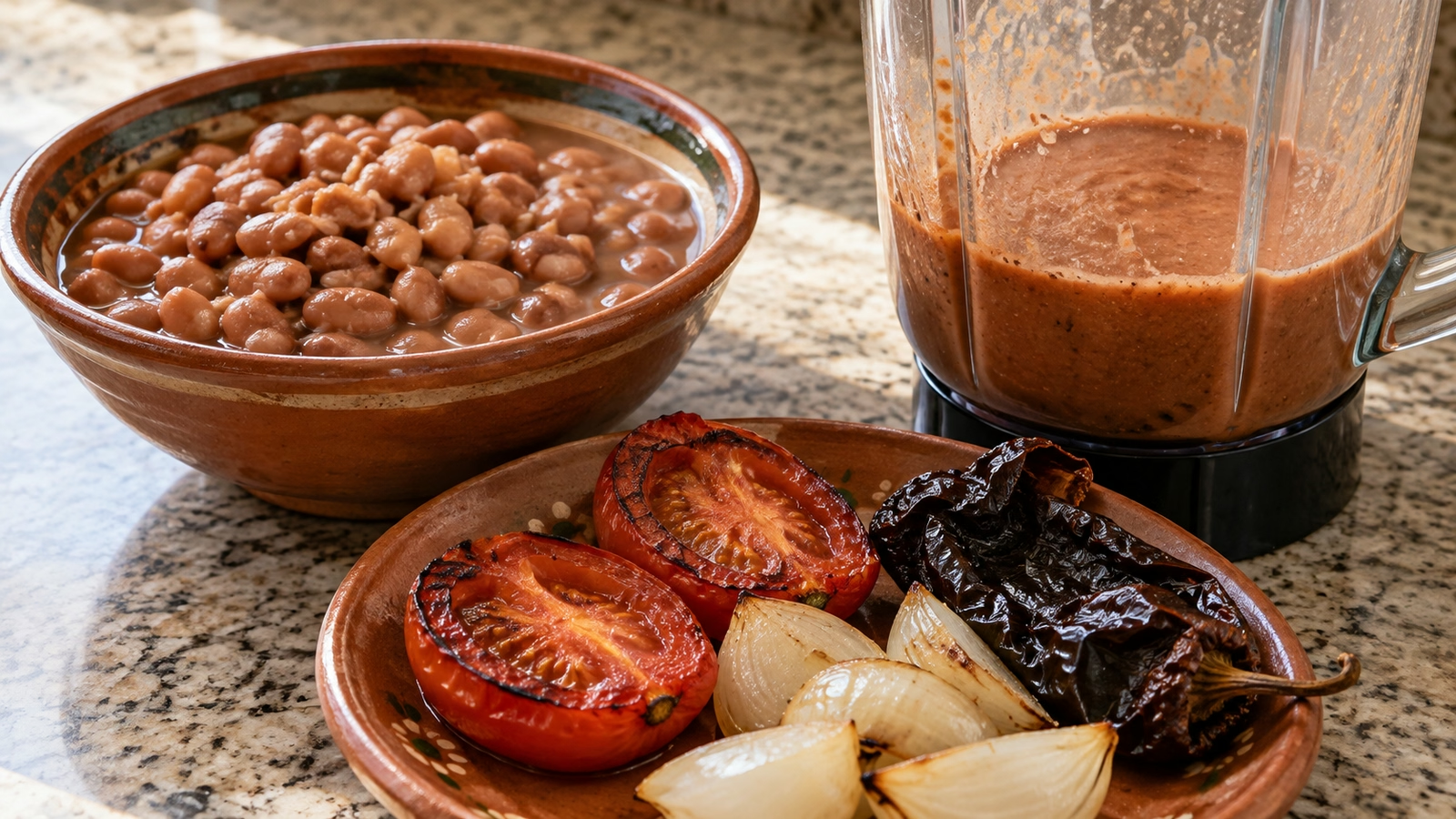
The beans provide plenty of body, so begin with the recipe’s water rather than trying to stretch a thick purée in the pot afterward. If you use canned beans, drain and rinse before weighing. Our guide to when rinsing canned beans helps explains why that choice depends on the dish.
- Roast the vegetables: softened tomatoes and browned onion add depth to the base. Add the garlic near the end so it does not blacken while the larger vegetables catch up.
- Soften the ancho: a brief toast and hot-water soak make it easier to blend. Discard stems and seeds before weighing the amount you need.
- Blend in batches if necessary: allow ingredients to cool if your blender is not designed for hot liquids. A small, freely moving batch is better than a packed jar.
- Cook the purée: stir it in the measured oil before adding the remaining water. Scrape the bottom as it simmers, because bean purée can settle and catch.
- Check the spoon: the finished soup should pour easily. Add hot water if it begins to resemble refried beans, then taste again before salting.
Keep the tortilla and chile strips crisp
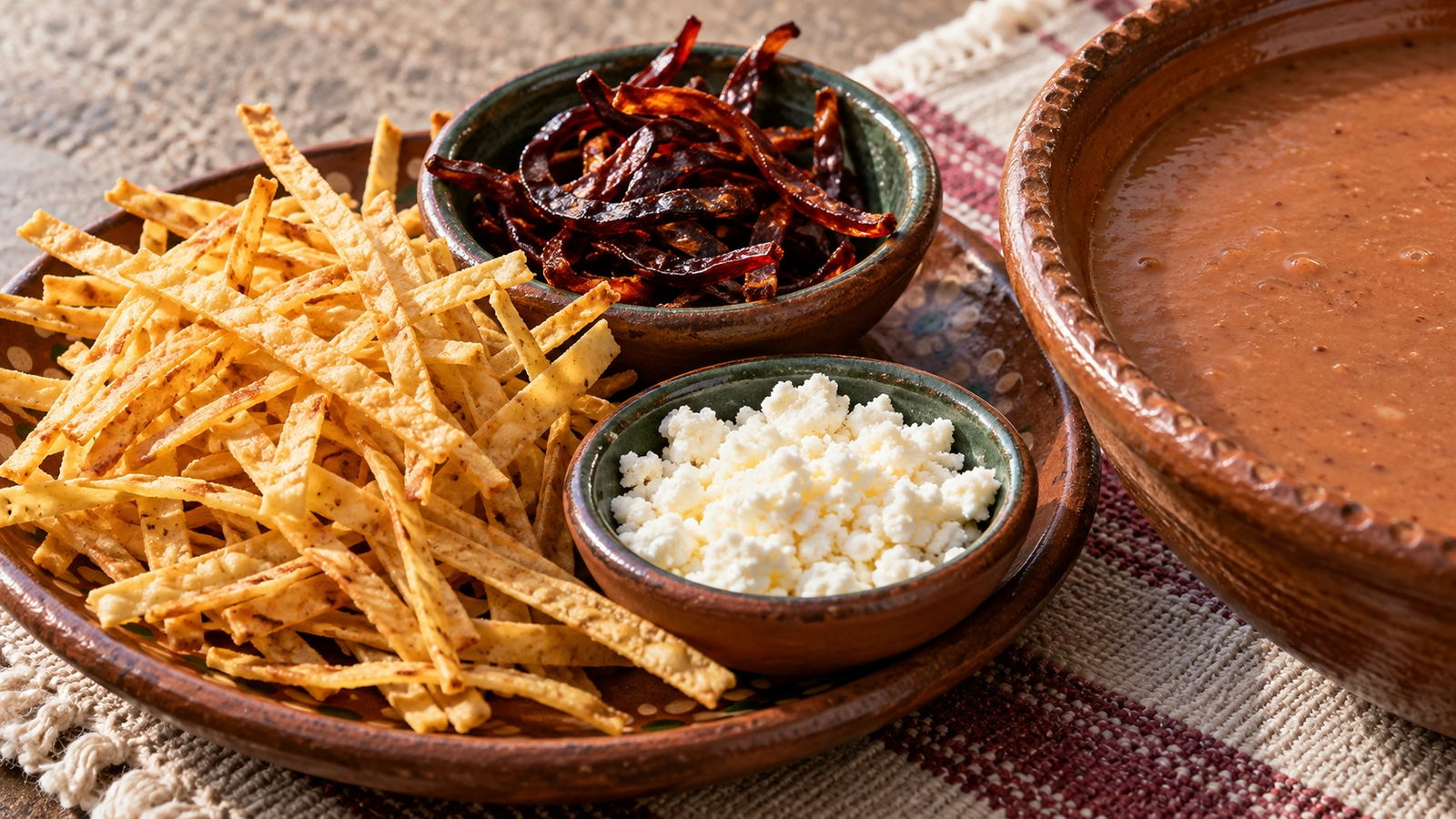
Thin, even tortilla strips are easier to crisp in the modest amount of oil here. Work in batches rather than piling everything into the skillet; crowded strips tend to steam together. Let the cooked strips cool uncovered on a rack or paper towel.
I would give the chile strips their own very short turn at the end. They can darken much faster than the tortillas, and burned chile is a poor reward for all that careful soup-making. If a strip turns black and smells acrid, leave it out.
- Use corn tortillas: their flavor belongs with the bean-and-chile base. Cut them into narrow strips rather than chunky squares that dominate the spoon.
- Divide the oil: the topping allowance is for all the tortilla batches and the chile, not a fresh pour for every batch.
- Keep containers separate: putting warm strips under a lid traps moisture. Store them dry, away from the soup.
- Build bowls individually: divide the soup, then add the cheese, sour cream, tortilla strips and chile. Offer any extra separately.
- Adjust salt with the finish in mind: queso fresco varies by brand. Taste a spoonful with a little cheese before deciding the soup needs more salt.
A practical make-ahead soup
The blended base is the part I would prepare ahead. Keep the toppings separate and add water as you reheat, since beans thicken as they stand. That gives you a smooth soup again without sacrificing the crisp elements to an overnight soak.
This recipe makes six bowls. If serving it as a smaller first course, the yield and nutrition per bowl will change; the card estimate assumes one-sixth of everything, including the cheese, cream and measured oil.
- Refrigerate promptly: divide soup into shallow containers within two hours, or one hour if the room or outdoor temperature exceeds 90°F.
- Use within three to four days: maintain refrigerator temperature at 40°F or below. Keep dairy toppings cold in their own containers.
- Reheat to 165°F: stir well so the middle heats as thoroughly as the edges, then check with a thermometer.
- Finish fresh: put the warm soup in bowls first. Crisp toppings belong on top just before eating, not in the storage container.
Sopa Tarasca Recipe

Ingredients
- 600 g cooked pinto beans about 3 1/2 cups, drained, unsalted; not dry weight
- 400 g ripe red tomatoes about 14 oz
- 100 g white onion about 1/2 medium onion, in wedges
- 10 g garlic about 3 peeled cloves
- 12 g dried ancho chile weighed without stems and seeds, for blending
- 1000 ml water about 4 1/4 cups, plus more if needed
- 10 g canola oil about 2 tsp, for soup
- 5 g fine salt about 3/4 tsp, divided
- 3 g fresh epazote 1 small washed sprig
- 120 g corn tortillas about 5 small tortillas, without added salt, cut into thin strips
- 8 g dried ancho chile stemmed, seeded and cut into thin strips
- 20 g canola oil about 1 1/2 tbsp total for all tortilla and chile strips
- 90 g queso fresco about 3 oz, crumbled; pasteurized
- 90 g plain sour cream about 6 tbsp; pasteurized
Equipment
- 1 Heavy skillet or griddle
- 1 Large saucepan
- 1 Blender
- 1 Kitchen scale
- 1 Instant-read thermometer
Instructions
- Roast tomatoes and onion on a griddle or heavy skillet for 12–15 minutes, turning until softened and browned in spots. Add garlic in the last few minutes and retain the tomato juices.
- Briefly toast the 12 g ancho for the base without letting it smoke. Soak in hot water 15 minutes and drain. Blend with beans, roasted vegetables and juices, and 500 ml water until smooth. Cool ingredients first if your blender is not designed for hot liquids.
- Heat 10 g oil in the saucepan. Add the purée and cook 5 minutes, stirring. Add the remaining 500 ml water, epazote and 3 g salt. Simmer gently 12–15 minutes, stirring along the bottom. Add hot water if it becomes too thick to pour.
- While the soup simmers, heat part of the 20 g topping oil in a skillet. Crisp the tortilla strips in small batches, turning and dividing the oil among batches; reserve a little for the chile. Transfer to paper towels or a rack and cool uncovered.
- Fry the 8 g ancho strips in the reserved oil for only a few seconds, just until fragrant. Remove before they darken too much. Do not use blackened or scorched strips.
- Remove a tough epazote stem. Taste the soup and add up to the remaining 2 g salt, considering the saltiness of the cheese. Adjust with water until it pours easily. Divide among six bowls.
- Top each bowl with 15 g queso fresco and 15 g sour cream. Distribute the tortilla and chile strips just before eating. Store any remaining soup and toppings separately.
Nutrition
Notes
Tried this recipe?
Let us know how it turned out!Sources
- Michoacán tourism office: sopa tarasca
- USDA: leftover storage
- USDA: safe reheating
- USDA FoodData Central: ingredient composition
Hi, I’m Laura, the voice behind Tastiva. I’ve always believed that eating well should feel enjoyable, comforting, and realistic—not like another complicated rule to follow. I love creating recipes that fit into everyday life, sharing simple nutrition ideas, and finding small ways to make meals feel a little better without losing the pleasure of good food.