
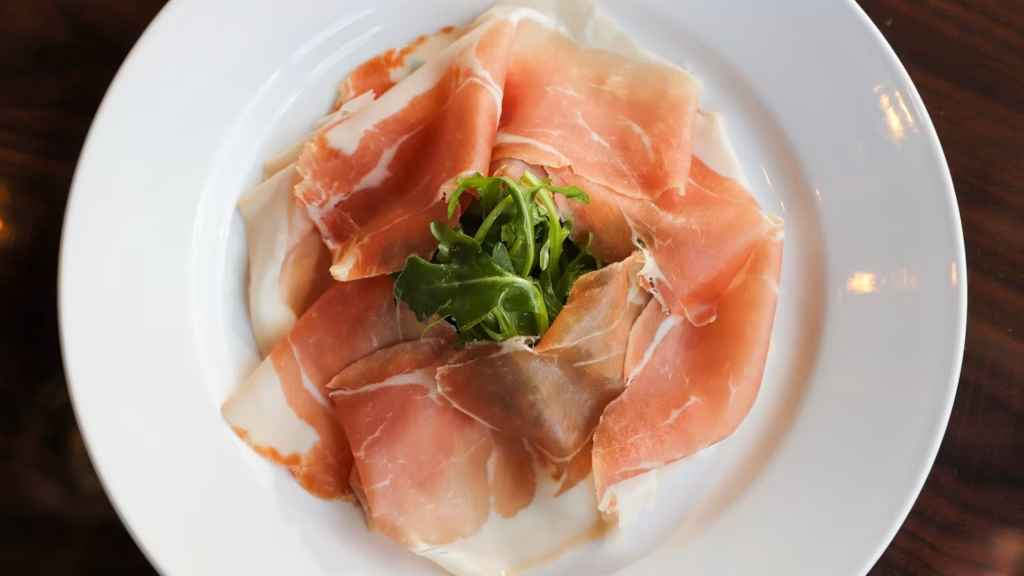
Prosciutto looks almost too simple to need an explanation: rosy, paper-thin slices of ham, often folded beside cheese or draped over melon. Then you reach the deli counter and meet a small geography lesson—crudo, cotto, Parma, San Daniele—and suddenly lunch feels like an exam. The good news is that choosing and serving it is much easier once you know what those names actually promise.
The best prosciutto needs very little help. Let it lose the refrigerator chill, give the slices room to fold and flutter, and resist the urge to bury them under a busy dressing.
What prosciutto is—and what it is not
Prosciutto is the Italian word for ham, but on American menus it usually means prosciutto crudo: a whole pork leg seasoned with salt, slowly dried, and served uncooked in translucent slices. “Crudo” means raw, although the long curing process transforms the meat’s texture, flavor, and moisture. It is ready to eat; you do not cook it for safety before serving.
Prosciutto cotto is different. It is cooked ham with a tender, juicy texture and gentler flavor. If a package simply says prosciutto, check the smaller print. Crudo will be dry-cured, while cotto will be cooked. Both are Italian ham, but they behave differently on a plate.
You may also see names tied to place. Prosciutto di Parma is protected by the European Union’s PDO system, so the name identifies a product made in a defined area under a detailed specification. Other excellent dry-cured hams exist, including Prosciutto di San Daniele. “Prosciutto” alone describes the style; the protected regional name tells you more about origin and production.
How dry-curing creates flavor and texture
Traditional prosciutto begins with a fresh hind leg. Salt draws out moisture and helps preserve the meat, then time and controlled air do the patient work. The leg gradually loses weight as it dries. Enzymes also break down proteins and fats, creating the savory, nutty, faintly sweet flavors that a quick-cooked ham cannot copy.
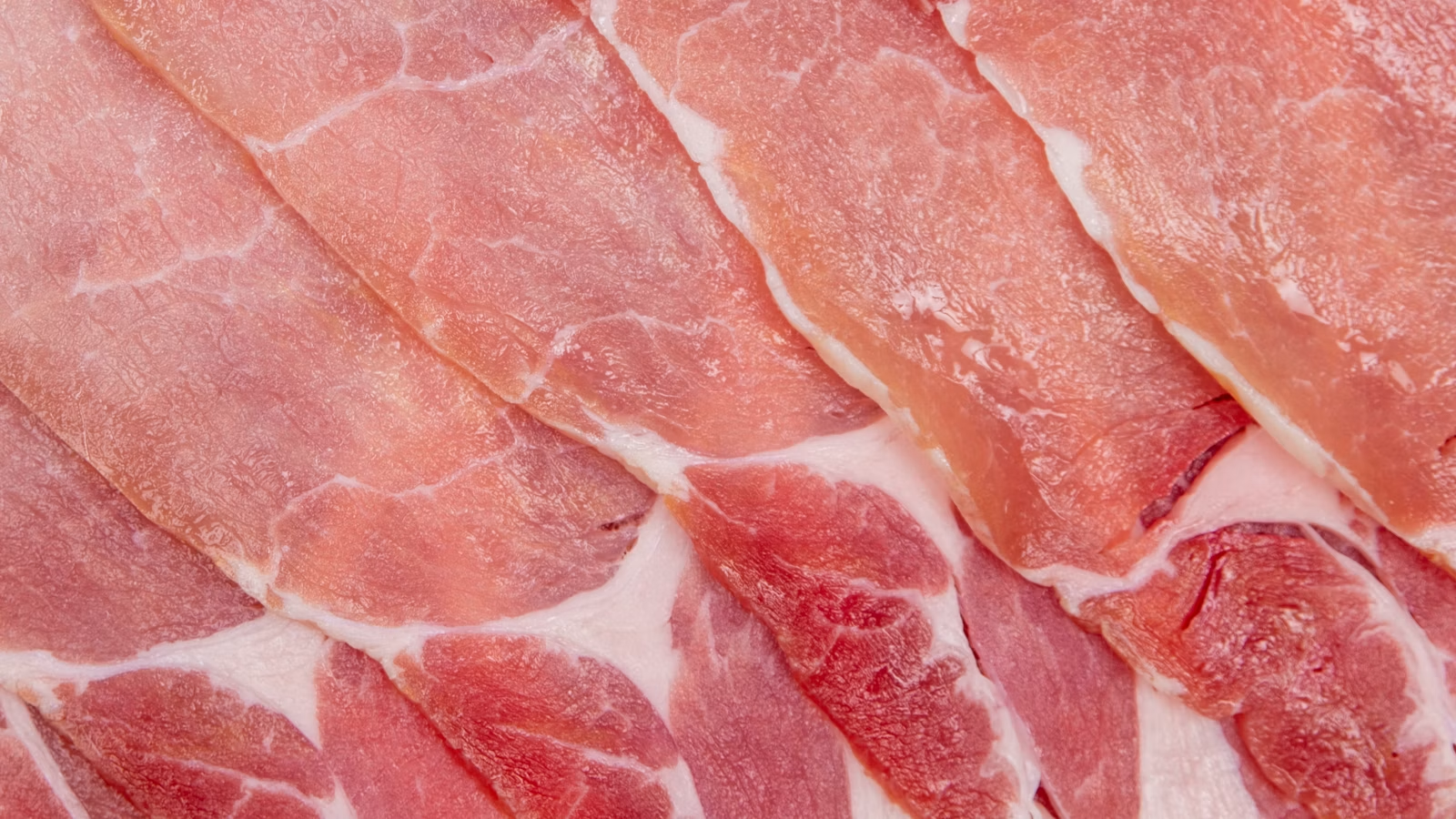
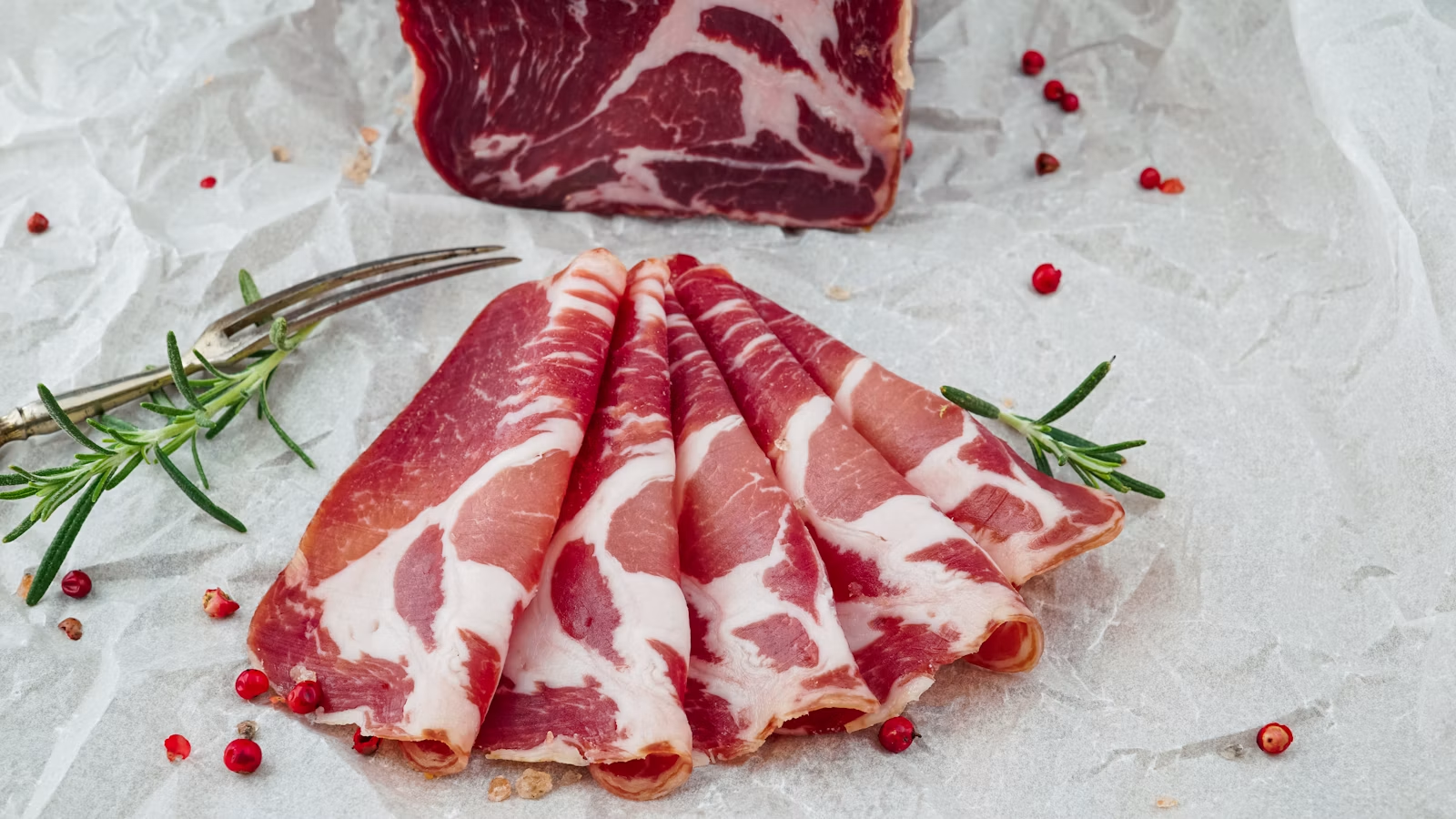
That slow transformation explains the texture. A well-cut slice should be thin enough to almost see through, supple rather than leathery, with ribbons of soft white fat. The fat is not an inconvenient border to trim away; it carries aroma and gives the lean meat its melting feel. If prosciutto seems aggressively salty or tough, it may be too cold, too thickly sliced, or past its best.
The curing time and maker’s methods affect intensity, but age is not the only quality signal. Balance matters more than bragging rights. I look for a clean pork aroma, gentle sweetness, and salt that wakes up the palate without flattening everything else.
How to buy, taste, and serve prosciutto
At a staffed counter, ask for a sample and request very thin slices. Prepacked prosciutto can be excellent too; choose a package with neatly separated slices, an even rosy color, and creamy white fat. Avoid packs with excessive liquid or gray, dried edges. A short ingredient list is normal for traditionally cured ham.
Before serving, take only what you need from the refrigerator and let it stand for about 10 to 15 minutes. Cooler room temperature softens the fat and releases more aroma. Separate the slices gently with clean fingers, then fold them loosely rather than laying them flat in a tight stack.
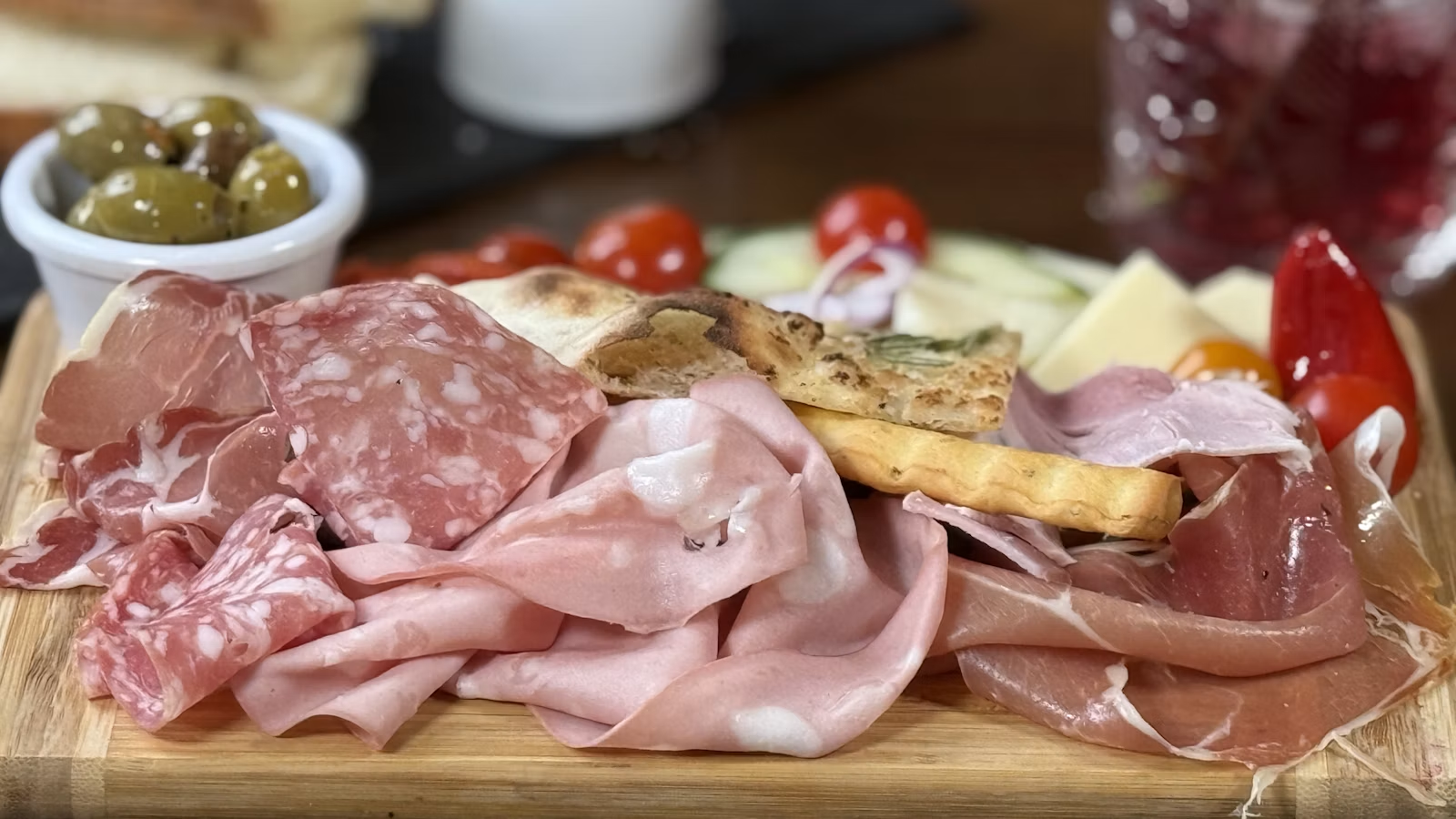
Sweet, juicy foods are classic partners because they soften prosciutto’s saltiness. Try melon, ripe pear, figs, peaches, or roasted grapes. For contrast, add peppery arugula, pickled vegetables, or a squeeze of lemon. Mild mozzarella and creamy burrata let the ham lead; aged Parmesan creates a more savory bite. On a board, combine it with our mortadella guide for two distinctly different Italian cured-meat textures.
- For cooking: use a light hand. Wrap prosciutto around asparagus before roasting, crisp torn pieces for pasta, or lay slices on pizza after baking so they stay silky. Long, hard cooking can make thin slices dry and disproportionately salty.
Storage, nutrition, and food-safety notes
Keep sliced prosciutto refrigerated and follow the package’s use-by and storage directions. Once opened, wrap it well or seal it in an airtight container so the edges do not dry out or absorb refrigerator odors. Deli-cut slices are best bought in an amount you will enjoy promptly. If the package becomes swollen, the meat develops an unpleasant sour odor, or the surface turns slimy, discard it.
Whole cured legs and factory-sealed packages may have different storage instructions, so the label wins over a general rule. The USDA also advises keeping the refrigerator at 40°F (4°C) or below. Put prosciutto back in the refrigerator rather than leaving a charcuterie board at room temperature for hours.
Nutritionally, prosciutto supplies protein, but it is also a concentrated cured meat and can contribute substantial sodium and saturated fat. Think of it as a flavorful accent rather than the entire meal: a few delicate slices alongside fruit, vegetables, whole-grain bread, or beans can feel generous without requiring a large portion. Anyone following a medically prescribed low-sodium plan should check the nutrition label and their clinician’s guidance.
- For higher-risk diners: pregnant people, older adults, very young children, and anyone with a weakened immune system should follow current medical and public-health advice about ready-to-eat deli meats. Recommendations can vary by personal risk, so individualized guidance matters more than a confident internet rule.
For a quick introduction from an Italian cooking expert, Lidia Bastianich shares this short lesson on prosciutto. Pair it with the buying, serving, and storage details above.
Sources
- USDA Food Safety and Inspection Service: Hams and Food Safety
- USDA Food Safety and Inspection Service: Refrigeration and Food Safety
- European Commission: Prosciutto di Parma PDO
- Consorzio del Prosciutto di Parma
- Prosciutto di Parma product specification

Hi, I’m Laura, the voice behind Tastiva. I’ve always believed that eating well should feel enjoyable, comforting, and realistic—not like another complicated rule to follow. I love creating recipes that fit into everyday life, sharing simple nutrition ideas, and finding small ways to make meals feel a little better without losing the pleasure of good food.