
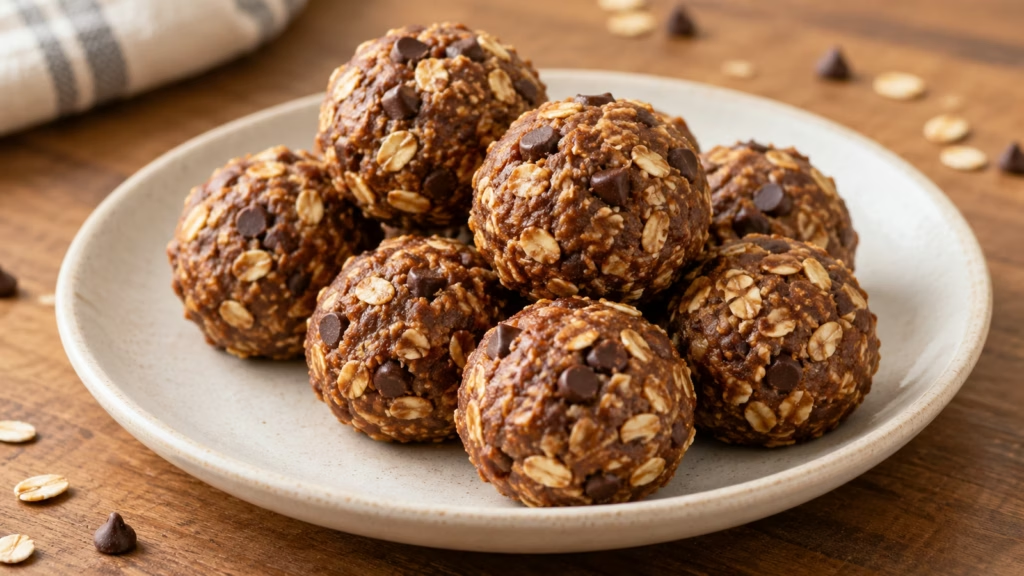
There is a slightly annoying moment with no-bake snacks: the bowl looks like cookie dough, but the first handful falls apart. This protein balls recipe starts with oats, smooth peanut butter, honey, chocolate protein powder, and a few mini chocolate chips. Check the mixture before rolling to avoid twenty crumbly little snacks.
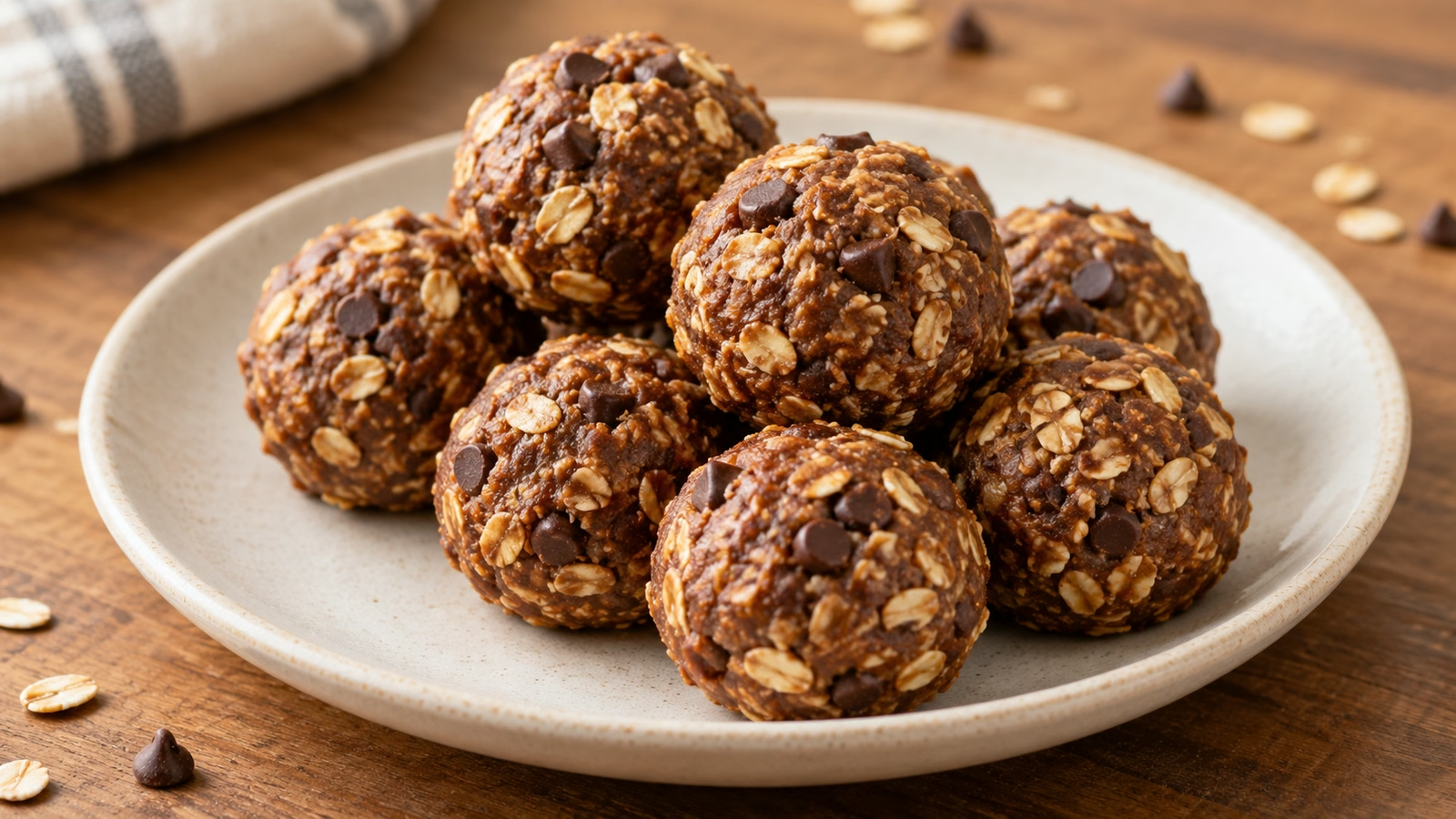
A small squeeze test is more useful than another scoop of sweetener: the mixture should hold its shape before you start rolling.
What gives these protein balls their texture
Peanut butter does two jobs here: it brings the main flavor and helps the dry ingredients bind. Oats give the balls a visible, chewy structure rather than a completely smooth center. Chocolate powder adds cocoa flavor and protein, while honey contributes sweetness and stickiness.
- Start with well-stirred peanut butter. Work the separated oil back into the entire jar before measuring. An oily top and a dry bottom produce different mixtures.
- Choose rolled oats. Old-fashioned oats keep their flakes visible. Quick oats make a finer mixture; steel-cut oats are not an equivalent swap for this no-cook preparation.
- Weigh the powder. A scoop is packaging equipment, not a universal measurement. Use the recipe’s gram amount rather than assuming every brand’s scoop holds the same quantity.
- Keep chocolate chips small. Mini chips distribute more easily through small portions. Large chunks can make a ball awkward to compress without adding much practical value.
I would put more attention into the peanut butter’s consistency than into elaborate toppings. A plain, cohesive ball beats a decorated pile of crumbs.
Fix a crumbly or sticky mixture before rolling
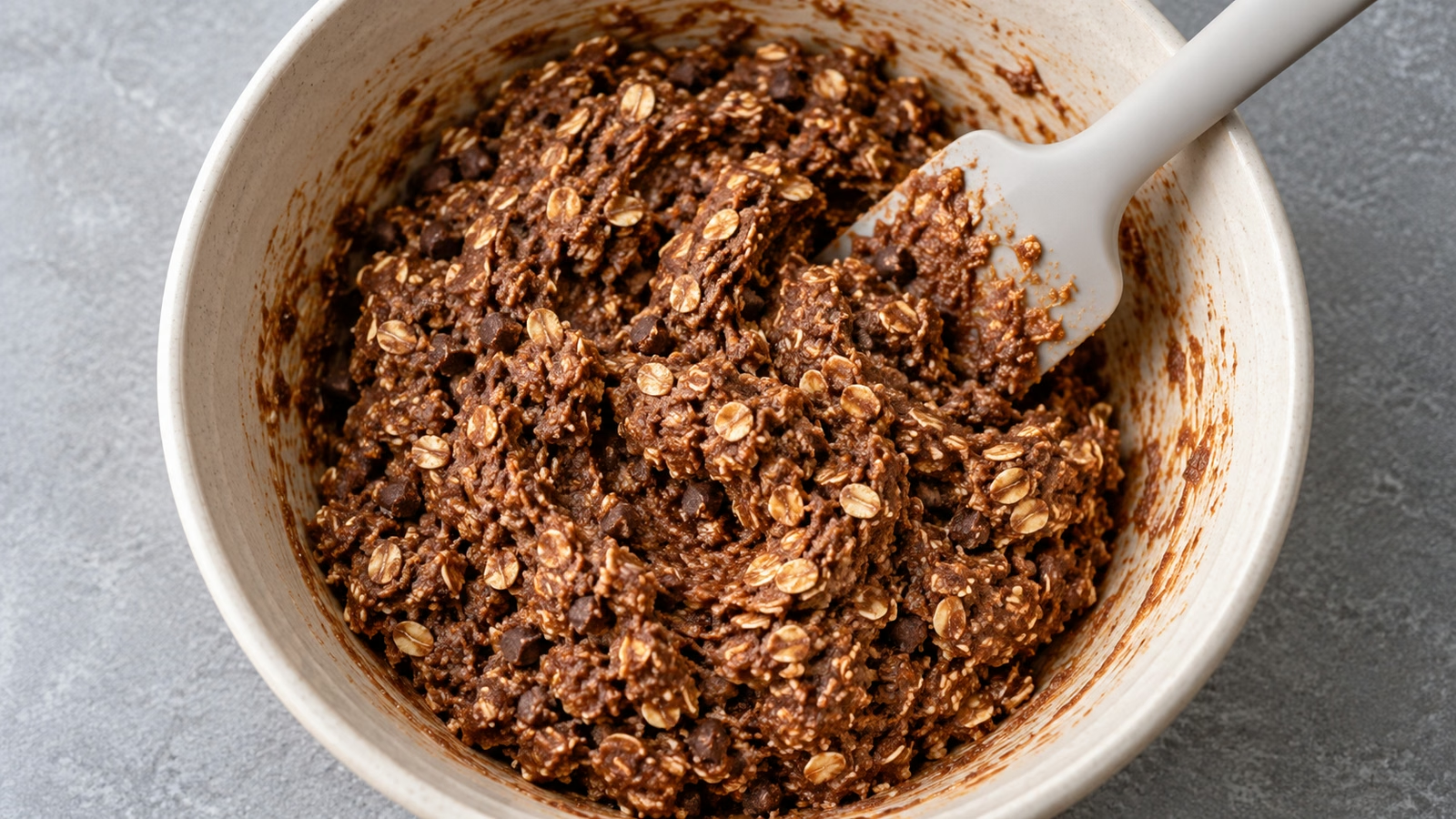
Mix thoroughly before changing the ingredients. Dry pockets around the edge of the bowl can make the mixture look short on moisture when it simply needs more folding and pressing. Then squeeze a small portion in your clean hand and see whether it stays together when you release it.
- If it falls apart: add water one teaspoon at a time, mix completely, and repeat the squeeze test. Stop when the portion holds; do not pour in a large splash.
- If it smears heavily: refrigerate it before adding anything else. Chilling is a sensible first step when a warm, soft nut butter is making shaping difficult.
- If it is still too sticky after chilling: add a small amount of oats and mix again. Extra oats change the ingredient balance and nutrition, so make the adjustment deliberately.
- If pieces keep breaking off: compress each portion gently before rolling. Rolling loose crumbs around your palms is mostly an exercise in optimism.
Aim for a cohesive mixture that yields to pressure, rather than a dry mass you have to force into shape. Protein powders differ, so texture is a better finishing cue than an insistence that every bowl behave identically.
Substitutions that deserve a second look
I prefer changing one ingredient at a time here. Several simultaneous swaps make texture changes difficult to explain. Keep the first batch simple, then decide which part you actually want to adjust.
- Almond butter: a possible alternative to peanut butter, with a different flavor and nutritional profile. Stir it thoroughly and reassess the dough; it is not an allergy-safe substitute for someone avoiding tree nuts.
- Sunflower seed butter: an option when its ingredients and manufacturing information fit the person eating it. A seed butter does not automatically make the entire recipe free of allergens.
- Maple syrup: changes flavor and can change consistency. Treat it as a variation that needs another squeeze test rather than promising an identical result.
- A different protein powder: use a product intended for uncooked food and check its sweeteners and allergens. Whey comes from milk; a plant-based label does not establish that every other ingredient is suitable for your needs.
Do not add raw wheat flour or cake mix to firm up this no-bake mixture. The FDA’s flour guidance explains that raw flour can carry harmful bacteria and warns against relying on home heat treatment. Use oats whose manufacturer permits no-cook use, and follow the powder’s instructions too.
Portions, serving, and keeping the batch cold
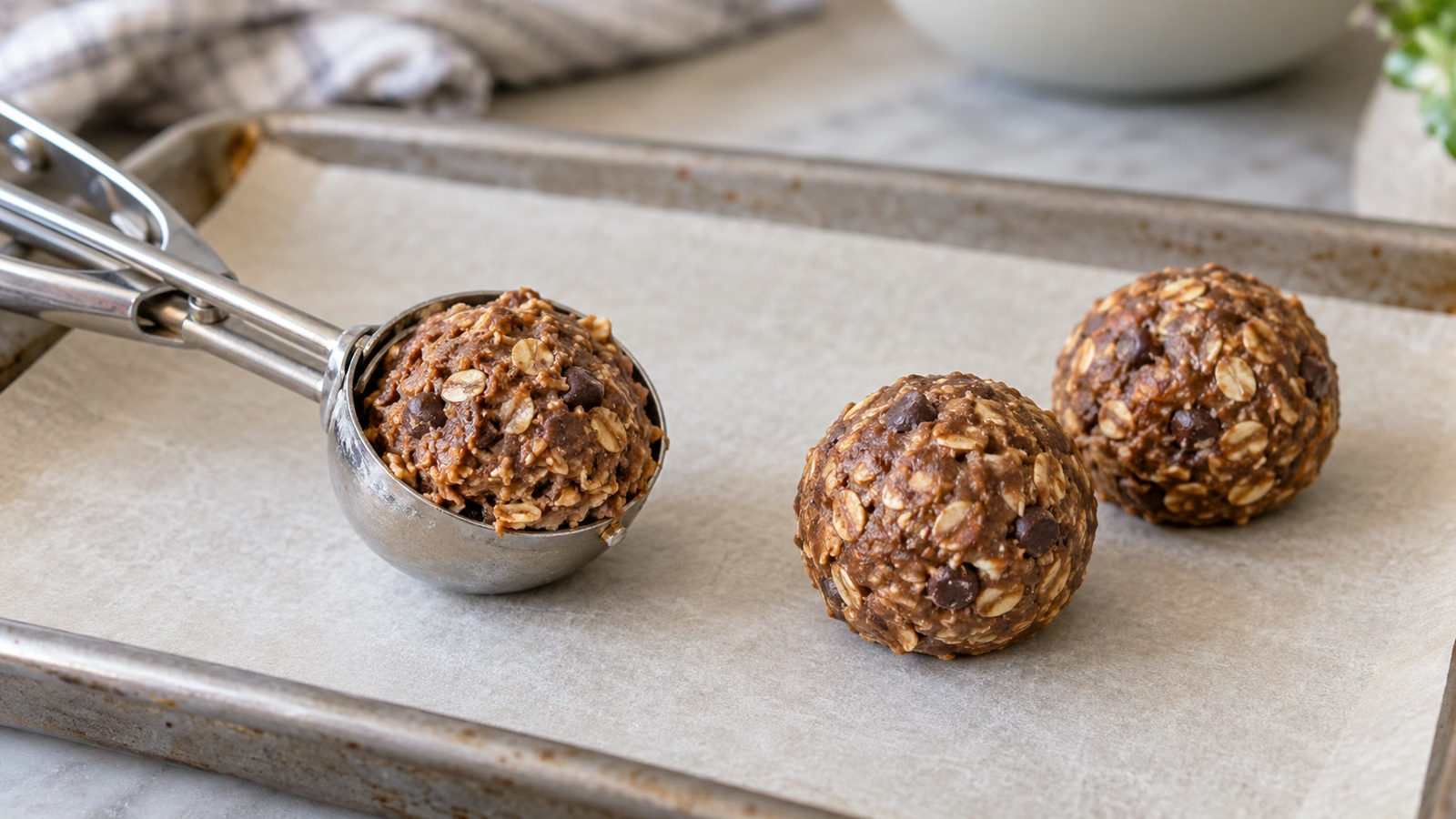
Divide the batch into twenty balls, with two balls making one recipe serving. For equal portions, divide the mixture’s weight by twenty. The word protein in the name is not a reason to ignore serving size, and the final amount depends on the products you choose.
- For a snack: start with two balls and add fruit or another food if that suits your appetite. They are a small sweet snack, rather than a complete meal.
- For comparison: look at the same serving size when comparing homemade balls with plant-based protein bars. Compare ingredients as well as protein grams.
- For storage: refrigerate in a covered container with parchment between layers. Keep the refrigerator at 40°F (4°C) or below, following FDA cold-storage guidance.
- For a smaller queue of snacks: keep only the portions you expect to eat soon in the refrigerator and freeze excess promptly. Thaw in the refrigerator; follow any stricter handling directions on the ingredients.
Honey and chocolate contribute sweetness even when the rest of the ingredients sound wholesome. The distinction between added sugars and total sugars helps when reading labels. Check each package for allergens, and do not give honey-containing foods to a child younger than twelve months.
Protein Balls Recipe

Ingredients
- 80 g old-fashioned rolled oats about 1 cup; use a product suitable for no-cook use
- 192 g smooth unsalted peanut butter about 3/4 cup; stir thoroughly
- 84 g honey about 1/4 cup
- 46 g chocolate plant-based protein powder Orgain Creamy Chocolate Fudge used for nutrition estimate; use a powder suitable for uncooked recipes
- 28 g mini semisweet chocolate chips about 2 tablespoons
- 1 tsp water only if needed; add further teaspoons separately after checking texture
Equipment
- 1 large mixing bowl
- 1 sturdy spatula
- 1 Measuring cups and spoons
- 1 Kitchen scale
- 1 covered food container
Instructions
- Stir the peanut butter in its jar until the oil is fully incorporated. Measure it into a large bowl and mix with the honey until evenly combined.
- Add the oats and protein powder. Fold and press with a sturdy spatula until the dry ingredients are coated, then mix in the chocolate chips.
- Squeeze a small portion in your clean hand. If it breaks apart after thorough mixing, stir in 1 teaspoon water and check again. Stop adding water once the portion holds together. If the mixture smears heavily on your fingers, cover and refrigerate before deciding whether it needs more oats.
- Cover and refrigerate for 20 minutes. Divide into 20 equal portions, ideally by weight. Compress each portion gently, then roll into a ball.
- Place in a covered container, separating layers with parchment, and refrigerate. Serve two balls as one recipe serving.
Nutrition
Video
Video: Dani Spies of Clean & Delicious demonstrates mixing and rolling no-bake peanut butter protein balls. Her version uses vanilla or peanut butter protein powder and milk, with different proportions; this recipe uses chocolate plant-based protein powder and optional water. Follow the recipe above for its quantities and chilling step.
Notes
Tried this recipe?
Let us know how it turned out!Sources
- FDA: Handling Flour Safely
- FDA: Refrigerator Thermometers and Food Safety
- FDA: Food Allergies and Label Reading
- CDC: Foods and Drinks to Avoid or Limit
Hi, I’m Laura, the voice behind Tastiva. I’ve always believed that eating well should feel enjoyable, comforting, and realistic—not like another complicated rule to follow. I love creating recipes that fit into everyday life, sharing simple nutrition ideas, and finding small ways to make meals feel a little better without losing the pleasure of good food.