
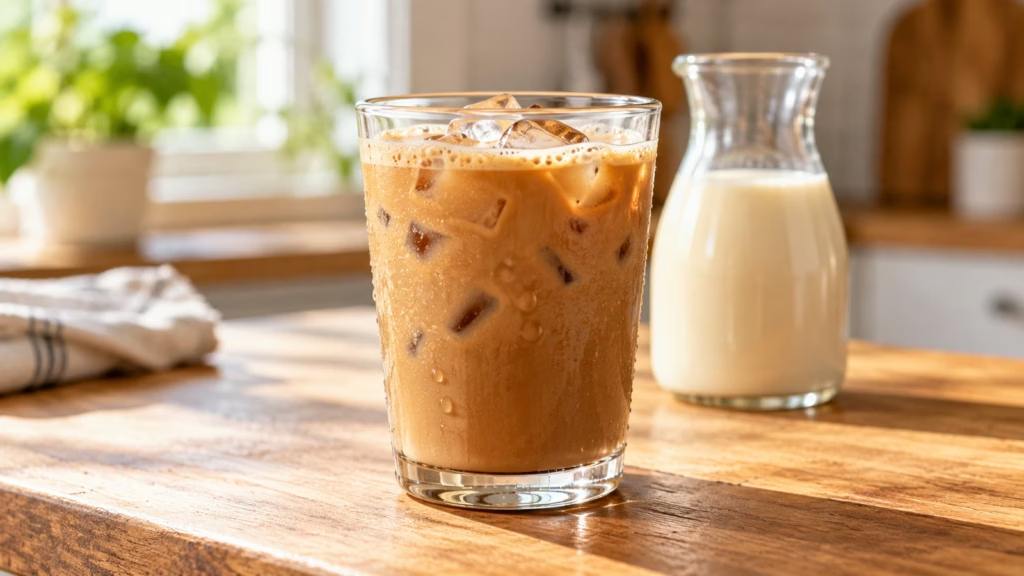
The coffee is ready, breakfast is still undecided, and a bottle promising both caffeine and protein looks wonderfully efficient. Protein coffee can be worth it when you want both in the same drink and the serving fits your needs. The useful comparison is less glamorous than the front label: how much protein, how much caffeine, how much sugar, and what else you’ll eat.
Choose the drink for the morning you actually have, with enough information to know what is going into the cup.
What counts as protein coffee?
The name covers several different products: brewed coffee mixed with a protein shake, a ready-to-drink coffee with added protein, or a caffeinated coffee-flavored protein powder. Those are not interchangeable servings. Some already contain caffeine before you add any brewed coffee, while others get their caffeine entirely from the coffee you pour in.
I’d separate convenience from a health promise. Combining two things you already want can simplify breakfast, but putting protein and coffee in the same container does not establish special benefits beyond their separate contributions. Nor does a protein number tell you whether the drink is enough food for your morning.
- Ready-to-drink bottle or can: Check the entire container, its serving count, and refrigeration instructions after opening.
- Powder: Compare the stated gram weight or scoop serving before adding milk, coffee, or other ingredients. Those additions change the final totals.
- Homemade mixture: Add the amounts from every ingredient. Half a shake supplies half its labeled protein; a small splash does not supply the whole bottle’s total.
- Café order: Use the nutrition for that size and customization. Our cappuccino vs. latte guide explains why milk volume and espresso dose are separate questions.
Three real labels, with different trade-offs
These U.S. manufacturer figures were checked in October 2026. They describe the listed whole container, not an equal-volume taste test or a ranking. Formulas can change, so match the product name and size to the package you’re holding; these are label comparisons, not personal tasting recommendations.
| Product and whole-container serving | Protein | Caffeine | Total sugars |
|---|---|---|---|
| Premier Protein Café Latte shake, 11.5 fl oz | 30g | 95mg | 1g |
| Starbucks Coffee & Protein Classic Caffè, 12 fl oz | 22g | 130mg | 2g |
| Super Coffee XXTRA Vanilla, 15 fl oz | 20g | 200mg | 0g |
The differences are useful: the most protein in this small comparison does not come with the most caffeine. The 15-ounce can is also larger than either bottle, so “one drink” hides a portion difference. Starbucks’ 2026 launch information additionally lists 5g fiber per bottle; that is a separate ingredient and tolerance consideration, not a reason to ignore the other columns.
- If caffeine is the deciding factor: Find the milligram amount for the exact product before comparing protein claims.
- If protein is the deciding factor: Use grams per amount you’ll drink, then decide whether that amount is useful alongside your food.
- If sugar is the deciding factor: Distinguish total sugars from added sugars. Milk contributes naturally occurring sugar; low sugar can also come with non-sugar sweeteners, so check ingredients if taste or tolerance matters to you.
Count caffeine before adding another cup
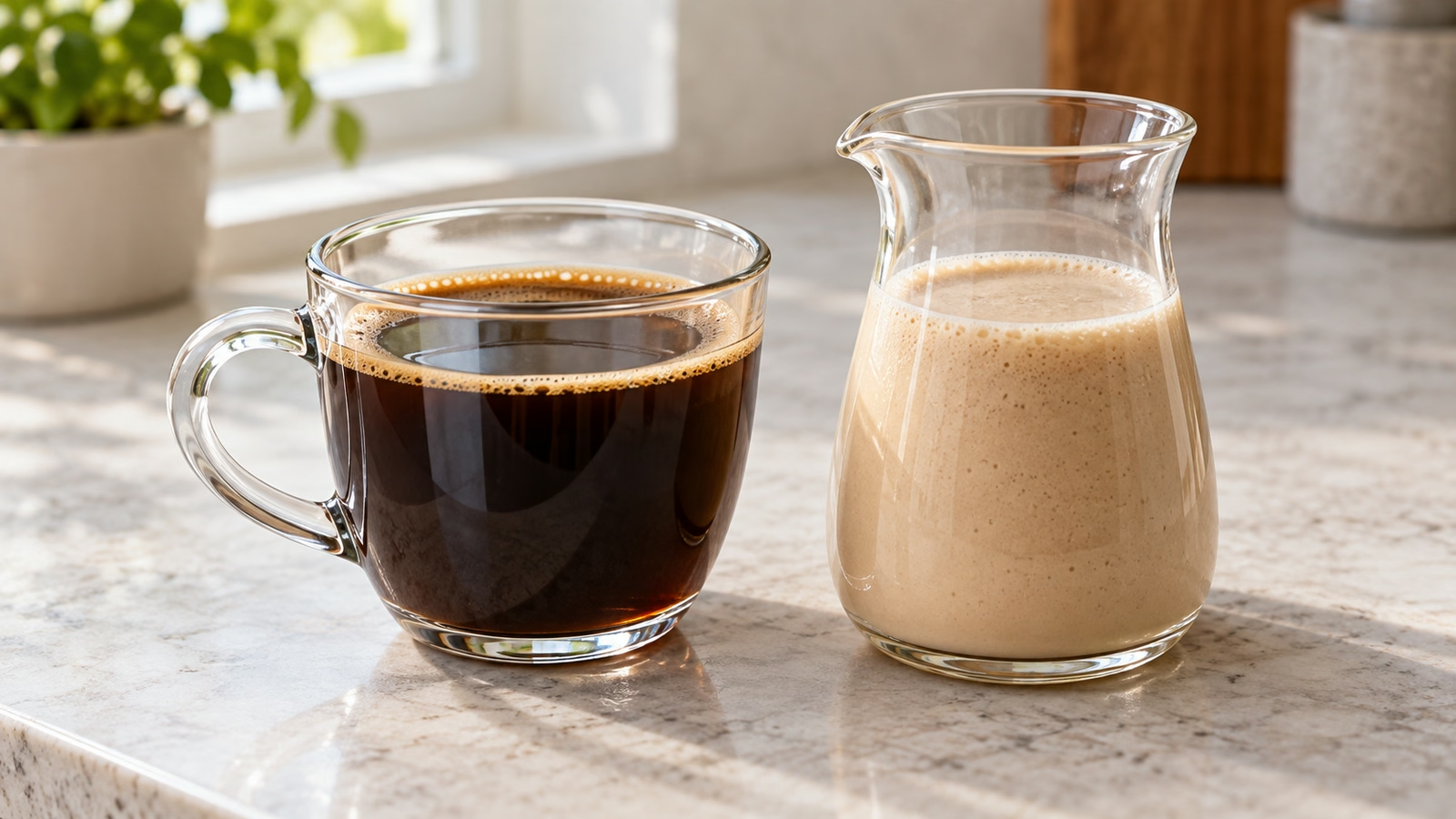
FDA cites 400mg a day as an amount not generally associated with negative effects for most adults, not a target or a guarantee for everyone. Sensitivity, medications, health conditions, pregnancy, and breastfeeding can change the advice. Ask your health professional about your own limit when those considerations apply; this adult comparison is not guidance for children.
A hypothetical 95mg caffeinated shake mixed with coffee supplying 120mg becomes a 215mg drink. That arithmetic is straightforward; the 120mg coffee figure is only an example, not a universal value for a cup. Check the coffee’s actual information, and remember other caffeinated drinks and supplements in the same day.
- Check both components: “Coffee-flavored” and “decaf” are not enough information to assume zero caffeine. Look for a stated amount or ask the manufacturer.
- Count the portion you use: Half of a 95mg bottle contributes about 47.5mg before any coffee is added.
- Consider the timing: If caffeine affects your sleep, a protein claim does not make an afternoon drink a better fit. Choose a non-caffeinated protein food or beverage instead when appropriate.
- Pay attention to symptoms: Jitters, sleep disruption, or a racing heart are reasons to reconsider intake and seek professional advice, rather than treating a general daily figure as permission to continue.
Decide whether it solves breakfast or only the drink
I’d ask what the purchase replaces. If it replaces both a coffee you wanted and a separate protein drink you would otherwise buy, convenience may justify the price. If you already eat a satisfying breakfast with protein, the extra purchase may simply be optional. A hypothetical $3 bottle on five mornings costs $15; compare that with your actual coffee-and-food costs, rather than assuming homemade or bottled is always cheaper.
- For a drink alongside breakfast: Pair it with food you enjoy, such as toast and fruit or oatmeal. Check the whole meal, not just the bottle’s headline nutrient.
- For a rushed morning: A portable drink plus a banana and a sandwich can provide a more substantial eating opportunity than treating every small bottle as a complete meal.
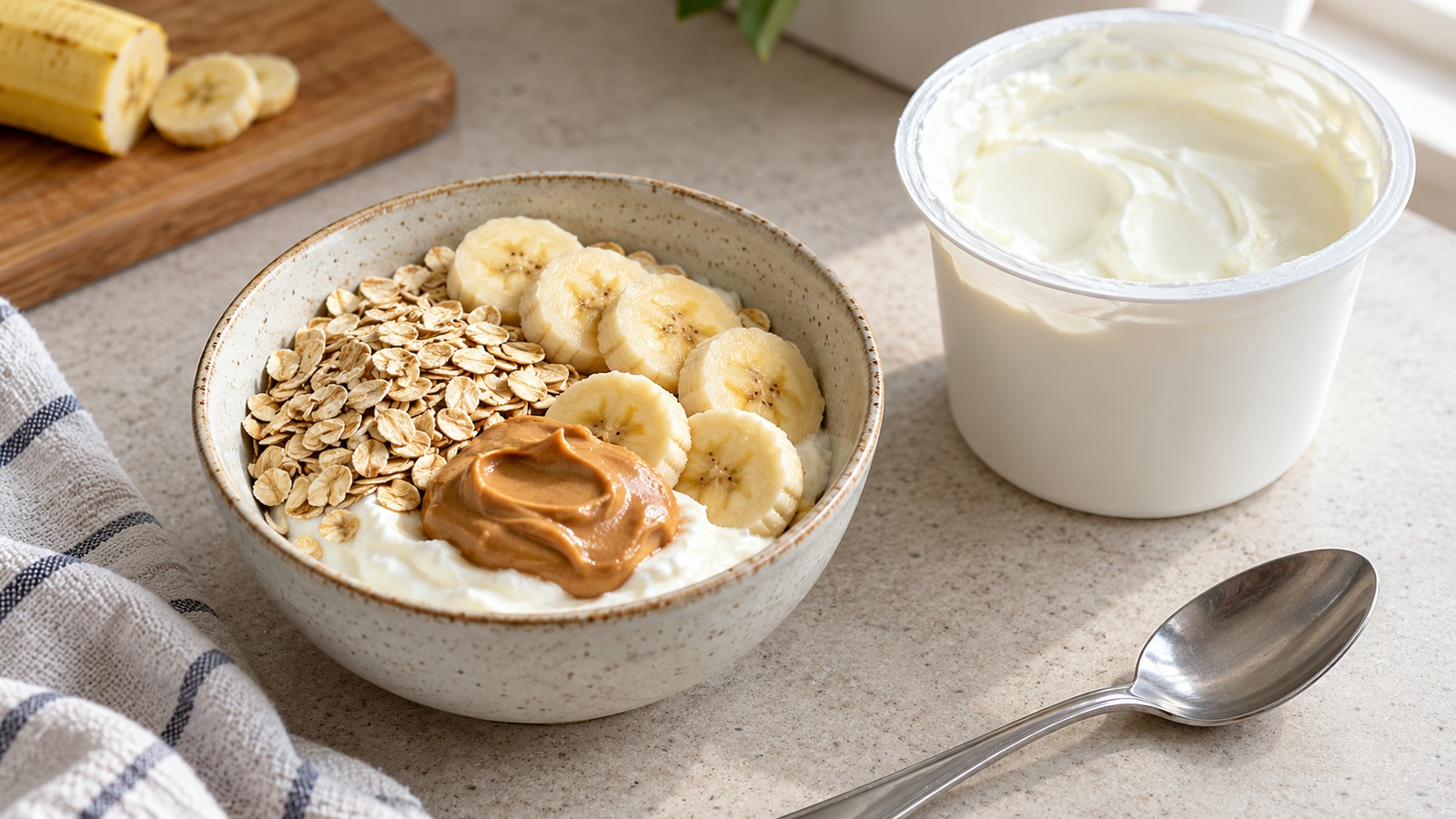
- For an ordinary breakfast alternative: Yogurt with oats, banana, and peanut butter, eggs with toast, or beans on toast can contribute protein without requiring caffeinated protein products. Portions and needs differ.
- For dietary restrictions: Read the exact allergen statement and protein source. The Premier shake and Super Coffee example contain milk; plant-based wording elsewhere on a shelf does not apply to every product.
My bottom line is practical: buy protein coffee if you like it, can afford it, and its contents fit your day. Keep the caffeine decision separate from the protein decision, and leave room for food variety. If a drink also advertises extra fiber, the added-fiber label guide explains what those grams can and cannot tell you.
Sources
- Premier Protein: Café Latte shake label and caffeine
- Starbucks: 2026 Coffee & Protein product details
- PepsiCo/Starbucks: Coffee & Protein caffeine amount
- Super Coffee: XXTRA Vanilla nutrition and caffeine
- FDA: Caffeine amounts and individual considerations
- FDA: Total and added sugars on the label

Hi, I’m Laura, the voice behind Tastiva. I’ve always believed that eating well should feel enjoyable, comforting, and realistic—not like another complicated rule to follow. I love creating recipes that fit into everyday life, sharing simple nutrition ideas, and finding small ways to make meals feel a little better without losing the pleasure of good food.