
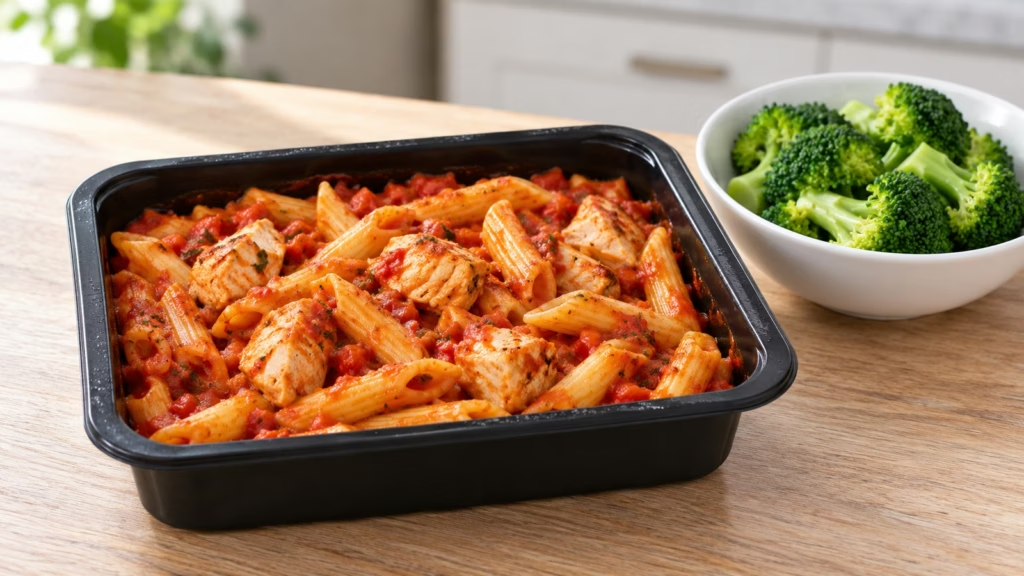
The freezer-door decision often happens when dinner is already late: a bowl looks convenient, but is it enough, and what belongs beside it? Healthy frozen meals can be a useful starting point when the portion, ingredients, and nutrition fit your needs. Before adding a side, check what the meal already provides and what the addition would actually change.
Let the package do part of the work, then choose a side with a clear purpose.
Healthy frozen meals start with the portion
Start with the Nutrition Facts serving size and servings per container. A single tray, a two-serving bag, and a family-size entrée require different arithmetic. If you eat the whole two-serving package, double the listed nutrients; the photograph on the front is not a serving-size instruction.
I wouldn’t choose dinner by the smallest calorie number alone. A very small entrée may need more food to suit your appetite, while a larger meal may already cover what you wanted. “Healthy” here describes a practical whole-meal decision, not a claim that every product discussed qualifies for a particular package-label definition.
- Check the meal’s building blocks: Look for a protein source, a grain or other starchy food, and vegetables or fruit somewhere in the meal you assemble. MyPlate emphasizes variety across food groups over the day.
- Read protein and fiber: These help describe what is there; they do not create a universal pass/fail threshold for every person or meal.
- Check sodium and saturated fat: Compare similar portions, especially if a clinician has given you a specific limit. “Plant-based,” “organic,” or “high protein” does not answer this question.
- Confirm dietary fit: Use the actual ingredient and allergen statements. A vegetable-forward meal can still contain milk, wheat, soy, or other allergens.
Two real labels show why the side matters
These examples use U.S. manufacturer information checked in October 2026. They are comparisons, not a “best frozen meals” ranking or a tasting test. The amounts refer to the whole package shown; names and formulations change, so the label on your current box takes priority.
| Whole-package example | Calories | Protein | Fiber | Sodium |
|---|---|---|---|---|
| Healthy Choice Adobo Chicken bowl, 9.75 oz / 276g | 320 | 22g | 7g | 600mg |
| Lean Cuisine Chicken Parmesan, 10⅞ oz / 308g | 350 | 22g | 4g | 780mg |
Both examples provide 22g protein, but they differ in fiber and sodium. The 600mg and 780mg sodium amounts are about 26% and 34% of FDA’s 2,300mg Daily Value, respectively. FDA’s general label guide considers 20% DV or more high; that describes one nutrient in one serving, not the entire food’s value or a personal prescription.
- For the chicken-and-grain bowl: You may want additional vegetables, fruit, or more food overall, depending on appetite. Extra protein is not automatically the missing piece simply because the package is small.
- For the chicken-and-pasta entrée: A side of plain cooked broccoli or a simple salad adds a vegetable component. A salty dressing, extra cheese, or garlic bread changes the meal’s totals too.
- For either meal: An unsalted side can contribute food without much additional sodium, but it does not remove the sodium already in the entrée. Choose a different base when that amount does not fit your needs.
Match the addition to the gap
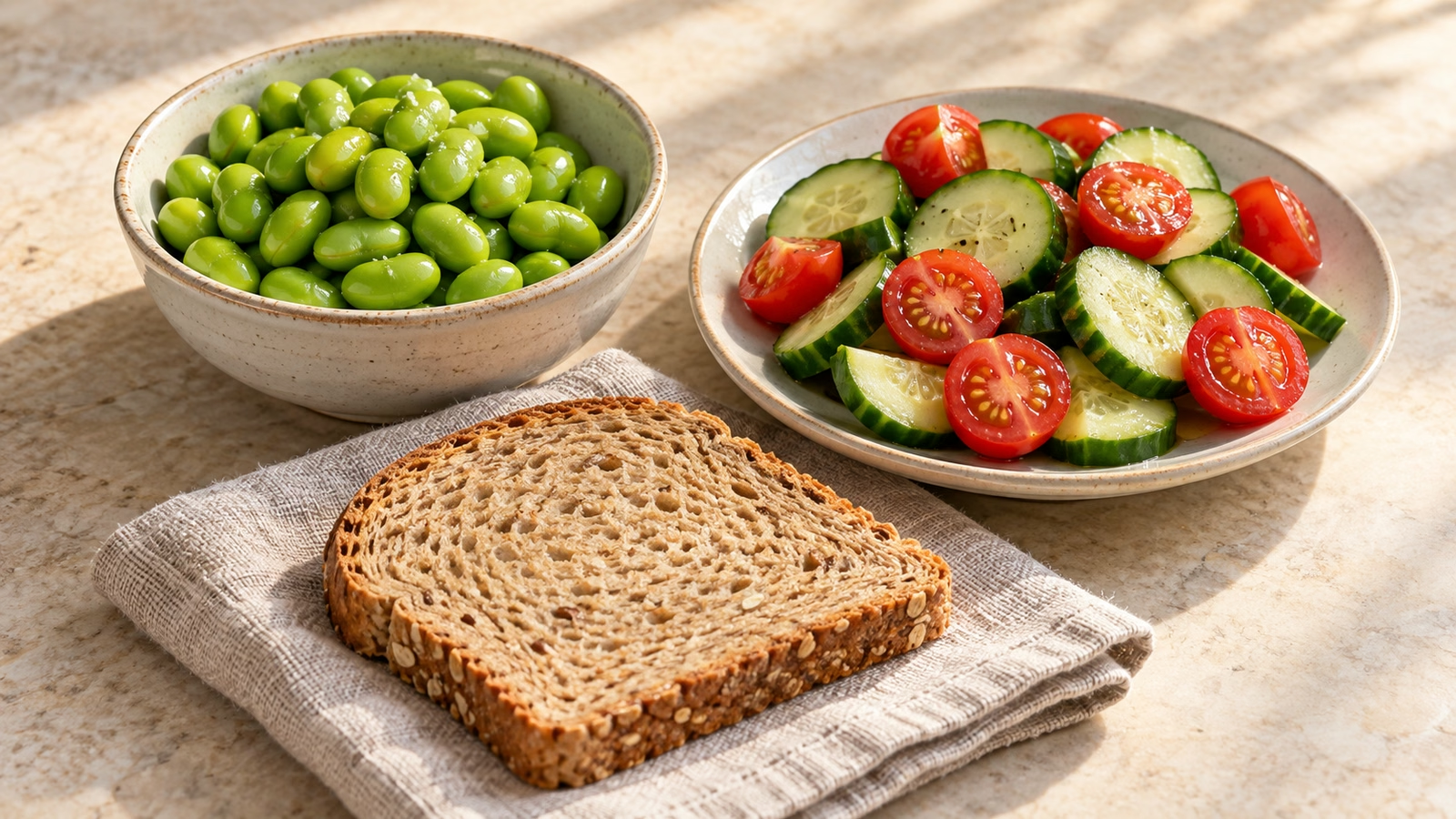
A side works best when you know why you’re adding it. More vegetables can add variety and volume; beans or edamame can contribute protein and fiber; bread, rice, or a potato can make a small meal more substantial. The useful choice depends on the starting meal, your hunger, and what is available, rather than an automatic salad beside every box.
I’d keep a short list of easy additions instead of turning a convenience meal into a second cooking project. Dinner does not need an elaborate supporting cast, and buying four perishable sides for one frozen entrée rather misses the convenience point.
- Mostly pasta or rice with little protein: Consider beans, cooked edamame, tofu labeled ready to eat, canned fish, or cooked chicken, according to your preferences and dietary needs.
- Protein and starch but few vegetables: Add plain microwave vegetables, cucumber and tomatoes, or a bagged salad with dressing added to taste.
- Vegetables and protein but still too small: Add bread, a microwaveable grain portion, a potato, fruit, or another food that makes the meal satisfying for you.
- A vegetarian meal: Look for a meaningful portion of beans, lentils, tofu, eggs, or dairy if those fit your diet. A few vegetables in sauce do not necessarily supply the same protein as a bean-based entrée.
- Extra fiber on the front label: Read the serving and ingredients as well as the number. Our added-fiber guide explains why different fiber claims deserve a closer look.
Buy for your kitchen, then follow the cooking directions
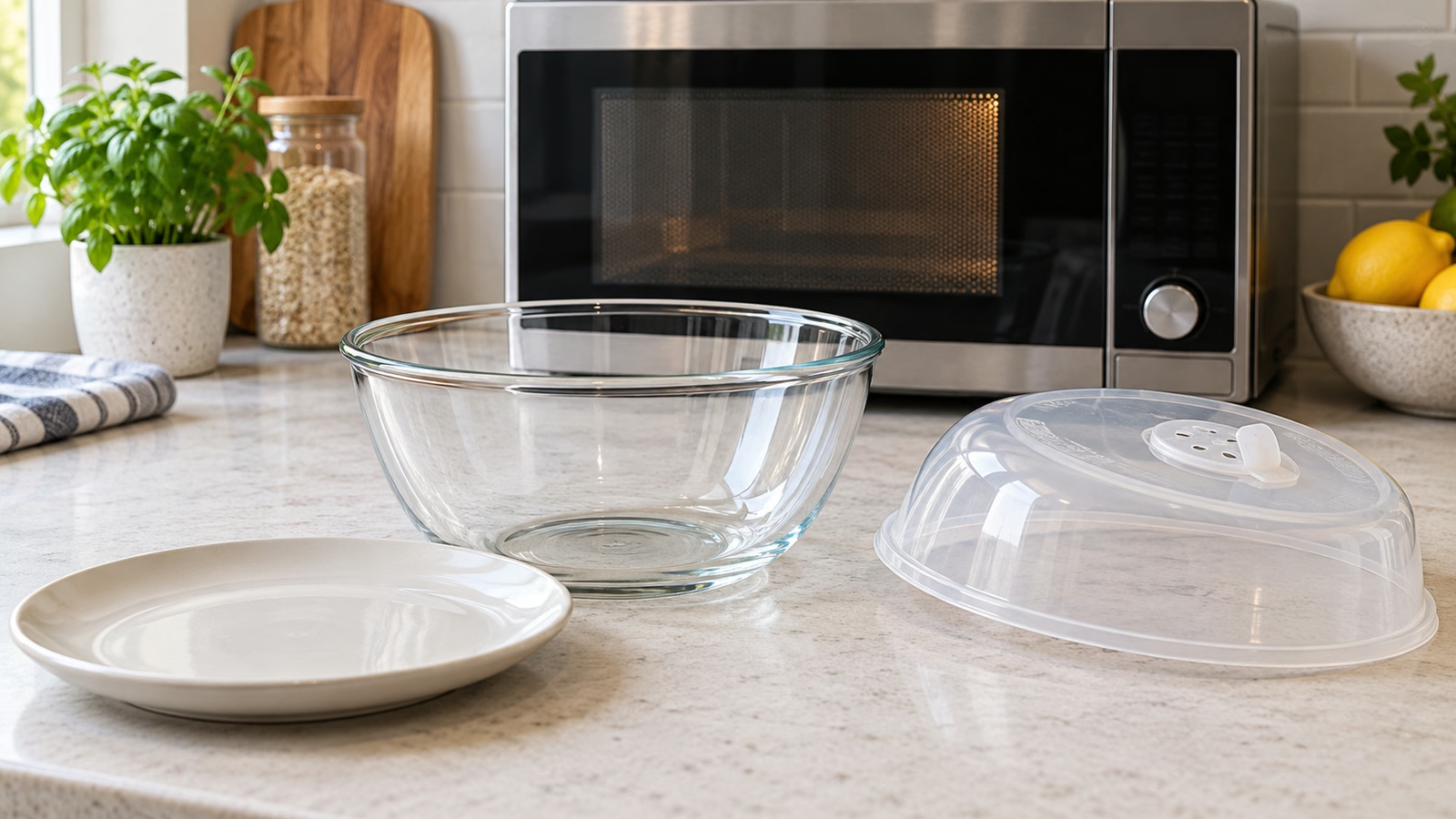
Check the equipment instructions before buying. Some frozen meals are microwave-only, others require an oven, and a crisp-looking breaded product may contain raw ingredients. Keep frozen foods frozen for storage and follow the package’s thawing or cook-from-frozen instructions; do not assume that every meal can use the same method.
Compare the cost of the finished plate, too. A hypothetical $4 entrée plus a $1 side is a $5 meal, while a cheaper box that needs several additions may cost more overall. Buy one unfamiliar meal before stocking a case, and choose sides you can use elsewhere; our microwave meal plan offers stove-free ideas with an actual grocery list.
- Match the microwave power: Follow the directions for the appliance you have, including whether to vent or leave the film sealed. Do not borrow instructions from another brand.
- Keep the required steps: Stirring, rotating, and standing time help address uneven heating. A hot edge does not establish that the center is ready.
- Use a food thermometer: Check the temperature required by the package. The two examples above specify 165°F (74°C); USDA also recommends 165°F for reheated leftovers.
- Respect the tray: Use only the cooking method the package permits, handle steam carefully, and do not reuse a tray for heating when the directions prohibit it.
Mayo Clinic dietitian Angie Murad explains choosing frozen produce, then covers what to check in frozen mixes and entrées. Use this short overview alongside the label comparisons above; plain frozen vegetables can be a useful side, but adding them does not remove the sodium already in a meal.
Sources
- Lean Cuisine: Chicken Parmesan package nutrition and preparation
- Conagra: Healthy Choice Adobo Chicken bowl nutrition and preparation
- FDA: Sodium and the Daily Value
- USDA MyPlate: Food-group variety
- USDA FSIS: Cooking with microwave ovens
- USDA FSIS: Freezing and food safety

Hi, I’m Laura, the voice behind Tastiva. I’ve always believed that eating well should feel enjoyable, comforting, and realistic—not like another complicated rule to follow. I love creating recipes that fit into everyday life, sharing simple nutrition ideas, and finding small ways to make meals feel a little better without losing the pleasure of good food.