
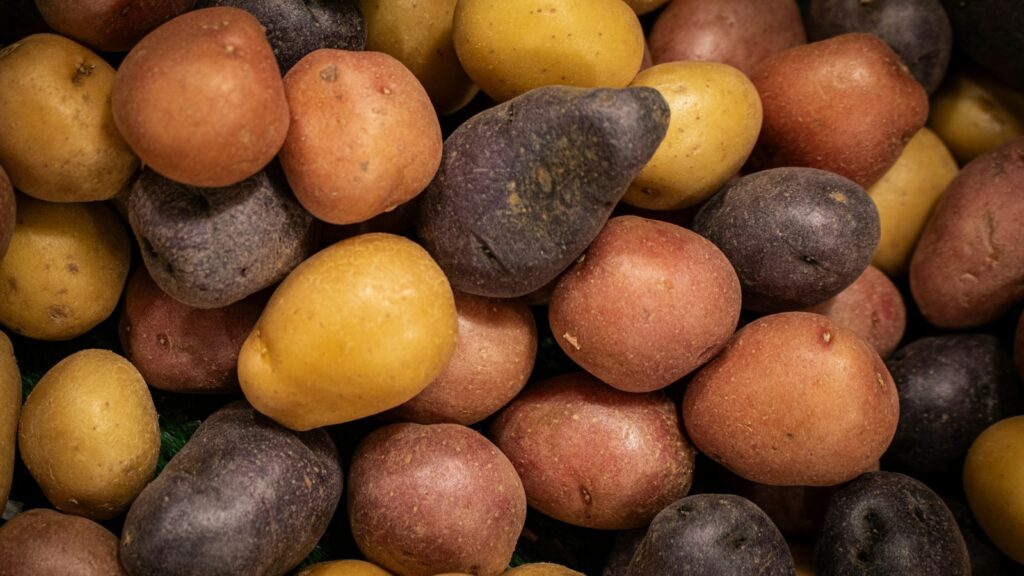
A bag of dark-skinned potatoes can make a familiar dinner feel new, but it also raises a practical question: will they cook like the potatoes you usually buy? Purple potatoes are true potatoes (Solanum tuberosum), and their texture matters more than the color when you choose a dish. Some have violet flesh; others are pale inside. Cut one open and check the variety or package description before planning around a dramatic purple plate.
Let the cut surface and texture guide dinner; the purple skin alone cannot promise what is inside.
Purple potatoes are not purple sweet potatoes
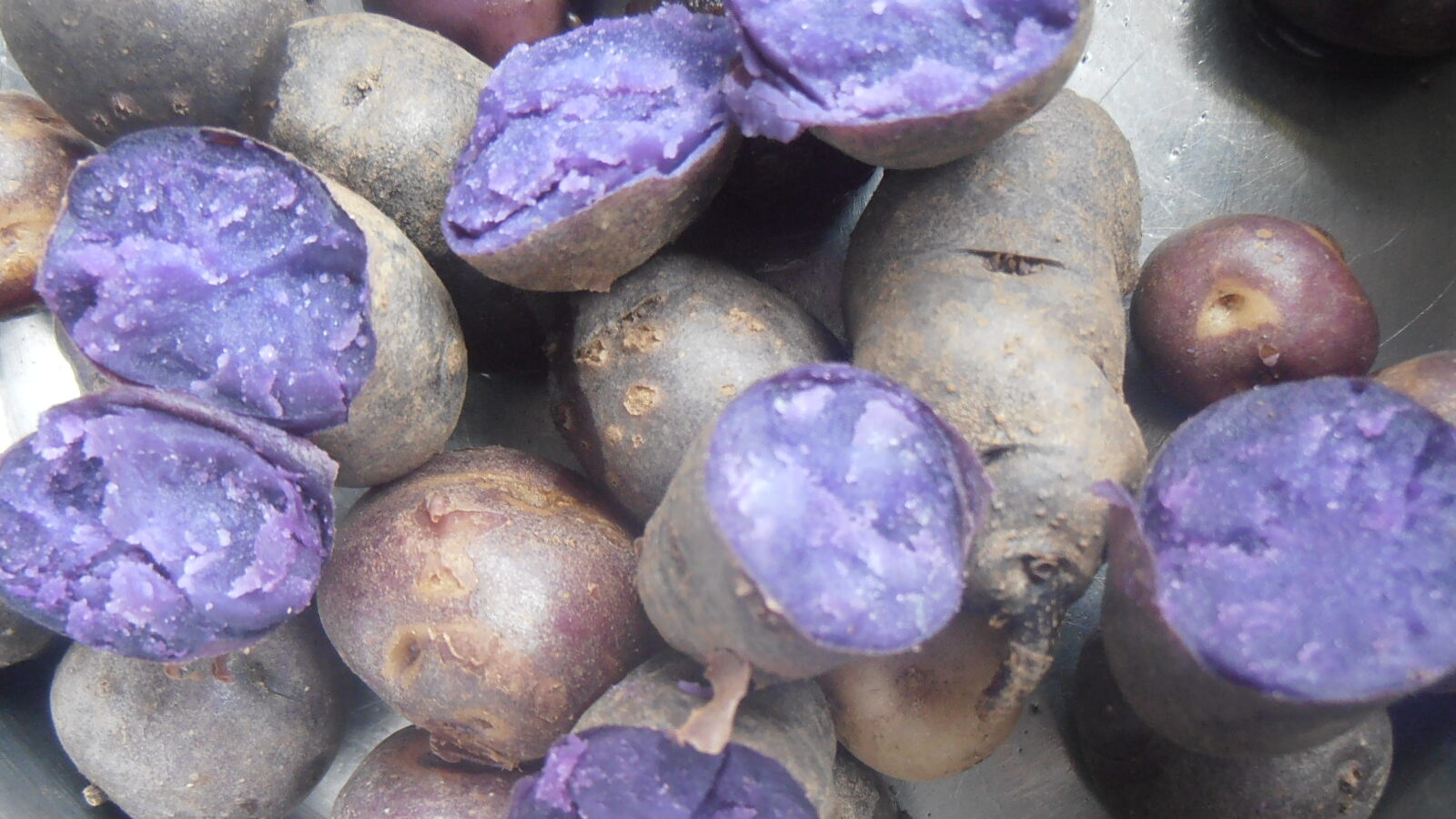
The names sound close, and both can have vivid flesh, but they refer to different plants. The potato is Solanum tuberosum; the sweet potato is Ipomoea batatas. Our purple sweet potato guide covers that sweeter, separate ingredient. If a recipe calls for purple potatoes, don’t assume a purple sweet potato will give the same flavor or texture.
Even among true potatoes, the label describes a color family rather than one uniform variety. Potatoes USA notes that blue and purple types can have deep skin and flesh ranging from blue or lavender to pink or white. Most are moist and firm, but some purple Peruvian types are starchier and more floury. I would buy for the dish I have in mind, then cut one before committing the whole bag.
- Purple skin, pale flesh: enjoy it as a potato with a colorful jacket; the cut pieces may not turn the whole salad violet.
- Purple flesh: keep some skin on if you like the contrast, and expect the cooked shade to vary with the variety and method.
- Firm or floury texture: use that clue for intact slices or a softer mash, just as you would with other potatoes.
Choose a cooking method for the texture you want
For a salad, start with potatoes that feel firm and hold together after cooking. Steam or microwave similarly sized pieces until a knife slides in without a hard center, then let them cool enough to handle before dressing. Potatoes USA says microwaving tends to preserve the purple color best, while steaming and baking also work well. It doesn’t mean every variety will keep exactly the same shade.
Roasting gives the cut sides a browned edge and a different experience from a tender steamed slice. Scrub the potatoes, cut them to an even size, coat lightly with oil, and spread them so the pieces can brown. Follow the recipe’s temperature and judge doneness by the center, since potato size and oven behavior change the timing. A purple surface can make the usual golden cue less obvious; use a fork or knife as well as your eyes.
- For a salad: favor a firm variety and check a piece before draining the whole pot.
- For a roast: leave space between pieces and look for tender centers, not just dark edges.
- For a mash: a flourier variety can work beautifully; begin with modest liquid and adjust after mashing.
A split potato is a useful small test. If it crumbles as soon as you lift it, use the rest for mash or a rustic soup rather than forcing neat salad cubes. That change of plan is easier than trying to rescue a bowl of broken pieces.
What the color does, and does not, say about nutrition
Anthocyanins are pigments that contribute red, blue, and purple colors in many plants. Research on colored potato cultivars finds them in purple-fleshed tubers, with amounts that vary by variety and growing conditions. That is a real difference in composition, but a purple potato is still a starchy potato. Color alone does not turn a serving into a treatment or tell you the exact nutrients in the bag.
I would keep the whole meal in view: how many potatoes you serve, what you cook them with, and what else is on the plate. The preparation can add oil, salt, or a rich dressing, and the same potato can fit several kinds of meals. If you compare packaged potato dishes, use the label’s serving size and ingredients rather than treating a purple tint as a nutrition claim.
That doesn’t make the color uninteresting. A naturally violet slice can make a simple salad inviting without adding a new sauce or seasoning. Enjoy that visual pleasure on its own terms, while keeping strong health promises out of the shopping decision.
Pick a sound bag and store it in the dark
Choose firm potatoes without major cuts, soft spots, or obvious damage. A dark skin can make it harder to spot a green patch, so look closely under good light and set aside any badly green, shriveled, or decaying tubers. The purple color is normal pigmentation; greening from light exposure is a different issue. Trim minor damaged areas from an otherwise sound potato before cooking.
Keep uncooked purple potatoes in a cool, dark, ventilated place, away from direct sun and heat. A breathable bag or loose arrangement is more helpful than a sealed plastic bag that traps moisture. Wait to wash them until you cook them. Potatoes USA recommends a cool, dark, well-ventilated spot and notes that dampness encourages early spoilage.
- Before cooking: scrub under running water and cut away a small bruise or sprout from a firm potato.
- After cooking: refrigerate leftovers promptly in a shallow container; follow the storage needs of the full dish, especially if it contains dairy, eggs, or meat.
- For the next meal: reheat only what you plan to eat, and let the original texture guide whether it belongs in a skillet, soup, or salad.
The useful habit is simple: inspect one potato when the bag comes home and another when you cook. You’ll learn whether that variety stays firm, turns floury, or keeps its color, without asking every purple potato to behave alike.
Sources
- Potatoes USA: Purple Potatoes — appearance, texture, flavor, and cooking uses.
- Potatoes USA: Storage and Handling — buying, washing, and storing potatoes.
- Anthocyanin Profiles in Colored Potato Tubers — measured differences among colored potatoes.
- Kew Science: Solanum tuberosum and Kew Science: Ipomoea batatas — botanical distinction.

Hi, I’m Laura, the voice behind Tastiva. I’ve always believed that eating well should feel enjoyable, comforting, and realistic—not like another complicated rule to follow. I love creating recipes that fit into everyday life, sharing simple nutrition ideas, and finding small ways to make meals feel a little better without losing the pleasure of good food.