
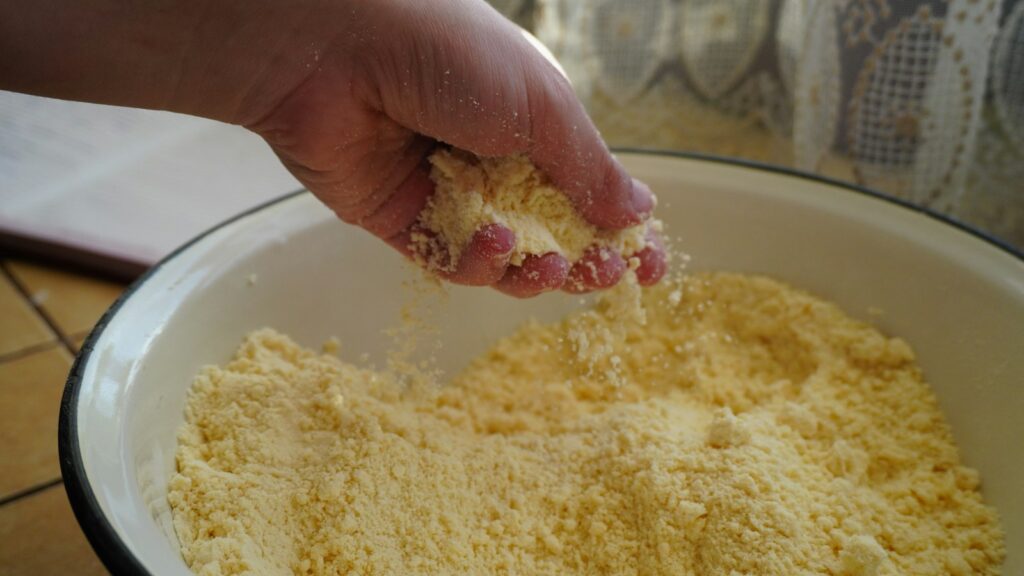
A recipe asks for semolina flour, but the shelf has several yellow bags with names that sound alike. Which one belongs in your dough? Semolina flour is usually a coarse grind of durum wheat; the grind and the recipe’s job for it matter more than the sunny color. It can make pasta pleasantly firm, give bread a little character, or keep a pizza from sticking to a peel. It is still wheat flour, so it contains gluten.
Choose semolina for the texture you want, then check whether the recipe needs a coarse grain or a finer flour.
What semolina flour is, and what it is not
King Arthur Baking describes semolina as coarsely ground durum wheat. Its durum flour is made from the same wheat but ground more finely. That small difference is practical: a coarse grain feels slightly sandy between your fingers, while a fine flour blends more smoothly into a dough. Labels may say semolina, durum flour, or finely milled semolina, so read the actual product description rather than assuming all bags behave alike.
The word can also be used loosely for other coarse grain products, and names such as sooji or rava appear in different cooking traditions. Those labels do not guarantee the same grain size or exact milling. If an unfamiliar recipe uses one, check its ingredient notes and look at the bag before swapping it for a different product. Couscous is a prepared granular pasta, not a direct measure-for-measure replacement for loose semolina flour.
For anyone avoiding wheat or gluten, this distinction matters. The Celiac Disease Foundation lists durum and semolina among gluten-containing wheat derivatives. A yellow color does not make a flour cornmeal or a gluten-free option. Here the focus is the ingredient you bring to a mixing bowl, not the finished pasta on a plate.
Give the coarse grind a useful job
Pasta is the familiar use. Semolina’s durum wheat proteins and coarse grind help make a dough that can be worked into resilient noodles. Follow a pasta recipe written for the particular flour you have, especially when it specifies a fine durum flour rather than coarse semolina. If a dough seems dry, rest and hydrate it according to that recipe before adding a large splash of water. The goal is a workable dough, not an arbitrary amount of flour used up.
In bread or a savory bake, a portion of semolina can add a light golden cast and a more noticeable bite. King Arthur suggests starting with a quarter of the all-purpose flour by volume when adapting a recipe such as muffins, waffles, or cake. That is an experiment for flavor and texture, not a promise that a full replacement will rise or feel the same. For a first bake, keep the rest of the recipe familiar and record which grind you used.
- For pasta: use the grind and ratio in a tested pasta recipe rather than guessing from the bag alone.
- For bread or batter: begin with a modest portion, then notice whether the crumb turns pleasantly textured or too firm.
- For dusting: scatter a thin layer under pizza or bread dough so it moves more freely; too much can leave loose grains on the bake.
- For a cooked cereal: choose a recipe that boils semolina in liquid, where the grains soften into a porridge or pudding.
The dusting use is especially easy to test without rewriting a dough formula. A little semolina on a peel can help a pizza slide; shake the peel before topping it to see whether the dough moves. If it sticks, lift a corner and add a light pinch where needed. Keep the grains off a hot oven floor when possible, because spilled flour can scorch.
Substitute by purpose, not by color
If semolina is only there to dust a pan or peel, another flour may prevent sticking, though the bottom crust may feel different. If it forms much of the dough, changing it can change handling and chew. King Arthur suggests bread flour as a closer pantry substitute than all-purpose flour when semolina is unavailable, but notes that semolina gives the intended flavor and texture. That advice is a useful starting point, not a guarantee for every pasta or pastry recipe.
A fine durum flour comes from the same wheat, yet it is not identical to coarse semolina. It may make a smoother dough and absorb liquid differently in a particular formula. Cornmeal is another common mix-up: it is ground corn, with different proteins and flavor. It can work for some dusting jobs, but it will not form a wheat pasta dough by itself. Our corn flour guide explains another yellow product whose name changes across kitchens.
I would make one small choice before improvising: is the flour providing structure, texture, or a nonstick surface? A structure swap deserves a recipe designed for it. A dusting swap is much easier to adjust by eye. That little distinction can save a bowl of dough from being asked to do a job its ingredients were never meant to do.
Buy and keep a bag you will actually use
At the store, check the ingredient list, grind description, package date, and whether the bag is intact and dry. If whole-grain status matters to you, look for a clear whole-grain label or ingredient statement; the word durum alone does not tell you that the entire grain was retained. Buy a smaller bag for an occasional pizza night, or a larger one only if pasta and bread are regular plans. A specialty flour is more useful when there is a real dish waiting for it.
At home, close the bag tightly and keep it in a cool, dry place away from strong odors and pests. Mark the opening date if you transfer it to a container, and follow the manufacturer’s storage guidance, especially for whole-grain products. If the flour develops an off smell, visible moisture, or pests, discard it. Measuring by weight when a recipe supplies grams also reduces the guesswork of a coarse grain settling differently in a cup.
Treat semolina as raw flour while cooking. The FDA says milling does not reliably kill harmful bacteria, so do not taste raw dough or batter. Wash hands and surfaces after handling it, and cook flour-containing foods according to the recipe. The pleasure here is in the finished texture: a little golden grain can be the right addition when you give it a clear, cooked purpose.
Sources
- King Arthur Baking: What Is Semolina Flour? — grind, uses, and substitution guidance.
- Celiac Disease Foundation: Sources of Gluten — durum and semolina as wheat derivatives.
- FDA: Handling Flour Safely — raw flour precautions.

Hi, I’m Laura, the voice behind Tastiva. I’ve always believed that eating well should feel enjoyable, comforting, and realistic—not like another complicated rule to follow. I love creating recipes that fit into everyday life, sharing simple nutrition ideas, and finding small ways to make meals feel a little better without losing the pleasure of good food.