
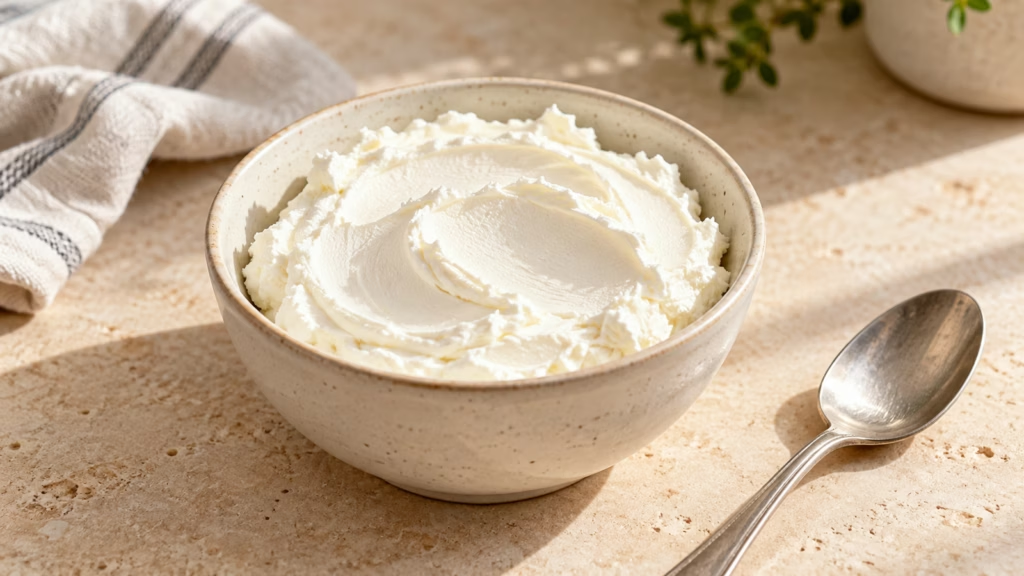
A tub of quark can leave you hovering between two plans: breakfast bowl or cheese spread? Both make sense. Quark is a fresh, unaged cheese, usually made from cow’s milk, with a smooth texture and a mild tang. It may look like thick yogurt, but it belongs to the fresh-cheese family.
Start with the texture in your tub. Quark can be spoonable or quite thick, and that difference matters more than a blanket substitution rule.
I’d taste a little plain before deciding what to add. A spoonful tells you whether this particular quark wants berries, chopped herbs, or a recipe that was designed around its moisture and richness.
What quark is, and why the texture varies
Quark begins with milk and a culture that produces acid. The milk proteins form curds, and whey is removed to leave a soft fresh cheese. The Canadian Dairy Commission describes quark as smooth rather than divided into the distinct curds associated with cottage cheese. Some production methods also use a little rennet.
- Fresh means unaged: Expect a mild dairy flavor rather than the developed sharpness of an aged cheese.
- Milkfat varies: U.S. Dairy notes that quark can be made with whole, low-fat, or skim milk. The name alone does not tell you how rich the tub will be.
- Moisture matters: A thick quark and a looser spoonable one may behave differently in a filling, spread, or batter.
- Flavorings change the job: Plain quark is the flexible starting point. A vanilla or fruit-flavored product belongs in a different conversation from an herb dip.
This is why “quark tastes like yogurt” is helpful only up to a point. The resemblance can orient you at the dairy case, but it doesn’t describe every product. Read the ingredients and the milkfat information, then judge the consistency you actually have.
Quark, yogurt, cream cheese, and cottage cheese
These foods overlap in use without becoming identical. Quark can sit comfortably in a breakfast bowl or spread across bread. That versatility does not mean a tub of any other white dairy food will set, bake, or spread exactly the same way.
- Compared with yogurt: Quark is a fresh cheese. Arla describes it as firm and creamy, with a yogurt-like tang that can be milder and drier. Individual products still vary.
- Compared with cottage cheese: Smooth quark lacks the obvious separate curds of a typical cottage cheese. Tastiva’s cottage cheese flavor and texture guide explains that curd-and-dressing distinction.
- Compared with cream cheese: Think of both as possible spread or cheesecake ingredients, not automatic equivalents. A recipe built for one may depend on a different balance of moisture and fat.
- Compared with ricotta: Both can appear in fillings, but the texture of your particular product matters. A smooth quark filling will not necessarily resemble a ricotta filling.
For a cold topping, a small substitution is easy to assess before serving. For a whole cheesecake, the stakes are different. I’d choose a quark-specific recipe rather than replace all the cream cheese and hope the filling behaves.
Give a plain tub a sweet or savory direction
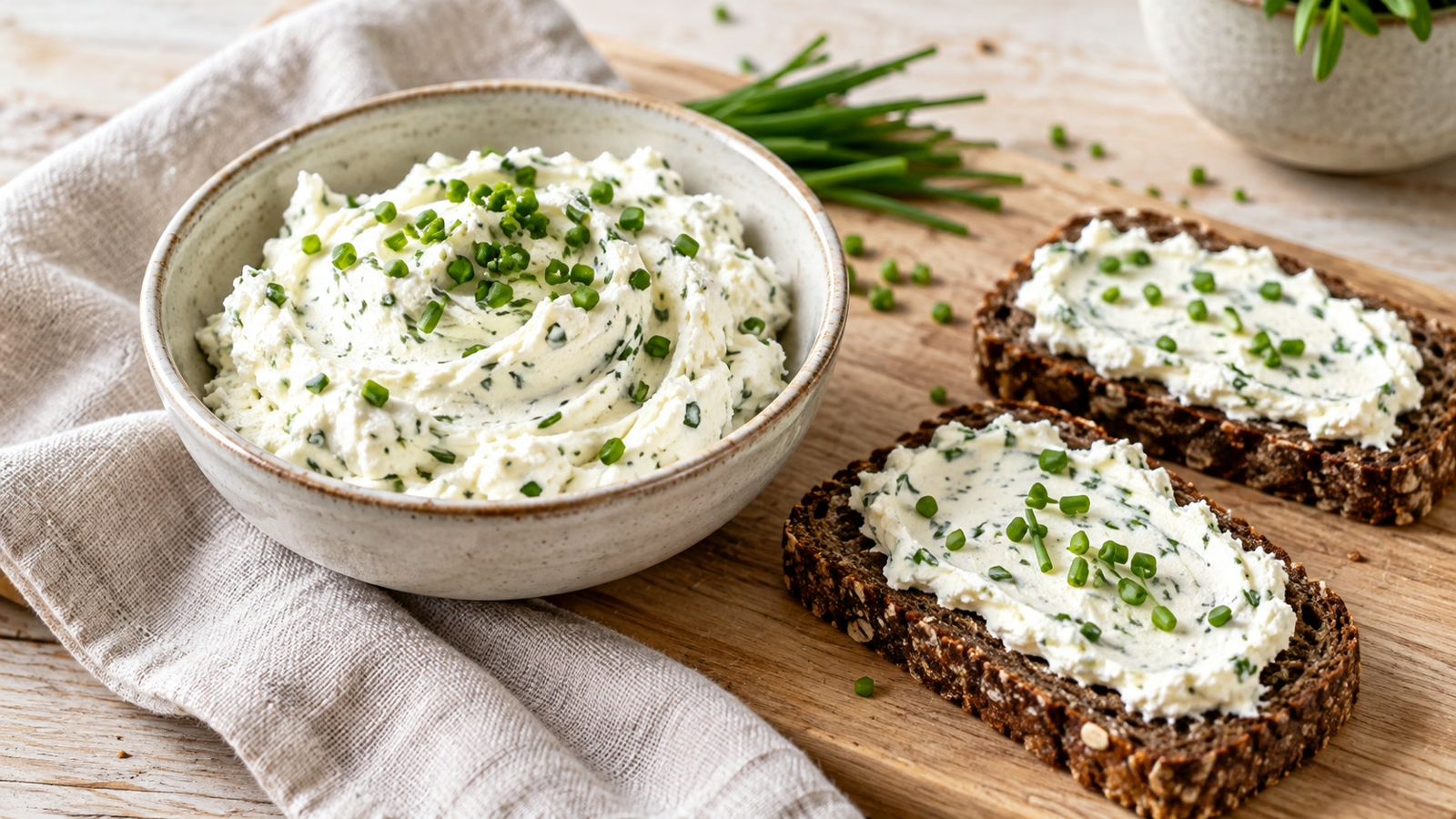
A cold spread is a low-pressure first use because you can adjust it as you go. The Canadian Dairy Commission lists seasoned toppings and dips among quark’s applications, including a chive topping for potatoes. Keep the additions simple enough to notice the mild cheese underneath.
- On bread: Spread plain quark on rye or toast, then add chopped chives and black pepper. Taste before adding salt.
- With potatoes: Spoon an herb-seasoned quark alongside cooked potatoes rather than treating it like a melting cheese.
- As a dip: Stir in herbs gradually. If the texture needs loosening, add a compatible liquid a little at a time rather than committing the whole tub.
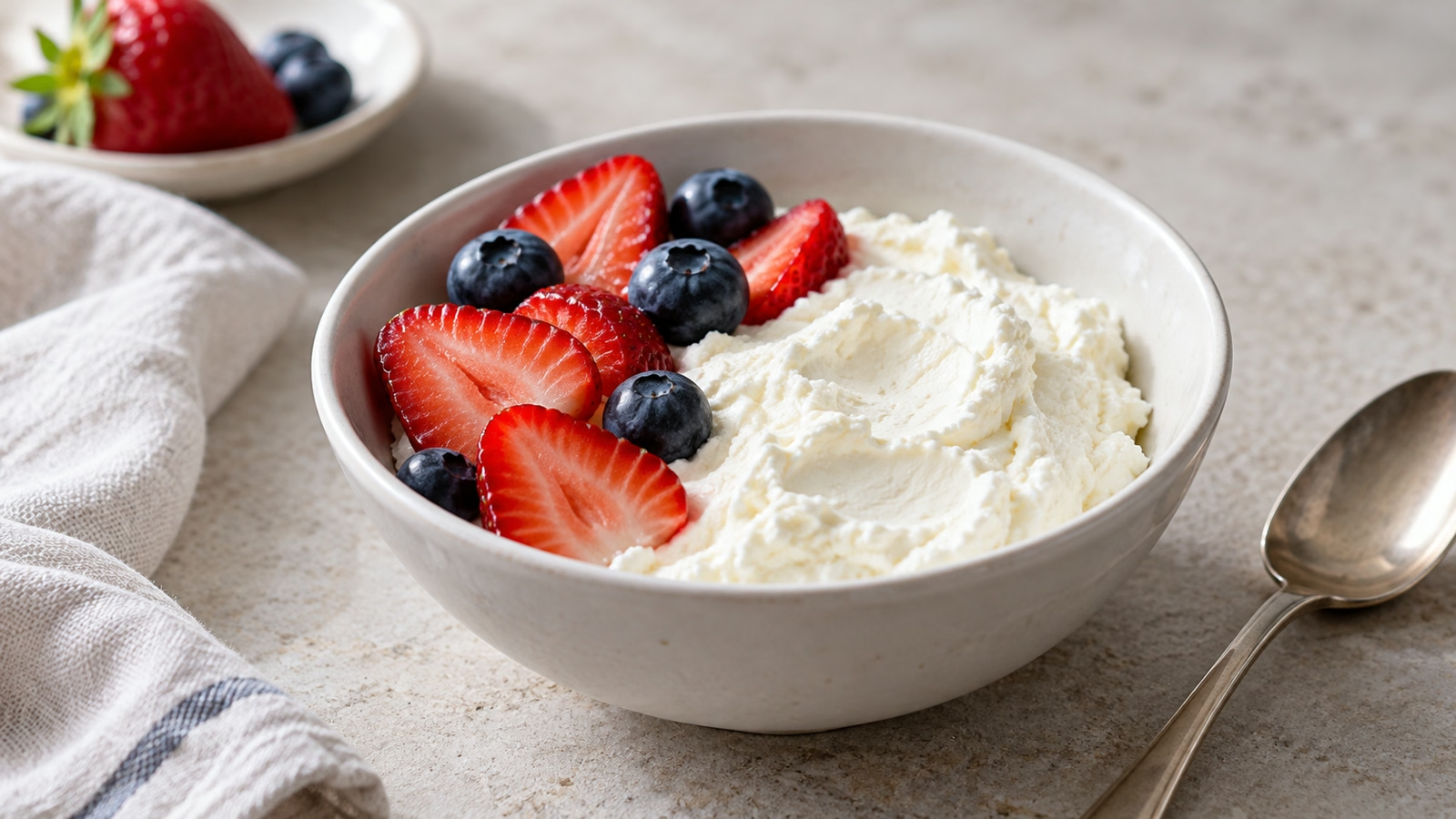
- In a fruit bowl: Add fresh berries or a spoonful of fruit compote. Sweeten only after tasting the combination.
- In baking: Look for a recipe that specifies quark and tells you whether it should be drained or have a particular fat level.
Quark also appears in warm dishes, but gentle-looking dairy does not guarantee a smooth result under heat. Arla warns that it can curdle and discusses using flour in warm preparations. Follow the method in a suitable recipe instead of stirring an unfamiliar tub straight into a vigorously boiling sauce.
Buy what you’ll use and keep it cold
Choose a size that matches a realistic plan: a few breakfasts, a dip, or a specific bake. If nutrition is part of your decision, compare the actual Nutrition Facts panels using the same serving amount. Plain, sweetened, low-fat, and richer quark products should not be treated as one nutritionally identical food.
- Keep quark refrigerated and follow its package date and instructions after opening.
- Use a clean spoon and close the container promptly. Serve a portion rather than leaving the entire tub on the table.
- Vermont Creamery advises serving its cup-packaged quark cold. Its fresh-cheese guidance calls for using opened products within about a week; follow your own product’s instructions if they differ.
- Discard soft cheese with visible mold. USDA guidance does not support simply scraping mold off a soft cheese.
- Freezing can change the texture. Arla advises refrigerator thawing and whisking afterward; if a perfectly smooth cold serving matters, using the quark fresh is the simpler choice.
My favorite way to approach an unfamiliar dairy ingredient is to give it one easy job first. A small bowl with fruit or a little herb spread is enough to learn its texture. Once you know the tub, choosing a more involved recipe becomes much less of a guess.
Undeniably Dairy’s short video introduces quark and its place among fresh dairy foods.
Sources
- Canadian Dairy Commission: Quark Cheese.
- U.S. Dairy: What Is Quark?.
- Arla: Quark, Uses and Freezing.
- Vermont Creamery: Fresh-Cheese Storage and Serving FAQ.
- USDA FSIS: Mold on Food and Soft Cheese.

Hi, I’m Laura, the voice behind Tastiva. I’ve always believed that eating well should feel enjoyable, comforting, and realistic—not like another complicated rule to follow. I love creating recipes that fit into everyday life, sharing simple nutrition ideas, and finding small ways to make meals feel a little better without losing the pleasure of good food.