
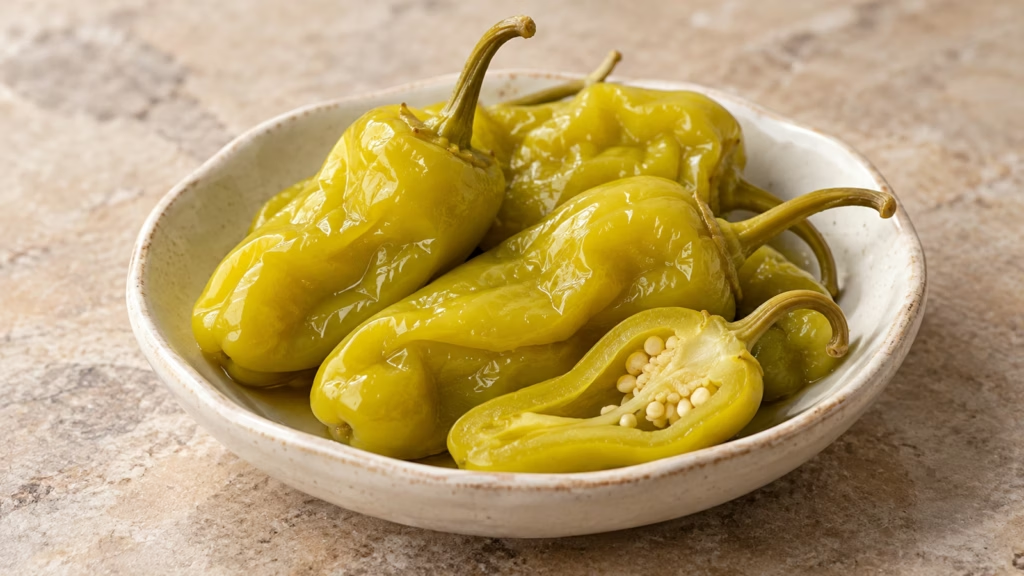
A sandwich can have plenty of cheese and still need one sharp, crunchy bite. Pepperoncini are the yellow-green peppers commonly sold pickled in jars, bringing tang, a little heat, and texture to sandwiches, salads, and other savory dishes. Think of the jar as a seasoning choice: the peppers add crunch, while the brine adds liquid, salt, and acidity.
Use the peppers for little bright bites, and add the brine only when the dish needs more liquid and tang.
I’d taste a small piece before adding a generous handful. “Mild” is a helpful starting point, but brands and personal tolerance differ, and an ingredient that wakes up one sandwich can take over another.
What pepperoncini brings to a dish
In a U.S. grocery store, pepperoncini usually refers to the pickled peppers near olives and other jarred vegetables. You may also see the spelling peperoncini, as Mezzetta uses on its jars. Check the actual product rather than assuming a similar word on every international label means the same preparation.
- Flavor: Expect pepper flavor with a vinegary, salty edge from the pickling liquid. Mezzetta describes its Greek peppers as fruity and mildly piquant.
- Heat: The manufacturer places its peppers in a mild-to-medium range. That is not a guarantee that every jar or bite will feel equally gentle.
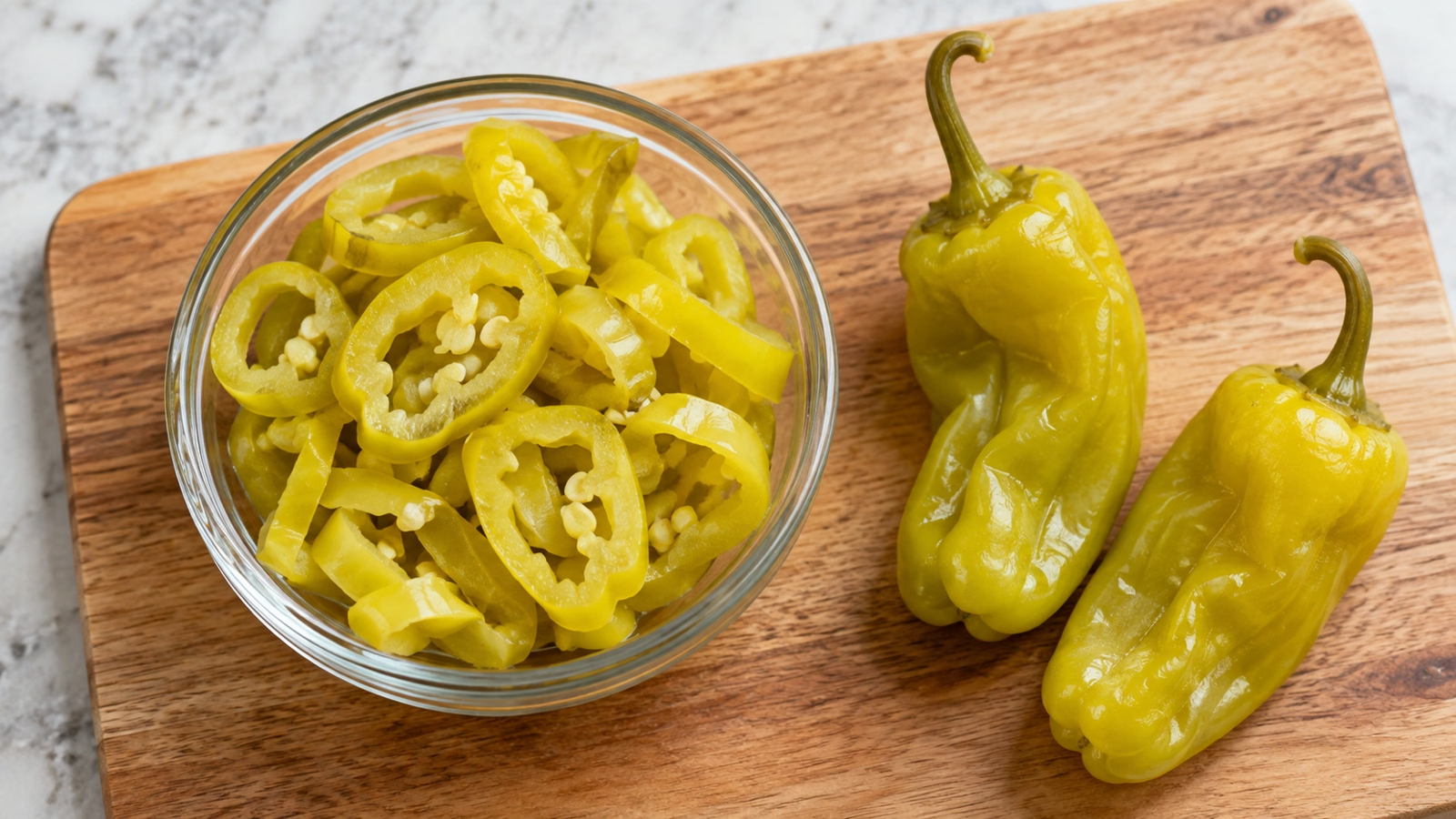
- Texture: Whole peppers give a more distinct bite; slices spread through a salad or sandwich more readily. A drained spoonful is easier to control than a pour straight from the jar.
- Ingredients: Commercial brines vary. Mezzetta’s Golden Greek product includes vinegar and salt along with other listed ingredients, so read your own label for dietary needs.
Pepperoncini and pepperoni are very different shopping-list items: one is a pepper, the other a cured sausage. More importantly for cooking, pickled peppers are not interchangeable with an equal handful of fresh chiles; the fresh version does not bring the same brine.
Pepperoncini, banana peppers, and hotter swaps
Banana peppers and pepperoncini can occupy the same corner of a sandwich bar, but they are different products. For a substitution, match the job: do you need mild pickled crunch, more heat, or simply something bright against a rich filling?
- Pickled mild banana pepper rings: A practical starting point when mild crunch and tang are the priority. Mezzetta describes its version as mild, sweet, tangy, and crunchy; expect its own flavor rather than an exact duplicate.
- Pickled jalapeños: Choose them only when the change in pepper flavor and potentially stronger heat suits the dish. Start with less and taste.
- Sport peppers: These are a different small pickled chile associated with Chicago hot dogs. Tastiva’s sport pepper guide explains that ingredient and its more assertive role.
- Fresh peppers: They can add fresh pepper texture, but they do not replace the acidity of a pickled product. Follow a recipe designed for the ingredient you have.
I’d compare two jars by taste and ingredient list before worrying about which has the more authentic-looking photograph. Whole versus sliced, heat level, and the brine itself can matter more to lunch than the color on the front label.
Use the peppers without making everything soggy
Pepperoncini can provide contrast in a dish that is rich, creamy, or otherwise mild. Drain the amount you plan to use, then decide whether it belongs in large bites, thin slices, or smaller chopped pieces. These are serving ideas, not a recipe that needs every ingredient listed here.
- Sandwiches: Layer drained slices among the filling rather than pouring liquid onto bread. Remove whole stems before chopping peppers into a mixture.
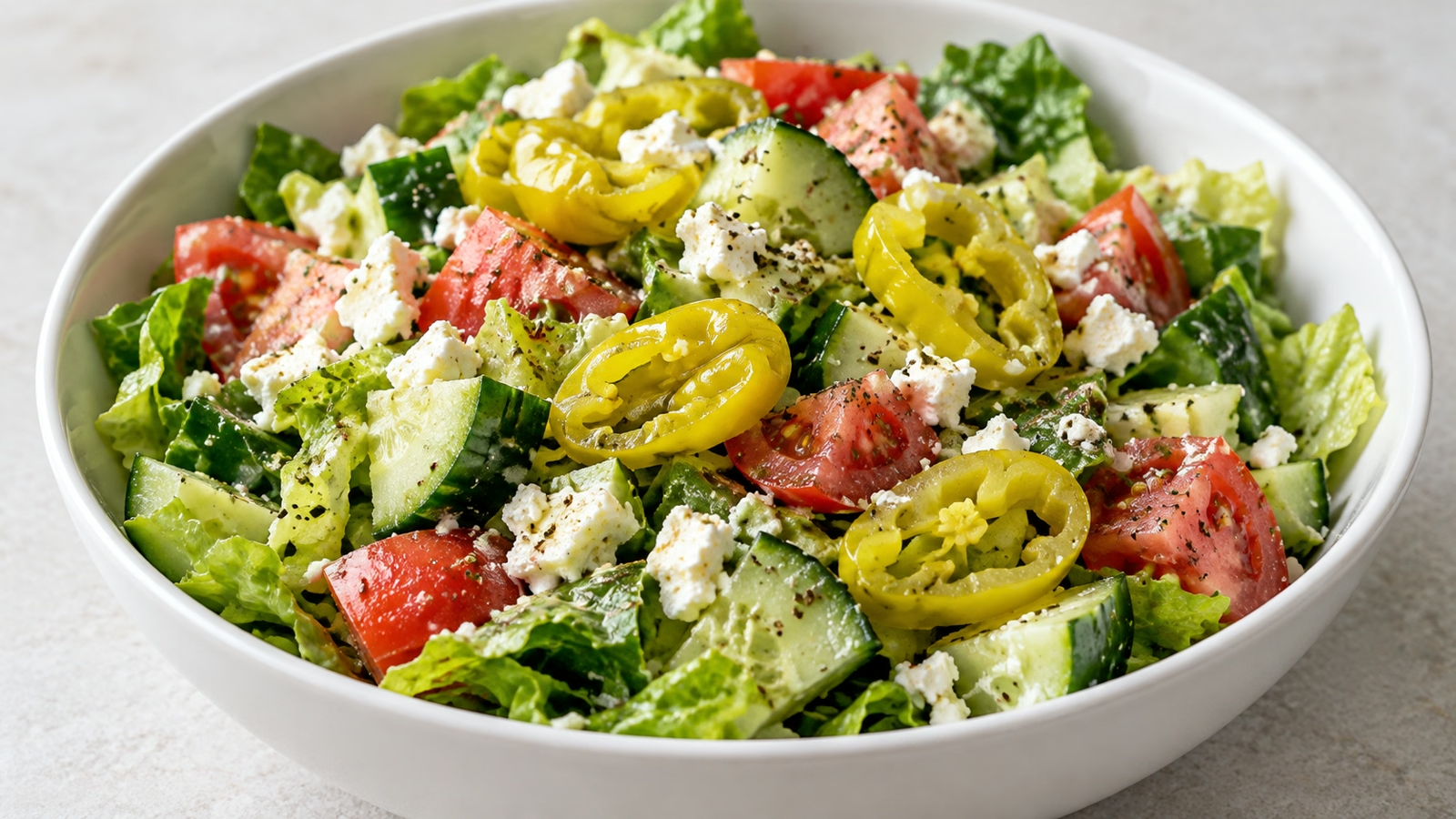
- Chopped salads: Mix a modest amount with cucumber, tomato, greens, and a little feta. Taste the combined salad before adding more salt or vinegar.
- Creamy dips: Finely chopped peppers can add small bursts of flavor through a cheese- or yogurt-based dip. Begin with a spoonful in a small portion if you are improvising.
- Antipasto plates: Whole peppers work alongside cheese and cured meat when guests can choose their own amount. Keep stems obvious rather than hiding them in another bite.
- Cooked dishes: Use a complete recipe when the peppers and brine are part of a braise or sauce. Their salt and acid affect the whole dish, not just the garnish.
A little brine can also sharpen a dressing or sauce. I would add it gradually, tasting after mixing, because it changes both seasoning and consistency. It is easier to loosen a thick dip deliberately than to ask crackers to rescue a runny one.
Buy the right jar and store it as directed
Choose the size you will realistically use, check whether the peppers are whole or sliced, and read the heat label. Compare sodium using the same serving amount if that is important to you; a tiny label serving can be easy to overlook when the peppers are scattered freely over a meal.
- After opening: Follow the jar’s refrigeration directions. Mezzetta specifically says to keep its opened products refrigerated.
- Use clean utensils: Take out what you need with a clean fork or spoon instead of fingers. Close the jar and return it to the refrigerator.
- Mark the opening date: Mezzetta recommends its vinegar-packed peppers within three months of opening for best quality. That is manufacturer guidance for those products, not a universal deadline for every jar.
- Read product-specific instructions: A jar of roasted peppers, a pepper sauce, and vinegar-packed pepperoncini may have different storage windows. Do not carry one product’s directions over to another.
- Keep homemade preservation separate: This guide concerns commercially prepared jars. It does not provide a canning method or a shelf-stable homemade brine formula.
The short video below comes from Mezzetta’s official channel and pairs peperoncini with prosciutto. It offers an appetizer serving idea, rather than instructions for preserving peppers at home.
Sources
- Mezzetta: Pepper types, flavor, and uses
- Mezzetta: Golden Greek Peperoncini ingredients
- Mezzetta: Mild banana pepper rings
- Mezzetta: Refrigeration and opened-product guidance
- Mezzetta: Peperoncini in a creamy dip

Hi, I’m Laura, the voice behind Tastiva. I’ve always believed that eating well should feel enjoyable, comforting, and realistic—not like another complicated rule to follow. I love creating recipes that fit into everyday life, sharing simple nutrition ideas, and finding small ways to make meals feel a little better without losing the pleasure of good food.