
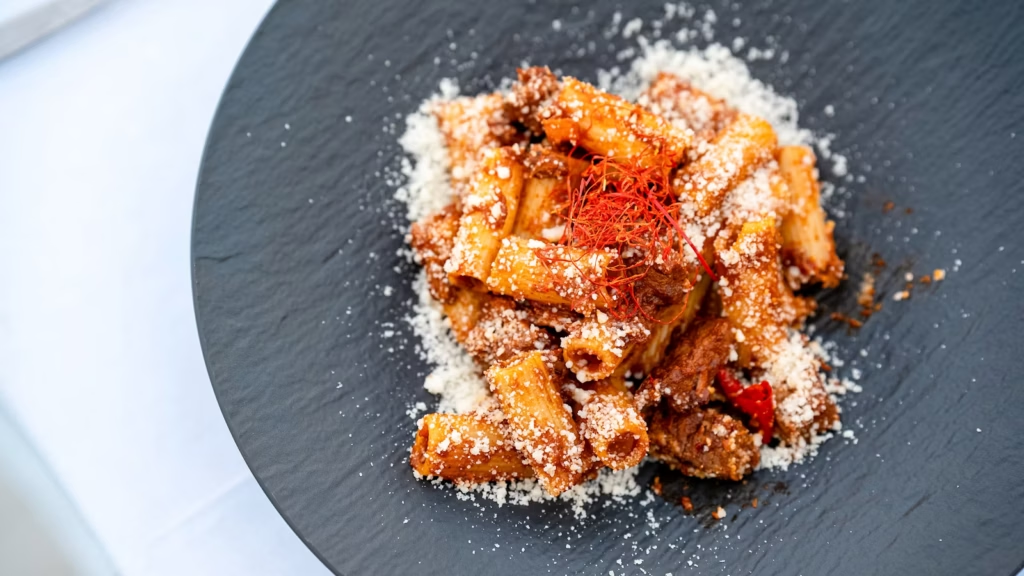
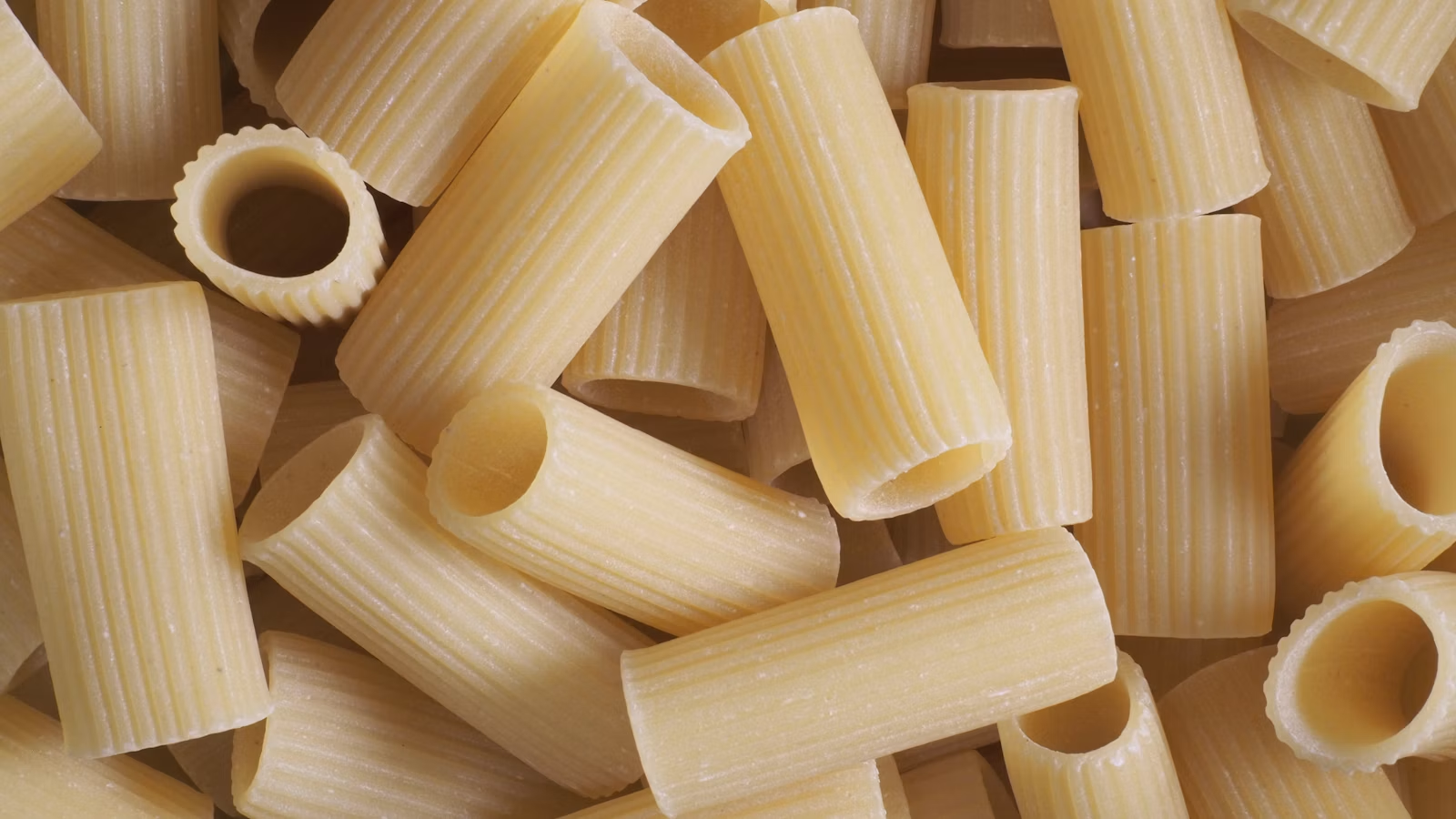
Rigatoni is a large, straight tube pasta with deep ridges running lengthwise and ends cut square across. The shape looks simple, but it solves several cooking problems at once: the outside grips sauce, the hollow center catches meat and vegetables, and the thick wall keeps a satisfying chew under heavy ragù or a layer of baked cheese. It is especially useful when a delicate strand would disappear beneath the sauce or a smaller tube would lose the chunky pieces.
Rigatoni works because sauce meets the pasta three ways: on the ridges, inside the tube, and along each sturdy cut edge.
What rigatoni is and where the name comes from
Rigatoni is dried durum-wheat semolina pasta extruded as a wide cylinder and cut into short lengths. The name comes from the Italian rigato, meaning ridged or lined. Barilla’s historical archive describes those ribs as marks created by the pasta die, while De Cecco identifies rigatoni as a traditional Roman shape. Modern production is widespread across Italy, and the pasta is strongly associated with central and southern cooking.
Rigatoni vs. penne, ziti, and tortiglioni
Rigatoni is wider and usually shorter than penne, with square-cut ends instead of penne’s diagonal quill shape. Ziti is typically narrower and smooth, although regional and brand differences blur the labels. Tortiglioni is another ridged tube, but its grooves spiral around the pasta rather than running parallel. Mezzi rigatoni simply means shorter rigatoni and suits spoons, smaller baking dishes, and sauces with finely cut pieces.
These details affect the bite. Penne gives you pointed edges and a narrower channel; ziti feels smoother; rigatoni provides a broad, substantial chew. When substituting, match diameter and wall thickness before worrying about the exact name, and follow the cooking time printed on the new package rather than assuming every tube cooks alike.
Why the ridges and wide tube matter
Thick or chunky sauces need physical places to settle. Rigatoni’s ridges hold emulsified tomato, cream, or cheese sauce on the exterior, while the open tube catches crumbled sausage, mushrooms, eggplant, peas, and bits of braised meat. The sturdy wall also survives vigorous tossing and a second round of heat in the oven. Bronze-cut versions often feel rougher, adding even more surface for sauce to cling to.
The best sauces for rigatoni
Start with sauces that have body: beef or pork ragù, sausage and tomato, mushroom cream, alla Norma, vodka sauce, or a slow-cooked vegetable sauce. Roman combinations are a natural fit. Amatriciana brings tomato, pecorino, chile, and cured pork; this guide to guanciale explains the traditional ingredient. A small amount of spicy ’nduja can melt into tomato sauce and lodge in the tubes.
Very thin oil-based sauces tend to drain away unless they are emulsified with starchy pasta water. If using a lighter sauce, add grated cheese, puréed vegetables, or butter and pasta water to give it enough body to coat the ridges. Keep chunky ingredients smaller than the tube opening so some travel inside instead of collecting at the bottom of the bowl.
How to cook rigatoni so it holds sauce
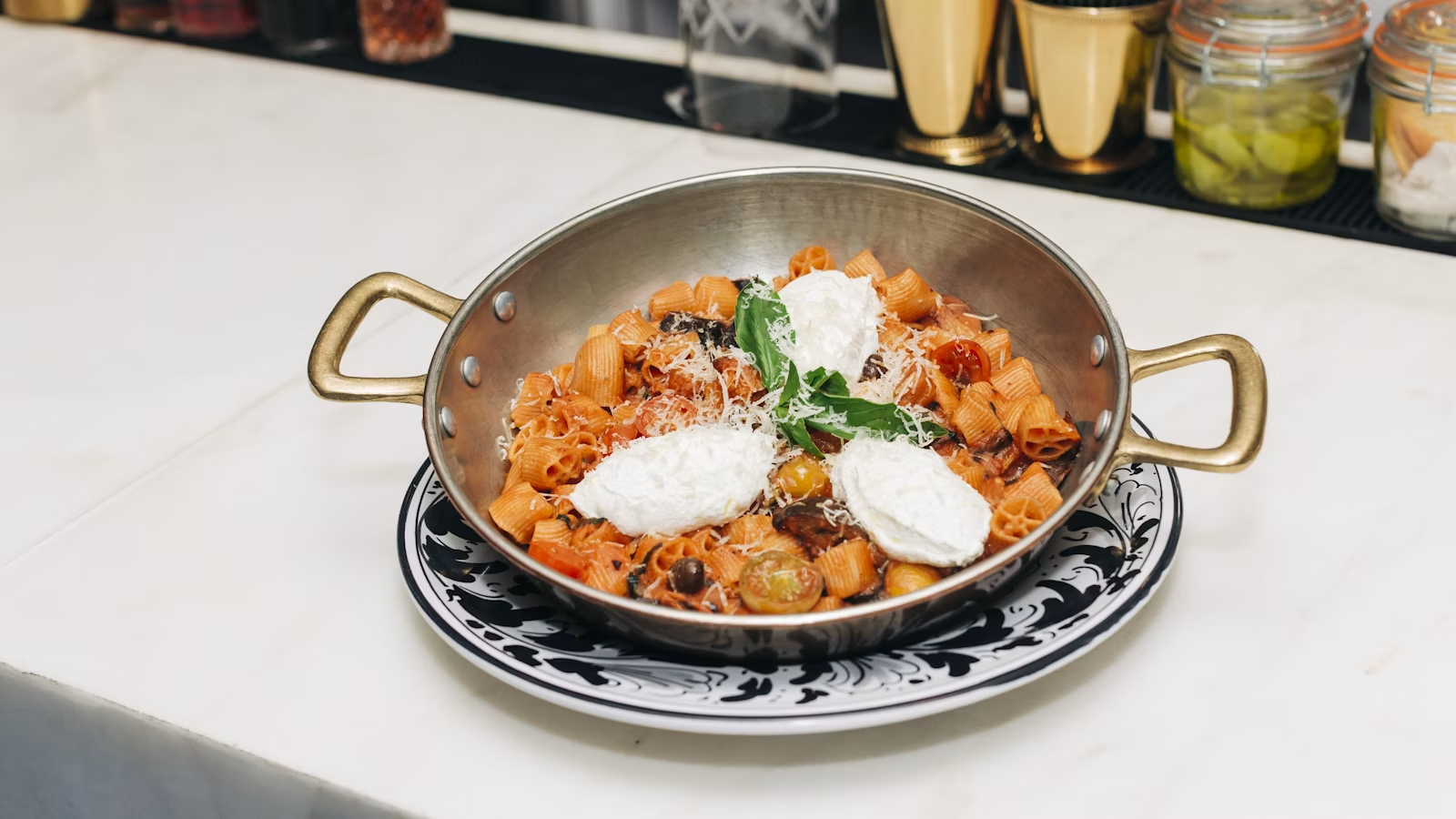
Use a broad pot of well-salted boiling water and stir during the first two minutes, when tubes are most likely to nest together. Begin tasting before the package time ends. Drain when the center is firm but no longer chalky, reserving at least a cup of pasta water. Finish rigatoni in the sauce for one to two minutes so starch, fat, and liquid form a coating instead of separate layers.
Do not add oil to the cooking water; it floats on the surface and can make the pasta harder to coat after draining. For baked rigatoni, undercook by two or three minutes because the pasta continues absorbing moisture in the oven. Make the sauce slightly looser than a stovetop version and cover during the first portion of baking so exposed edges do not dry out.
Storage, reheating, and smart substitutes
Refrigerate cooked rigatoni within two hours in a covered shallow container and use it within three to four days. Reheat sauced pasta with a spoonful of water in a covered pan or bake until steaming throughout. Plain cooked pasta benefits from a small amount of sauce before storage, which limits sticking better than rinsing away its starch.
Penne rigate, tortiglioni, mezzi maniche, or ziti can substitute in most dishes. Choose penne for a slightly lighter bite, tortiglioni for similar sauce grip, and ziti for baked dishes where a smooth tube is welcome. Paccheri is much larger and changes portioning, so it works best when the filling or sauce is designed around that scale.
Chef Adrienne Cheatham explores pasta-and-sauce pairings for Epicurious. Jump to 18:31 for rigatoni and a gricia example, or watch the wider guide to compare the other shapes mentioned above.
Sources
- Barilla Historical Archive: Rigatoni name and production
- De Cecco: Rigatoni shape and sauce pairings
- Barilla: Pasta and sauce pairing guide
- USDA FSIS: Leftovers and food safety

Hi, I’m Laura, the voice behind Tastiva. I’ve always believed that eating well should feel enjoyable, comforting, and realistic—not like another complicated rule to follow. I love creating recipes that fit into everyday life, sharing simple nutrition ideas, and finding small ways to make meals feel a little better without losing the pleasure of good food.