
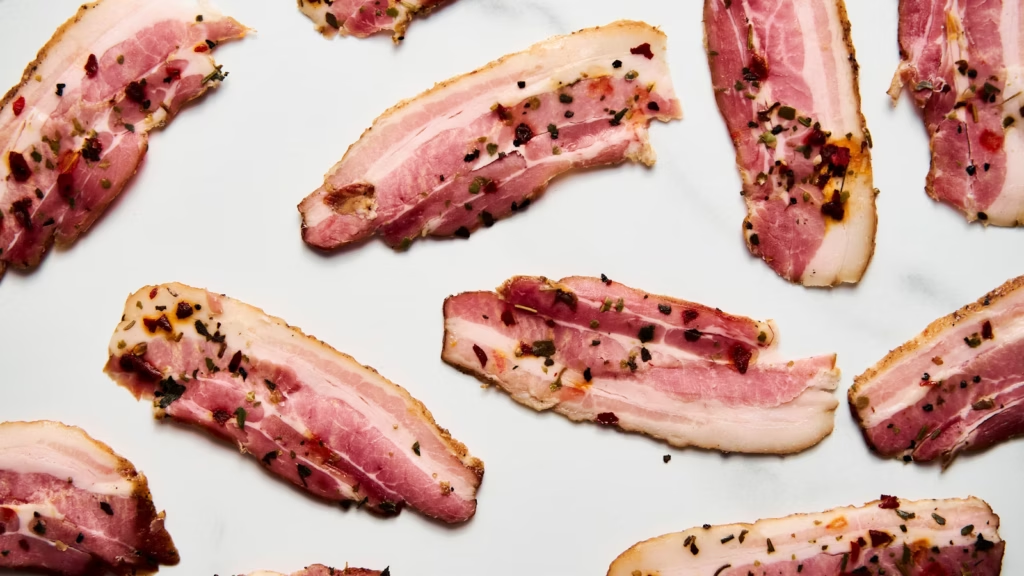
Guanciale is the cured pork that gives several Roman pastas their deep, savory backbone. It looks modest—mostly creamy fat threaded with a little rosy meat—but a few slowly rendered pieces can season an entire pan. If you have seen it on a specialty-market label and wondered whether it is simply expensive bacon, the short answer is no. The useful answer is more delicious.
Guanciale is small, salty proof that the quietest ingredient in the pan can run the whole dinner.
The name comes from guancia, the Italian word for cheek. Producers cure the pig’s jowl with salt and seasonings, often including black pepper, then dry it until the texture firms and the flavor concentrates. The finished cut is especially associated with Lazio and central Italy. It is not usually smoky, so its pork flavor comes through clearly instead of hiding behind a campfire.
What is guanciale?
Guanciale is a whole-muscle salume made from pork jowl rather than belly or leg. A cross-section shows more fat than lean meat, which is exactly the point. That firm jowl fat melts gradually in a skillet, leaving crisp edges and enough richly flavored fat to coat pasta, soften onions, or start a pot of beans.
Seasoning changes by producer. Black pepper is common; garlic, chile, herbs, or other spices may appear too. Some regional versions are lightly smoked, but many are not. Read the label rather than assuming every block will taste identical. La Cucina Italiana describes guanciale as a triangular cured jowl with one or two veins of lean meat—an easy visual clue when you are shopping.
What does guanciale taste like?
Expect a concentrated pork flavor, pronounced salt, warm spice, and a soft sweetness from the fat. Raw cubes feel firm and waxy; cooked slowly, they become translucent, then golden and crisp at the edges while staying pleasantly chewy inside. The rendered fat tastes rounder and more distinctly porky than neutral cooking oil.
That intensity is why you do not need much. Guanciale is a seasoning as much as a piece of meat. Pair it with plain ingredients that can absorb what it gives: pasta, beans, lentils, sturdy greens, potatoes, or eggs. Salt the rest of the dish cautiously, because both the pork and its frequent partner, Pecorino Romano, already bring plenty.
Guanciale vs pancetta and bacon
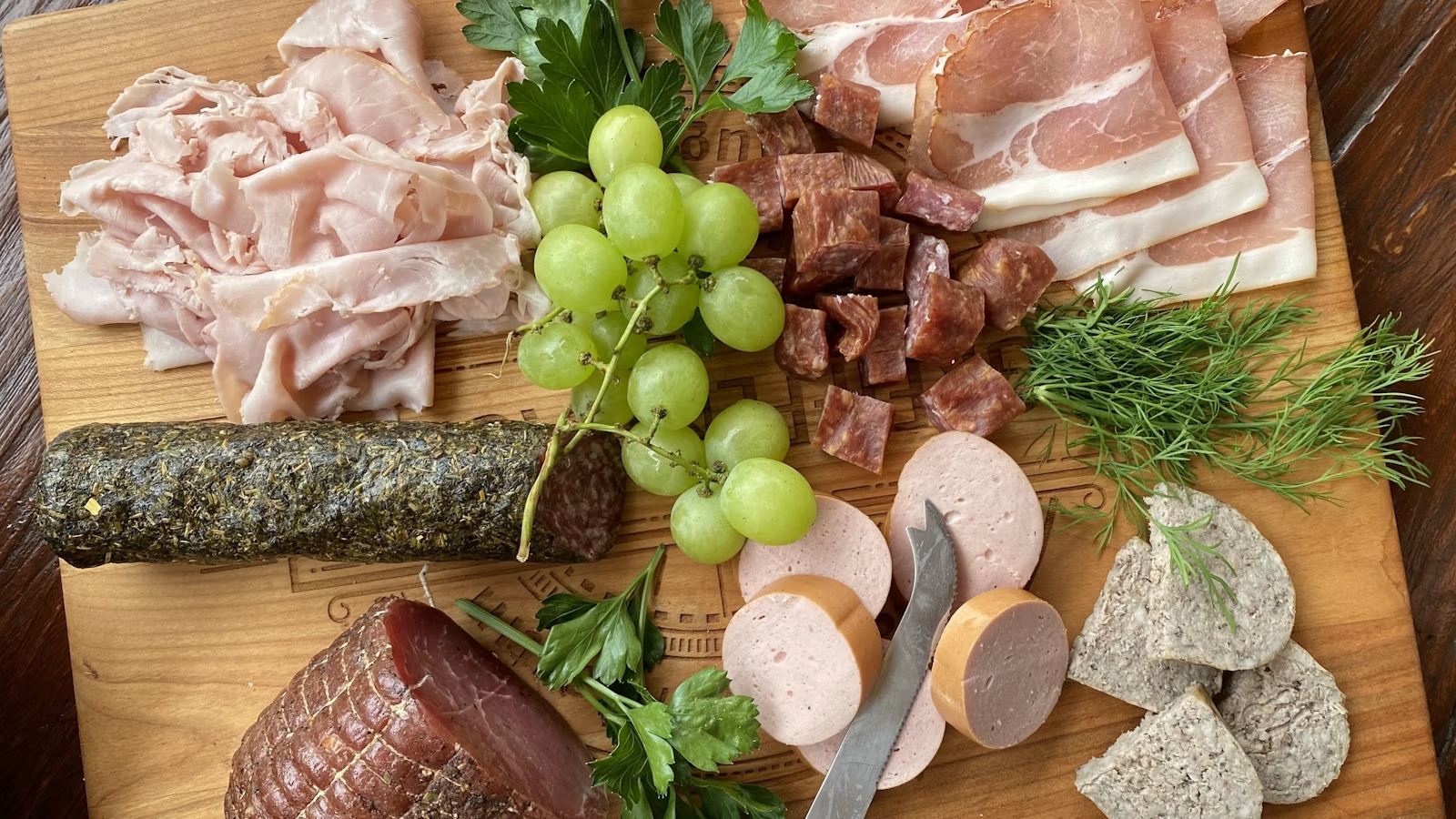
All three are cured pork, but the cut and treatment change the result. Guanciale comes from the jowl and has the highest proportion of firm fat. Pancetta comes from the belly and is generally milder. American-style bacon also comes from the belly and is usually smoked, so it adds a flavor that traditional Roman sauces do not have.
Pancetta is the closest practical substitute when guanciale is unavailable. It will render nicely, though the sauce may taste leaner and less assertive. Bacon works if you enjoy smoke, but call it a variation rather than an invisible swap. Prosciutto is not a strong substitute: it is leg meat, much leaner, and prone to turning hard when fried in the same way.
How to cook with guanciale
Remove any tough rind if your butcher has left it on, then cut the meat into thick matchsticks or cubes. Put it in a cold, dry skillet and set the heat to medium-low. The slow start gives the fat time to melt before the lean parts scorch. Stir occasionally, and stop when the pieces are golden with crisp edges; they will firm a little more off the heat.
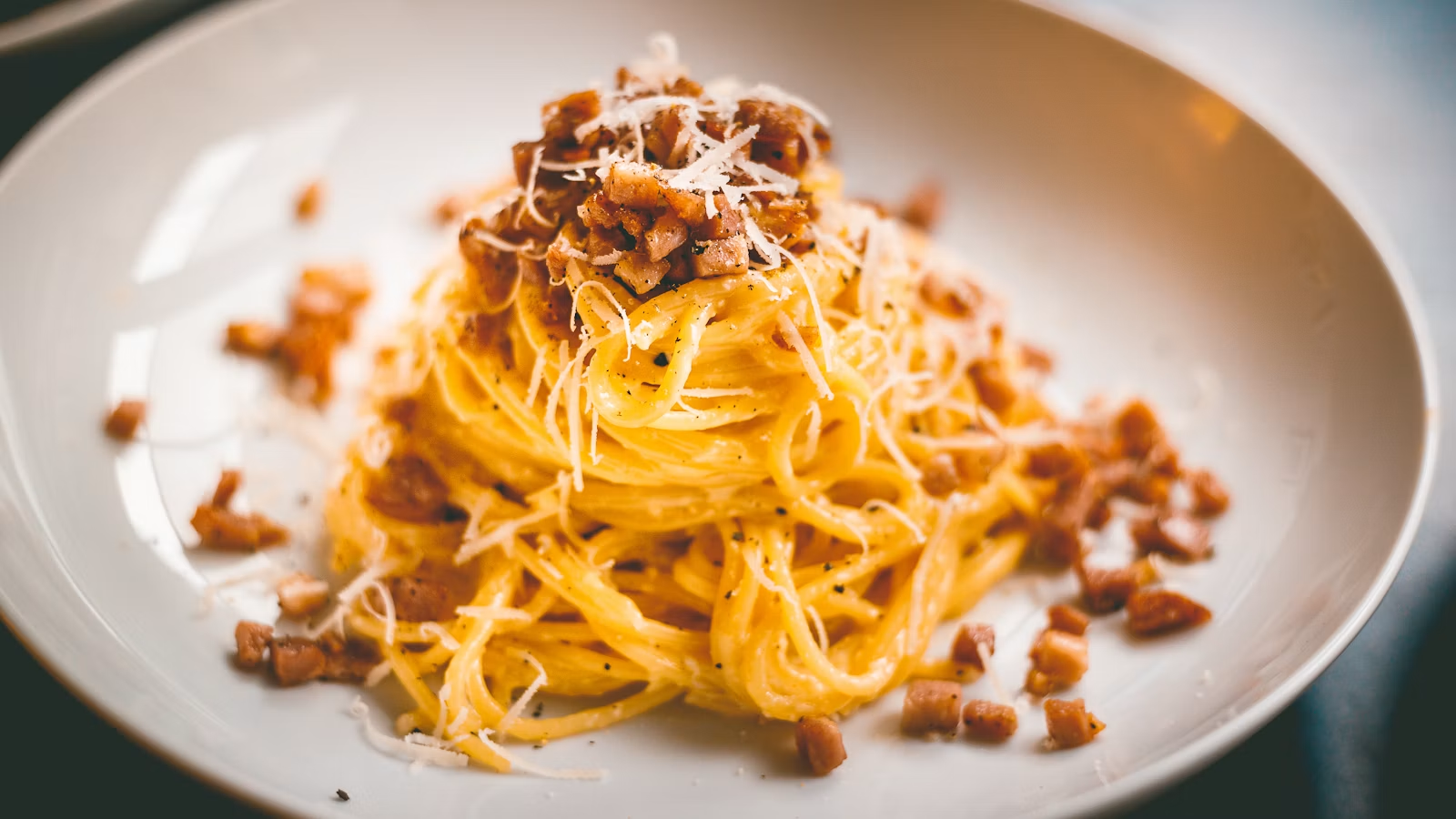
Keep that rendered fat. It is the foundation of carbonara, amatriciana, and gricia, three sauces that prove a short ingredient list can still have opinions. Rome’s tourism authority includes guanciale in its traditional carbonara, while Barilla pairs it with eggs and Pecorino Romano. Toss it with properly cooked durum-wheat spaghetti, or use a spoonful to begin soup, braised greens, or a pan of peas.
Buying, storing, and substituting
Look for guanciale at Italian markets, serious butcher shops, and well-stocked cheese counters. A good piece should smell clean and savory, not sour, and show firm white fat with streaks of pink meat. Buy it in one piece when possible; a block stays useful longer and lets you choose slim slices or substantial cubes.
Follow the producer’s label for storage because curing methods and packaging differ. Once opened, wrap the cut surface well and refrigerate it. Freeze smaller portions if you will not use them promptly, then thaw in the refrigerator. Guanciale is rich and salty, so I treat it as a flavor ingredient rather than the center of the plate: a modest amount delivers the point without making dinner feel like a dare.
Chef Frank Proto demonstrates cutting and cooking guanciale for carbonara in this Epicurious lesson. His variation starts with a little olive oil and leaves the pieces lightly browned and chewy; the method above uses a dry pan and aims for crisp edges.
Sources
- La Cucina Italiana: Guanciale glossary
- Italia.it: Guanciale in Lazio cuisine
- Turismo Roma: Traditional carbonara
- FoodSafety.gov: Cold food storage chart

Hi, I’m Laura, the voice behind Tastiva. I’ve always believed that eating well should feel enjoyable, comforting, and realistic—not like another complicated rule to follow. I love creating recipes that fit into everyday life, sharing simple nutrition ideas, and finding small ways to make meals feel a little better without losing the pleasure of good food.