
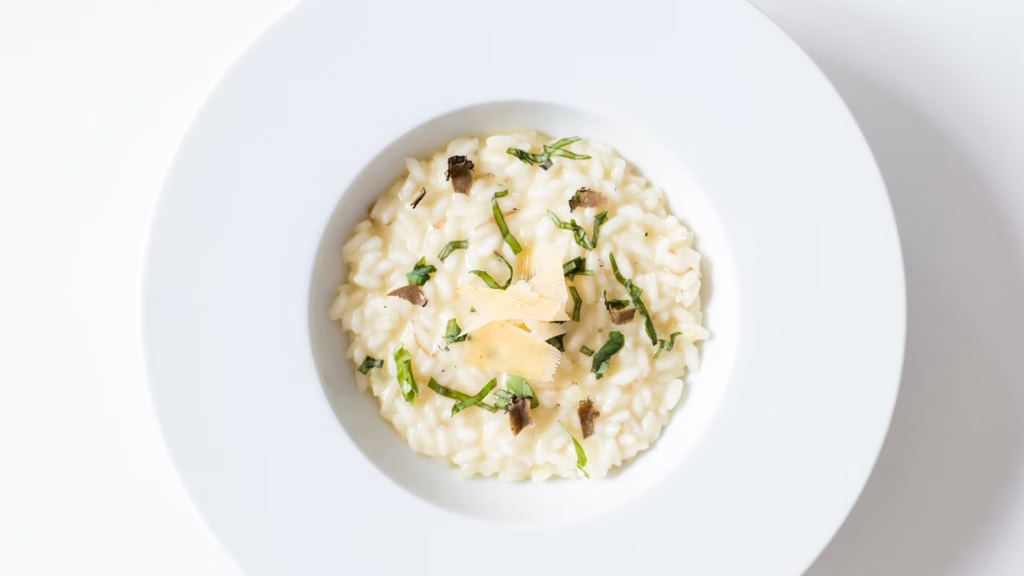
Risotto has a reputation for demanding constant attention, as if the saucepan might file a complaint when you look away. In practice, this risotto recipe asks for steady care, not panic: use the right rice, keep the stock hot, stir frequently, and stop while the grains still have a tender bite. Butter and Parmesan finish the dish, but the creamy body comes from rice starch and controlled additions of liquid—not a carton of cream.
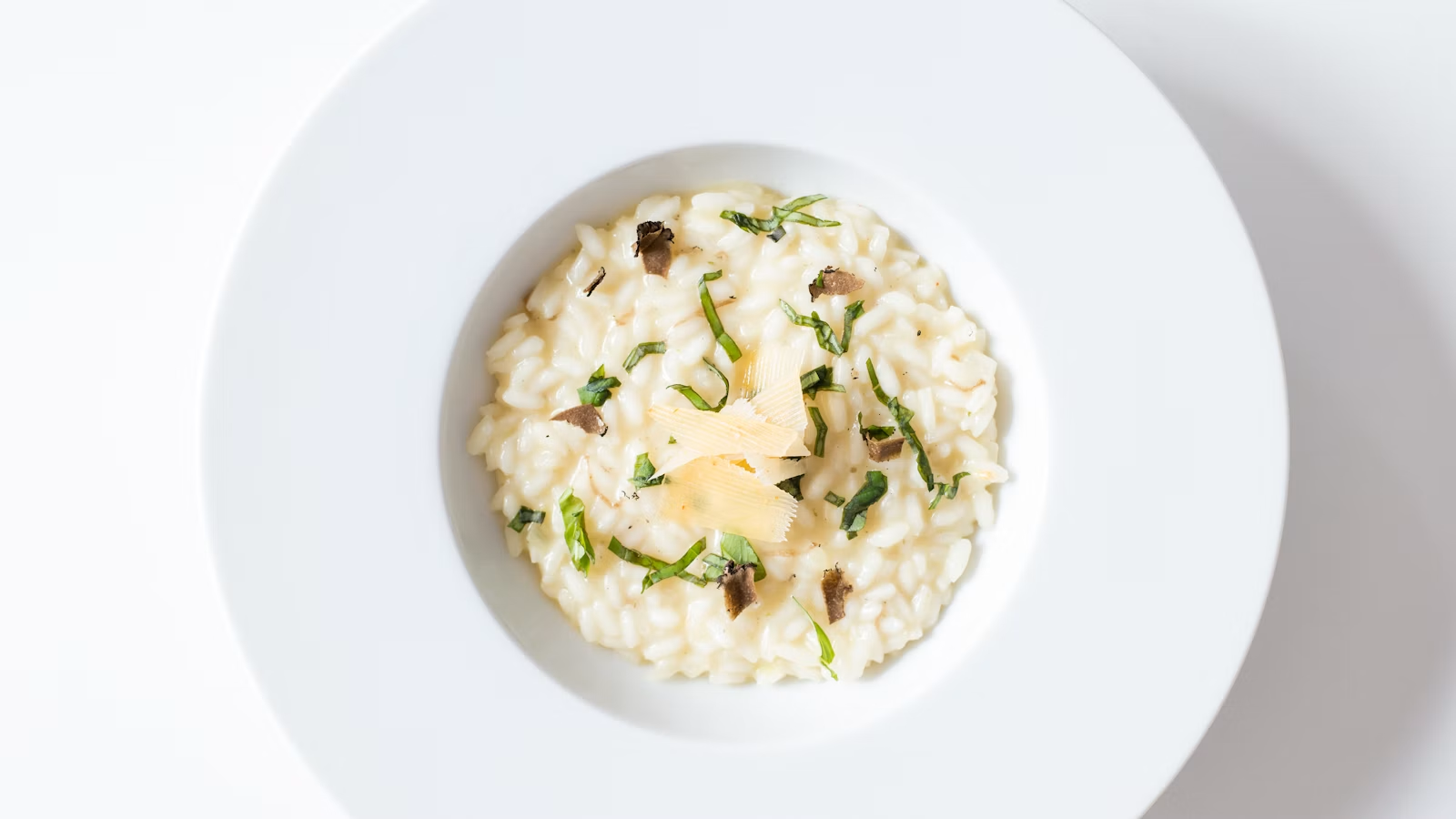
Good risotto should flow softly across a warm plate while each grain still keeps its own gentle bite.
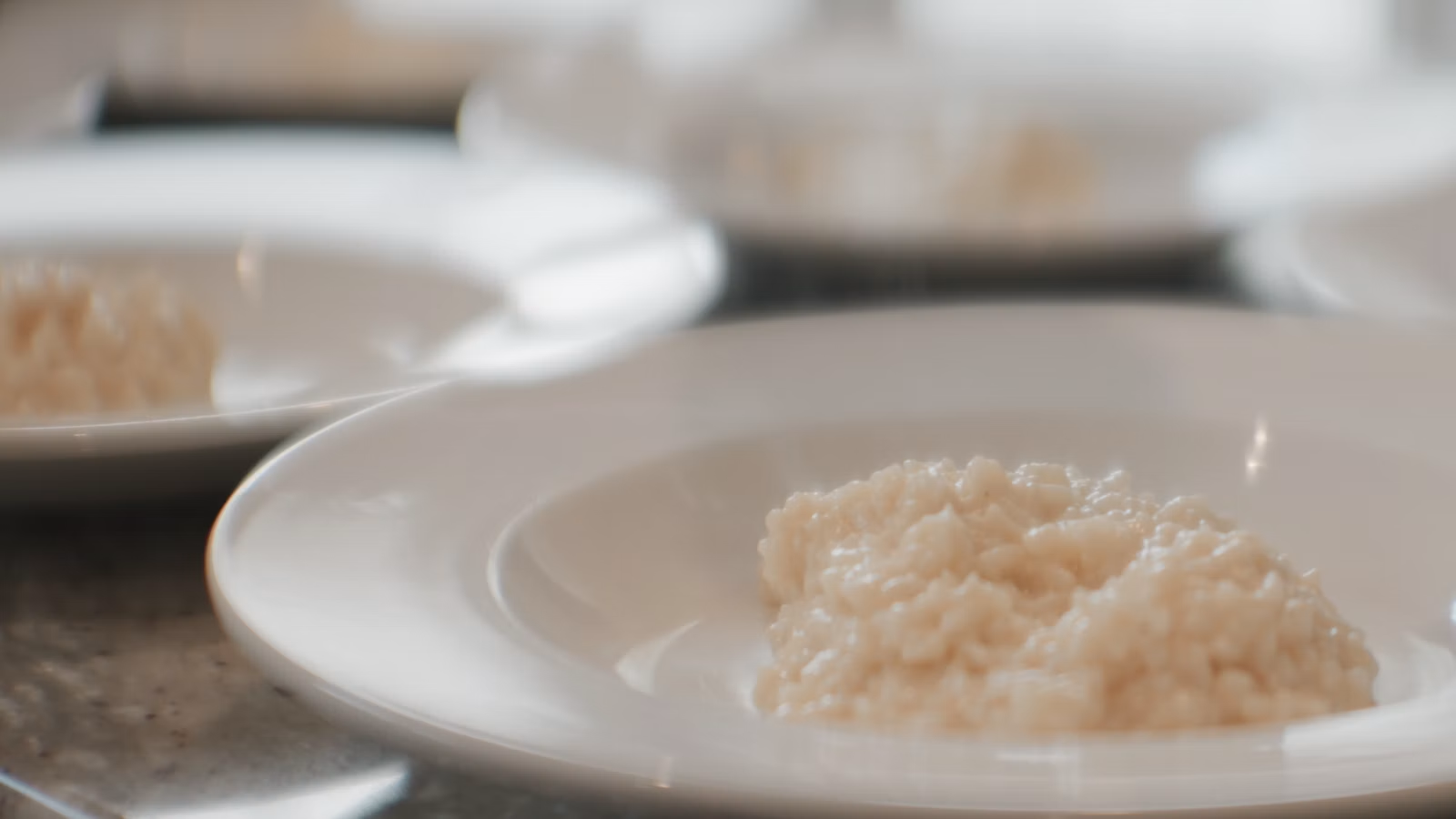
Why risotto turns creamy without cream
Arborio and Carnaroli are Italian rice varieties that can absorb liquid while releasing enough surface starch to thicken the broth. The grains soften outside but hold structure in the center, which is why long-grain rice cannot simply step into the same job. Do not rinse the rice for this method; washing away surface starch works against the texture you are trying to build.
- Toast the dry rice: Two minutes in the onion and fat gives the grains a glossy coat and a lightly nutty aroma.
- Add hot stock gradually: A steady simmer encourages even cooking without flooding the pan.
- Stir frequently: Movement releases starch, but a frantic nonstop whisk can damage the grains.
- Finish off the heat: Butter and Parmesan create the final glossy emulsion.
I prefer a wide saucepan because the rice cooks in a shallow layer and it is easier to see how quickly the liquid is disappearing.
Choose the rice, stock, and wine carefully
Carnaroli tends to hold its shape especially well, while Arborio is widely available and becomes beautifully creamy when watched closely. Either works here. Warm stock is essential; cold liquid repeatedly drops the pan temperature and makes the cooking rhythm harder to judge. If you need a fresh batch, Tastiva’s guide to how to make vegetable stock gives you a full-flavored base without pushing the risotto toward one specific variation.
- Stock: Choose low-sodium so the liquid can reduce without making the dish too salty.
- Wine: Use a dry white wine you would drink; sweet wine leaves the balance muddy.
- No-wine option: Replace it with more stock and add a tablespoon of lemon juice at the end.
- Parmesan: Grate it finely so it melts quickly instead of clumping.
Because stock and Parmesan both contribute salt, taste near the end rather than seasoning aggressively at the beginning.
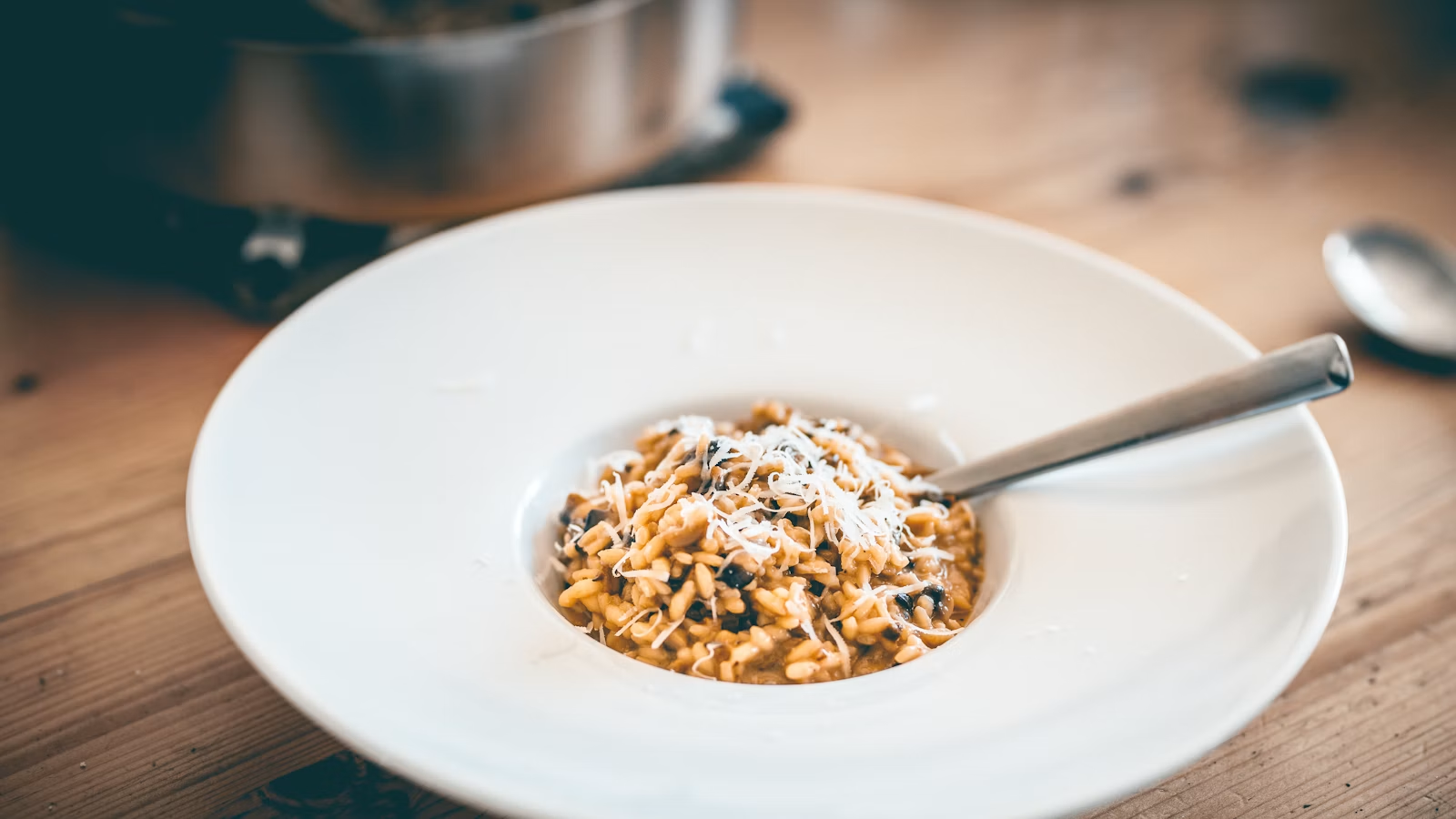
Texture cues that matter more than the clock
Start tasting after about 18 minutes of adding stock. A finished grain should be tender around the outside with a small, pleasant firmness at the center. The surrounding liquid should look creamy, not watery, and the spoon should leave a path that slowly closes.
- If the rice is firm and the pan looks dry, add another small ladle of stock.
- If the grains are nearly ready but the mixture is loose, cook briefly before adding more.
- Remove the pan while the risotto is slightly looser than you want; it thickens quickly off the heat.
- Stir in cold butter and Parmesan vigorously enough to make the surface glossy.
- Serve in warm bowls immediately.
Risotto that stands in a stiff mound has gone too far or waited too long. A splash of hot stock can loosen it, but the best fix is to have everyone ready before the last ladle goes in. Dinner may wait for people; risotto, rather famously, does not.
Variations and safe leftover storage
For mushroom risotto, brown sliced mushrooms separately and fold them in near the end so they stay savory rather than steaming in the rice. Peas, roasted squash, asparagus, or lemon zest also work, but add each ingredient according to the time it needs. Delicate vegetables should not spend 25 minutes surrendering every trace of color.
- Mushrooms: Sauté until browned; add with the final stock.
- Peas: Stir frozen peas in during the last 3 to 4 minutes.
- Roasted squash: Fold in gently after the rice is cooked.
- Lemon: Add zest with the Parmesan and juice only after tasting.
Cool leftover risotto quickly in a shallow container and refrigerate it within two hours, following FoodSafety.gov guidance. Reheat with stock until steaming hot, though the texture will be thicker than the original. Leftovers are also excellent for arancini if you follow a tested frying recipe and handle the filling safely.
Risotto Recipe
The card below keeps the full amounts, timing, nutrition estimate, and cooking sequence together. Read through once before starting so the hot stock and finishing ingredients are ready when the rice needs them.
Risotto Recipe

Ingredients
- 5 cups low-sodium vegetable or chicken stock kept hot
- 2 tablespoons extra-virgin olive oil
- 1 small yellow onion finely diced
- 1 1/2 cups Arborio or Carnaroli rice do not rinse
- 1 cup dry white wine
- 3 tablespoons unsalted butter divided
- 1 cup finely grated Parmesan cheese about 3 ounces, plus more to serve
- 1/2 teaspoon fine salt plus more to taste
- 1/4 teaspoon freshly ground black pepper
Equipment
- 1 medium saucepan for the stock
- 1 wide heavy saucepan
- 1 ladle
- 1 wooden spoon
Instructions
- Bring the stock to a gentle simmer in a medium saucepan, then keep it hot over low heat.
- Heat the olive oil and 1 tablespoon butter in a wide, heavy saucepan over medium heat. Add the onion and a pinch of salt; cook 5 to 6 minutes until soft but not browned.
- Stir in the rice and cook for 2 minutes, until the grains look glossy and the edges turn slightly translucent.
- Pour in the wine and stir until it is almost completely absorbed and the sharp alcohol aroma fades, about 2 minutes.
- Add one ladle of hot stock and stir frequently until mostly absorbed. Continue adding stock a ladle at a time for 18 to 22 minutes, keeping the rice at a lively simmer, until creamy and al dente.
- Remove the pan from the heat. Stir in the remaining 2 tablespoons butter, Parmesan, pepper, and enough extra stock to make the risotto flow slowly when the pan is tilted. Taste and adjust salt.
- Spoon into warm shallow bowls and finish with more Parmesan and black pepper. Risotto should spread softly rather than stand in a stiff mound.
Nutrition
Video
Notes
- Do not rinse the rice; the surface starch helps create the creamy texture.
- Keep the stock hot so each addition maintains a steady simmer.
- The wine can be replaced with an equal amount of extra stock plus 1 tablespoon fresh lemon juice added at the end.
- Refrigerate leftovers in a shallow container within 2 hours. Reheat with a splash of stock; the texture will be thicker than freshly made risotto.
- Nutrition is an estimate using vegetable stock and will vary by stock and cheese brand.
Tried this recipe?
Let us know how it turned out!Sources
- Accademia di Cucina Italiana: How to Make a Basic Risotto
- La Cucina Italiana: How to Make Risotto the Right Way
- FoodSafety.gov: Leftover refrigeration guidance
Hi, I’m Laura, the voice behind Tastiva. I’ve always believed that eating well should feel enjoyable, comforting, and realistic—not like another complicated rule to follow. I love creating recipes that fit into everyday life, sharing simple nutrition ideas, and finding small ways to make meals feel a little better without losing the pleasure of good food.