
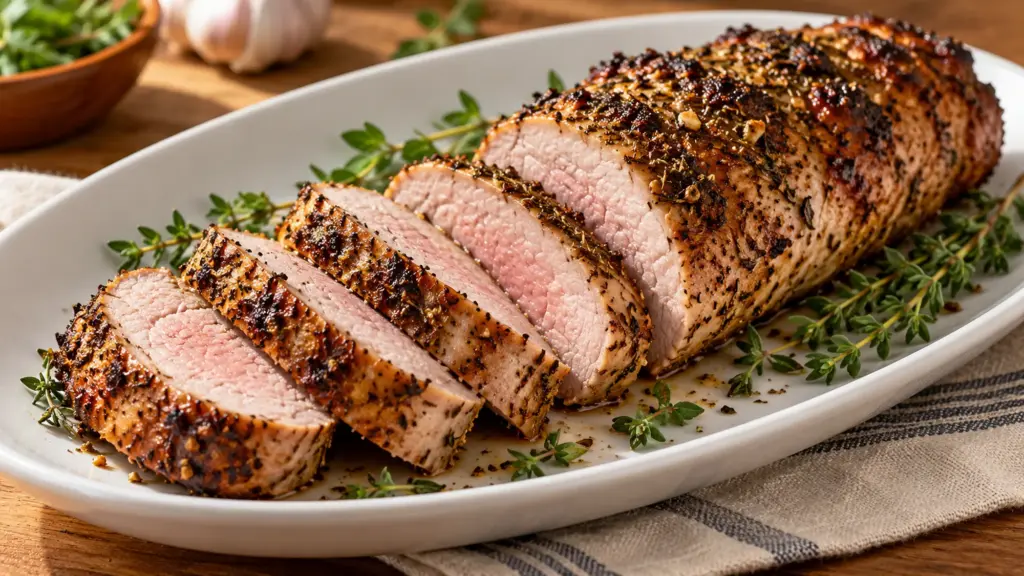
A small roast can feel like a generous dinner without needing the afternoon to itself. This roasted pork tenderloin starts in a hot skillet and finishes in the oven, with garlic, coriander and dried herbs forming a savory surface. Sliced across the grain, it gives you neat medallions that work with a simple vegetable side.
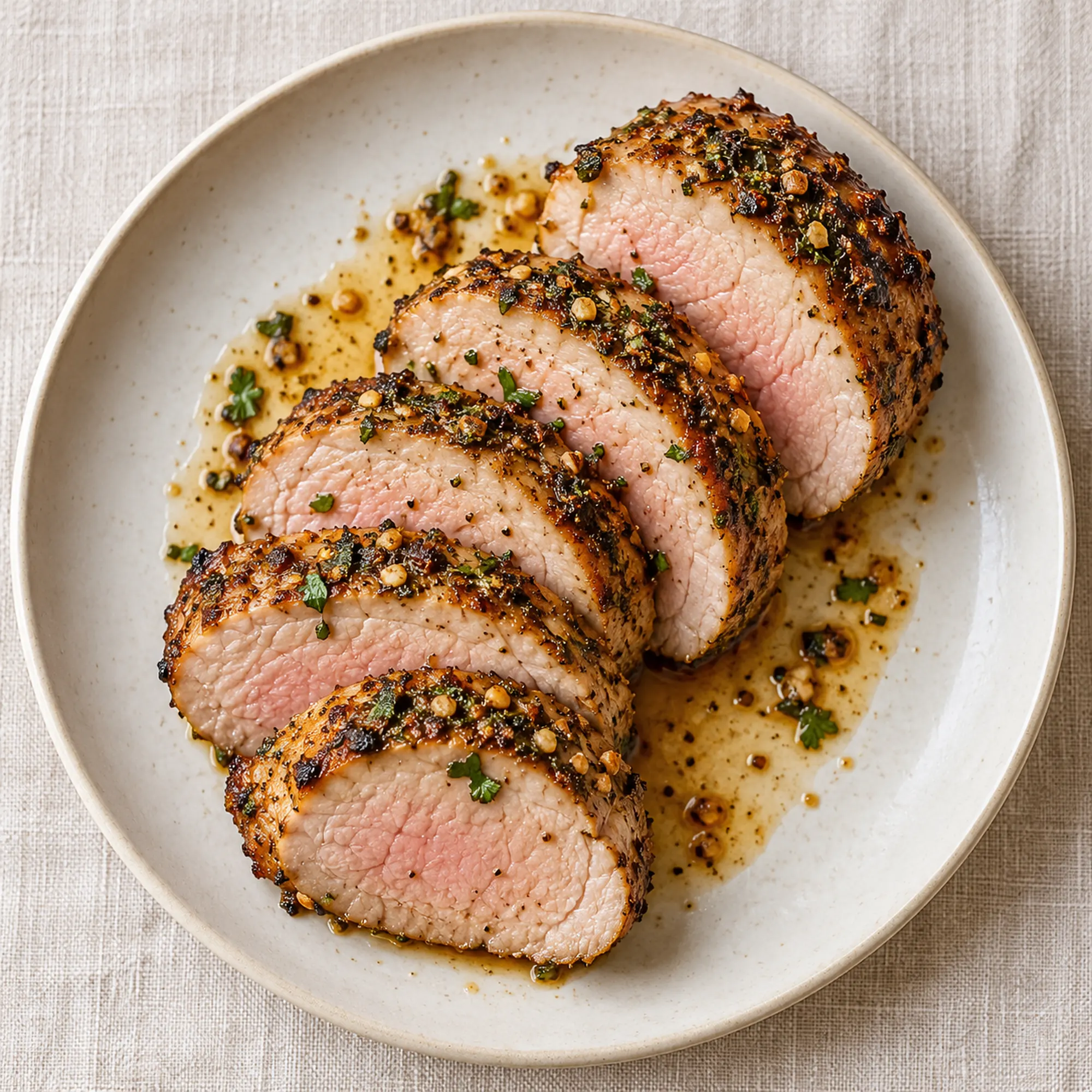
For roasted pork tenderloin that stays tender, use the correct cut, check the center with a thermometer, and rest the meat before slicing.
I like tenderloin for this job because its narrow shape makes it practical for a smaller meal. It is not the same as a broad pork loin roast. That distinction matters more than any spice adjustment: a much thicker cut will not cook safely or evenly on this short schedule.
Serving Roasted Pork Tenderloin
Serve a few slices with the resting juices spooned over them rather than covering the crust with a heavy sauce. Tastiva’s garlic-lemon green beans bring a bright contrast, while mashed potatoes offer a softer, more comforting pairing. Neither side is included in the recipe’s nutrition or cost.
If potatoes are on the menu, prepare them before the pork enters its final cooking stage. The mashed-potato guide explains a separate method, which is helpful when coordinating two dishes. A crisp salad is the lower-effort alternative when you would rather keep the stove clear.
- Slice only what you plan to serve immediately; a whole remaining piece is easier to reheat gently than many thin slices.
- Use a rimmed cutting board or platter to catch the juices released during resting.
- Keep optional fresh-herb garnish light so it does not hide the browned surface.
| Side | Useful contrast |
|---|---|
| Green beans | Bright flavor and a firmer bite |
| Mashed potatoes | A soft base for the resting juices |
| Crisp salad | A cool, fresh accompaniment |
Let the pork keep its simple crust, and choose sides that add contrast rather than more rich sauce.
Seasoning and Cut Variations
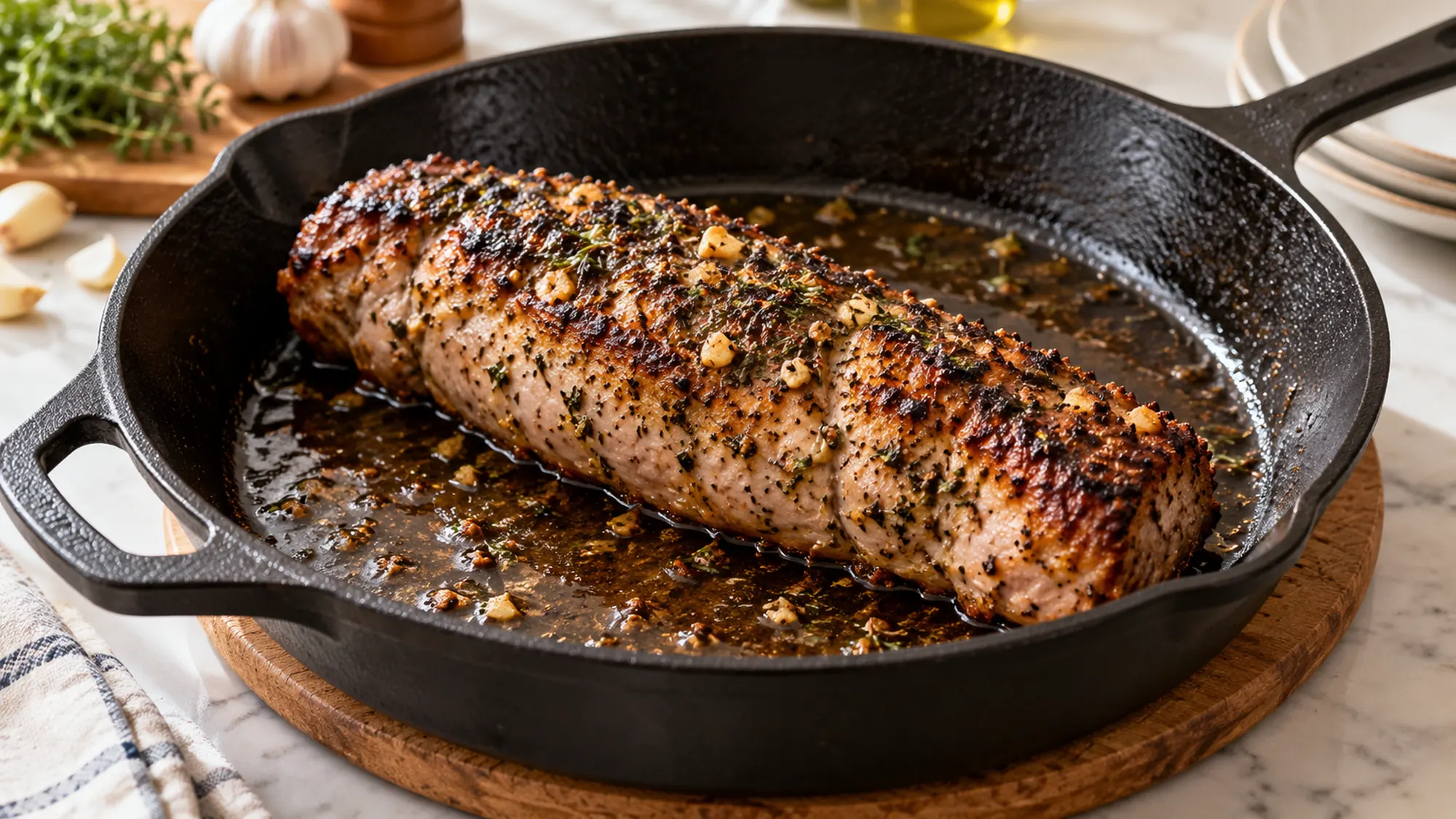
The sear-and-roast approach follows Natasha’s Kitchen’s tenderloin method. Here, dried oregano and thyme stand in for the mixed Italian seasoning, so the herb amounts are clear. Coriander adds a warm, citrus-like note; it does not make the meat taste like a hot pepper dish.
I would keep the seasoning layer fairly even instead of piling it heavily on one side. A little oil helps it adhere, but large clumps of dry garlic can catch in the skillet. Watch the surface as you turn the pork, and lower the heat if the spices darken faster than the meat browns.
- Trim the silvery membrane before seasoning; it does not soften like fat during a short roast.
- A marinated or pre-seasoned tenderloin needs different salt assumptions. Start with plain, unseasoned meat for this card.
- If cooking two tenderloins, leave space between them and check each separately. Their thickness matters more than their combined weight.
The method depends on a true tenderloin and even thickness, not on keeping every herb exactly the same.
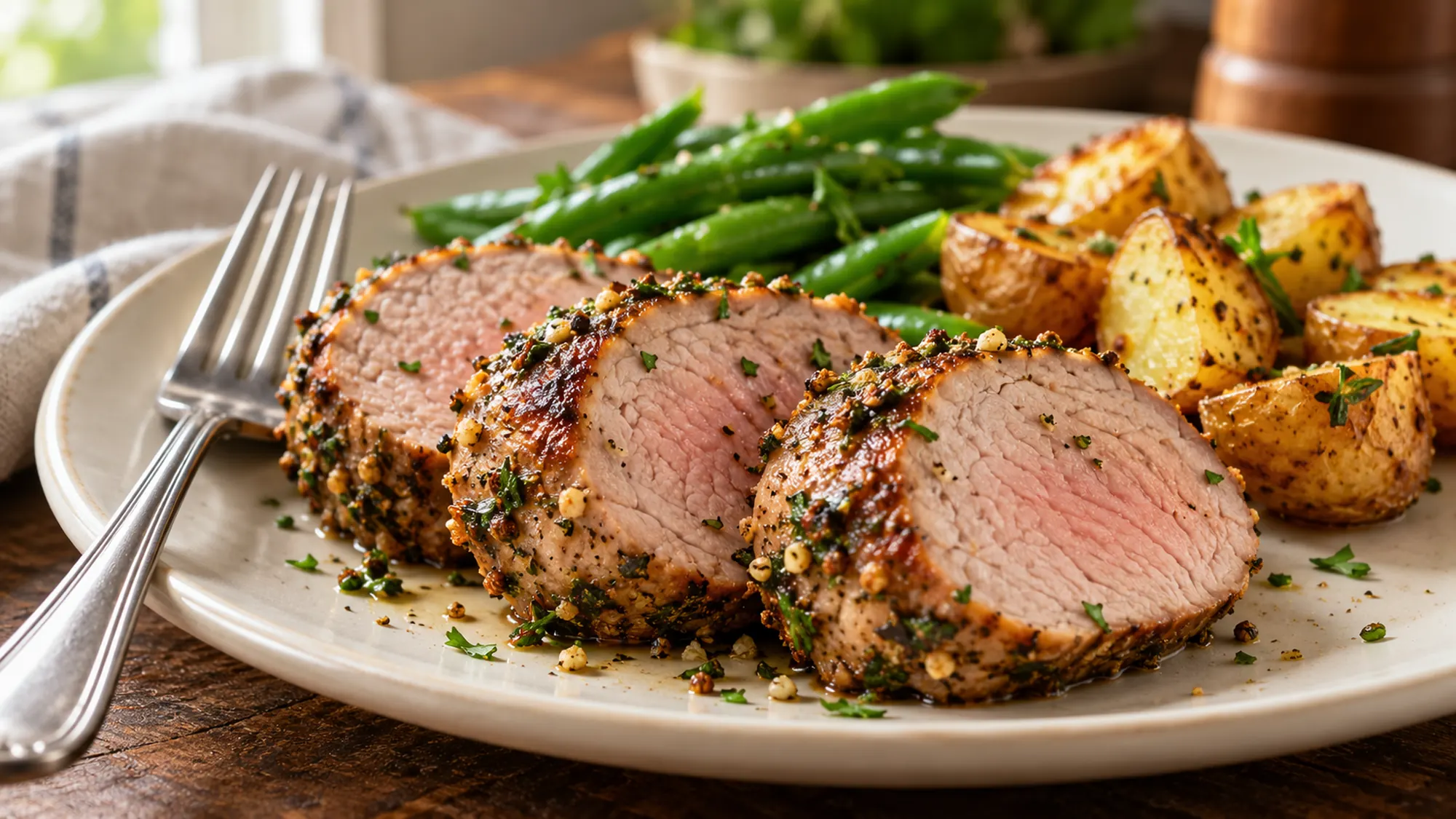
Nutrition Benefits and Safe Temperatures
Pork tenderloin supplies protein without requiring a creamy sauce. This recipe’s calculated estimate is about 276 calories and 36 grams of protein for one quarter of the roast, counting all measured olive oil. That portion is based on a 680-gram raw tenderloin; cooking changes its weight, so a cooked slice does not equal its raw weight.
The sides still shape the meal. Vegetables add variety, while buttered potatoes or a generous sauce bring their own energy and fat. There is no need to label the roast as a special diet food to appreciate a practical portion with a vegetable and a starch that suit your appetite.
- The safe minimum for whole pork is 145°F (63°C), followed by at least three minutes of rest. This card targets 150°F and a five-minute rest for a little more doneness.
- Insert the thermometer into the thickest center, not just below the browned surface.
- Keep raw-pork tools separate from the serving board, and refrigerate leftovers promptly. Reheat leftovers to 165°F, adding moisture as needed.
A thermometer and a proper rest give clearer guidance than judging pork by color alone.
Bottom Line
Roasted pork tenderloin works because the job is modest: season a small cut, brown its outside, finish the center and give it a short rest. Keep that sequence intact and the meal stays manageable. The spice crust offers enough character that a simple green vegetable and the collected juices can do the rest.
Choose the right cut, watch the temperature and give the roast a quiet few minutes before slicing.
Roasted Pork Tenderloin Recipe

Ingredients
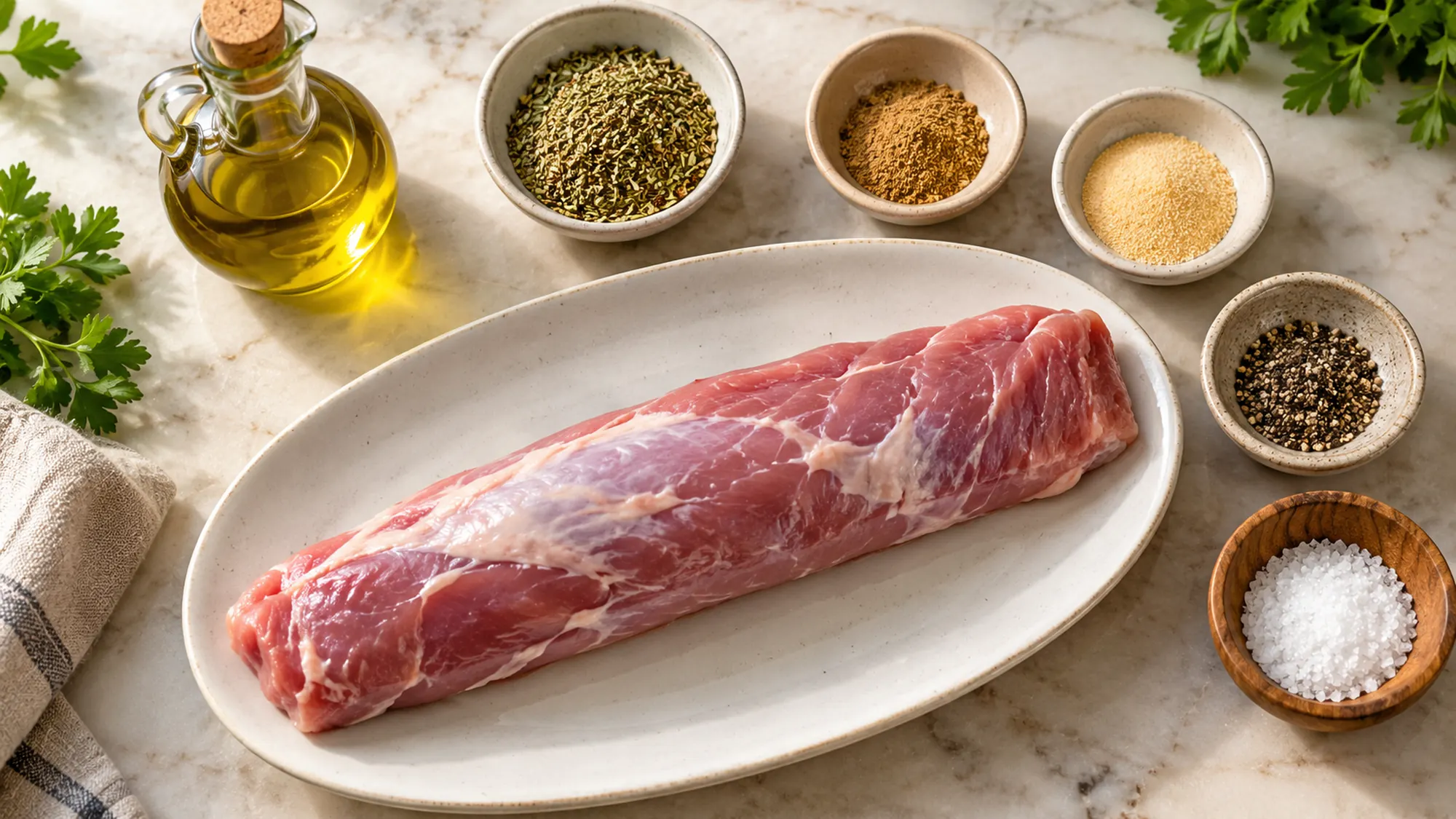
- 680 g plain pork tenderloin 1 1/2 pounds; silver skin removed
- 27 g olive oil 2 tablespoons
- 6 g fine salt 1 teaspoon
- 1 g black pepper 1/2 teaspoon
- 1 g dried oregano 1 teaspoon
- 1 g dried thyme leaves 1 teaspoon
- 3 g garlic powder 1 teaspoon
- 2 g ground coriander 1 teaspoon
- chopped fresh herbs optional garnish, excluded from estimates
Equipment
- 1 Oven-safe skillet
- 1 Tongs
- 1 Instant-read thermometer
- 1 Clean cutting board
Instructions
- Heat the oven to 400°F (200°C). Trim the silver skin from the pork and pat dry. Mix salt, pepper, oregano, thyme, garlic powder and coriander; rub evenly over the tenderloin.
- Heat the olive oil in a large oven-safe skillet over medium-high heat. Sear the pork for about 6 minutes total, turning to brown the surfaces. Reduce heat if the spices begin to burn.
- Transfer the skillet to the oven. Roast about 13–18 minutes, checking the thickest center with a thermometer. This recipe targets 150°F (66°C); the safe minimum for whole pork is 145°F (63°C) followed by at least a 3-minute rest. Thickness changes cooking time.
- Move the pork to a clean board and rest 5 minutes. Handle the skillet with oven mitts; its handle remains hot. Slice across the grain and spoon over the resting juices. Divide into four portions and add optional herbs.
Nutrition
Video
Notes
Tried this recipe?
Let us know how it turned out!Hi, I’m Laura, the voice behind Tastiva. I’ve always believed that eating well should feel enjoyable, comforting, and realistic—not like another complicated rule to follow. I love creating recipes that fit into everyday life, sharing simple nutrition ideas, and finding small ways to make meals feel a little better without losing the pleasure of good food.