
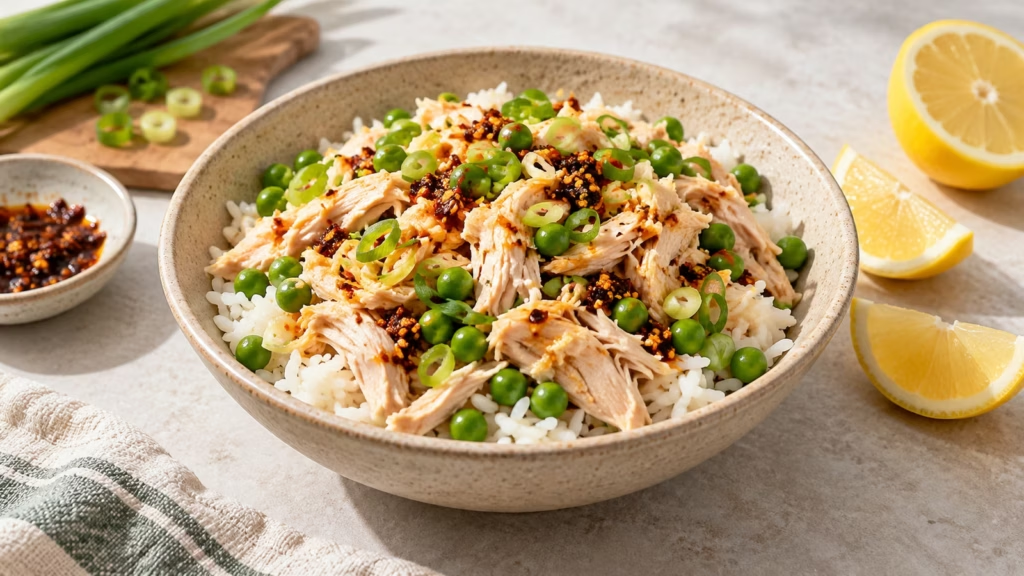
A rotisserie chicken can solve dinner and still leave you staring at a pot of plain rice. This rotisserie chicken rice bowl brings the two together with peas, lemon, scallions and a measured spoonful of chili crisp. The idea follows the much-shared chicken-and-rice bag shortcut, but the mixing happens in a roomy bowl where you can actually see what needs seasoning.
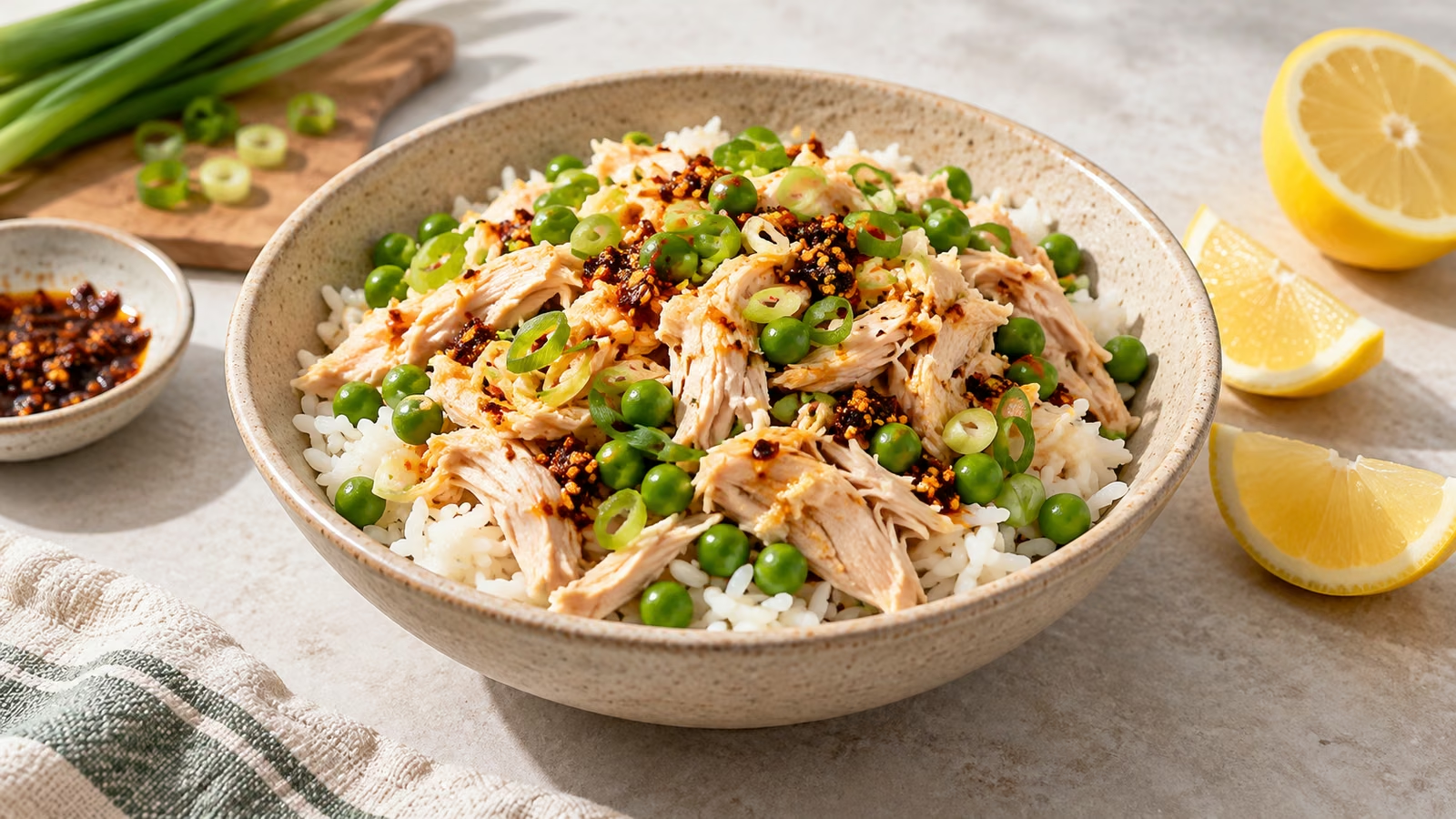
Start with cooked chicken and rice, then add crunch, brightness and just enough chili crisp to make the bowl feel like a meal you chose.
What belongs in a rotisserie chicken rice bowl
The chicken does most of the savory work, so I would spend my attention on the rice and the finishing sauce. Use moist, separated grains rather than a dense block straight from the refrigerator; a splash of water and gentle reheating help before anything gets mixed.
- Chicken. Weigh the usable meat after removing bones and skin. A whole supermarket bird is an unreliable measuring cup, and using a fixed amount makes the portions and nutrition estimate more useful.
- Rice. Jasmine rice gives you distinct grains and a lightly fragrant base. Short-grain rice is fine if you prefer a stickier bowl, but fold rather than stir vigorously.
- Peas and scallions. Peas add a sweet, tender bite, while scallions stay sharper and fresher when scattered on after heating.
- The finish. Lemon supplies acidity; chili crisp supplies both oil and crunchy solids. Stir the jar before measuring so one bowl does not get all the oil.
Warm it gently, then season it
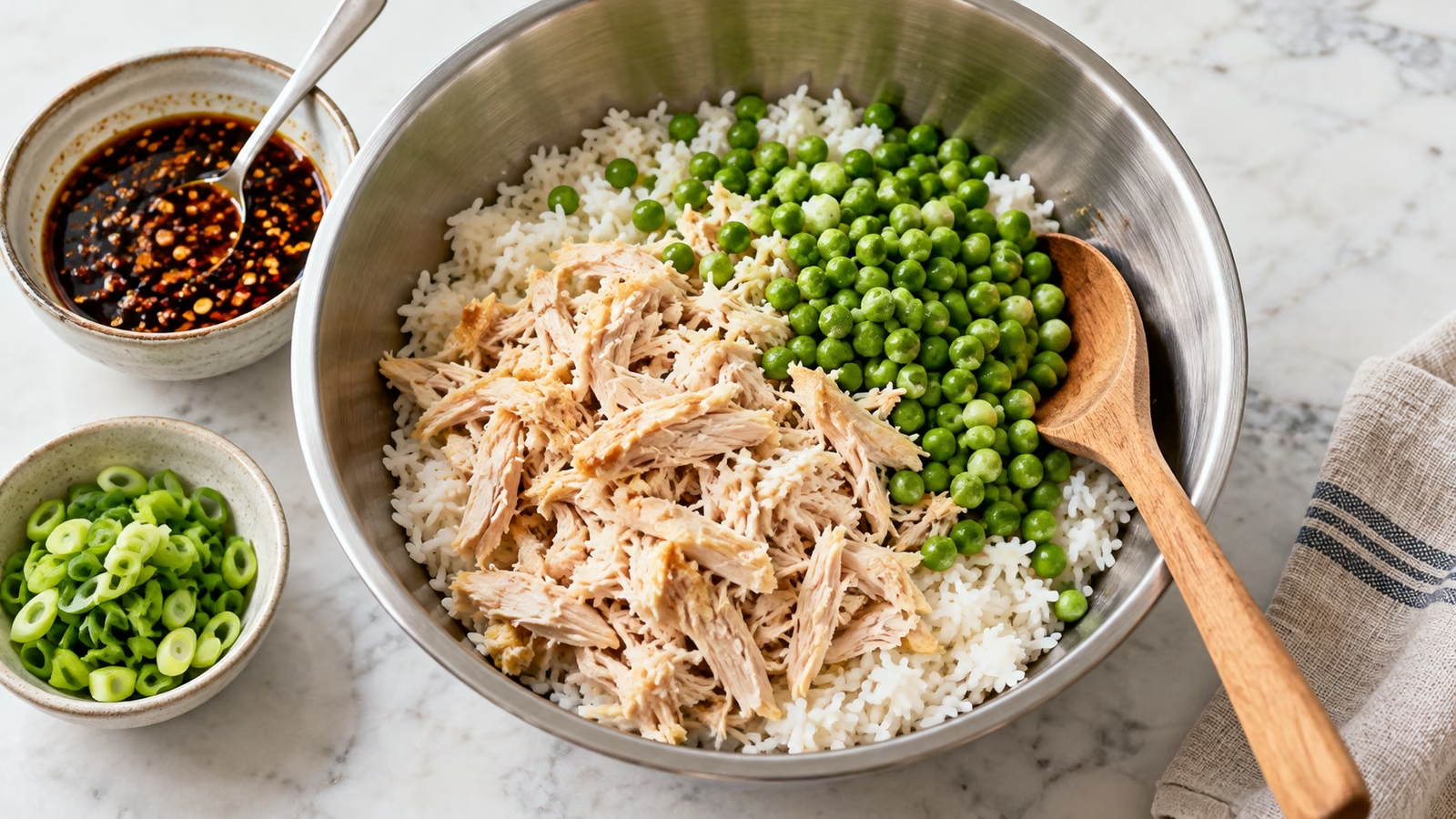
This is an assembly recipe, not a reason to cook already-cooked chicken twice as long. Heat the chicken, rice and peas together with a little water, then fold in the sauce. I prefer that order because the rice loosens before it meets the oily chili crisp.
- Break up cold rice first. Use the back of a spoon to separate compact clumps. Smaller clumps heat more evenly, particularly in a microwave.
- Cover, but vent. A microwave-safe lid traps enough moisture to soften the grains without sealing the bowl shut. Stir during heating and check several spots with a thermometer.
- Keep the mixing roomy. A wide bowl gives the rice space to turn over without being mashed. The original takeaway bag can stay out of the job entirely.
- Taste at the end. The chicken is already seasoned. Add the measured sauce first, then decide whether the bowl needs more lemon or heat rather than automatically reaching for salt.
Easy changes and what they change
The point of this bowl is flexibility with a little structure. Keep the chicken and cooked-rice amounts steady while changing one accent, and you can judge the result without turning dinner into a scavenger hunt.
- Want less heat? Use less chili crisp and offer the rest at the table. Its crunch and oil are part of the sauce, so the bowl will also be less rich.
- Using dark meat? Cooked thigh meat works and tends to feel richer. Remove bones carefully and expect the nutrition estimate to change.
- Choosing brown rice? Use the same cooked weight, not the same dry measure. It brings a firmer chew; follow its package instructions if cooking from scratch. Tastiva’s brown-rice cooking guide covers the starting method.
- Need a soy-sauce alternative? A labeled gluten-free tamari can replace soy sauce, but inspect the chicken seasoning and chili crisp too. A single swap does not establish that the entire bowl is gluten-free.
For a cooler contrast, serve sliced cucumber alongside rather than burying it in the hot mixture. I would keep extra toppings modest here: this bowl already has several things to say.
Serve now and save leftovers safely
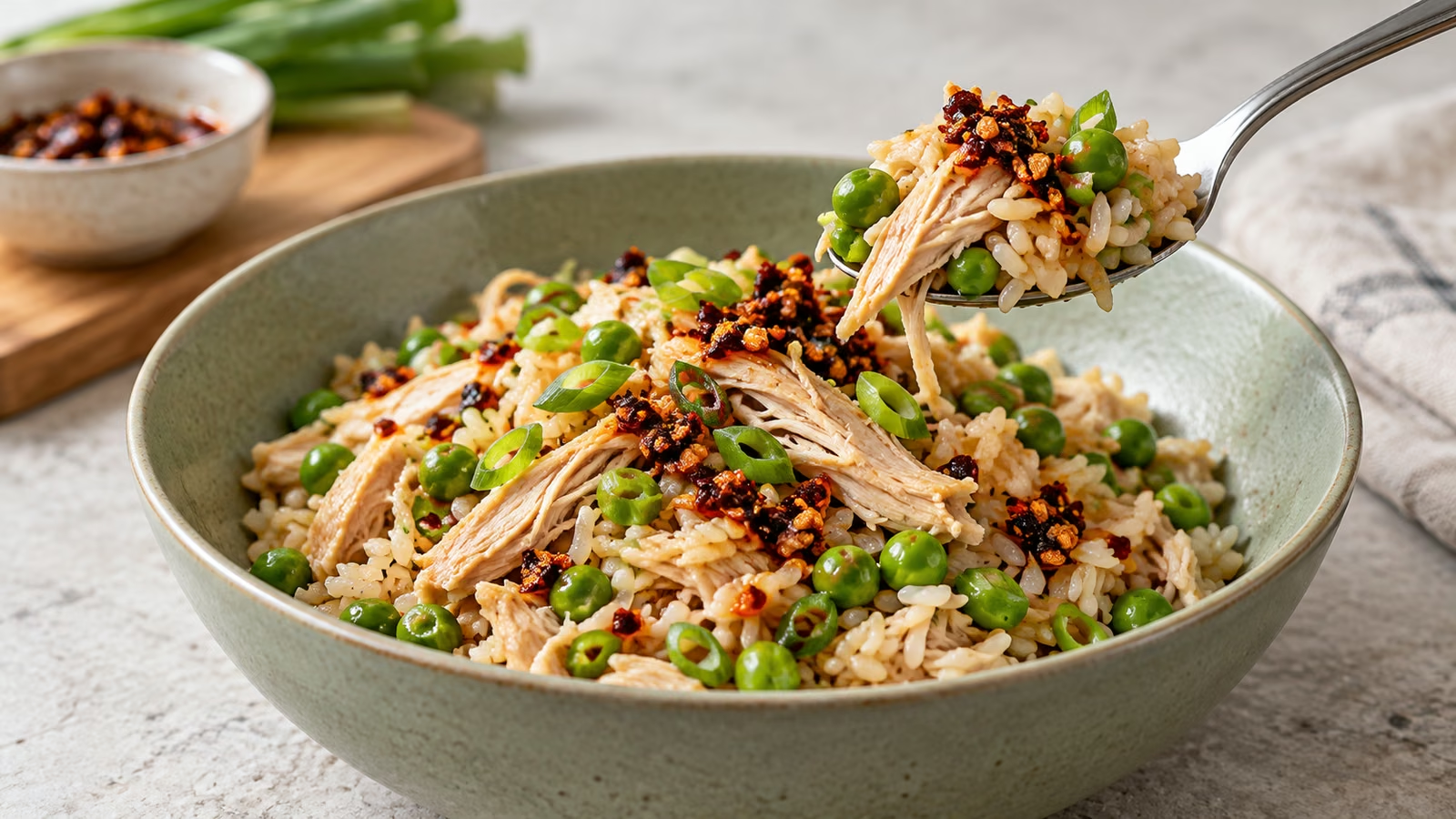
Portion into four bowls while the rice is hot. If you are packing lunch, store the cooked mixture in shallow containers and add the scallions after reheating for a fresher finish. Keep any cucumber separate so it does not soften against the warm rice.
- Start the clock with the oldest ingredient. Using yesterday’s chicken does not give it a new storage window. Plan around when the chicken and rice were originally cooked.
- Chill promptly. USDA guidance calls for refrigerating perishable leftovers within two hours, or one hour above 90°F (32°C), at 40°F (4°C) or below.
- Reheat thoroughly. Use within three to four days of the original cooking date and reheat leftovers to 165°F (74°C). Stir and check more than one spot; a steaming edge can hide a cooler center.
For planned extra portions, see how to freeze cooked rice.
Rotisserie Chicken Rice Bowl Recipe

Ingredients
- 450 g cooked skinless rotisserie chicken breast shredded; about 3 packed cups
- 600 g cooked jasmine rice about 4 cups
- 150 g cooked green peas cooked from frozen and drained; about 1 cup
- 30 ml reduced-sodium soy sauce 2 tablespoons
- 30 ml fresh lemon juice 2 tablespoons
- 28 g chili crisp about 2 tablespoons
- 40 g scallions thinly sliced; about 1/2 cup
- 30 ml water 2 tablespoons, plus extra if needed
Equipment
- 1 Large microwave-safe bowl with vented lid
- 1 small mixing bowl
- 1 wide spoon
- 1 Instant-read thermometer
Instructions
- Cook frozen peas according to their package directions, drain and measure 150 g cooked peas. If starting with uncooked rice, cook enough to yield 600 g and allow extra time; the stated timing assumes cooked rice.
- Put the cooked rice, chicken, peas and water in a large microwave-safe bowl. Cover with a vented microwave-safe lid. Microwave in 1-minute intervals, stirring between intervals, until several places reach 165°F (74°C). Alternatively heat in a covered skillet over medium-low heat, stirring and adding a small splash of water as needed.
- Mix the soy sauce, lemon juice and chili crisp in a small bowl. Fold into the hot chicken-rice mixture with a wide spoon, then divide among four bowls.
- Scatter the sliced scallions over the bowls and serve immediately. Taste before adding any extra salt, since rotisserie chicken and sauces vary in saltiness.
Nutrition
Notes
Tried this recipe?
Let us know how it turned out!Sources
- Simply Delicious: viral chicken-and-rice trend
- USDA: leftovers and food safety
- USDA FoodData Central: ingredient nutrients
Hi, I’m Laura, the voice behind Tastiva. I’ve always believed that eating well should feel enjoyable, comforting, and realistic—not like another complicated rule to follow. I love creating recipes that fit into everyday life, sharing simple nutrition ideas, and finding small ways to make meals feel a little better without losing the pleasure of good food.