
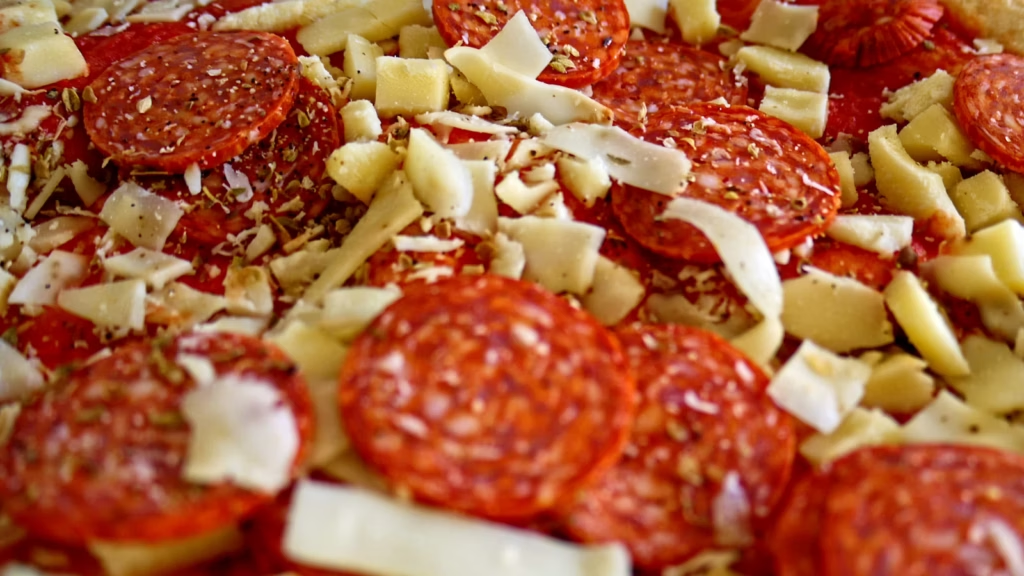
Pepperoni is salty, smoky, gently spicy, and built for heat. On pizza, its fat renders into the cheese while the edges crisp; served cold, it is softer and chewier, with paprika, chile, garlic, and fermentation doing most of the talking. It is familiar enough to feel obvious, yet its name, style, and storage still cause plenty of confusion.
Choose pepperoni for the job: thin slices melt into pizza, while thicker natural-casing slices crisp and curl.
Pepperoni is an American cured sausage
Pepperoni is an Italian American style of cured, fermented sausage, usually made from pork and beef and seasoned with paprika or other red chiles. Beef-only, pork-only, and turkey versions exist, and U.S. labels should identify the species used. The texture is finer and generally softer than many traditional dry salamis.
The name is a linguistic trap. In Italian, peperoni refers to peppers; it does not name the familiar American pizza sausage. Pepperoni developed in the United States alongside Italian immigrant foodways and resembles spicy southern Italian salami without being a traditional Italian product copied unchanged.
That distinction does not make it inauthentic; it makes it a food with its own history. Compare it with mortadella, a cooked Italian sausage with a pale, silky texture, or prosciutto, which is cured whole-muscle ham rather than ground sausage.
What pepperoni is made of and why it tastes that way
Producers grind meat and fat, add salt, curing ingredients, spices, and a starter culture, then stuff the mixture into casings. Controlled fermentation builds tang and helps preservation; drying concentrates flavor and firms the texture. Paprika contributes red color and sweetness, while chile, black pepper, garlic, fennel, smoke, or anise may appear depending on the brand.
- Mild pepperoni: paprika-forward, smoky, and only gently hot.
- Spicy pepperoni: stronger chile heat and often more garlic or pepper.
- Turkey pepperoni: typically leaner, with a firmer bite and less rendered fat.
- Artisan pepperoni: may have coarser texture, natural casing, and more pronounced fermentation.
Because formulas vary, the ingredient label matters more than assumptions. Check it for meat species, allergens, sodium, and any dietary restrictions. Pepperoni is a processed meat, so it works best as a flavorful accent rather than the only substantial part of a meal.

Why some pepperoni cups and some lies flat
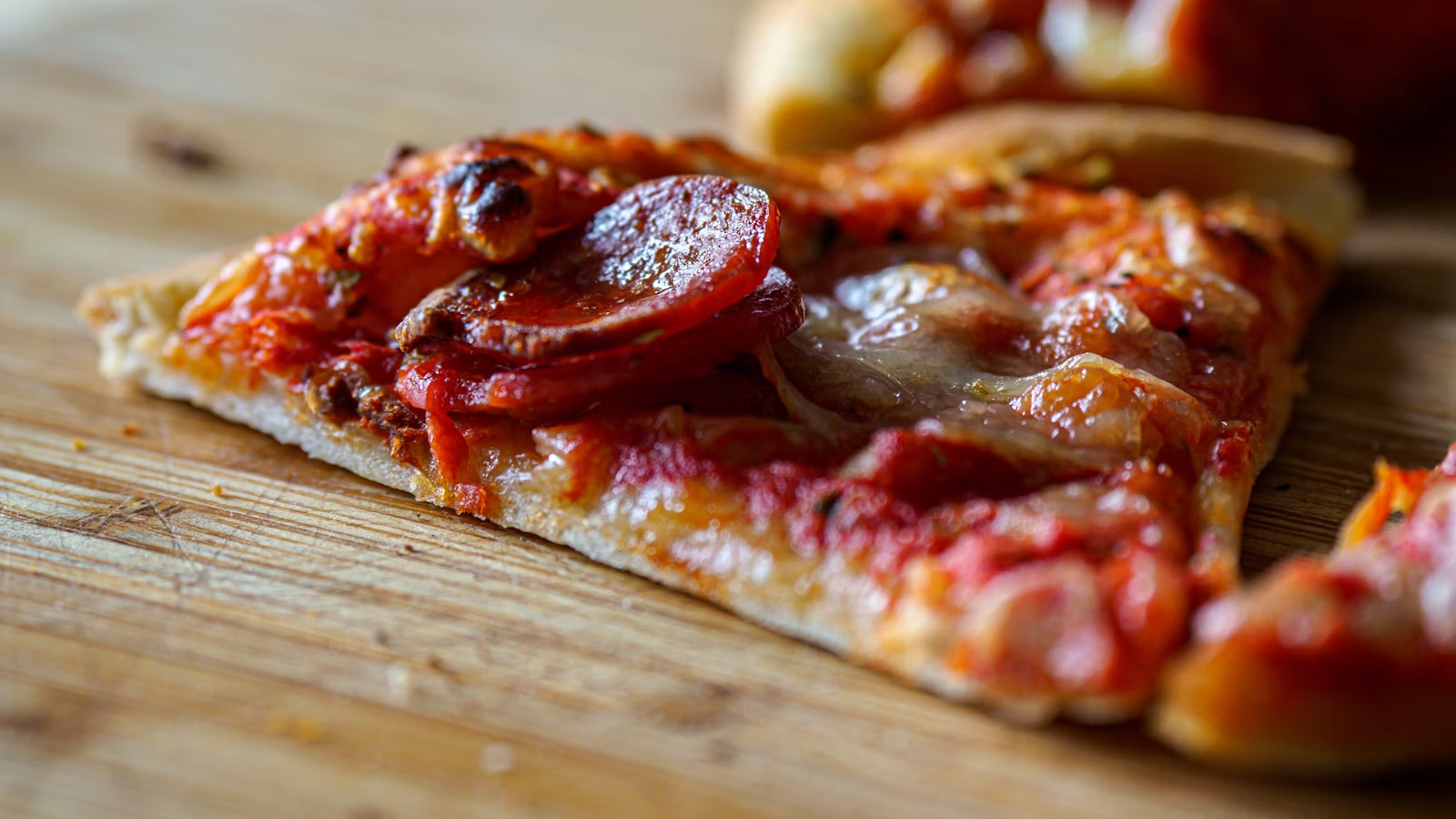
“Cup-and-char” pepperoni curls into tiny bowls as it bakes, creating crisp, darkened rims and a pool of rendered fat in the center. Slice thickness, casing, moisture, and the way the sausage was stuffed all influence the curl. Natural-casing or purpose-made cupping pepperoni is the reliable choice when that texture is the goal.
Flat pepperoni is not lower quality by definition. Thin, casing-free slices spread their flavor evenly and are useful when you want full pizza coverage. Patting the tops before serving can remove excess surface grease, but blotting before baking also removes some fat that helps the edges fry.
- For crisp cups, use thicker slices and strong top heat.
- For even coverage, overlap thin slices only slightly.
- For pasta or baked vegetables, dice the pepperoni so its fat seasons the whole dish.
- For snacking, serve at cool room temperature for a few minutes rather than refrigerator-cold.
How to choose, use, and store pepperoni
Use pepperoni on pizza, in stromboli, chopped into pasta sauce, folded into savory bread, scattered over roasted vegetables, or crisped as a garnish. Pair its salt and fat with acidic tomatoes, pickled peppers, bitter greens, or a sharp vinaigrette. On a snack board, a modest portion goes a long way beside fruit, nuts, and cheese.
“Ready to eat” and “shelf stable” are not the same promise. USDA’s Food Safety and Inspection Service explains that sausages may be fresh, cooked, dry, or semi-dry, and labels indicate whether cooking is required. Follow the package directions. Refrigerate products labeled “keep refrigerated,” and refrigerate opened packages even when the unopened stick was shelf stable.
Keep opened pepperoni tightly wrapped or in an airtight container, use it within the label’s stated window, and discard it if it develops mold not intended by the producer, a rancid odor, slime, or unusual discoloration. For pizza leftovers, refrigerate promptly and reheat only what you plan to eat.
For a practical way to use pepperoni, Julia Collin Davison and Bridget Lancaster of America’s Test Kitchen make French bread pizza. Their bread-based recipe is a serving idea, rather than a guide to curing sausage at home.
Sources
- USDA FSIS: sausages and food safety
- USDA FSIS: sausage storage times
- USDA FoodData Central: food composition data
- Allrecipes: what pepperoni is

Hi, I’m Laura, the voice behind Tastiva. I’ve always believed that eating well should feel enjoyable, comforting, and realistic—not like another complicated rule to follow. I love creating recipes that fit into everyday life, sharing simple nutrition ideas, and finding small ways to make meals feel a little better without losing the pleasure of good food.