
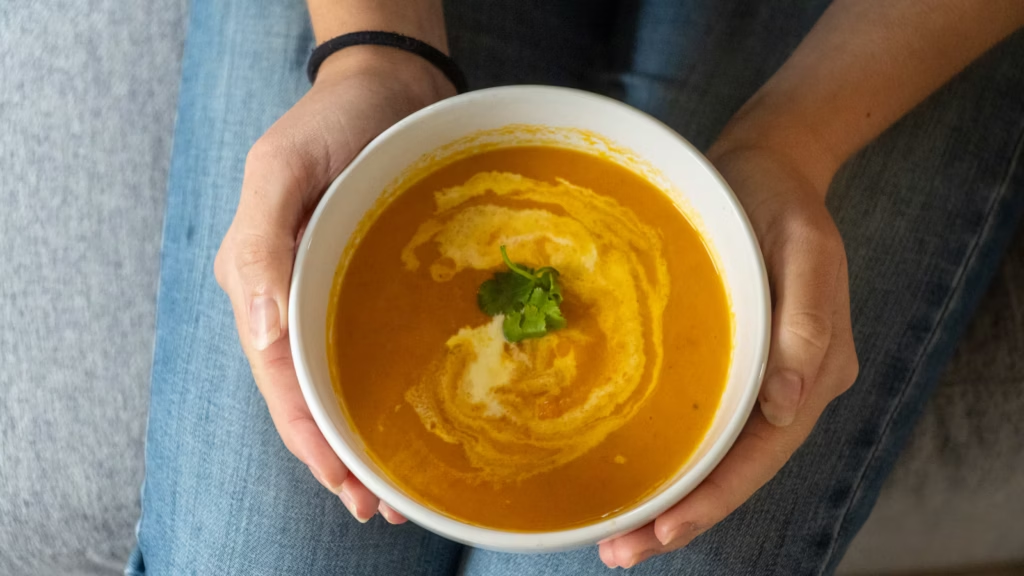
A silky bowl of soup seems made for tomorrow’s lunch, until the thawed portion looks a little grainy. Freezing creamy soup is possible, but milk and cream can separate, and some other ingredients lose their texture. I’d start by checking what makes the soup creamy, then decide whether to freeze the finished soup or save its dairy finish for reheating.
A good freezer plan begins with the ingredients in the pot, not just the container waiting beside it.
Freezing creamy soup starts with the ingredients
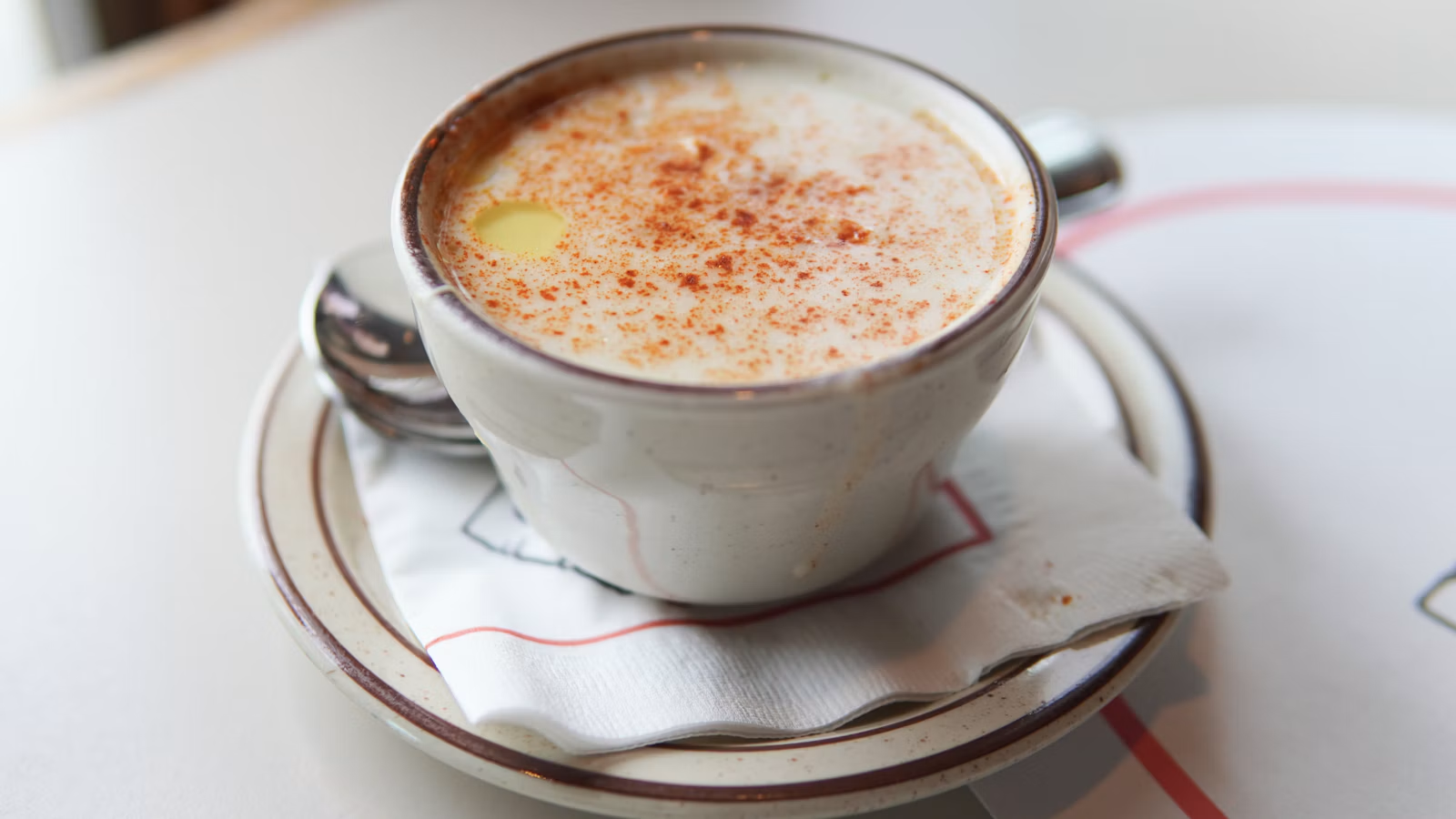
“Creamy” describes a texture, not one fixed recipe. A smooth vegetable soup, a milk-thickened chowder, and a cheese soup can look equally comforting while behaving differently after freezing. The National Center for Home Food Preservation notes that dairy soups may curdle or separate, so an unchanged texture isn’t something I’d promise.
- Milk or cream: expect a possible change in smoothness after thawing and reheating. This is a quality issue when the soup has otherwise been handled safely.
- Sour cream: freezing can leave it watery and separated. A fresh topping added at serving is a more sensible plan.
- Potato pieces: cooked potatoes can become mealy or waterlogged. Blended soup and chunky soup don’t give you the same texture to judge.
- Pasta or rice: cooked versions may soften. If the recipe allows, keep them out of the portion intended for freezing.
Those distinctions matter more than a general “all soup freezes beautifully” claim. Read the specific recipe’s storage notes, especially when a starch or dairy ingredient supplies the structure. Tastiva’s soup planning guide can help you choose a rotation; here, the question is what a particular pot will be like when it comes back out.
Freeze the base when the recipe gives you that option
For a soup that adds cream near the end, I’d favor freezing the cooked base before that final addition. The National Center’s soup guidance includes adding liquids such as cream when reheating. This approach gives you a chance to finish the soup fresh, although it doesn’t make every recipe interchangeable.
- Read ahead: find the dairy addition in the original method. If it is integral to cooking or thickening the base, don’t simply omit it and assume the recipe will work.
- Set aside the freezer portion: do this before a late cream, milk, sour-cream, or cheese finish when the recipe permits.
- Write a useful label: include the soup name, preparation date, and what still needs to be added. “Add cream after reheating” is more helpful than “orange soup.”
- Finish from the recipe: use its specified amount and method when the base is reheated. A fresh addition shouldn’t become an excuse to guess at the proportions.
If you’ve already added the dairy, you can still choose to freeze safely handled soup, but accept that the texture may change. Stirring while reheating may help; it isn’t a guarantee that a separated soup will become perfectly silky again. I’d avoid promising a kitchen rescue that depends on the exact recipe.
Cool promptly, then pack portions you will use
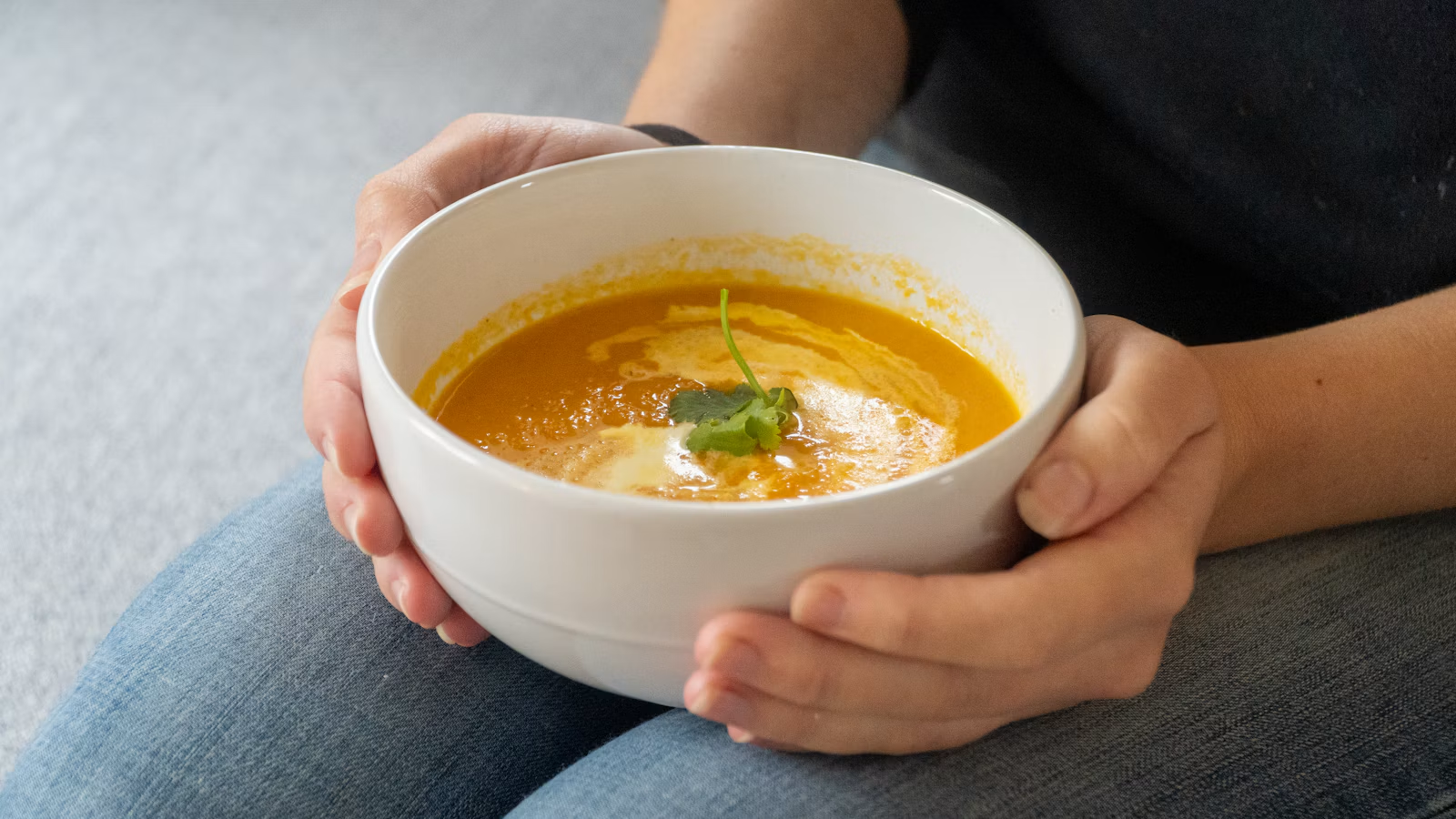
Don’t wait for a large pot to spend hours reaching room temperature. FoodSafety.gov advises placing leftovers in shallow containers and refrigerating promptly, within two hours—or one hour above 90°F (32°C). Keep the refrigerator at 40°F (4°C) or below and the freezer at 0°F (−18°C) or below.
- Portion for a real meal: individual or household-sized portions let you warm the amount you need instead of repeatedly handling one large batch.
- Choose freezer-safe containers: use packaging designed to seal against moisture and air. Follow the maker’s directions for liquids and freezing.
- Leave expansion space: soup expands as it freezes. Follow the container guidance rather than filling it to the rim.
- Handle glass carefully: use freezer-suitable glass, and don’t put hot glass directly into the freezer or an ice bath.
- Keep the dates visible: FoodSafety.gov lists soup and stew at three to four days refrigerated and two to three months frozen for best quality.
My preference is a portion that matches an actual lunch or dinner, plus a clear finishing note. A container that requires its own detective story isn’t much of a shortcut. For packaging and air exposure, Tastiva’s freezer-burn guide covers the broader storage question.
Reheat thoroughly without expecting a brand-new soup
The National Center describes reheating soup directly from frozen and using a double boiler for cream soup, with stirring to help the consistency. Its guidance calls for a rolling boil or at least 165°F (74°C). Follow the recipe and use a food thermometer; an apparently warm surface doesn’t establish that the whole portion is ready.
- Choose suitable equipment: transfer soup to appropriate cookware; don’t heat a container unless it is designed for that use.
- Stir as it warms: pay attention to the center and any thicker areas. Add the recipe’s dairy finish at the appropriate stage, then ensure the finished soup is thoroughly heated.
- Adjust thickness thoughtfully: a little of the recipe’s broth or other suitable liquid may help a concentrated base. Add gradually and check the consistency.
- Refresh at serving: add the recipe’s fresh herbs or crisp toppings then, rather than freezing them into the soup.
- Keep safety separate from appearance: texture changes alone don’t prove spoilage, and a smooth appearance doesn’t prove safe handling.
The most useful expectation is a convenient, enjoyable second meal with some possible texture differences. When smoothness is the main attraction, freezing the unfinished base is worth considering before the first bowl is served. When the recipe doesn’t support that approach, choose another freezer-friendly soup rather than forcing this one to behave differently.
Multnomah County Health Department demonstrates ice-bath and shallow-pan cooling for soups and chowders. This professional-kitchen demonstration illustrates the cooling step, not a way to prevent dairy separation; at home, follow the article’s prompt refrigeration guidance and keep your refrigerator at 40°F (4°C) or below.
Sources
- National Center for Home Food Preservation: Freezing soup
- National Center for Home Food Preservation: Foods that do not freeze well
- FoodSafety.gov: Four steps to food safety
- FoodSafety.gov: Cold food storage chart

Hi, I’m Laura, the voice behind Tastiva. I’ve always believed that eating well should feel enjoyable, comforting, and realistic—not like another complicated rule to follow. I love creating recipes that fit into everyday life, sharing simple nutrition ideas, and finding small ways to make meals feel a little better without losing the pleasure of good food.