
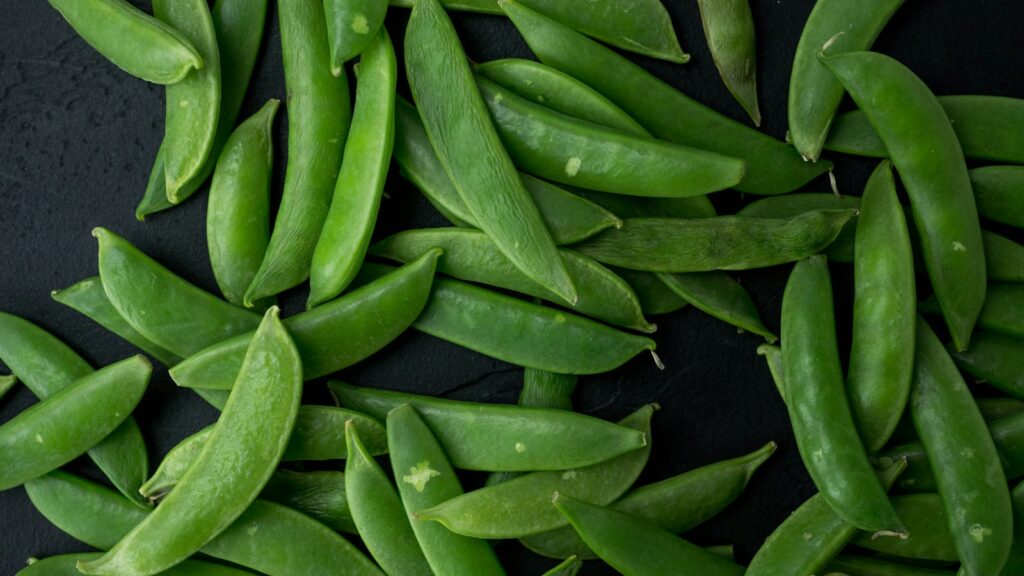
The flat green pods in a stir-fry are often snow peas, and you eat the tender pod as well as the tiny peas inside. They are different from plump sugar snap peas and from garden peas that need shelling. A quick trim and a little attention to cooking order help their light sweetness and crisp texture stay noticeable in the finished meal.
Give snow peas a clear place in the cooking order: their thin pods need less time than a pan full of thick vegetables.
Snow peas, snap peas, and garden peas compared
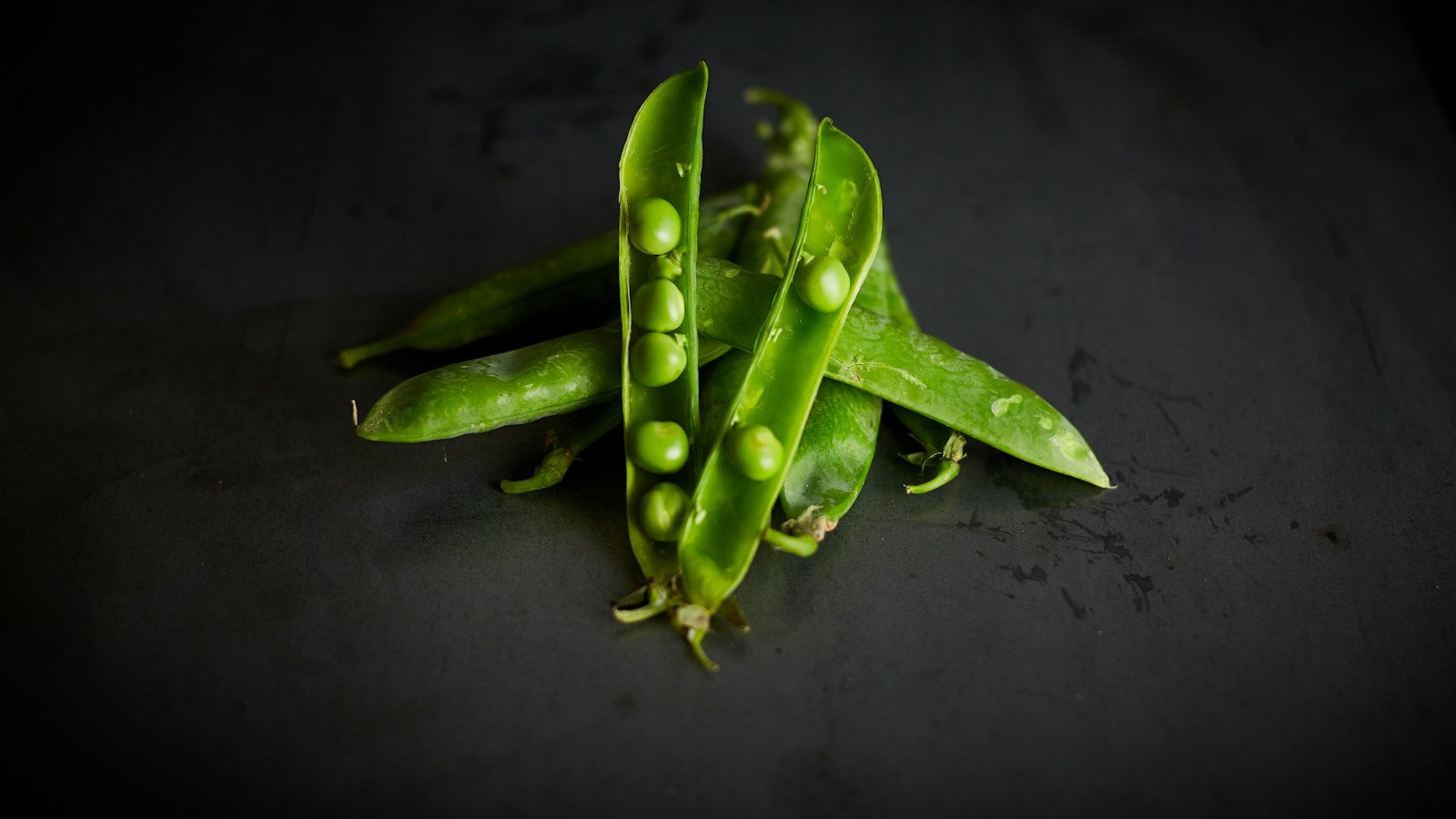
Snow peas are harvested while their pods are flat and the seeds inside are still small. Sugar snap peas have fuller, thicker edible pods. Garden peas, also called English or shelling peas, are grown for the rounded peas inside, with the pod removed before eating. The distinction is useful both at the store and when reading a recipe.
| Type | What it looks like | What you eat | Useful kitchen role |
|---|---|---|---|
| Snow pea | Broad, flat pod with tiny visible peas | The tender pod and peas | Quick cooking, salads, and thinly sliced garnishes |
| Sugar snap pea | Plump, rounded pod | The tender pod and peas | Crunchy snacks and vegetable dishes |
| Garden or English pea | Pod containing developed round peas | The shelled peas | Soups, rice dishes, and cooked sides |
The University of Minnesota Extension notes that snow peas can become tough if left to mature too far. That is why a flat pod with only small pea outlines is a better starting point than a heavily bulging one. Some varieties have fibrous strings along their edges, and those are worth removing even though most of the pod is edible.
I’d choose by tenderness before worrying about making every pod look identical. Look for fresh, firm pods and leave behind slimy, moldy, or badly damaged ones. A slightly curved pod can still do its job perfectly well; the goal is a pleasant bite, not a matching set of green crescents.
Trim and wash without overcomplicating it
Wash your hands and rinse the peas under running water before preparation, unless a ready-to-eat package gives different handling directions. The FDA advises against washing produce with soap or detergent. Dry the pods with a clean towel, especially if you plan to sauté them, so extra surface water does not immediately pool in the pan.
- Hold a pod near its stem end and snap or cut away the small tip.
- If a string pulls away with that tip, draw it down the edge and discard it.
- Check the other edge and remove any additional tough string that is present.
- Leave tender pods whole for cooking, or slice them across or lengthwise for the dish you’re making.
- Keep the prepared peas separate from boards, knives, and plates used for raw meat or seafood.
You do not need to open every pod and remove the little peas. That would discard much of the ingredient you bought. Test one trimmed pod for texture before preparing the entire pile; a noticeably fibrous batch may need more careful string removal, while a tender batch can be handled with a lighter touch.
For raw serving, slice larger pods into pieces that suit the eater and the rest of the salad. People with chewing or swallowing needs may require cooked, softer vegetables or another preparation. “Crisp” is a pleasant texture only when it works for the person eating it.
Add them late and check the texture
Snow peas usually need brief cooking compared with thick carrots, potatoes, or large pieces of broccoli stem. If everything enters the pan together, the peas may soften long before the slower vegetables are ready. Start those ingredients first, then add the snow peas when the rest of the dish is close to finished.
| Cooking approach | How to use the peas | Cue to watch |
|---|---|---|
| Stir-frying or sautéing | Add after slower-cooking ingredients | Hot throughout, with the bite you want |
| Steaming | Keep the layer manageable and check early | Tender enough to eat without becoming limp |
| Adding to soup | Stir in toward the end | Pods soften quickly in hot broth |
| A cooked salad component | Cook briefly, then cool as the recipe directs | Keep the texture distinct from soft grains |
| Raw salad | Trim, wash, dry, and slice appropriately | A tender pod without tough edge strings |
There is no single minute count that fits every pan, batch size, or desired texture. Check a pod as you cook and adjust from there. If the pan is crowded and full of released liquid, a smaller batch can make the process easier to control. Have the sauce ready before the peas go in so they are not waiting while you search for a bottle.
For a savory finish, ginger, garlic, citrus, or a little sesame oil can each offer a clear direction. Tastiva’s tamari guide explains one seasoning option and its label considerations. I’d pick a few compatible flavors first; a mild vegetable does not need every sauce in the refrigerator competing over it.
Build a meal and use the pods while they’re fresh
Snow peas make a vegetable component, rather than a substitute for a substantial serving of beans, tofu, meat, or another protein food. Pair them with rice or noodles and your chosen protein, or serve them beside fish with potatoes. Their flat shape also makes them easy to cut into strips that distribute through a bowl instead of sitting in a separate heap.
- For a noodle bowl: Add trimmed peas near the end of cooking and keep the sauce proportionate to the noodles and vegetables.
- For a lunch salad: Combine thinly sliced tender pods with a grain, a protein ingredient, and a dressing you enjoy.
- For a simple side: Cook to your preferred tenderness, then add herbs or a small squeeze of citrus.
- For advance planning: Keep raw peas chilled, and prepare only the amount you expect to use soon.
- For a longer gap before cooking: Consider commercially frozen snow peas and follow their package directions.
Refrigerate fresh pods promptly and use them while they are still firm and appealing. Storage life depends on how fresh they were when purchased and how they were handled; no calendar can rescue slimy or moldy produce. Keeping the peas visible in the vegetable drawer helps give them a place in dinner while their texture is still at its best.
Sources
- University of Minnesota Extension: Pea types, harvest, and handling
- Utah State University Extension: Peas and prompt refrigeration
- FDA: Selecting, washing, and serving produce safely
Hi, I’m Laura, the voice behind Tastiva. I’ve always believed that eating well should feel enjoyable, comforting, and realistic—not like another complicated rule to follow. I love creating recipes that fit into everyday life, sharing simple nutrition ideas, and finding small ways to make meals feel a little better without losing the pleasure of good food.