
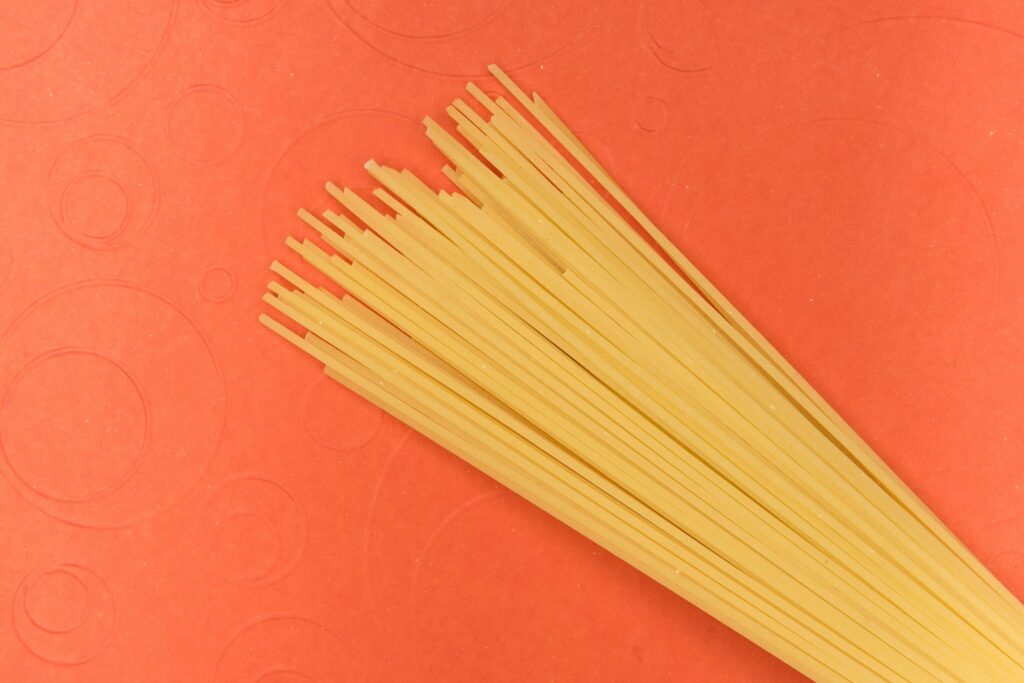
Turn over a familiar box of spaghetti and the ingredient list may be almost comically short: “durum wheat semolina” and perhaps added vitamins and minerals. Spaghetti durum wheat pasta is dried spaghetti made from durum, a hard species of wheat that is commonly milled into golden semolina. It is prized for pasta because it forms dough that can be shaped, dried, and cooked with a pleasantly firm bite.
Durum describes the wheat; semolina describes how its milled endosperm is prepared. Neither word automatically means whole grain or gluten-free.
That distinction clears up most of the package confusion. “Semolina,” “durum flour,” and “whole durum wheat” can all begin with the same grain but retain different parts of the kernel or have different particle sizes. I would never judge one box by its golden color alone—the ingredient list and Nutrition Facts panel tell the more useful story.
Durum Wheat, Semolina, and Spaghetti Explained
Durum wheat is Triticum durum, a hard wheat distinct from the common bread wheat used in many loaves and pastries. When durum is milled, the coarse, purified particles from the starchy endosperm are called semolina. Finely milled material may be called durum flour. The international Codex standard distinguishes ordinary semolina, in which bran and germ are essentially removed, from whole durum wheat semolina, which retains the bran and part of the germ.
In the United States, the federal standard for macaroni products allows dried formed dough made from semolina, durum flour, farina, flour, or combinations, with water and certain optional ingredients. “Spaghetti” names the long strand shape; it does not by itself promise one exact wheat formula. Many classic dried spaghettis are primarily semolina and water, while fresh pasta, egg pasta, whole-wheat pasta, and blended products follow different formulas.
| Label term | What it usually means | What it does not guarantee |
|---|---|---|
| Durum wheat | The hard wheat species used | Whole grain, Italian origin, or gluten-free status |
| Semolina | Coarsely milled, mostly endosperm portion of durum | Bran and germ are retained |
| Durum flour | Durum milled more finely | Better quality than semolina |
| Whole durum wheat | Milling includes the bran and more of the kernel | Identical flavor or texture to refined pasta |
| Enriched semolina | Refined semolina with specified nutrients added back | The fiber of a whole grain |
Why Durum Works So Well for Dried Pasta
Durum’s protein and gluten-forming properties help pasta dough hold together through extrusion and drying. Its natural yellow pigments contribute the warm amber color associated with many dried pastas. Once cooked, a well-made durum spaghetti can stay resilient enough to twirl and carry sauce rather than immediately turning soft. Processing, drying, pasta thickness, and cooking time still matter, so the wheat name is not a quality guarantee by itself.
Semolina’s coarse texture is especially useful in industrial dried pasta, while a finer durum flour can be easier to hydrate for some fresh or hand-shaped doughs. Italian terms add another layer: semola generally refers to durum semolina, and semola rimacinata is semolina milled again to a finer texture. “00,” by contrast, refers to milling fineness under an Italian classification and is not another name for durum; a 00 flour may be made from common wheat.
There is a practical sensory reason cooks care. Firm pasta gives a sauce time to cling while the strand retains structure. Still, I prefer the humble package instruction over pasta mythology: two brands made from the same named grain can cook differently. Start tasting early and let the strand—not the clock or the price tag—make the final decision.
Is Durum Wheat Spaghetti Healthy or Gluten-Free?
Durum spaghetti is a source of carbohydrate and provides some protein. The exact fiber, iron, folate, thiamin, riboflavin, niacin, sodium, and calories depend on whether the pasta is refined, enriched, whole grain, or made with extra ingredients. Enrichment adds specified nutrients to refined macaroni products, but it does not restore the kernel’s original fiber. Compare equal dry serving weights when choosing between boxes.
Standard durum wheat pasta contains gluten and is not appropriate for celiac disease, a wheat allergy, or another condition requiring wheat avoidance. A firm bite does not mean it has “more gluten” in a way a shopper can safely rank, and cooking does not remove gluten. For a wheat-free bowl, select pasta explicitly labeled for the relevant need; Tastiva’s gluten-free noodles guide compares rice, corn, legume, buckwheat, and starch-based options.
Whole-grain and refined pasta can both fit an ordinary meal, but they are not nutritionally interchangeable. Look for “whole durum wheat” or “whole-grain durum” as an ingredient when whole grain is the goal. Then build the plate around the pasta: vegetables, beans, fish, poultry, tofu, or another protein can add color, fiber, and staying power without asking one strand of spaghetti to be the entire nutrition plan.
How to Buy and Cook Durum Spaghetti Well
For a classic dried spaghetti, a short ingredient list is normal. Check whether the first ingredient is semolina, durum wheat semolina, whole durum wheat, or a blend; note eggs if an allergy or preference makes them relevant. “Product of Italy,” bronze-die language, organic certification, and a high price describe other qualities, not whether the grain is whole. Choose the label that matches the texture, nutrition, dietary needs, and budget you actually have.
Cook spaghetti in plenty of boiling water, stir during the first minute, and begin tasting a couple of minutes before the package’s maximum time. For a hot sauce, drain when the center is tender but still pleasantly firm, reserve a cup of starchy cooking water, and finish the pasta in the sauce. A splash of that water can loosen the sauce and help it coat the strands. Do not rinse unless a specific cold preparation calls for it, because rinsing removes helpful surface starch.
Portion guidance on a box is a reference, not a commandment; appetite and the rest of the meal matter. Store dry pasta sealed in a cool, dry place and follow the best-by guidance for quality. Refrigerate cooked spaghetti within two hours and use it within three to four days. The lasting takeaway is simple: durum makes dependable pasta, but the words around it—semolina, whole, enriched, and gluten-free—answer different questions.
Sources
- Electronic Code of Federal Regulations: 21 CFR § 139.110, Macaroni Products
- Codex Alimentarius: Standard for Durum Wheat Semolina and Durum Wheat Flour
- U.S. Food and Drug Administration: Gluten and Food Labeling
- NIDDK: Eating, Diet, and Nutrition for Celiac Disease
- USDA Food Safety and Inspection Service: Leftovers and Food Safety

Hi, I’m Laura, the voice behind Tastiva. I’ve always believed that eating well should feel enjoyable, comforting, and realistic—not like another complicated rule to follow. I love creating recipes that fit into everyday life, sharing simple nutrition ideas, and finding small ways to make meals feel a little better without losing the pleasure of good food.