
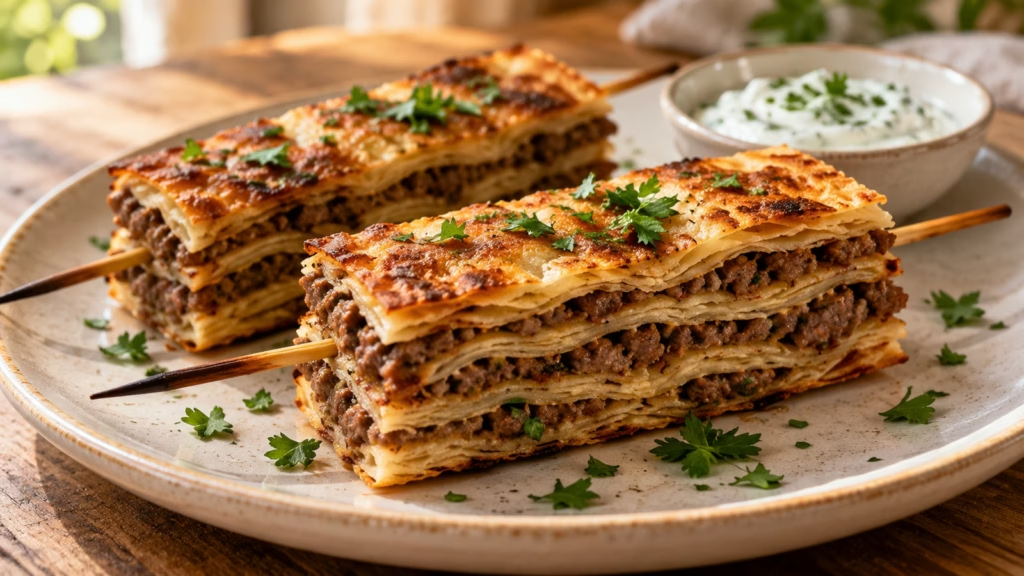
The tortilla edges look golden, the beef smells savory, and the obvious question is whether the middle is ready. That is the real challenge behind tortilla kebabs: thin layers of seasoned ground meat and tortillas, cut into sections and threaded onto skewers. The useful trick is even assembly and controlled heat, followed by a thermometer check rather than a guess from the crust.
Give the layers more attention than the stack’s height: the appeal is a crisp edge and a manageable bite.
What tortilla kebabs are, and why they caught attention
Think of a tortilla-and-beef stack turned into a skewer, rather than a rolled wrap or chunks of steak. The exposed edges offer plenty of opportunity for browning, while the repeated layers make the cross-section easy to recognize in a short video.
A U.S. social-video snapshot from September 10–17, 2026, reported 2.5 million views for @cookwithauds’ beef-and-tortilla skewer post. The report called it a single-post breakout, not an established cluster of recreations; earlier taco-kebab coverage also shows that the format predates September. That makes it an interesting idea to understand, without pretending it was invented this week.
What interests me is the construction, not the view count. This is a guide to choosing and handling the format, rather than a tested Tastiva recipe with a fixed yield or cooking time.
- Choose it for: a layered, crisp-edged alternative to the usual tortilla fold.
- Plan for: spreading, stacking, cutting, and turning several surfaces during cooking.
- Choose a simpler dinner when needed: our bean-and-poblano quesadilla uses a straightforward fold and a cooked filling.
Choose ingredients that make the layers manageable
For tortilla kebabs, I’d start with a flour-tortilla version before experimenting with several substitutions at once. Tortilla size, thickness, and flexibility change how the stack cuts and holds together, so follow one clearly specified recipe for quantities and assembly dimensions.
- Ground beef: published versions use 85/15 or 90/10 beef. Choose the recipe’s specified meat first; changing its fat level also changes the filling you are working with.
- Tortillas: ordinary flour and lower-carbohydrate products are both used in existing versions. Their labels and textures vary, so neither nutrition nor handling transfers automatically from one brand to another.
- Onion and herbs: finely chopped pieces fit into a thin meat layer more easily than large chunks. Keep the recipe’s proportions instead of adding a large handful of extra vegetables.
- Seasoning: choose a coherent flavor direction, such as taco spices or garlic, parsley, and warm spices. Check whether a packaged blend already contains salt.
- Skewers: check that they fit your pan or cooking surface before assembly. A beautifully built kebab is less helpful when its handle prevents it lying flat.
Corn, gluten-free, and grain-free tortillas can behave differently. If avoiding an allergen, check every ingredient label and preparation surface; a tortilla’s marketing name is not a substitute for that check.
Build thin layers, then check the meat
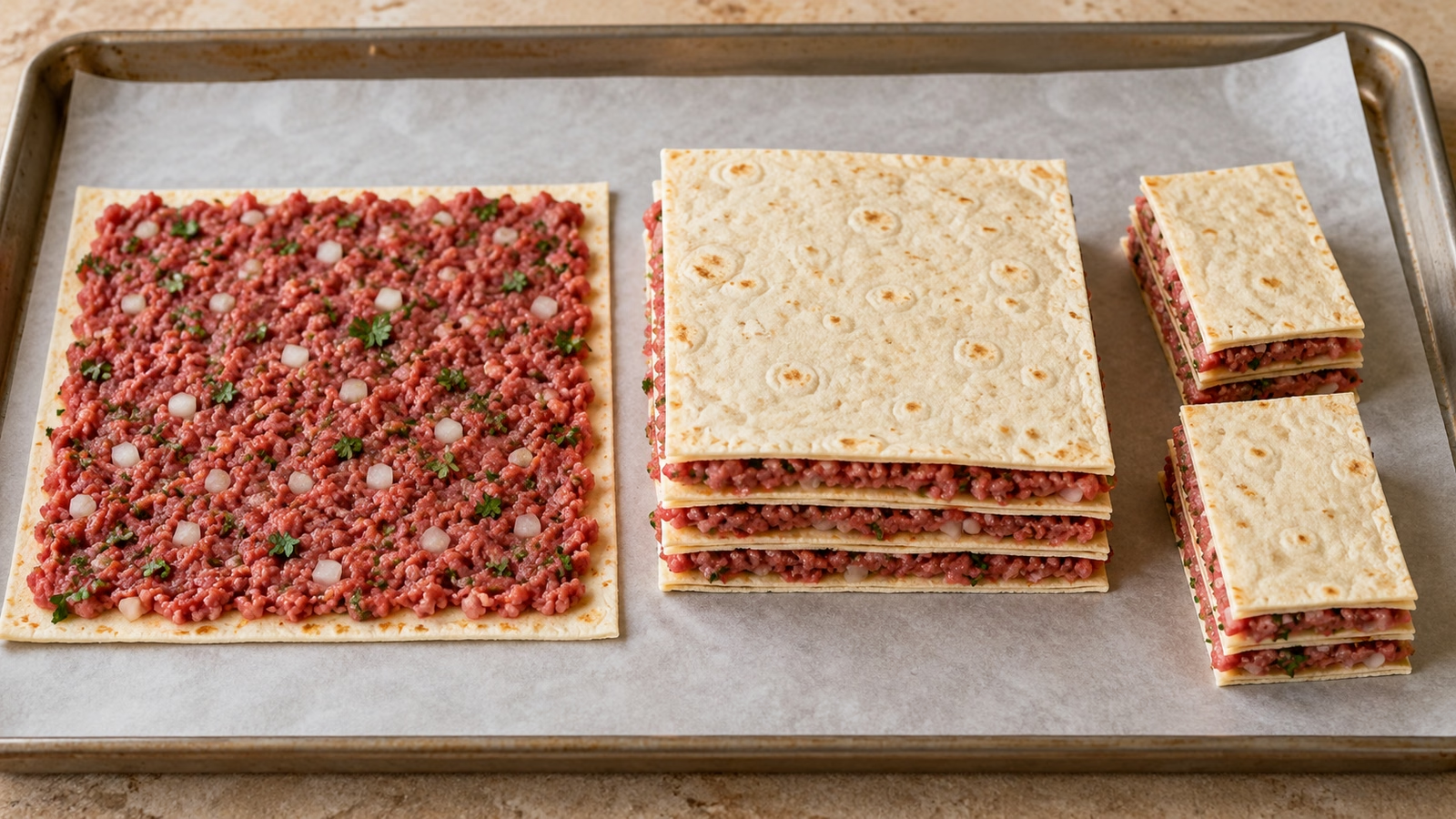
To assemble tortilla kebabs, spread a thin, even meat layer over trimmed tortillas, stack, cut, and secure the pieces. Resist building an oversized tower; thick or uneven pockets of meat make it harder to finish the middle without over-browning the exposed tortilla.
- Keep the filling even. Follow the chosen recipe’s layer thickness and stack dimensions, including the edges.
- Keep raw preparation separate. Use a separate board for ready-to-eat toppings, wash hands after handling raw beef, and use a clean serving plate.
- Watch the browning. Turn the kebabs as the recipe directs. If the outside darkens before the center is ready, reduce the heat rather than serving them early.
- Measure the center. Check the thickest meat portions with a food thermometer, positioning its sensing area in the meat rather than against a skewer. Check more than one kebab.
FoodSafety.gov gives 160°F (71°C) for ground beef and 165°F (74°C) for ground chicken or turkey. The lower temperature used for intact beef steaks is not the ground-beef target, and tortilla color cannot establish that the filling is safe.
Exact timing depends on the size, equipment, and starting temperature. A video’s edit can make the cooking look instant; your thermometer still gets the final word.
Serve tortilla kebabs with contrast, and store leftovers promptly
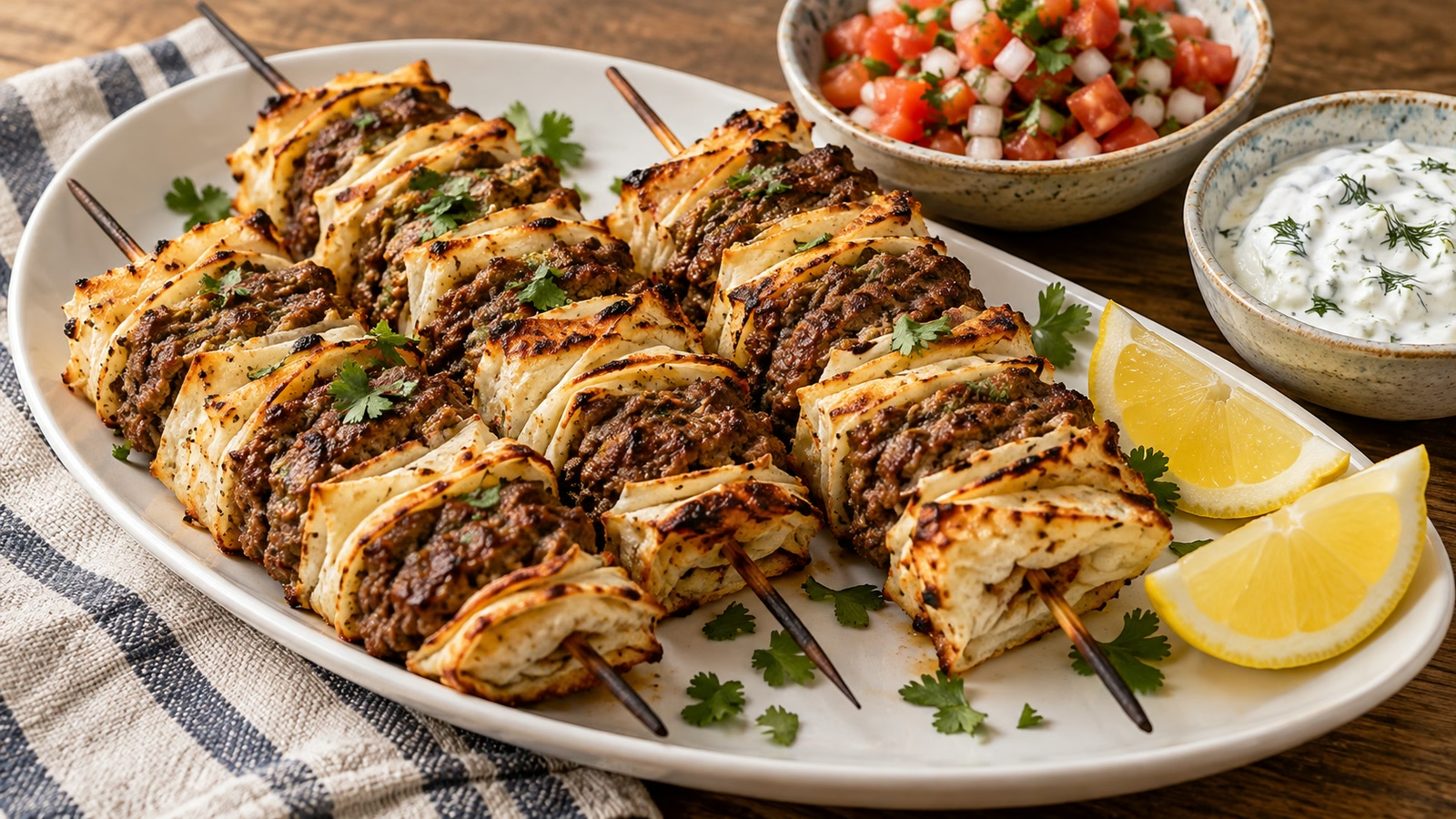
I would pair the savory layers with something cool and something fresh: an herby yogurt dip, a crisp vegetable side, or our fresh pico de gallo. Put wet toppings beside the kebabs so each person can add them as they eat.
- Refrigerate promptly: within two hours, or one hour when the surroundings are above 90°F (32°C). Do not leave perishable food out to preserve a crisp crust.
- Store cooked leftovers: use shallow covered containers in a refrigerator at 40°F (4°C) or below, and eat within three to four days.
- Reheat thoroughly: bring leftovers to 165°F (74°C). Use a thermometer instead of relying on a fixed reheating time.
- Handle raw make-ahead portions separately: ground meat generally keeps only one to two days refrigerated. Assembly does not restart that storage window.
Keep the sauce and salsa separate for easier reheating. For me, the best reason to try tortilla kebabs is the texture contrast; a sensible portion with vegetables and a sauce you enjoy is more useful than assuming every version is automatically a high-protein or low-carbohydrate meal.
Annie Lampella of KetoFocus demonstrates the layered tortilla-and-beef construction below using low-carbohydrate tortillas and her own seasonings. Treat those as recipe-specific choices, and check the thickest beef layers reach 160°F (71°C) rather than relying on tortilla color or an edited cooking time.
Sources
- Dig: U.S. viral-recipe snapshot, September 10–17, 2026 (reported social-view counts).
- KetoFocus: tortilla-kebab format and ingredient examples.
- Primal Gourmet: earlier taco-kebab coverage, February 2026 (format and assembly context; safety temperatures follow FoodSafety.gov).
- FoodSafety.gov: safe minimum internal temperatures.
- FoodSafety.gov: clean, separate, cook, and chill.
- FoodSafety.gov: cold-food storage chart.

Hi, I’m Laura, the voice behind Tastiva. I’ve always believed that eating well should feel enjoyable, comforting, and realistic—not like another complicated rule to follow. I love creating recipes that fit into everyday life, sharing simple nutrition ideas, and finding small ways to make meals feel a little better without losing the pleasure of good food.