
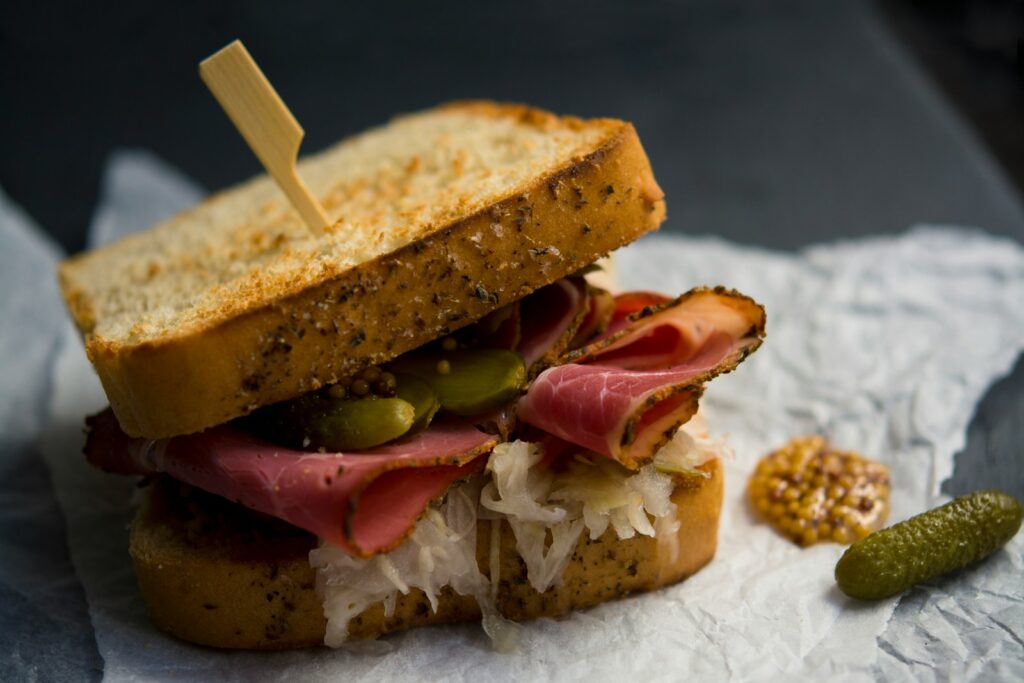
The name sounds as though corn should appear somewhere in the recipe. Corned beef is beef preserved by salt curing, commonly made from brisket; the “corned” part refers to grains of curing salt, not the vegetable. Its savory, salty character comes from that curing process, while the familiar tender texture usually comes from slow, moist cooking.
First identify whether your corned beef is raw or ready to eat; the name alone doesn't tell you.
What corned beef actually is
Brisket comes from the breast or lower chest area of the animal. It's a cut that benefits from cooking methods suited to its connective tissue. For corned beef, curing changes the flavor before the meat reaches your pot, and packaged briskets may include a separate spice packet.
Kansas State University Extension explains the connection between the name and coarse grains of salt. Modern products and recipes vary, so the package ingredient list is the right place to see the actual curing ingredients, seasonings, and sodium content.
I find it helpful to think of “corned” as a preparation, not a promise about how the meat is sold. A raw cured brisket, slices from a deli counter, and canned corned beef can all carry the name while needing very different handling. That distinction matters more at dinner time than memorizing a historical definition.
Three forms you'll see at the store
Look for instructions such as “cook thoroughly,” “fully cooked,” or “ready to eat.” Packaging and appearance aren't enough to establish whether a product needs cooking. Ask the butcher or deli staff if the label is unclear, and follow the product's storage directions.
| Form | What you're buying | How to approach it |
|---|---|---|
| Raw cured brisket | A cured beef cut that still needs cooking | Follow a suitable cooking method and check temperature |
| Cooked deli corned beef | Sliced prepared meat | Follow the seller's storage and use-by guidance |
| Canned corned beef | A packaged shelf-stable product before opening, when labeled that way | Read the opening, refrigeration, and serving directions |
Within brisket, you may see flat and point cuts. Their shape and fat distribution differ, which affects slicing and the finished dish. Rather than choosing solely by package weight, consider whether you want neat slices for sandwiches or a more irregular cut for a braised meal, and ask for help if the choice isn't clear.
Corned beef isn't identical to pastrami, even though both can appear in deli sandwiches. Avoid using the terms interchangeably when shopping. If you're following a particular recipe, its intended cut and preparation are worth matching rather than assuming every cured beef product will behave the same way.
Cook for both safety and tenderness
A raw corned beef brisket needs a suitable cooking method, enough time, and a thermometer. Moist methods such as braising or simmering are common. Avoid turning a gentle-cooking recipe into a hard boil simply to hurry it along; use a tested recipe and the package instructions for your particular cut and equipment.
The FoodSafety.gov minimum-temperature chart gives whole beef cuts a minimum of 145°F (63°C), followed by a three-minute rest. That is a safety minimum, not a guarantee of tender brisket. Corned beef often needs additional cooking for the texture you want, so don't confuse “safe temperature reached” with “ready to slice beautifully.”
- Insert the thermometer into the thickest part, avoiding a large pocket of fat.
- Keep enough cooking liquid for the method you're using and check its instructions.
- Add vegetables at the stage the recipe specifies so they don't all turn soft before the meat is ready.
- Allow the cooked meat to rest as directed, then identify the direction of the muscle fibers.
- Slice across those fibers rather than along them for easier-to-chew pieces.
My preference in an explanation like this is to separate the two checks: the thermometer answers the safety question, and the recipe's tenderness cues answer the texture question. Neither needs to pretend to do the other's job. Exact cooking time depends on the cut, size, and method, so one universal number wouldn't be useful here.
Serve it thoughtfully and store leftovers promptly
Corned beef and cabbage is a familiar St. Patrick's Day meal in the United States. It can also become a sandwich filling or part of a breakfast hash. Its pronounced salty flavor pairs well with comparatively simple sides: cabbage, carrots, potatoes, or a crisp salad don't need elaborate seasoning to share the plate.
For a sandwich, sliced corned beef can be paired with sauerkraut and Swiss cheese; Tastiva's Swiss cheese guide explains that ingredient's flavor and uses. Check the corned beef label if you're managing sodium, and build the rest of the meal around your needs rather than assuming every brand or portion is equivalent.
Refrigerate cooked leftovers within two hours, dividing large amounts into smaller, shallow containers for cooling. Use refrigerated leftovers within three to four days, and reheat them to 165°F (74°C), as described in University of Arkansas Extension guidance. Label the date while you're putting dinner away; tomorrow's sandwich will be much easier to plan.
Sources
- Kansas State University Extension: Corned beef and its name
- FoodSafety.gov: Safe minimum internal temperatures
- University of Arkansas Extension: Preparing and storing corned beef

Hi, I’m Laura, the voice behind Tastiva. I’ve always believed that eating well should feel enjoyable, comforting, and realistic—not like another complicated rule to follow. I love creating recipes that fit into everyday life, sharing simple nutrition ideas, and finding small ways to make meals feel a little better without losing the pleasure of good food.