
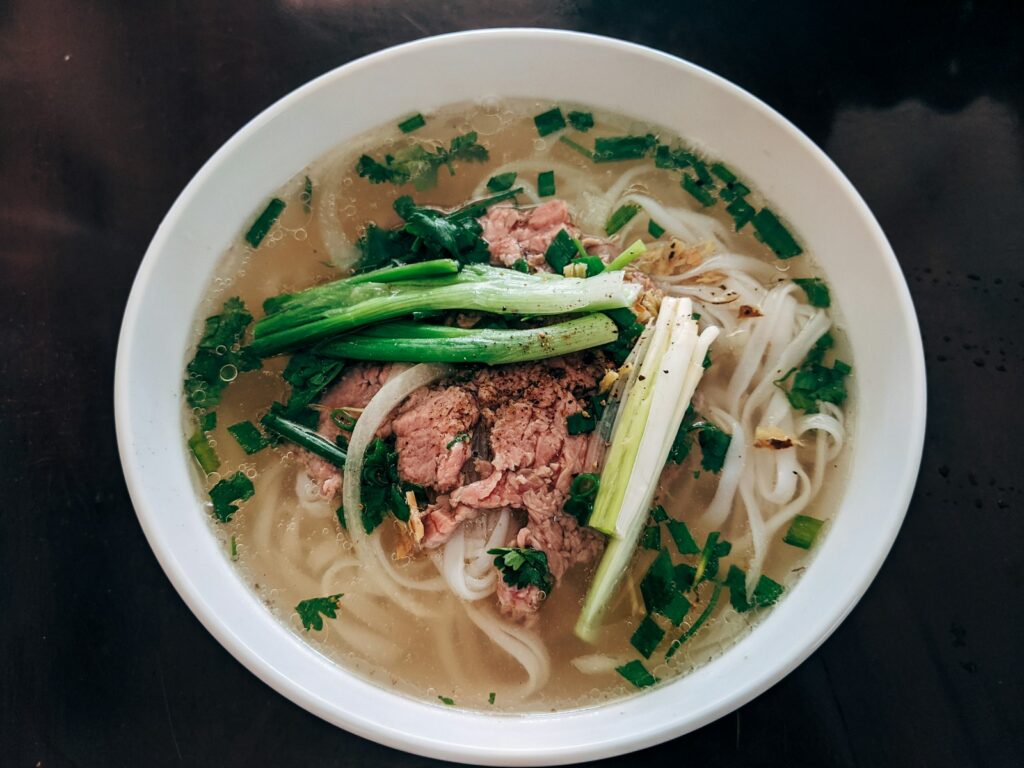
A bowl of pho arrives like a small landscape: clear, aromatic broth below; soft rice noodles and slices of meat in the middle; herbs, scallions, lime, and chiles waiting at the edges. Pho is a Vietnamese noodle soup built from broth, flat rice noodles called bánh phở, and usually beef or chicken, with garnishes and seasonings that vary by region, restaurant, and cook.
Pho is not one rigid recipe—it is a careful balance of broth, rice noodles, protein, herbs, and the choices each cook brings to the bowl.
The name is often approximated in English as “fuh,” though Vietnamese pronunciation and tone cannot be captured perfectly by that spelling. What matters at the table is easier: taste the broth first, add garnishes with intention, and let the bowl stay recognizably itself. I love that pho invites participation without demanding that every diner build the same final spoonful.
What Is in a Bowl of Pho?
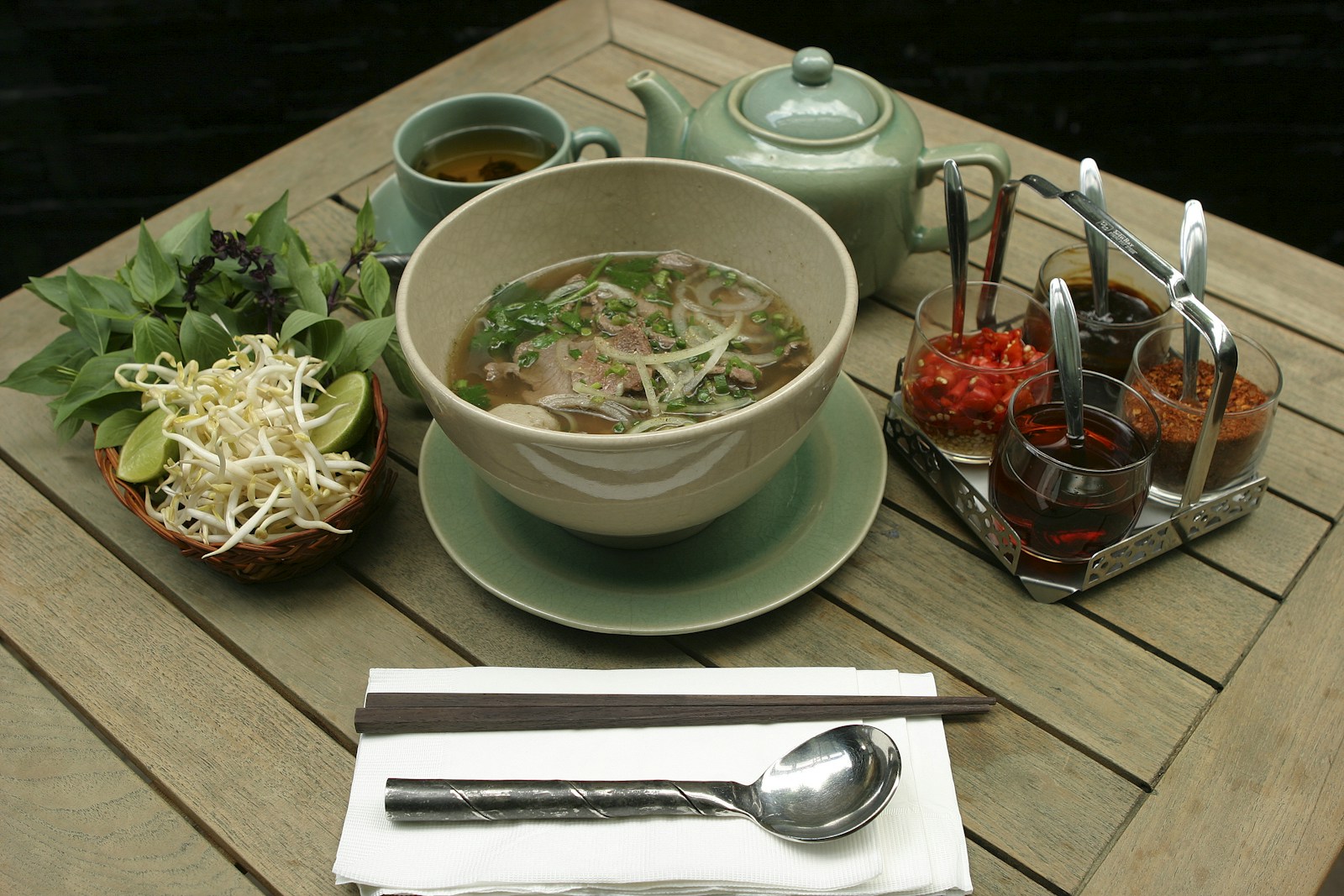
The broth is the center of pho. Beef versions may simmer bones and meat with charred onion and ginger, while chicken pho begins with chicken. Fragrant spices often include star anise, cinnamon or cassia, cloves, coriander seed, and cardamom, but recipes are not identical. Fish sauce and a small amount of sugar may help balance saltiness, savoriness, and aroma without making the broth taste obviously sweet.
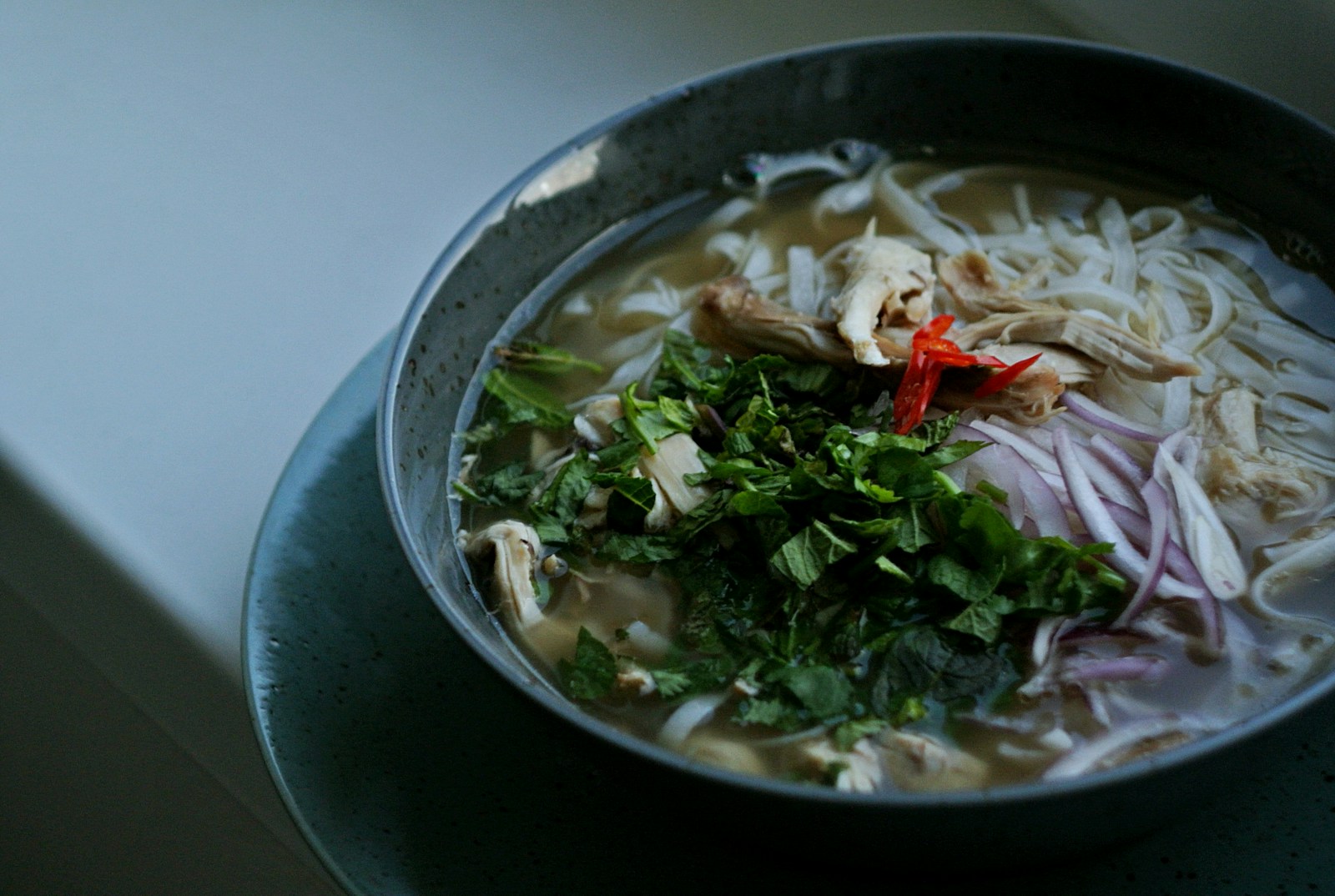
Wide, flat rice noodles—bánh phở—give the soup its tender, slippery body. Pho bò is made with beef, which may include brisket, flank, meatballs, tendon, or thin raw slices that cook in the steaming broth. Pho gà uses chicken and tends to have a lighter-looking broth. Scallions, onion, cilantro, black pepper, and other herbs bring freshness.
| Part of the bowl | What it contributes | What may vary |
|---|---|---|
| Broth | Aroma, warmth, and the soup’s main flavor | Beef, chicken, meatless; spice and seasoning balance |
| Bánh phở | Soft, flat rice noodles | Fresh or dried; narrow or wide |
| Protein | Substance and texture | Beef cuts, meatballs, chicken, tofu, or mushrooms |
| Garnishes | Freshness, heat, acidity, and crunch | Herbs, sprouts, lime, chile, scallions |
| Table sauces | Optional sweetness, salt, heat, or depth | Hoisin, chile sauce, fish sauce; restaurant customs differ |
Pho Bò, Pho Gà, and Regional Styles
Pho’s modern history is closely linked with northern Vietnam. Vietnam’s official tourism site describes Nam Dinh in the Red River Delta as the dish’s geographical cradle and Hanoi as its spiritual home, while also tracing its rise through the social changes around the turn of the 20th century. Food histories debate some details of its origin, so it is more accurate to respect that complexity than to repeat one tidy invention story as settled fact.
Northern-style pho is often described as restrained: a clear, savory broth, fewer table garnishes, and close attention to the noodles and beef. As pho moved south, especially to Saigon, bowls commonly became sweeter and arrived with a more abundant side plate—bean sprouts, Thai basil or other herbs, lime, and fresh chile. Those are broad tendencies, not rules for every household or restaurant.
Pho bò means beef pho; pho gà is chicken pho. Menus may specify the cut: tái for rare beef, chín for cooked beef, nạm for flank, gầu for fatty brisket, or bò viên for beef meatballs, although spelling and combinations differ. A vegetarian-looking pho may still use meat broth or fish sauce, so ask rather than relying on the toppings you can see.
How to Order, Season, and Eat Pho
If the menu offers sizes, remember that a large bowl can be genuinely large. Choose the broth and protein you want, then ask how rare beef is served if that matters to you. Thin slices labeled rare are commonly placed in the bowl and cooked by very hot broth; diners who prefer meat fully cooked can request it that way. For takeout, restaurants may pack broth, noodles, protein, and herbs separately so the noodles do not soften during the ride.
Taste the broth before reaching for hoisin or chile sauce. Then add herbs in small handfuls, squeeze in lime if you want brightness, and use sprouts for crunch. Sauces can be added to the broth, but dipping pieces of meat on the side preserves the broth’s balance. My favorite editorial rule here is wonderfully low-pressure: season one spoonful in your mind before seasoning the entire bowl in reality.
Chopsticks handle noodles and solids; a spoon carries broth and catches the noodles underneath. Slurping is practical, and there is no need to stage-manage every strand. Stir enough to distribute the herbs, but do not bury the bowl under every condiment just because it is on the table. Pho should taste layered, not like the condiment shelf held a meeting in it.
Is Pho Gluten-Free or Healthy?
Rice noodles are naturally made without wheat, but a restaurant bowl of pho is not automatically gluten-free. Broth bases, bouillon, meatballs, hoisin sauce, soy sauce, and other seasonings may contain wheat, and shared strainers, pots, or prep surfaces can create cross-contact. For celiac disease or another strict medical need, ask about the broth, noodles, sauces, protein, and kitchen practices; packaged products should carry a clear gluten-free claim when required. Tastiva’s gluten-free noodles guide offers a wider look at rice noodles and other wheat-free styles.
Pho can combine carbohydrates, protein, fluid, and herbs in one satisfying meal, but “healthy” depends on the bowl and the eater. Restaurant portions, fatty meat, noodles, and sodium can vary dramatically. You can choose a smaller bowl, request leaner meat or extra vegetables where available, taste before adding sauces, and leave some broth if you are watching sodium. None of those choices makes the traditional bowl wrong—they simply let it fit your needs.
Leftover takeout should be refrigerated promptly, with noodles and broth separated when possible. Reheat broth and leftovers to 165°F (74°C), the USDA target for leftovers, and bring sauces or garnishes back only after heating. Pho is at its best when the broth is fragrant, the noodles still have life, and the herbs taste fresh; a little care protects all three.
Sources
- Vietnam Tourism: The Story of Vietnamese Pho
- Vietnam Tourism: 21 Must-Try Vietnamese Dishes
- U.S. Food and Drug Administration: Gluten and Food Labeling
- USDA Food Safety and Inspection Service: Leftovers and Food Safety
- Centers for Disease Control and Prevention: About Sodium and Health

Hi, I’m Laura, the voice behind Tastiva. I’ve always believed that eating well should feel enjoyable, comforting, and realistic—not like another complicated rule to follow. I love creating recipes that fit into everyday life, sharing simple nutrition ideas, and finding small ways to make meals feel a little better without losing the pleasure of good food.