
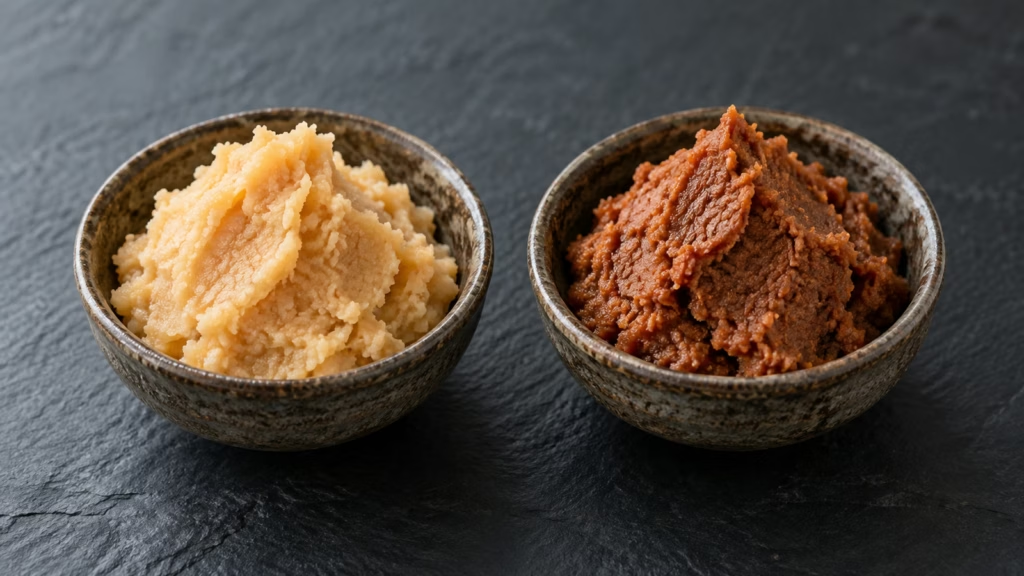
Two tubs of miso sit side by side, and the recipe simply says white. In a white miso vs red miso decision, start with flavor: white miso is often milder and sweeter, while red varieties commonly bring a deeper, more assertive taste. Those are useful tendencies, not a guarantee of salt level or an automatic one-for-one swap.
Choose the flavor you want in the finished dish, then let the actual paste set the amount.
White miso vs red miso is a starting point
Miso is a Japanese fermented seasoning with many regional styles. Color reflects ingredients and processing as well as maturation; it is too simple to say that every pale miso is young and every dark one is old. The proportion of koji, the grain used, and the maker’s method all matter.
- White miso: Often a useful starting point for light dressings, butter sauces, and vegetable glazes where you want savory depth without an especially forceful finish.
- Red miso: Often suits hearty broths, braises, and darker sauces that can carry a stronger fermented aroma.
- Blended miso: Sometimes labeled awase. Its flavor depends on the blend, so place it by taste rather than trying to force it into a color category.
- Sweet white miso: A distinct style can be much sweeter than a standard pale everyday paste. Do not assume the words white miso describe one identical product.
I would buy a small tub first if you have not cooked with that brand. A paste that seems intense on its own may taste balanced after it is diluted across a pot of soup; tasting still helps you understand what it will contribute.
Read beyond the color on the front
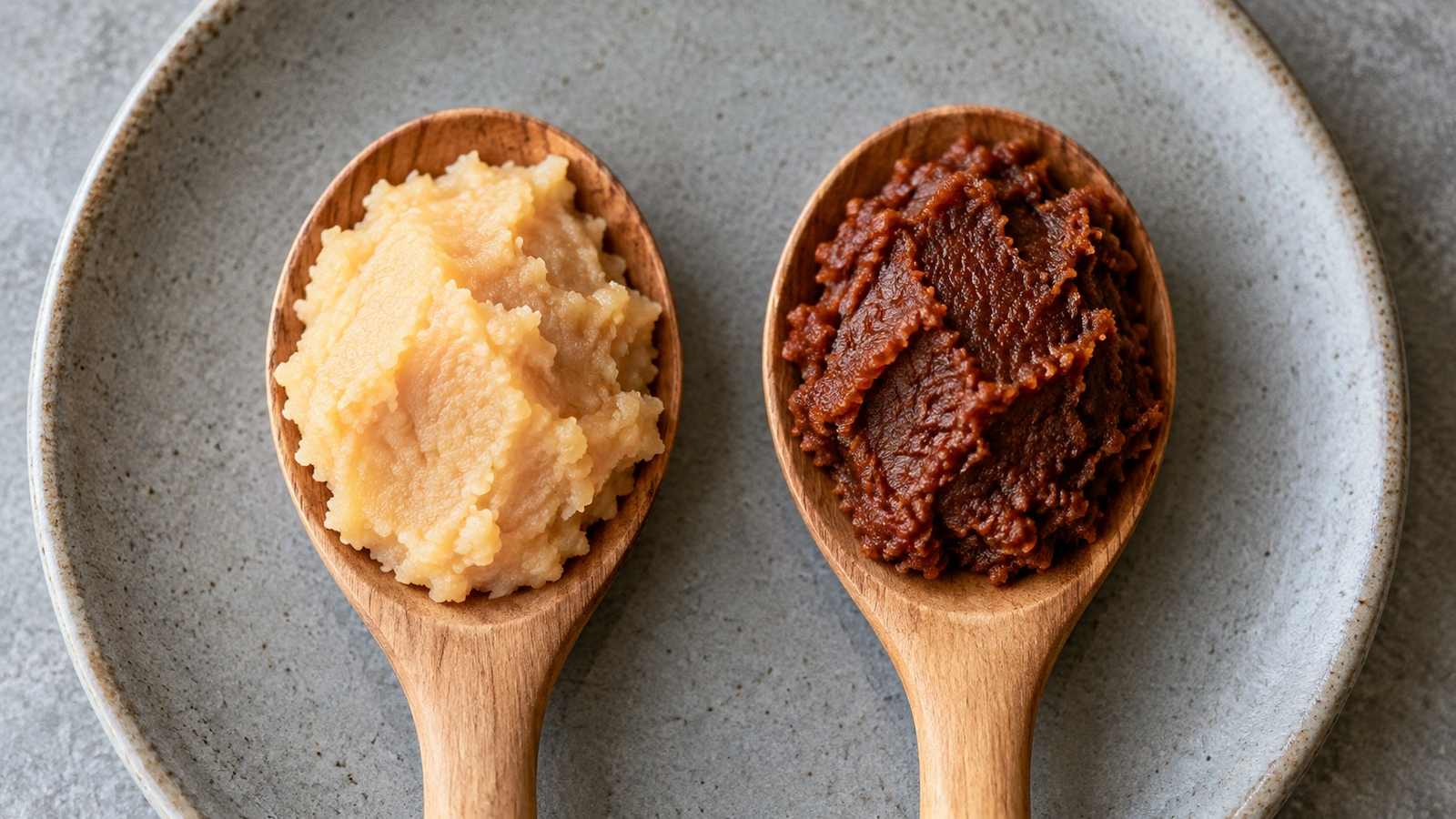
The ingredient list answers questions that the photograph of the paste cannot. Many products contain soybeans, rice, and salt, while others use barley or additional ingredients. Dashi-seasoned products can include fish, and instant soup mixes may add several seasonings that a plain paste does not contain.
- For gluten avoidance: Check the specific product and certification where relevant. Miso is not universally gluten-free.
- For vegetarian or vegan cooking: Look for dashi ingredients and other animal-derived additions.
- For sodium comparison: Compare equal gram amounts. One label’s tablespoon may not weigh the same as another’s.
- For sweetness: Read the description and taste; color is not a nutritional measure.
- For live cultures: Fermented does not by itself establish a probiotic effect in the finished food. Processing, storage, and cooking vary.
Hikari’s red miso and white miso are useful examples of how a maker describes its own products. They are examples, not universal definitions for every tub sold under those names.
Make a substitution gradually
If miso is a supporting seasoning in a large pot, the swap is usually easier than when it defines a delicate dressing or dessert. Start with less of a stronger paste than the recipe specifies, dissolve it into a little of the dish’s liquid, and taste the mixture before adding more. There is no dependable universal ratio because the products vary.
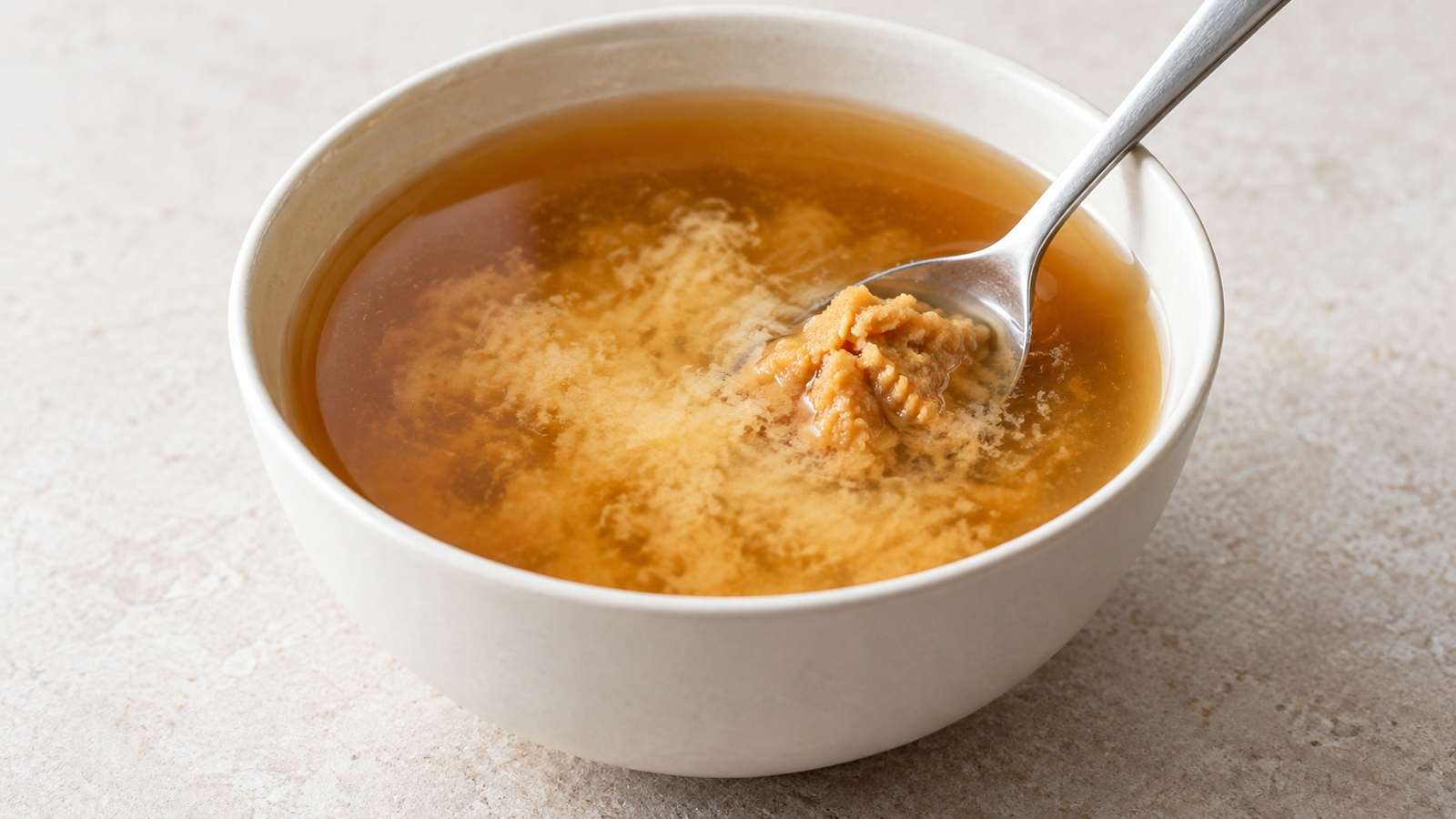
- In a soup: Blend the paste with warm broth in a small bowl, then stir it back in. This helps distribute it evenly.
- In a butter sauce: Mix the miso into warm water first and add gradually. Hold back other salty ingredients until the end.
- In a glaze: Check both sweetness and thickness. A thinner paste or a sweeter miso changes how the coating behaves.
- In baking: Use the specified style when possible. A color swap can change sweetness, salt, moisture, and appearance together.
Do not try to correct a too-strong miso addition with endless sugar or acid. Both add their own flavors. Increasing the unseasoned part of the dish may be the more useful fix, although that changes the yield and timing.
Use the tub you buy, and store it as directed
Miso is receiving renewed attention: Waitrose reported rising miso demand in September 2026. That UK retailer signal explains the timely interest, but the practical question is what you will cook after the first spoonful. Plan two or three uses rather than buying multiple large tubs immediately.
- A light paste: Try a little in a vegetable dressing, a mushroom pasta sauce, or a late-applied sweet-potato glaze.
- A stronger paste: Start with a brothy bean dish, a robust mushroom soup, or a small amount in a savory marinade.
- Storage: Follow the container’s directions after opening, keep it tightly closed, and use a clean utensil.
- Changes: Darkening alone is not the same as spoilage. If you find mold, unusual growth, or an unexpected off odor, seek product-specific guidance rather than tasting to decide.
Tastiva’s tamari guide is useful if you are comparing other soy-based seasonings. Tamari is a liquid seasoning, however, and cannot replace miso’s paste texture without changing the dish. Keep the role of the ingredient in mind before making the substitution.
Chef and author Tim Anderson explores miso styles and cooking uses in this video from The Wasabi Company. His examples include flavored and dark misos as well as white miso, so they offer a wider view of the shelf rather than a fixed red-for-white substitution rule.
Sources
- Hikari Miso: ingredients, color, and maturation questions
- Hikari: white miso product details
- Hikari: red miso product details
- Waitrose: September 2026 miso interest

Hi, I’m Laura, the voice behind Tastiva. I’ve always believed that eating well should feel enjoyable, comforting, and realistic—not like another complicated rule to follow. I love creating recipes that fit into everyday life, sharing simple nutrition ideas, and finding small ways to make meals feel a little better without losing the pleasure of good food.