
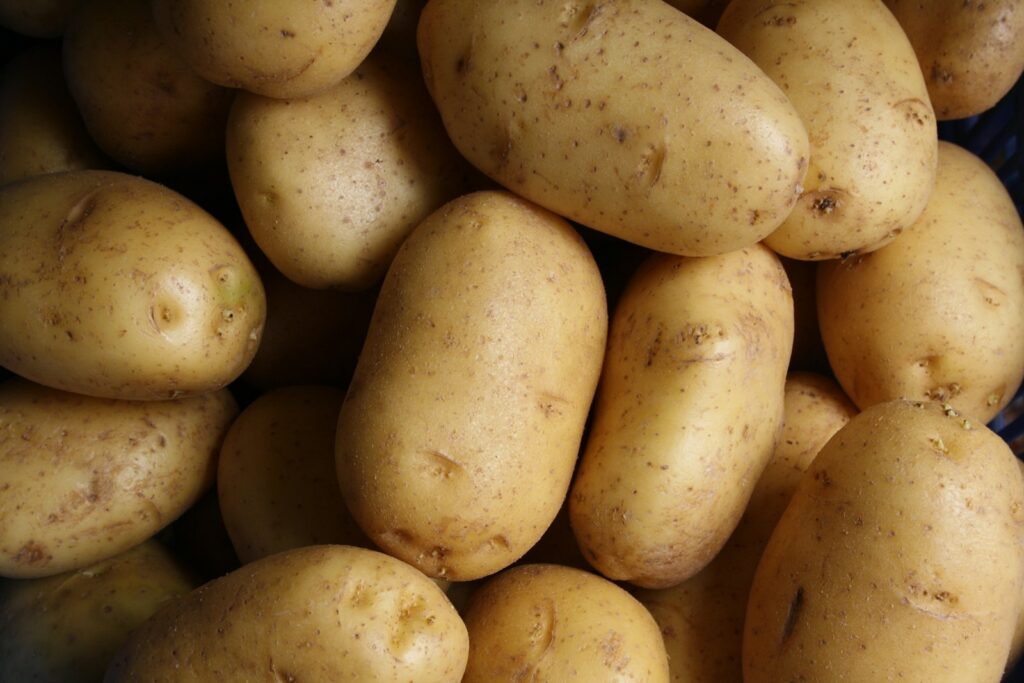
A plain baked potato is straightforward; the fries beside a breaded sandwich deserve another question. Potatoes are naturally gluten-free, including white, red, yellow, and purple varieties. Gluten can enter a potato dish through added ingredients or contact with gluten-containing food during preparation, so the finished meal matters as much as the potato itself.
Start with the potato, then check what was added and how it was cooked; that's where the gluten-free decision becomes useful.
Are potatoes gluten-free in every ordinary variety?
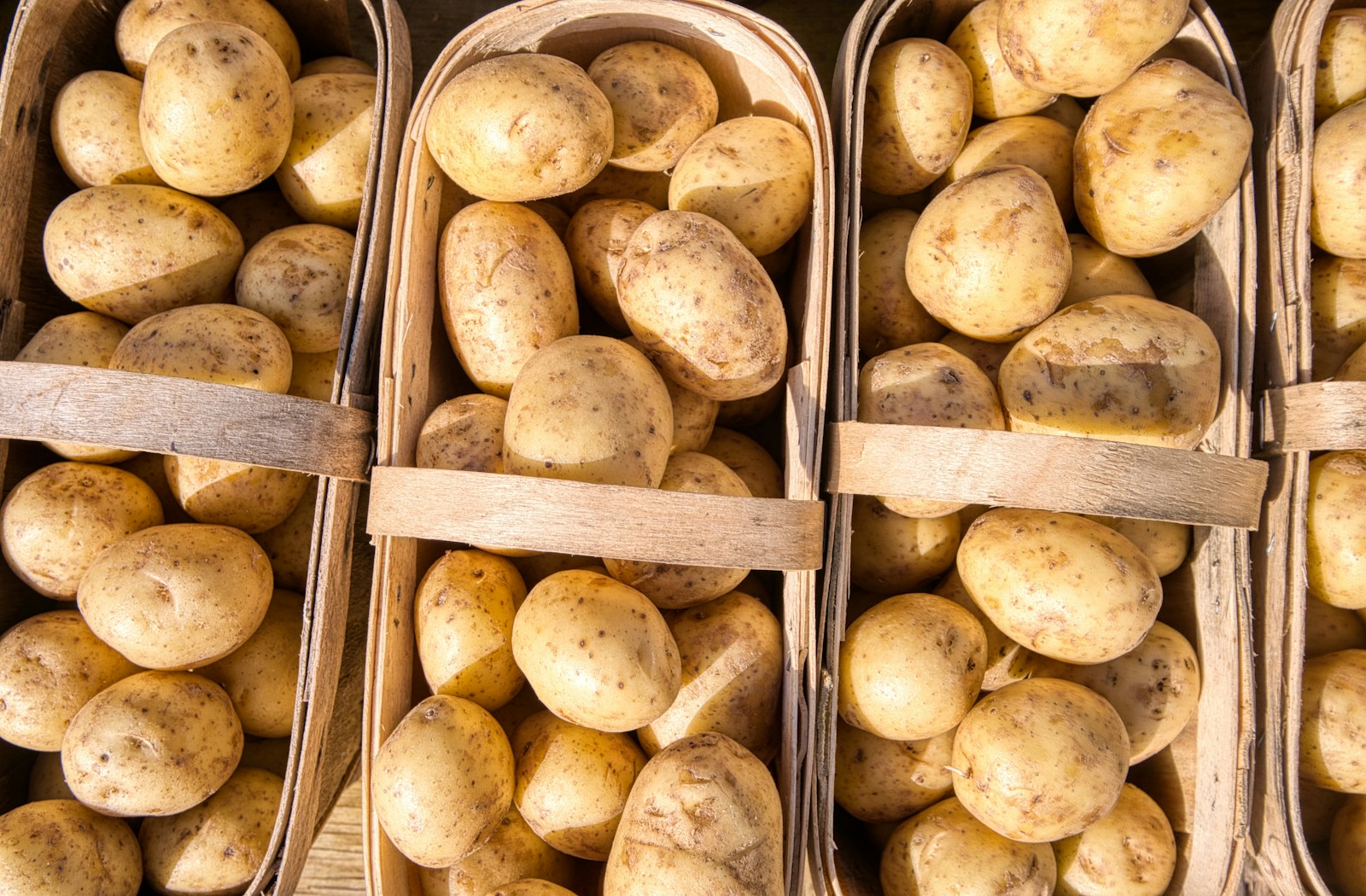
Gluten is a group of proteins found in wheat, barley, rye, and related grains. A potato doesn't naturally contain those proteins. The Celiac Disease Foundation includes potatoes among naturally gluten-free starchy foods, and sweet potatoes are naturally gluten-free too, despite being a different plant.
Boiling, baking, or roasting a plain potato doesn't create gluten. Neither does leaving on its skin. The concern begins when another ingredient is included or when shared equipment transfers gluten to the food. “Made with potatoes” is therefore a starting description, not a guarantee about a complete packaged product.
I find that distinction reassuring: you don't have to distrust the whole produce bin. You do need a clear answer about the coating, gravy, seasoning, or preparation when potatoes arrive as part of a dish someone else has made.
Familiar potato dishes, with the useful checks beside them
Some versions of a dish are gluten-free and others aren't. Mashed potatoes made from potatoes, milk, and butter are a different proposition from a boxed mix with added ingredients or a restaurant mash topped with flour-thickened gravy. Check the actual product or recipe rather than assigning one answer to every version.
| Potato food | Main issue to check | A useful question |
|---|---|---|
| Plain baked potato | Toppings and handling | Is it prepared with clean utensils and served without an unverified sauce? |
| Mashed potatoes | Mix-ins, gravy, or packaged seasoning | What ingredients go into both the potatoes and topping? |
| French fries | Wheat-based batter and shared frying oil | Are the fries coated, and is the fryer dedicated to gluten-free food? |
| Hash browns or home fries | Coatings, seasonings, shared griddle | Are they plain, and how is cross-contact controlled? |
| Potato chips | Flavorings and product labeling | Does this exact flavor carry a gluten-free claim? |
| Gnocchi or potato bread | Wheat flour in the dough | Is the entire product gluten-free, rather than merely potato-based? |
Ordinary potato bread frequently contains wheat, and many gnocchi recipes combine potato with wheat flour. Those aren't exceptions to potatoes being gluten-free; they are examples of mixed foods. For another packaged snack distinction, Tastiva's gluten-free chips guide looks beyond the front of the bag.
Don't assume that removing a bun or picking off visible breading solves the issue. Cross-contact can leave gluten behind even when the food looks clean. If you have celiac disease, clear preparation information is more useful than an assurance that the dish contains “only a little” flour.
Read labels for the whole product
For FDA-regulated packaged foods in the United States, a gluten-free claim requires less than 20 parts per million of gluten along with other ingredient requirements. Third-party certification can add another verification program, but the FDA's claim has a defined meaning even without a certification symbol.
- Read the ingredient list for wheat, barley, rye, malt, and ingredients derived from them.
- Don't use a “Contains wheat” statement as the only check; it doesn't cover every possible gluten source.
- Treat “wheat-free” and “gluten-free” as different claims. A wheat-free food can still contain barley or rye.
- Recheck the current package when a product changes its formula or packaging, especially seasoned fries and snack flavors.
- Contact the manufacturer when the information doesn't answer your specific need.
Plain potato starch and plain potato flour are naturally gluten-free ingredients, but they serve different purposes. Starch is primarily used for thickening and structure; potato flour includes more of the whole potato. Verify the package and recipe instead of exchanging them measure for measure simply because both begin with potato.
Our gluten-free bread guide explains why those flour-and-starch combinations matter in baking. The ingredient can be gluten-free while the recipe that uses it still includes wheat.
Make the kitchen or restaurant conversation specific
At home, use clean pans, boards, utensils, and preparation surfaces. Keep crumbs out of shared butter, dips, and toppings. An uncomplicated baked or boiled potato can be a helpful starting point when cooking for someone with celiac disease, provided the accompaniments and handling are appropriate too.
At a restaurant, ask about both the ingredients and shared equipment. The Celiac Disease Foundation specifically flags fries cooked in oil shared with breaded food. A dedicated fryer can address that particular risk, but the staff also needs to understand the rest of the preparation and serving process.
My favorite question here is the concrete one: “Are these fries coated, and what else goes into that fryer?” It invites a more useful answer than “Potatoes don't have gluten, right?” If the kitchen can't establish a suitable option, choose something it can explain confidently instead of guessing from the menu name.
Sources
- Celiac Disease Foundation: naturally gluten-free foods
- Celiac Disease Foundation: ingredients and cross-contact sources
- FDA: what a gluten-free claim means
- Schär: potatoes, potato products, and gluten

Hi, I’m Laura, the voice behind Tastiva. I’ve always believed that eating well should feel enjoyable, comforting, and realistic—not like another complicated rule to follow. I love creating recipes that fit into everyday life, sharing simple nutrition ideas, and finding small ways to make meals feel a little better without losing the pleasure of good food.