
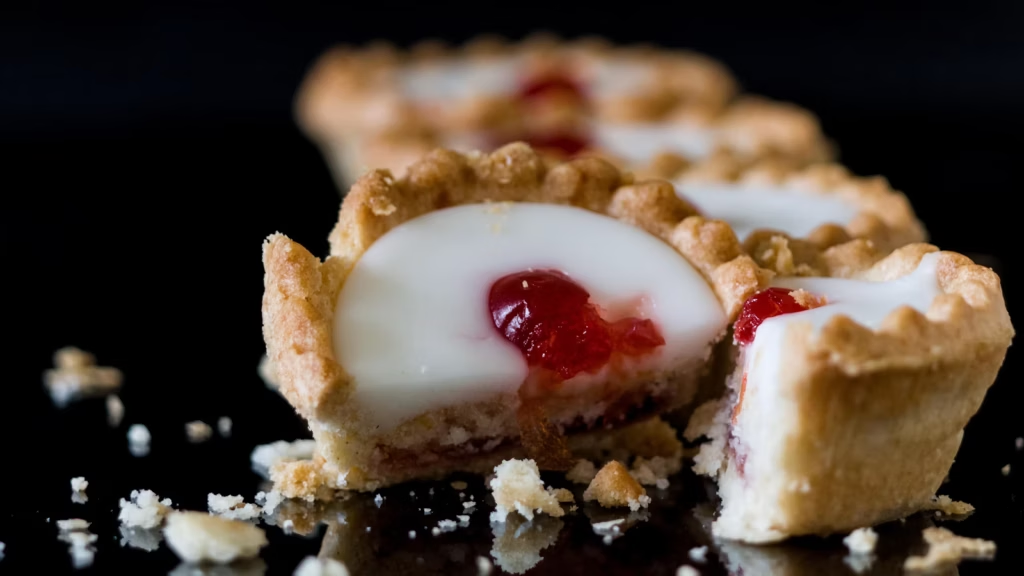
A Bakewell tart is a classic British bake built in three clear layers: crisp shortcrust pastry, a sharp ribbon of raspberry jam, and soft almond frangipane finished with toasted flaked almonds. The best slice holds a neat edge but never feels dry. You should taste butter first, raspberry next, and warm almond all the way through—not a thick blanket of sugar trying to hide a soggy base.
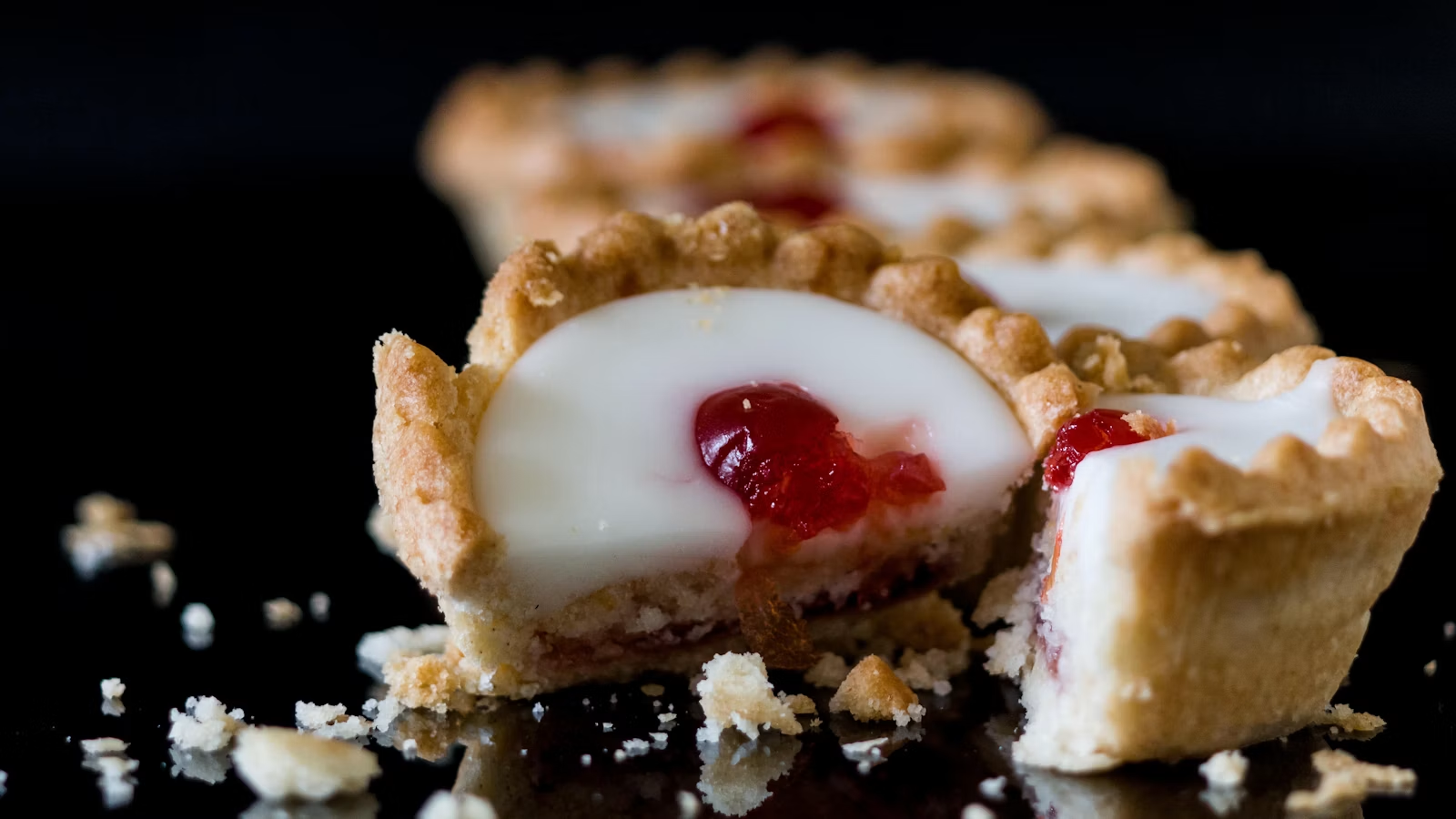
Blind-bake the shell, keep the jam layer thin, and let the almond filling stay tender rather than cake-dry.
Bakewell tart is not quite Bakewell pudding
The Bakewell tart and Bakewell pudding names are often swapped, but Bakewell’s own baking tradition treats them as related rather than identical. The older Bakewell pudding is commonly made with puff pastry and a softer egg-and-almond filling. The later tart uses shortcrust pastry with a more cake-like frangipane. Both carry fruit preserves and almond, and both have competing origin stories. That history is charming, but it does not need to become homework before dessert.
This recipe follows the familiar tart format: raspberry jam, almond cream, and sliced almonds, without the thick white icing and cherry used on some commercial versions. King Arthur Baking describes the same core structure of buttery shortcrust, raspberry preserves, frangipane, and toasted almonds. The contrast is the whole pleasure here—crumbly shell, bright fruit, and a filling that is rich without being heavy.
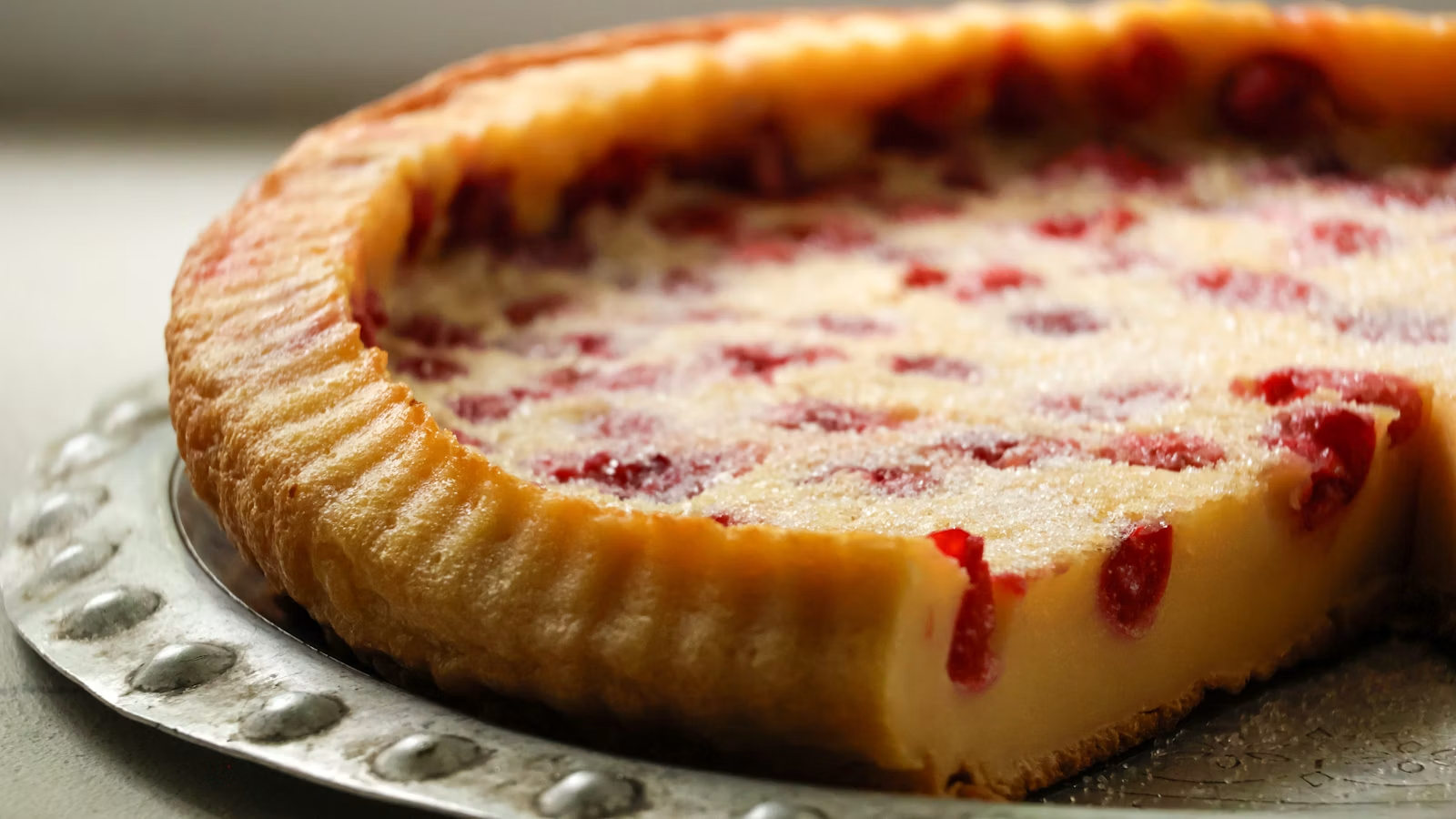
Start with cold pastry and a dry base
For Bakewell tart, cold butter makes a short, crisp pastry because it stays in small pieces until the dough reaches the oven. Mix only until the crumbs hold together when pressed, and add water cautiously. A sticky dough needs extra flour later, which makes the shell tougher. Resting the dough before and after rolling relaxes the gluten and helps the tart keep its shape.
Blind baking is not optional here. The jam and frangipane both bring moisture, so an unbaked shell struggles to crisp underneath them. Line the chilled crust with parchment, fill it right into the corners with pie weights, then bake until the sides are stable. Remove the weights and give the base five more minutes. For a deeper pastry guide, our shortcrust pastry recipe explains why stretching the dough is the quickest route to shrinkage.
Keep raspberry jam thin and frangipane soft
Use seedless raspberry jam so the layer stays smooth and the slices cut cleanly. About one-third cup is enough for a nine-inch tart. More looks generous but can bubble over, make the bottom slippery, and overwhelm the almond. Spread it over the cooled shell, stopping just short of the edge.
Frangipane sounds formal, yet it is simply softened butter, sugar, eggs, and almond flour with a little wheat flour for structure. Beat the butter and sugar until creamy, add the eggs gradually, then fold in the dry ingredients. If the mixture looks slightly split after the eggs, the almond flour usually brings it back together. Dollop it across the jam before smoothing; dragging one big mound from the center stirs the layers into pink streaks. Raspberry is classic, but a tart boysenberry preserve makes a lovely, darker variation.
Bake until golden, domed, and just set
The frangipane rises gently in the oven and settles as it cools. Look for an even golden top, toasted almonds, and a center that springs back when touched lightly. If the rim colors too quickly, shield it loosely with foil. FoodSafety.gov recommends 160°F (71°C) for egg dishes; checking the center is useful when the surface is brown but you are unsure whether the filling has set.
Do not slice the tart warm unless you are comfortable with a delicious landslide. Cooling gives the butter and almonds time to firm, making the layers cleaner and the flavor more distinct. I prefer to cool it completely in the pan, release the rim, then dust it lightly with powdered sugar. The word “lightly” is doing useful work—this tart already knows it is dessert.
Bakewell Tart Recipe

Ingredients
- 1 1/4 cups all-purpose flour 150 g; plus more for rolling
- 2 tablespoons powdered sugar 15 g
- 1/4 teaspoon fine salt
- 1/2 cup cold unsalted butter 113 g; cut into small cubes
- 1 large egg yolk
- 2 to 3 tablespoons ice water as needed
- 1/3 cup seedless raspberry jam about 105 g
- 1/2 cup unsalted butter 113 g; softened
- 1/2 cup granulated sugar 100 g
- 2 large eggs room temperature
- 1 1/4 cups almond flour 125 g
- 2 tablespoons all-purpose flour
- 1/2 teaspoon almond extract
- 1 teaspoon finely grated lemon zest
- 1/4 teaspoon fine salt
- 1/3 cup sliced almonds
- 1 tablespoon powdered sugar optional, for serving
Equipment
- 1 9-inch tart pan with removable bottom
- 1 Rolling Pin
- 1 baking beans or pie weights
Instructions
- Whisk the flour, powdered sugar, and salt. Rub or pulse in the cold butter until the mixture resembles coarse crumbs. Mix in the egg yolk and 2 tablespoons ice water; add the final tablespoon only if the dough will not hold when pressed.
- Flatten into a disk, wrap, and chill for 30 minutes. Grease a 9-inch tart pan. Heat the oven to 375°F (190°C).
- Roll the dough to an 11-inch circle on a lightly floured surface. Fit it into the pan without stretching, trim the edge, prick the base lightly, and chill for 15 minutes.
- Line the shell with parchment and fill with baking beans. Bake for 15 minutes. Remove the parchment and weights, then bake 5 minutes more until the base looks dry but remains pale. Cool for 10 minutes. Reduce the oven to 350°F (175°C).
- Beat the softened butter and sugar until creamy. Beat in the eggs one at a time. Fold in the almond flour, all-purpose flour, almond extract, lemon zest, and salt until smooth.
- Spread the raspberry jam over the cooled pastry base, leaving a narrow edge. Spoon the frangipane over it in small dollops, then gently smooth without dragging up the jam. Scatter with sliced almonds.
- Bake for 30 to 35 minutes, until golden, domed, and set in the center. An instant-read thermometer should reach 160°F (71°C) in the filling. Cool completely in the pan before dusting with powdered sugar and slicing.
Nutrition
Video
Notes
- Do not stretch the pastry into the pan; stretched dough shrinks as it bakes.
- A thin jam layer keeps the tart balanced. Too much can leak and leave the base soggy.
- The tart is ready when the center springs back lightly and the frangipane reaches 160°F (71°C).
- Store covered at cool room temperature for 1 day or refrigerate for up to 4 days. Bring to room temperature before serving.
- Nutrition is an estimate per slice based on the full recipe yield.
Tried this recipe?
Let us know how it turned out!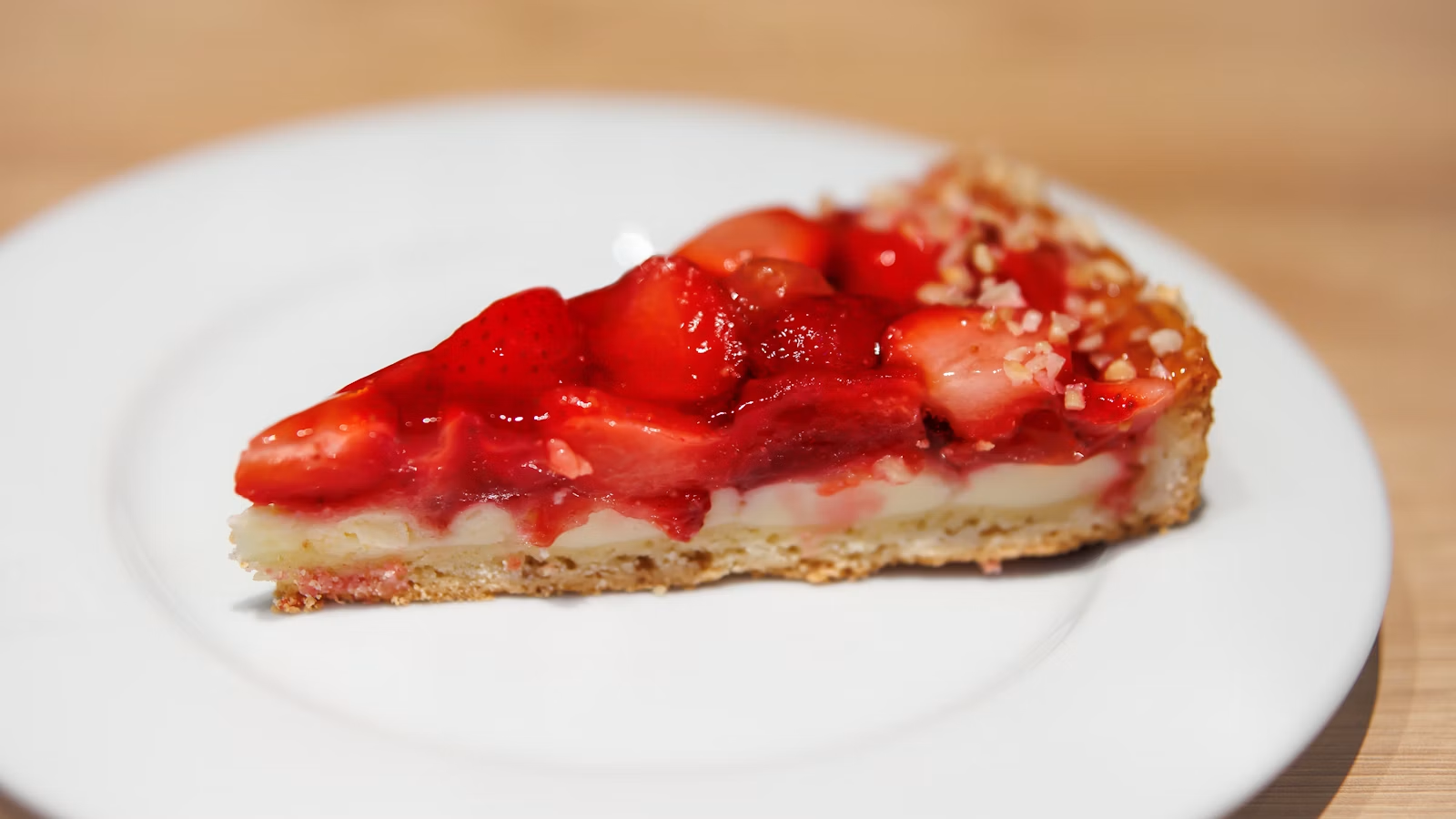
Serve simply and store it without losing the crust
Serve Bakewell tart at room temperature in modest slices. It is rich enough on its own, though unsweetened crème fraîche or softly whipped cream is welcome. Tea is the natural partner; something aromatic such as our homemade chai latte leans cozy, while plain black tea keeps the almond and raspberry sharper.
Keep the cooled tart covered at cool room temperature for one day. For longer storage, refrigerate it for up to four days, then bring slices back to room temperature before serving. The fridge firms the butter and dulls the aroma, so a cold slice can seem drier than it really is. To freeze, wrap individual un-iced slices tightly for up to two months and thaw them uncovered so condensation does not soften the pastry.
Sources
- Bakewell.co.uk: Bakewell Pudding or Bakewell Tart
- King Arthur Baking: British Almond-Jam Tart
- King Arthur Baking: Frangipane
- FoodSafety.gov: Safe Minimum Internal Temperatures
Images: Alan Stephenson, Denisa Trif, and Vlado Chabal via Unsplash.
Hi, I’m Laura, the voice behind Tastiva. I’ve always believed that eating well should feel enjoyable, comforting, and realistic—not like another complicated rule to follow. I love creating recipes that fit into everyday life, sharing simple nutrition ideas, and finding small ways to make meals feel a little better without losing the pleasure of good food.