
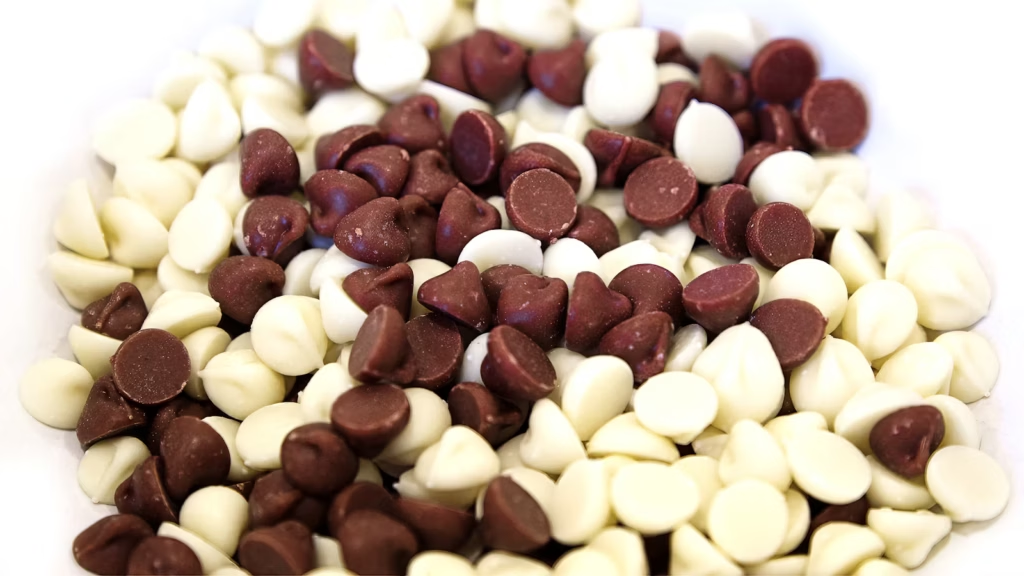
A bag of chocolate chips looks like the easiest decision in the baking aisle—until semisweet, bittersweet, milk, dark, white, mini, jumbo, chunks, and “baking morsels” all begin volunteering for the same cookie. The best choice depends on sweetness, how distinctly you want to taste the chocolate, and whether you want defined pockets or a smooth melt.
Choose chocolate chips for the flavor and texture you want after baking, not simply for the percentage printed largest on the bag.
I’d start by reading the actual product name and ingredient list. “Dark,” “semisweet,” and a bold cacao number can be useful clues, but brands formulate chips differently. Some stay proudly chip-shaped in a hot cookie; others relax into softer pools. Neither behavior is a quality verdict. It is a job description.
What chocolate chips are and why they hold their shape
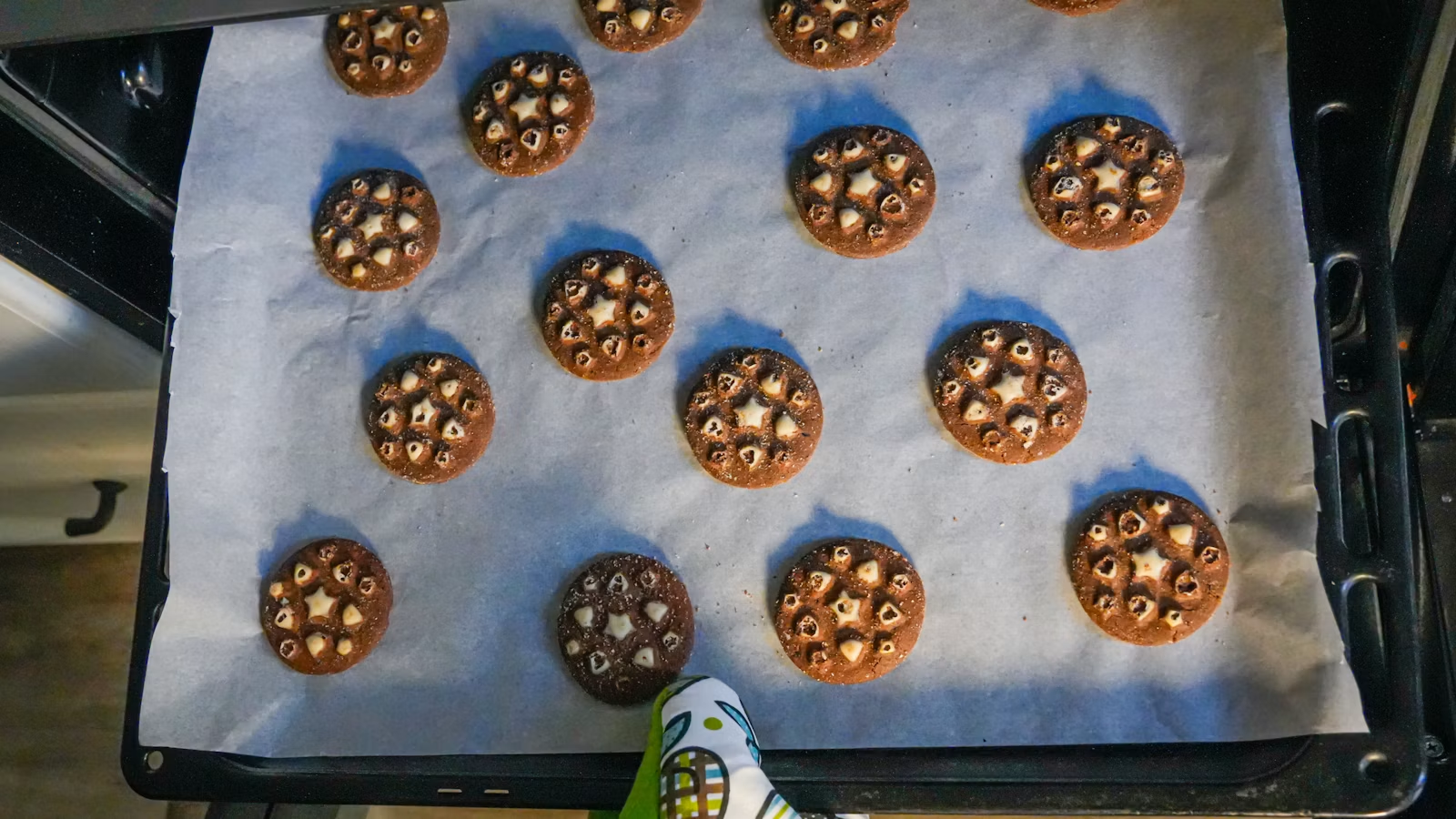
Chocolate chips are small, portioned baking pieces designed for easy measuring and distribution. Their pointed shape is familiar, but “chips,” “morsels,” chunks, and discs can all fill the same broad role. Compared with many chocolate bars or couverture products, chips are often formulated to remain more defined under oven heat. That is useful in a cookie and less helpful when your goal is an exceptionally fluid glaze.
- For visible pockets: standard chips keep a recognizable shape and spread chocolate through each bite.
- For irregular puddles: chopped chocolate creates large and small pieces that melt differently.
- For a smooth coating: a baking bar or melting wafer may flow more easily than a shape-holding chip.
- For even distribution: mini chips suit thin cookies, muffins, scones, and small portions.
The label matters because not every sweet baking piece meets the same chocolate standard. The FDA has specific standards of identity for several cacao products and for white chocolate. Products made with alternative fats or flavors may use wording such as “chocolate flavored.” That does not make them unusable; it tells you to expect a different melt, flavor, or mouthfeel.
Semisweet, milk, dark, and white chips compared
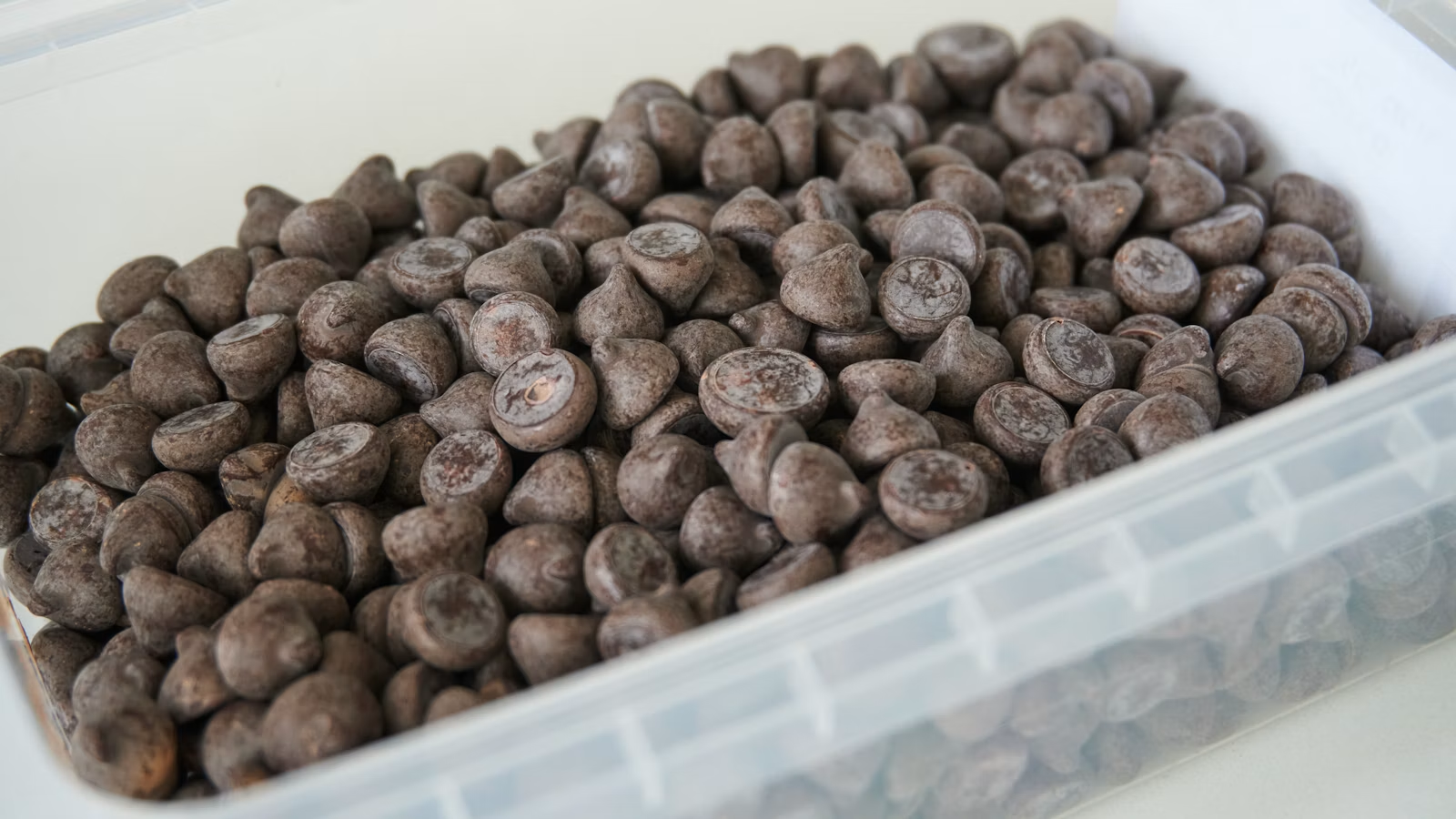
Semisweet is the safest all-purpose choice when a recipe simply says chocolate chips. It brings enough bitterness to balance a sweet dough without dominating it. Milk chocolate is creamier and sweeter, so it works best when the surrounding recipe is not already intensely sugary. Dark or bittersweet chips bring a deeper cocoa impression, although the exact sweetness and cacao content vary by brand.
- Semisweet: balanced for classic cookies, quick breads, bars, and snack mixes.
- Bittersweet or extra dark: useful when you want stronger contrast against a sweet batter.
- Milk chocolate: softer and sweeter; pair it with toasted nuts, oats, coffee, or a less-sweet dough.
- White chocolate: contains cocoa butter but no cocoa solids, so it tastes milky and vanilla-forward rather than cocoa-dark.
- Flavored morsels: butterscotch, peanut butter, mint, and similar pieces are separate confections; compare their ingredients and allergens individually.
If the finer distinctions interest you, our dark chocolate guide explains cacao percentage and label reading in more depth. And if “cacao” versus “cocoa” is the part making the aisle feel needlessly mysterious, this cacao and cocoa comparison separates the terms without turning grocery shopping into an exam.
How chip size changes cookies, muffins, and melted chocolate
Chip size changes distribution before it changes flavor. Mini chips create more chocolate points in every spoonful of batter. Standard chips make distinct pockets. Jumbo pieces and chunks create fewer, heavier areas that stay softer longer in the center of a warm cookie. When substituting by volume, remember that small pieces pack more tightly into a cup than large chunks; weight is the cleaner comparison when the recipe provides it.
- Thin or crisp cookies: minis or finely chopped chocolate reduce bulky pockets that can break a delicate cookie.
- Thick cookies and bars: combine standard chips with chopped chocolate for defined pieces and softer streaks.
- Muffins and pancakes: mini chips distribute evenly and are less likely to sink as dramatically as large chunks.
- Brownies: use a measured amount of chips for texture; melting chocolate for the batter is a separate job.
- Drizzles and dips: choose a product intended to melt smoothly if a glossy, thin finish matters.
Chips can be swapped across flavors when the recipe uses them as a mix-in, but sweetness changes. Replacing bittersweet chips with milk or white chips makes the finished bake noticeably sweeter. I’d adjust the type before changing the dough’s sugar, because sugar also controls spread, browning, and texture. One substitution should not start a small chemistry rebellion.
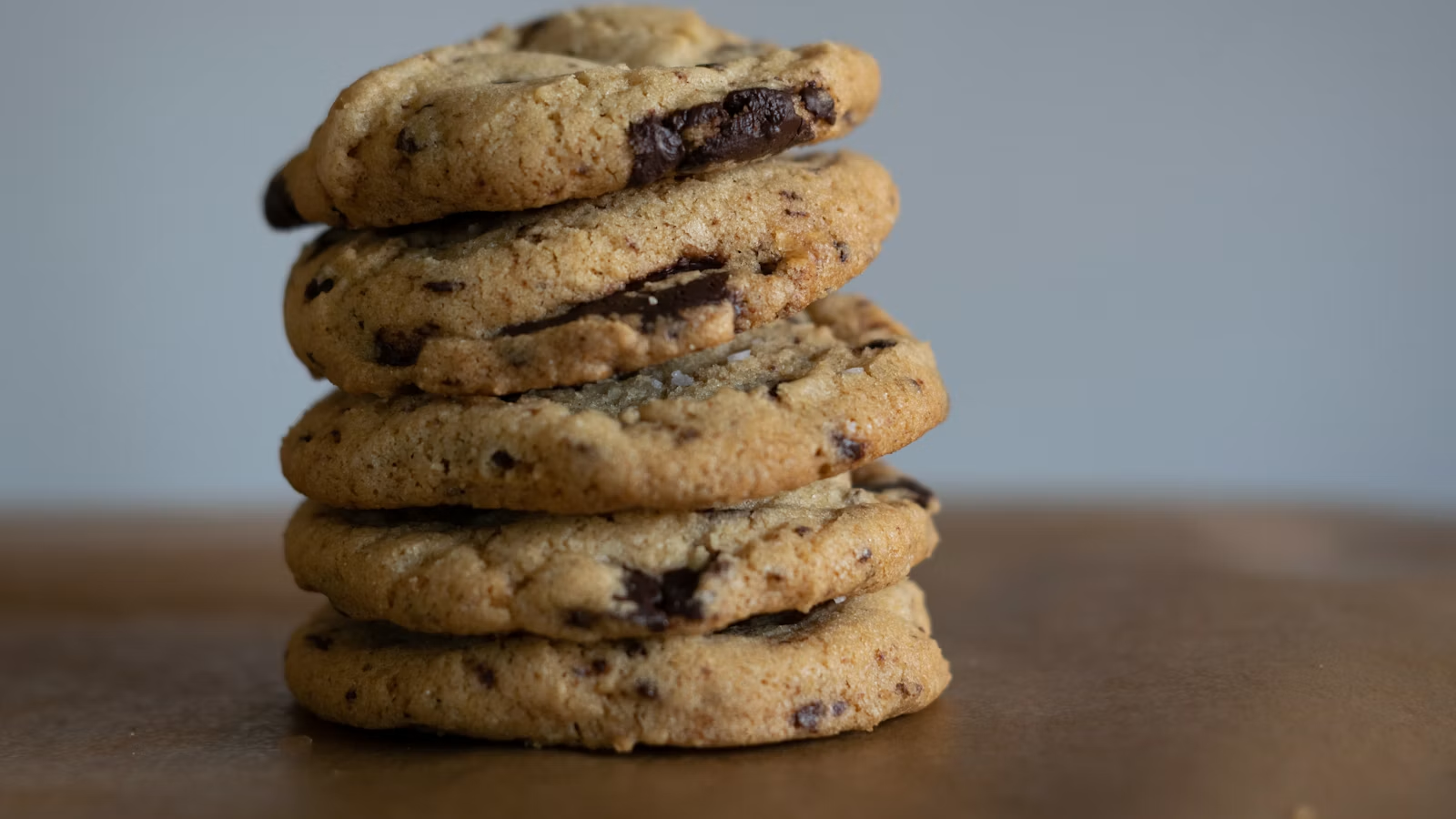
Melting, storing, and choosing a sensible portion
For melting, keep water away from the bowl and use gentle heat. In a microwave, warm briefly and stir between rounds; on the stovetop, use a heatproof bowl over barely simmering water without letting the bowl touch the water. Stop while a few pieces remain and stir until smooth. Residual heat can finish the job, while one ambitious extra minute can turn chocolate from glossy to grumpy.
- Store cool and dry: close the bag well and keep it away from heat, sunlight, steam, and strong odors.
- Expect formulation differences: a chip containing cocoa butter may melt differently from a flavored morsel made with another fat.
- Check allergens: milk, soy, peanuts, and tree-nut cross-contact statements vary; read the package for your needs.
- Compare equal servings: use the Nutrition Facts panel rather than assuming darker chips are automatically lower in sugar or calories.
- Use them where they count: a measured sprinkle in oatmeal, yogurt, or trail mix gives chocolate presence without letting the handful become mysteriously bottomless.
A pale or streaky surface can be chocolate bloom caused by temperature or moisture changes. The texture and appearance may suffer even when the product has not reached its date, so let smell, package condition, storage history, and the manufacturer’s guidance inform the decision. When chocolate is the main flavor, freshness matters more than hiding an elderly half-bag under extra vanilla.
America’s Test Kitchen compares chocolate chips and chunks in a cookie-focused tasting. Its preferences illustrate differences in flavor, size, and texture, rather than a universal winner for every bake; check the current package if a product’s formulation matters to your recipe.
Sources
- U.S. Food and Drug Administration: Labeling Products Purporting to Be Chocolate or Chocolate Flavored
- U.S. Food and Drug Administration: Standard of Identity for White Chocolate
- USDA FoodData Central
- BBC Good Food: How to Melt Chocolate

Hi, I’m Laura, the voice behind Tastiva. I’ve always believed that eating well should feel enjoyable, comforting, and realistic—not like another complicated rule to follow. I love creating recipes that fit into everyday life, sharing simple nutrition ideas, and finding small ways to make meals feel a little better without losing the pleasure of good food.