
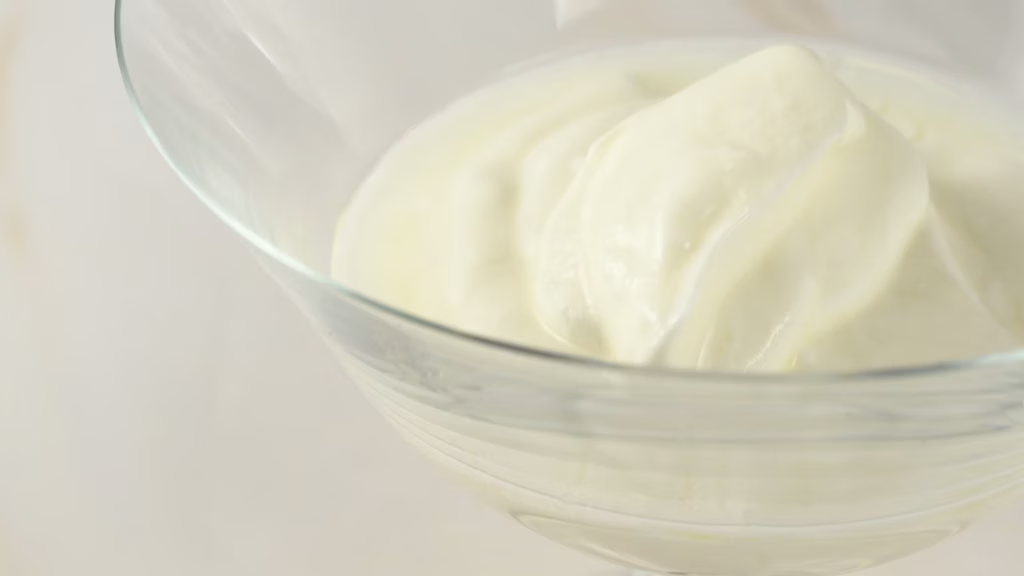
A British recipe can look perfectly familiar until two words stop you at the refrigerator: double cream. It is a very rich pourable cream, usually around 48% milk fat in the UK, with more body than American heavy cream. That extra fat explains why it pours thickly, whips quickly, and gives sauces and desserts a particularly plush finish. If you are shopping in the United States, heavy whipping cream is normally the closest practical substitute.
Double cream is richer than US heavy cream, but heavy whipping cream is the most useful substitute for everyday cooking and baking.
What double cream actually is
Double cream is the high-fat cream familiar in British supermarkets. Dairy UK’s cream composition data places it at roughly 48% fat, which is why it feels almost spoonable when cold but still pours. The name does not mean someone poured in twice the cream; it distinguishes this richer style from single cream, which is much lighter.
Fat changes how cream behaves. A higher proportion helps whipped cream hold its shape and gives a sauce a fuller mouthfeel with less added liquid. It also means a small amount goes a long way. I would treat double cream as a rich ingredient rather than a neutral splash: begin modestly, taste, and let acid, herbs, fruit, coffee, or dark chocolate provide contrast.
Double cream vs American heavy cream
US heavy cream, also labeled heavy whipping cream, must contain at least 36% milk fat under the federal standard of identity. That makes it lighter than British double cream, although the two fill many of the same roles. They are not exact twins, but they are close enough cousins to share a refrigerator shelf without starting an argument.
- Double cream: About 48% fat, very thick, rich, and easy to whip.
- Heavy or heavy whipping cream: At least 36% fat in the US; the closest widely available substitute.
- Whipping cream: Often lighter than heavy cream, so it may whip less firmly and make a thinner sauce.
- Single cream: A lighter British pouring cream that is not a like-for-like substitute for double cream.
- Crème fraîche: Cultured and tangy; useful when that acidity suits the dish, but not neutral in flavor.
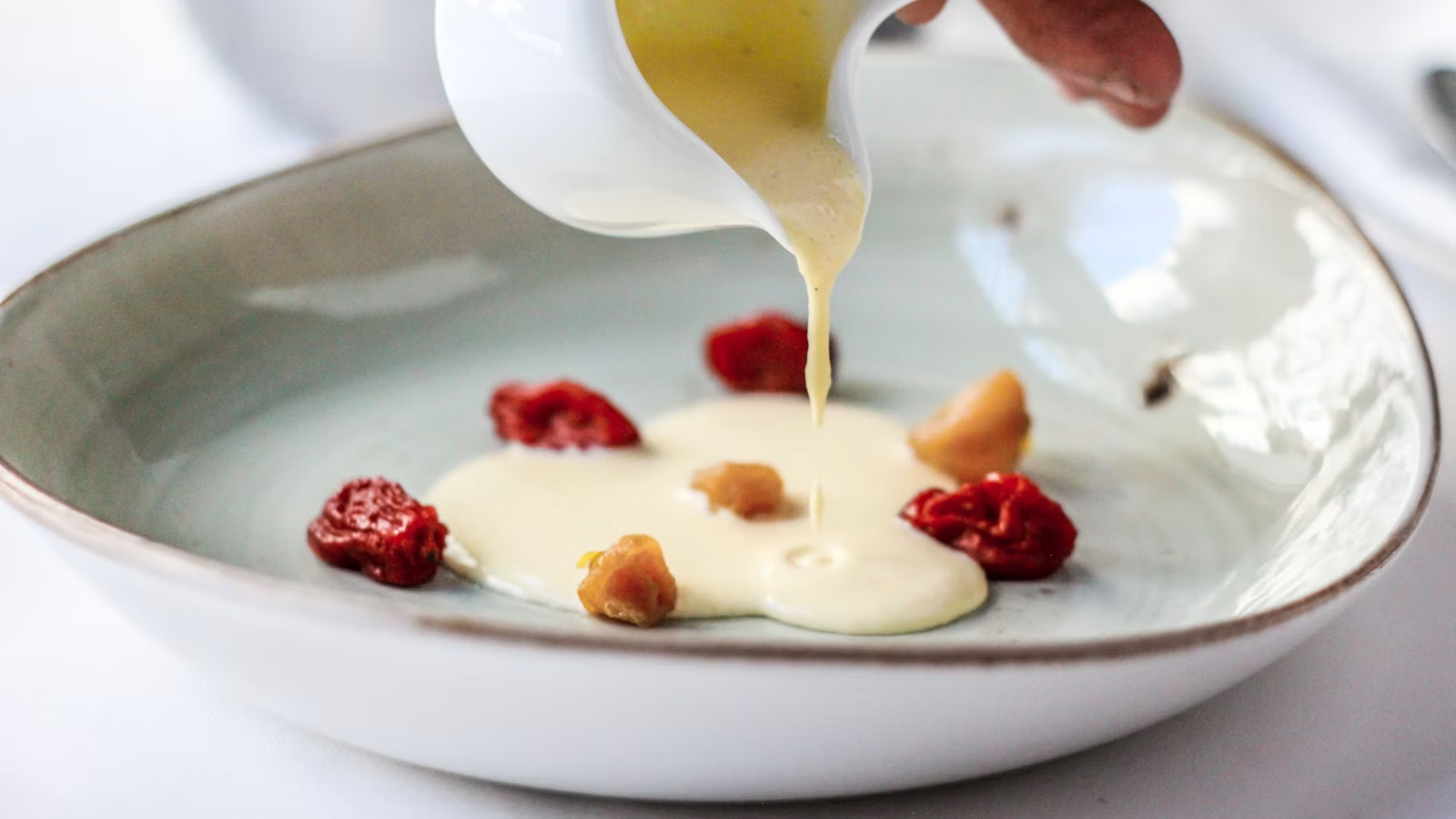
The difference matters most when cream supplies the structure. A spoonful stirred into soup is forgiving; a whipped filling, ganache, or dessert that must set can be more sensitive. Our guide to gelato vs ice cream explores another place where dairy fat and air change texture, while burrata shows how cream creates richness inside a fresh cheese.
The best substitutes for double cream in the US
For most recipes, choose pasteurized heavy whipping cream and replace double cream with the same measured volume. Expect a slightly lighter result. It works well for pan sauces, soups, whipped toppings, no-churn desserts, and cakes where cream adds moisture rather than carrying the entire structure. Read the carton: “half-and-half” and coffee creamer are much leaner products and will not behave the same way.
- For whipping: Chill the bowl, beaters, and cream. Stop at the texture the recipe requests; lower-fat heavy cream can go from soft to stiff peaks quickly.
- For sauces and soup: Heavy cream is usually a straightforward swap. Simmer gently rather than boiling hard.
- For pouring over fruit or pudding: Heavy cream works, though it will feel less dense than double cream.
- For recipes built around 48% fat: Use a version developed for American heavy cream when possible. A guessed thickener can change flavor and stability.
- For tangy dishes: Crème fraîche may be delicious, but choose it because the acidity belongs—not because the containers look equally luxurious.
Coconut cream can provide body in a dairy-free dish, but it brings a distinct flavor and does not make the recipe equivalent. For lactose concerns, lactose-free heavy cream is a closer functional option when available. A milk allergy is different from lactose intolerance, so dairy-free labeling and ingredient checks matter more than the word “cream.”
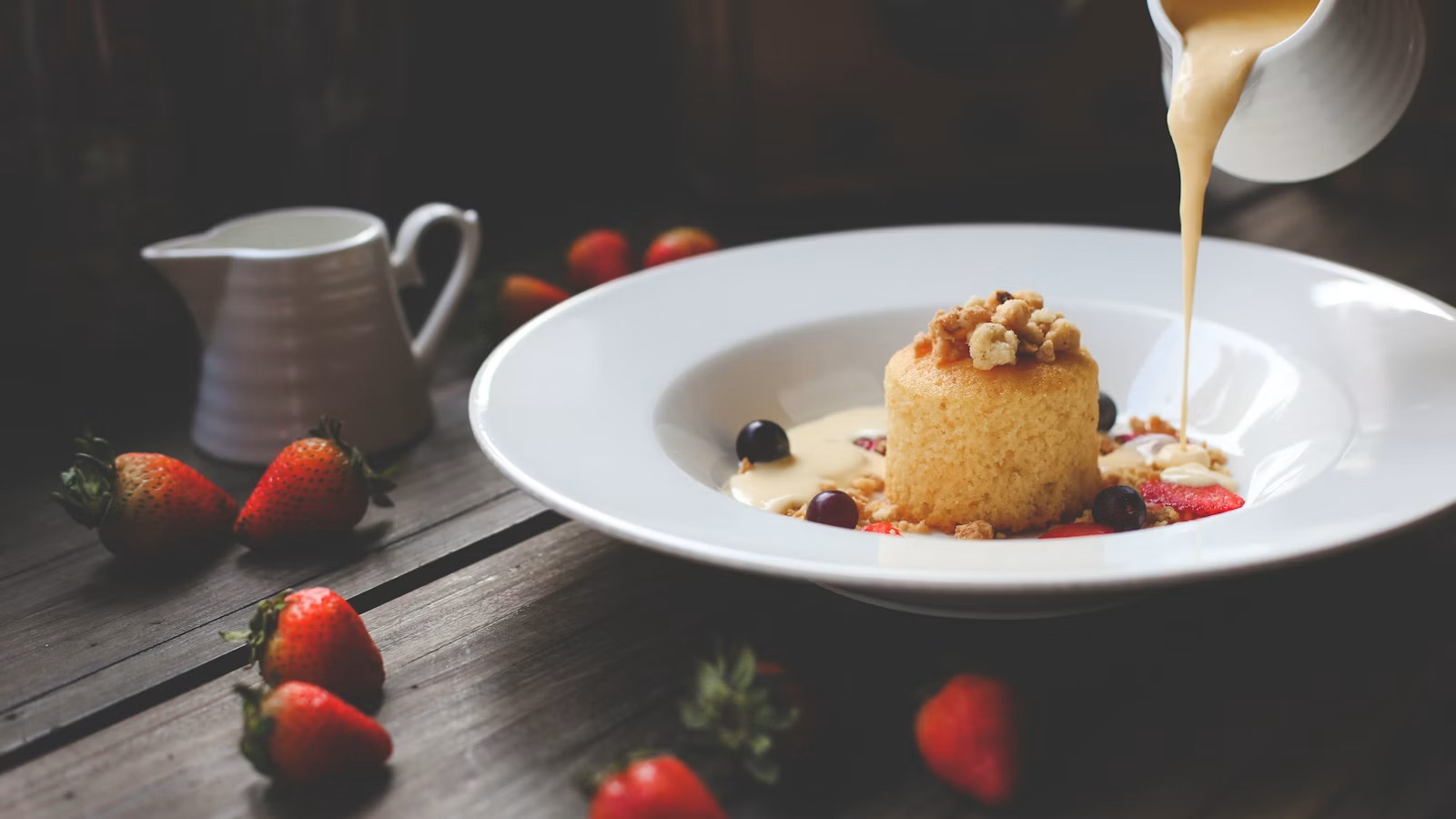
How to cook, whip, and store double cream
Cold cream traps air more reliably, so keep it refrigerated until you are ready to whip. Start at moderate speed and watch the surface: soft peaks curl over, while firm peaks stand. Stop before the texture looks grainy. If you continue far enough, the fat begins separating toward butter—which is useful only when butter was the plan.
In a hot sauce, add cream over moderate or low heat and avoid aggressive boiling. When a recipe includes lemon juice, wine, or another acidic ingredient, follow its order carefully and add the acid gradually. For a gently creamy dish rather than a cream-led one, the approach in our creamy risotto is a useful reminder that starch and cheese can provide body too.
Keep double cream and heavy cream at 40°F (4°C) or colder, return the carton promptly after measuring, and follow its use-by date and storage instructions. Do not rely on a taste test after that safety date. If the seal is swollen, the cream has curdled unexpectedly, or its smell is clearly off, discard it. Richness is welcome; refrigerator roulette is not.
Great British Chefs demonstrates whisking cream by hand and stopping before it splits. The video illustrates the texture cues discussed above; choose double or whipping cream for whipping, rather than treating every cream product as interchangeable.
Sources
- Dairy UK: Nutritional Composition of Cream
- Electronic Code of Federal Regulations: Heavy Cream
- UK Food Standards Agency: Best Before and Use-By Dates
- US Food and Drug Administration: Are You Storing Food Safely?

Hi, I’m Laura, the voice behind Tastiva. I’ve always believed that eating well should feel enjoyable, comforting, and realistic—not like another complicated rule to follow. I love creating recipes that fit into everyday life, sharing simple nutrition ideas, and finding small ways to make meals feel a little better without losing the pleasure of good food.