
Halloumi is the cheese that meets a hot skillet and, instead of melting into a puddle, turns golden at the edges and pleasantly chewy in the middle. This white, brined cheese comes from Cyprus and is traditionally associated with sheep’s and goat’s milk, sometimes with cow’s milk as well. Its firm structure makes it unusually good for grilling, pan-frying, roasting, and adding to salads or sandwiches.
Halloumi keeps its shape over high heat, so you can brown the outside while the center stays tender and satisfyingly chewy.
What halloumi is and where it comes from
Halloumi, also called Hellim, is a semi-hard cheese with deep roots in Cypriot food culture. The European Union registered Χαλλούμι/Halloumi/Hellim as a Protected Designation of Origin in 2021. Within the EU, that protected name is tied to cheese made in Cyprus according to the approved product specification—not simply any firm white cheese that can survive a grill.
The exact milk blend can vary within those rules. Official EU material describes sheep’s or goat’s milk, or a mixture of the two, with or without cow’s milk. Mint is also closely associated with traditional halloumi. If the origin matters to you, look for the PDO mark and Cyprus on the package rather than judging authenticity by a rustic label and a very persuasive font.
Why halloumi does not melt like other cheese
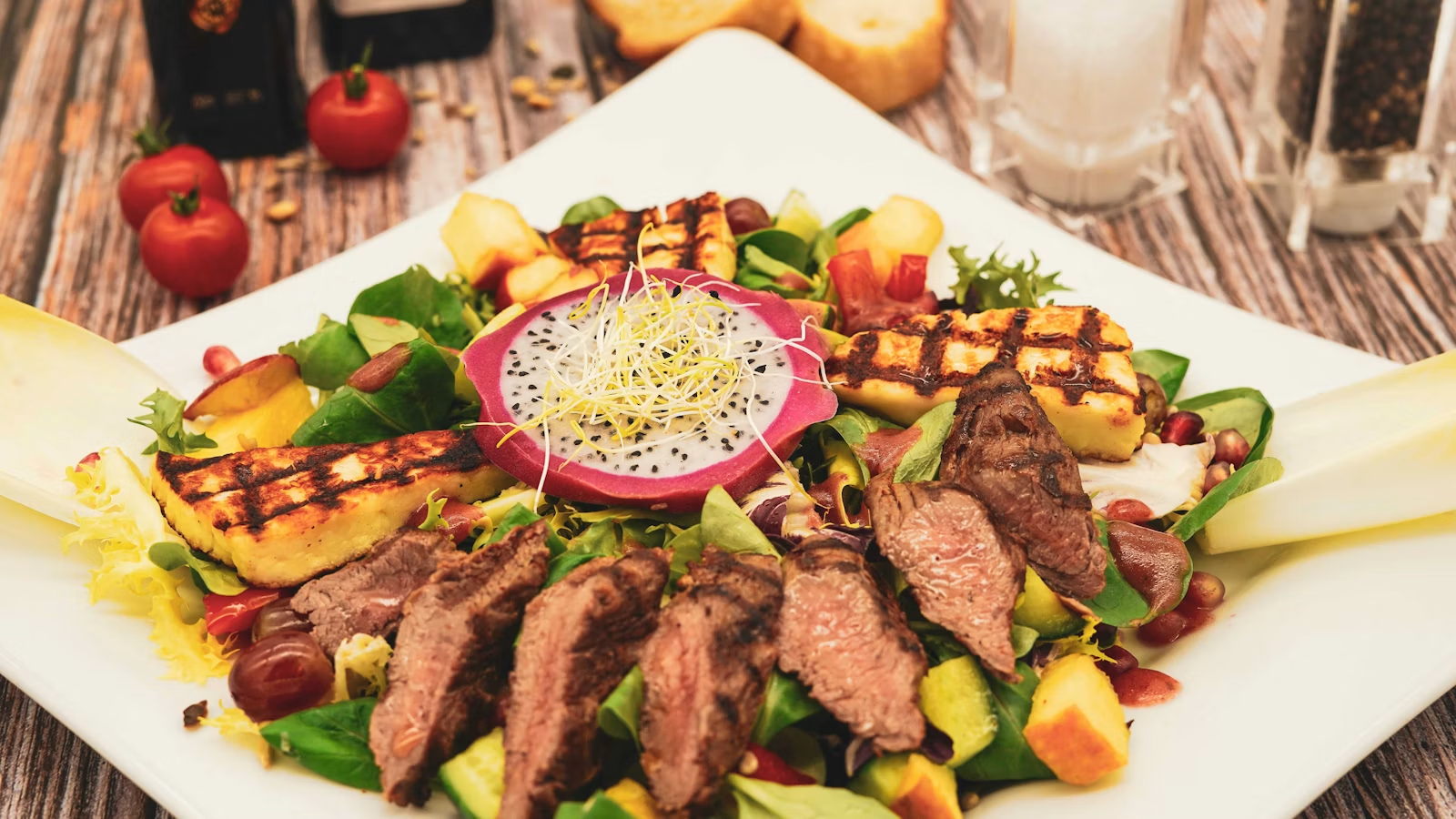
Halloumi is made with a firm protein structure and is heated during production. That structure holds together when the cheese meets a hot pan, so it softens without flowing the way mozzarella or cheddar would. The surface can brown through the Maillard reaction while the slice remains intact. This is also why halloumi can feel springy and make its famous little squeak against your teeth.
- Texture: Firm when cold, then softer and chewier when heated.
- Flavor: Milky, savory, and noticeably salty from its brine.
- Best feature: It develops a browned crust without losing its shape.
- What changes as it cools: The cheese firms quickly, so it is at its most tender straight from the pan.
Salt levels differ among brands. If yours tastes especially briny, a brief soak in cold water can soften that edge; pat it very dry before cooking. Water on the surface encourages steaming, and steaming is the enemy of the crisp, bronze patches you came for.
How to cook halloumi without making it rubbery
I prefer slices about 1/2 inch (1.25 cm) thick: substantial enough to stay tender inside, but not so thick that the center remains refrigerator-cold. Pat the cheese dry and use a lightly oiled pan or clean grill. Halloumi already contains plenty of fat, so you need only a thin film of oil, not a shallow bath.
- Pan-fry: Cook over medium-high heat for about 2 minutes per side, turning when the underside is deeply golden and releases easily.
- Grill: Oil the grates lightly and grill thick slices until marked and browned, usually 2 to 3 minutes per side.
- Roast: Add cubes or slabs to a hot sheet pan near the end of cooking so they color without drying out.
- Air-fry: Arrange pieces in one layer and check early; concentrated heat can take them from golden to tough rather quickly.
Do not chase an all-over mahogany crust. A few well-browned faces give you flavor while the pale interior preserves contrast. Serve immediately, because overcooking and long waiting both tighten the texture. Halloumi has many virtues, but lingering gracefully on a cold plate is not one of them.
The best ways to serve and store halloumi
Halloumi likes ingredients that cut through salt and richness. Lemon, tomatoes, watermelon, cucumber, fresh herbs, roasted peppers, and tart dressings all make sense. Pair cubes with grains and vegetables for a warm bowl, tuck slices into flatbread, or add them to a crisp salad at the last minute. The creamy contrast in our burrata guide offers another way to think about balancing rich cheese with acidic produce.
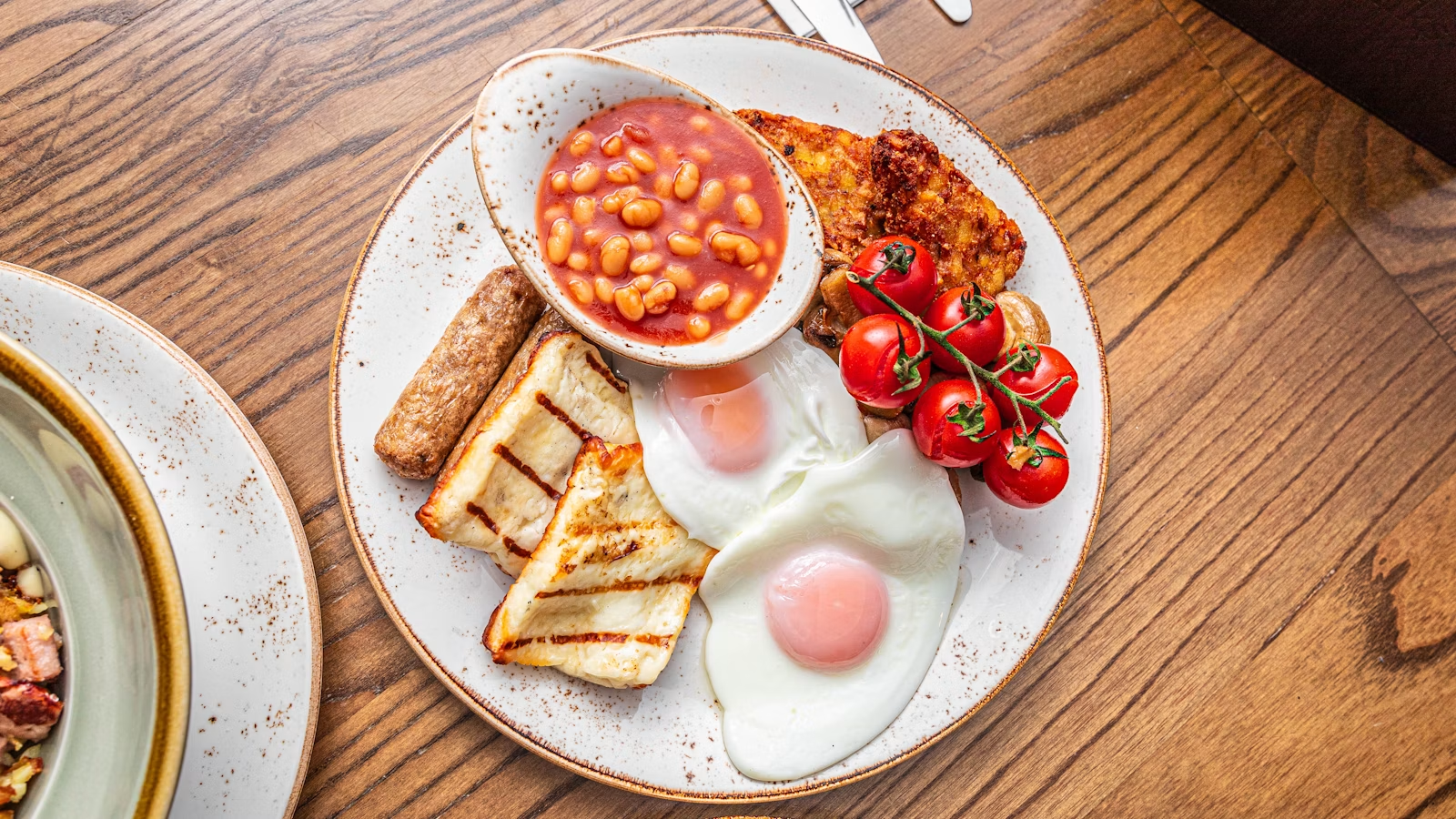
- For breakfast: Serve browned slices with eggs, tomatoes, herbs, and toast.
- For lunch: Add halloumi to salad with cucumber, watermelon, or citrus.
- For dinner: Pair it with roasted vegetables, lentils, or warm creamy polenta.
- For a snack: Cut it into fingers and serve with lemon and a fresh herb sauce.
Keep unopened halloumi refrigerated and follow the package date and instructions. After opening, use a clean airtight container and follow the maker’s guidance for the remaining cheese and brine. A use-by date concerns safety, not merely peak quality, according to the UK Food Standards Agency. Halloumi can also be frozen, but thawing may change its texture; I would reserve frozen portions for cooked dishes rather than a simple salad where every squeak is on display.
The Mediterranean Dish demonstrates pan-frying halloumi below. Its honey finish is one serving variation; the browning and texture cues are useful alongside the lemon, vegetables, and other pairings discussed here.
Sources
- European Commission: Halloumi/Hellim PDO Certification
- European Commission: Halloumi Registered as a Protected Designation of Origin
- Republic of Cyprus: Gastronomy in Cyprus
- UK Food Standards Agency: Best Before and Use-By Dates

Hi, I’m Laura, the voice behind Tastiva. I’ve always believed that eating well should feel enjoyable, comforting, and realistic—not like another complicated rule to follow. I love creating recipes that fit into everyday life, sharing simple nutrition ideas, and finding small ways to make meals feel a little better without losing the pleasure of good food.