
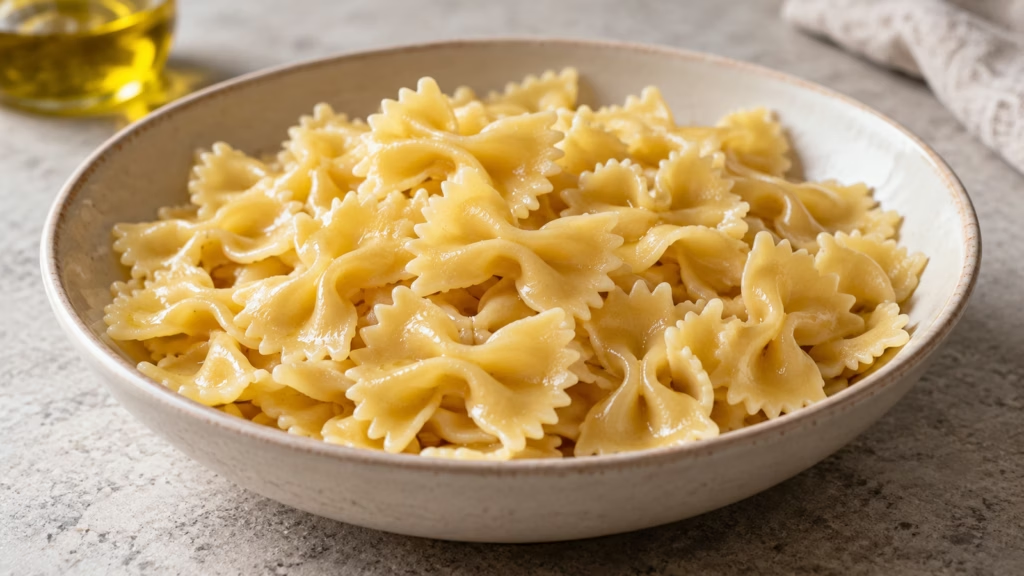
The wing of a bow-tie pasta can feel tender while its middle still puts up a fight. Farfalle is the short, pinched pasta often called bow ties, and that thicker center is the part worth tasting before you drain the pot. Its folds make it a useful choice for vegetable sauces, creamy coatings, and pasta salads, but the shape asks for a little more attention than its cheerful appearance suggests.
Choose the sauce for the folds, and judge doneness by the middle of the bow tie.
I’d choose farfalle when I want distinct bites of pasta and small pieces of vegetables together. You do not need a special sauce or a new piece of equipment; you need to know which part of the pasta is telling you it is ready.
What farfalle is, and what its shape changes
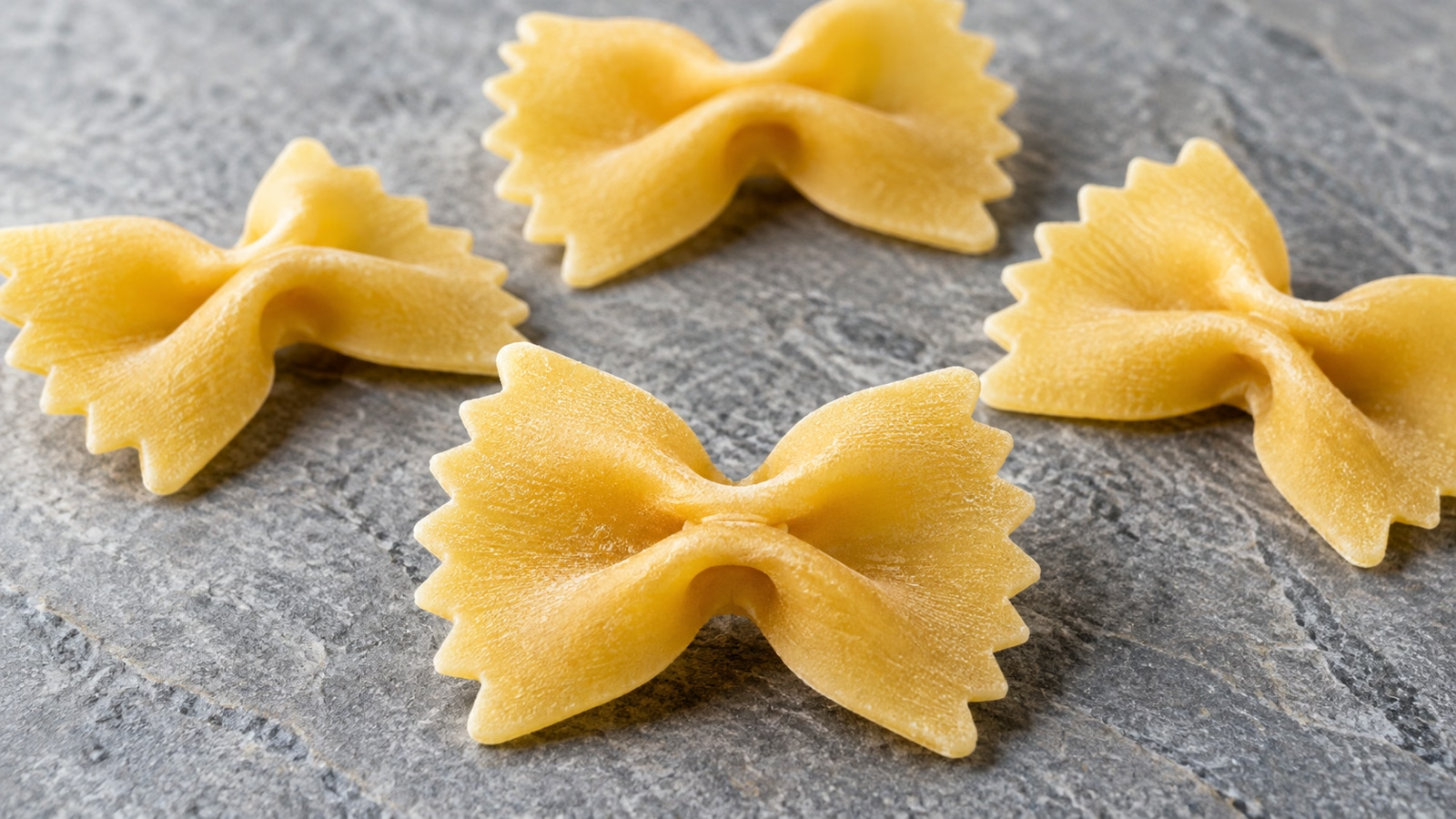
Farfalle means “butterflies” in Italian. The pieces are made by pinching a flat piece of pasta in the middle, leaving two broader wings. Standard dried versions are commonly made with durum wheat semolina; the name describes the shape, not a particular sauce or complete dish.
- The wings: Wide, relatively thin surfaces give a sauce somewhere to cling. Their scalloped edges are also an easy way to recognize the shape.
- The center: The pinched section is thicker than the sides. Check this part when tasting, rather than taking one small nibble from the edge.
- The folds: They work well with small vegetables and sauce. Choose bite-size additions that can share a forkful with a bow tie.
- The size: Mini farfalle is a smaller product, with its own cooking instructions. Do not assume the standard box time applies.
If the package language is confusing, this guide to durum wheat and semolina on pasta labels separates the grain from the shape. For dietary needs, check the actual ingredients and allergen information rather than judging by color or the word farfalle.
How to cook farfalle without a hard center
Use the package timing as a starting point, not a promise shared by every brand. Barilla’s U.S. Classic Blue Box farfalle currently lists 11–12 minutes, while its British Collezione farfalle lists 10 minutes. Those are instructions for different products, not a reason to split the difference for your own box.
- Start with boiling water. Follow your package directions, salt to suit the dish, and stir the pasta as it cooks so the pieces do not settle together.
- Taste an entire piece near the suggested time. Let it cool enough to handle, then bite through the middle. Look for pleasant firmness rather than a hard, chalky core.
- Plan for the sauce. If the pasta will finish cooking in a hot sauce, leave room for that final stage and taste again before serving.
- Save some cooking water before draining. Add it gradually if a hot sauce needs loosening; the goal is a coating, not a pool beneath the pasta.
- Drain and combine. For a hot sauced dish, avoid rinsing away the surface starch. Barilla also advises skipping oil in the boiling water.
My useful checkpoint is the complete bite. A soft wing does not cancel out an unpleasant middle, and a timer cannot tell you what your particular pot is doing. The bow tie gets a vote.
Sauces and meals that make good use of the folds
Think about the size of the additions as well as the sauce. A spoonful of peas or small pieces of zucchini can mingle with farfalle; one enormous vegetable chunk asks the fork to do another job. These are combination ideas, not fixed recipes.
- Light vegetable sauce: Try tomatoes and basil, or small pieces of cooked zucchini with olive oil. Start with a coating that leaves the pasta’s shape visible.
- Creamy sauce: Choose a fluid sauce that moves into the folds. If it becomes heavy and stiff during mixing, loosen it before adding more cheese.
- Pesto: Toss gently with a little loosened pesto rather than burying the bow ties in a thick paste. Tastiva’s basil pesto guide explains how to adjust its texture.
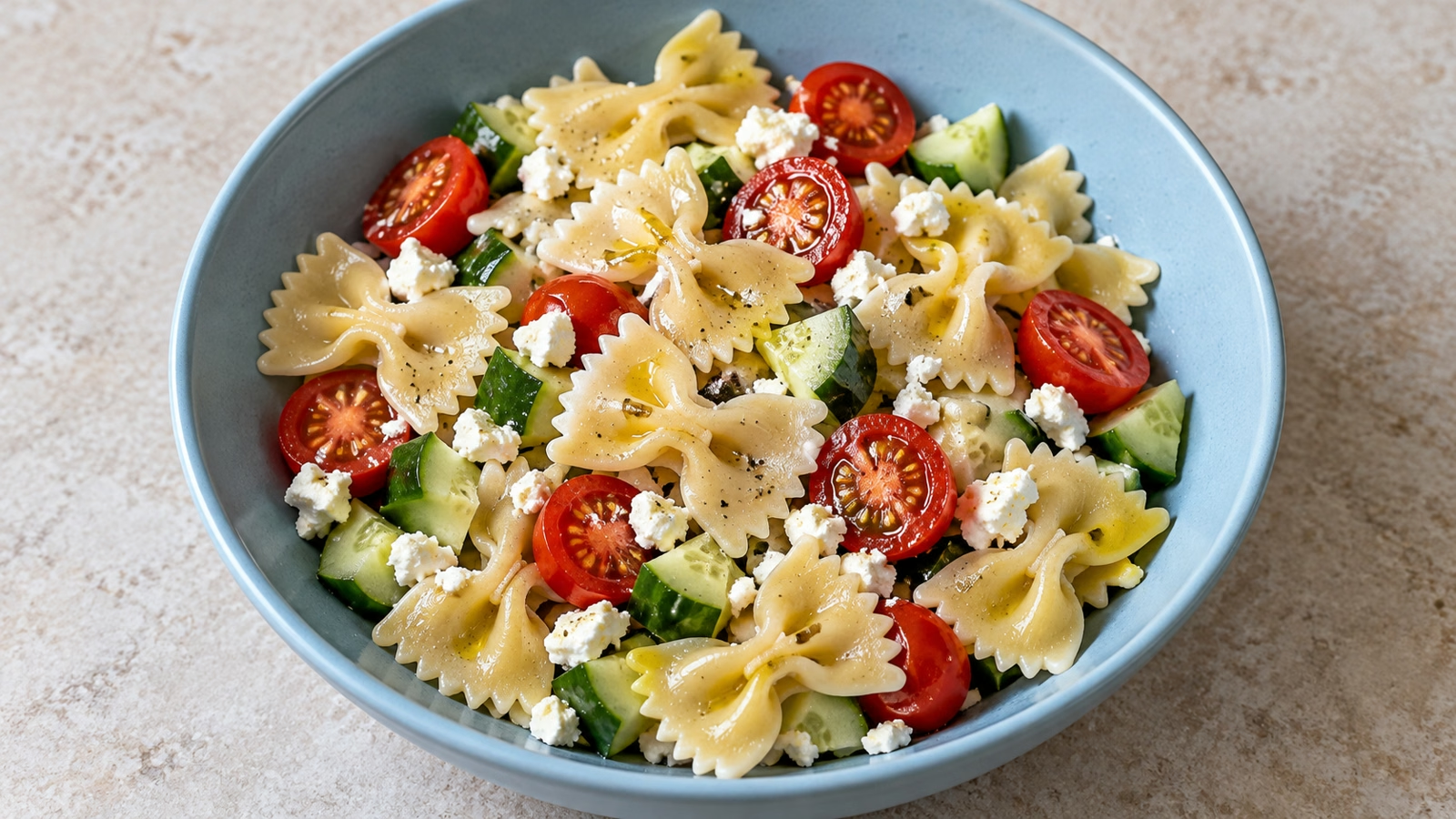
- Pasta salad: Tomatoes, cucumber, and a little crumbled feta give you a straightforward starting point. Follow a complete salad recipe for its cooling and storage instructions.
- Roasted vegetables: Squash, mushrooms, or peppers can make the bowl more substantial. Keep the vegetable pieces manageable and add enough sauce to connect the ingredients.
I’d pick one clear flavor direction before adding extras. A creamy coating with mushrooms or a bright tomato-and-basil combination gives the pasta a purpose; combining every open jar can make the result harder to balance.
Buying, swapping, and fixing the bowl
For an everyday dinner, start with the box that suits your ingredients, budget, and dietary needs. The farfalle shape alone does not tell you whether the pasta is whole grain, egg-free, or suitable for someone avoiding gluten. A specialty version may also need different cooking and handling.
- No farfalle available? Another short pasta can serve in many sauced dishes or salads. Expect a different forkful and follow the replacement’s own directions rather than copying the farfalle time.
- Wings soft but middle hard? Continue cooking and recheck the center. For the next batch, check the package and make sure the pasta can move freely while you stir.
- Sauce too thick? Add reserved cooking water gradually to the hot sauce and pasta, mixing between additions. Stop when the sauce coats rather than clumps.
- More vegetables than pasta? That may be exactly what you want. Treat the package serving as a reference and choose the balance that suits the meal.
For a visual example of farfalle in a tomato-based sauce, the following video comes from Barilla. It demonstrates one serving direction rather than every cooking or substitution point covered here.
Sources
- Barilla: Farfalle shape and product instructions
- Barilla: Farfalle No. 65 and its thicker center
- Barilla: How to cook pasta
- Barilla: Farfalle serving ideas
- Barilla: Pasta and sauce pairing guide

Hi, I’m Laura, the voice behind Tastiva. I’ve always believed that eating well should feel enjoyable, comforting, and realistic—not like another complicated rule to follow. I love creating recipes that fit into everyday life, sharing simple nutrition ideas, and finding small ways to make meals feel a little better without losing the pleasure of good food.