
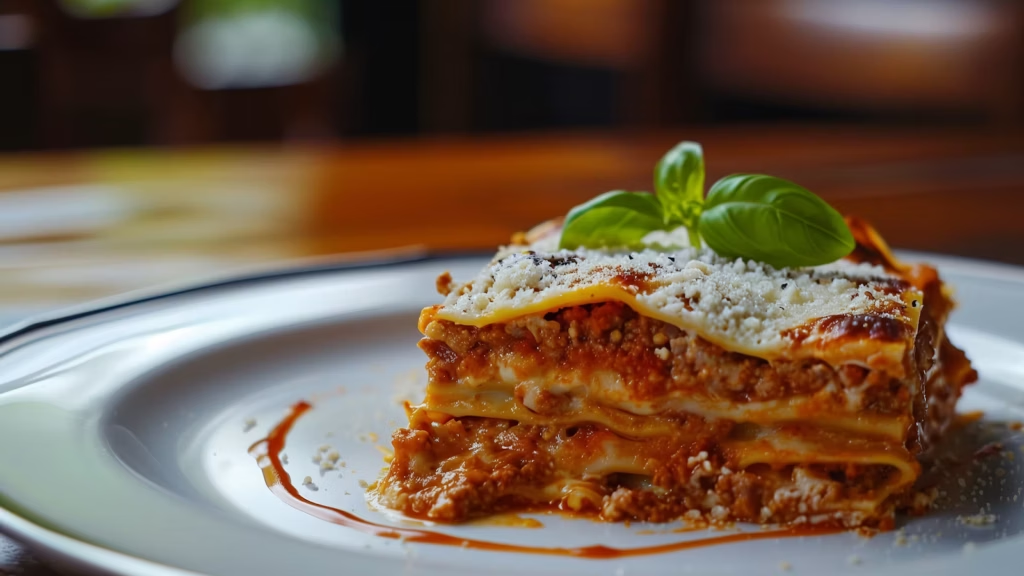
This lasagne recipe is the sort I want when the table is full: a savory beef and tomato sauce, a silky béchamel, tender pasta, and enough mozzarella and Parmesan for richness without turning every slice into a cheese avalanche. The sauces are reduced before layering, then the baked dish rests long enough to stand up neatly on the plate.
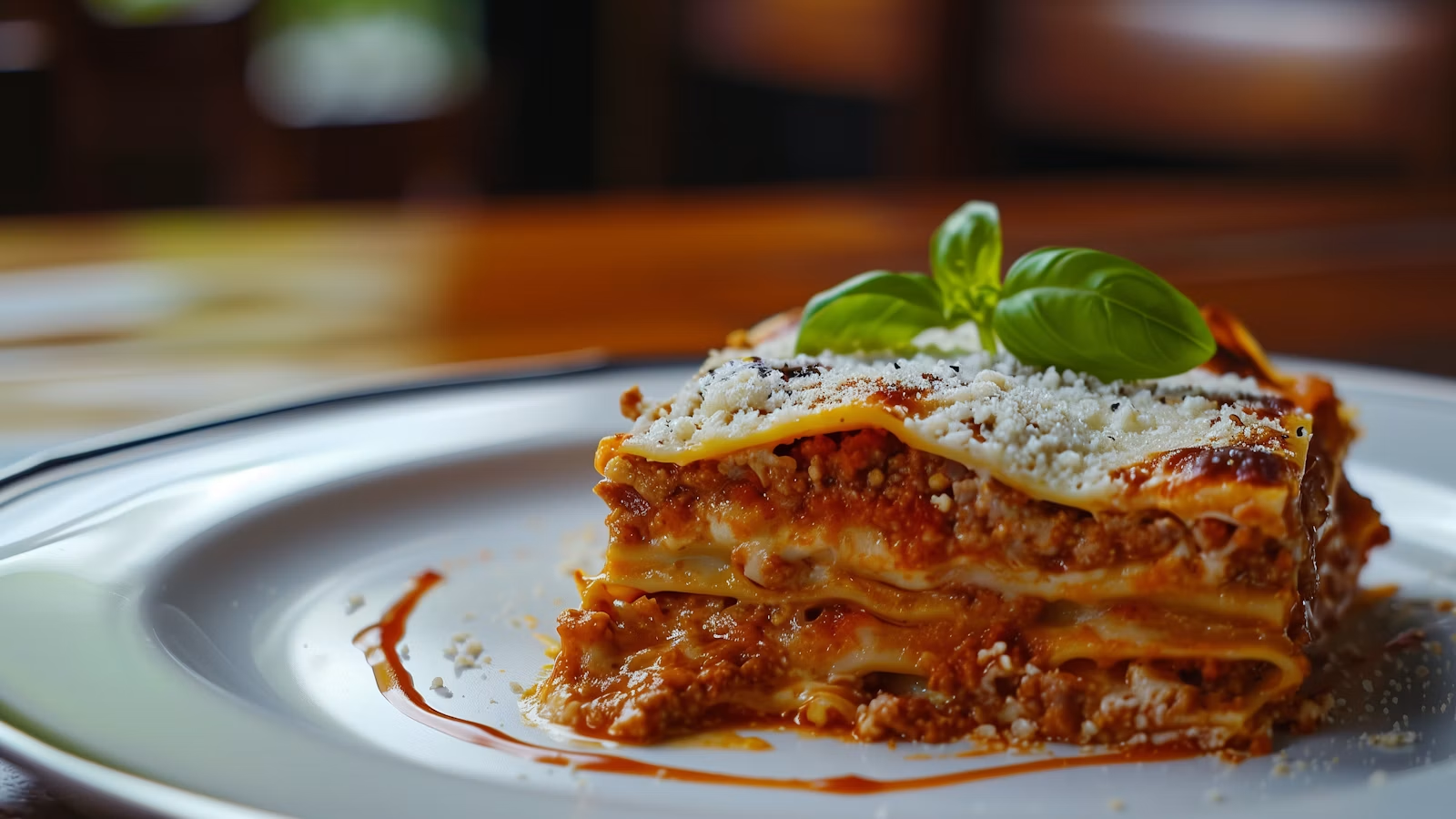
A neat lasagne slice begins before the oven: thick sauce, evenly cooked pasta, restrained layers, and twenty undisturbed minutes after baking.
I use the British and Italian spelling “lasagne” for the layered dish and “lasagna” only when a product label does. The pan does not care, naturally, but the noodle package might: standard dried sheets, oven-ready sheets, and fresh pasta absorb different amounts of liquid. This recipe is written for standard dried noodles cooked according to their package.
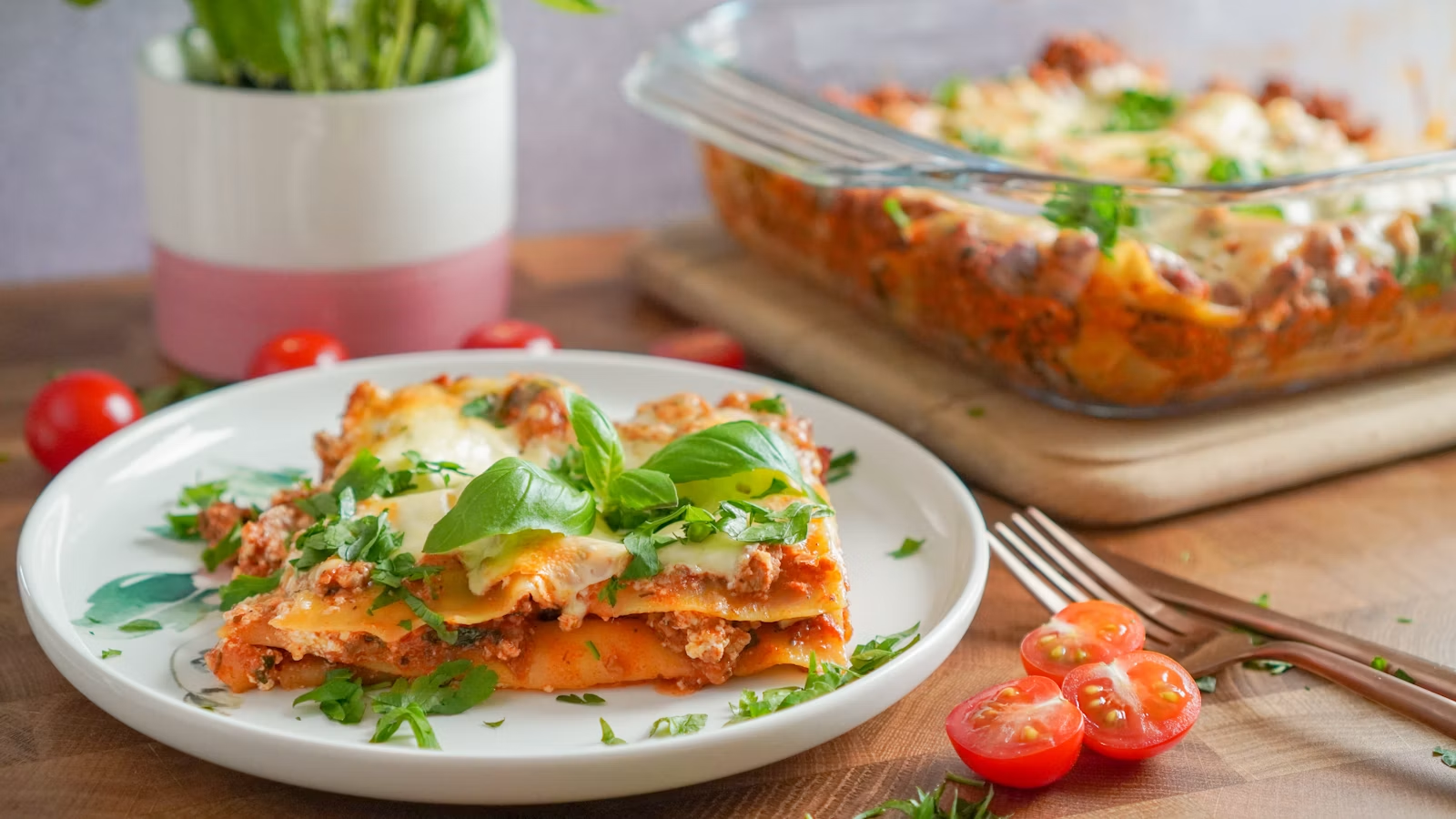
Why this lasagne recipe holds together
The meat sauce starts with finely diced onion, carrot, and celery, then simmers uncovered until it is thick enough to leave a brief trail when you drag a spoon across the pan. Watery sauce is the chief architect of a slumped slice. Tomato paste adds concentration, while a cup of beef broth gives the sauce time to simmer without becoming harsh.
Béchamel replaces a ricotta layer here. Butter and flour thicken warm milk into a smooth sauce that slips into the pasta without making the finished dish grainy. Nutmeg is subtle but lovely; it should whisper, not announce that it has arrived wearing perfume.
- Thick meat sauce: keeps the layers savory rather than soupy.
- Silky béchamel: adds moisture and richness without a heavy cheese filling.
- Four pasta layers: give structure without creating a dry brick.
- Covered, then uncovered baking: heats the center before browning the top.
- A full 20-minute rest: lets the sauce settle and the noodles finish absorbing moisture.
The recipe serves eight generous portions from a 9-by-13-inch pan. For a larger meal with salad and bread, you may comfortably cut ten smaller squares. For a hungry crowd that has been smelling the sauce for an hour, eight is the more diplomatic promise.
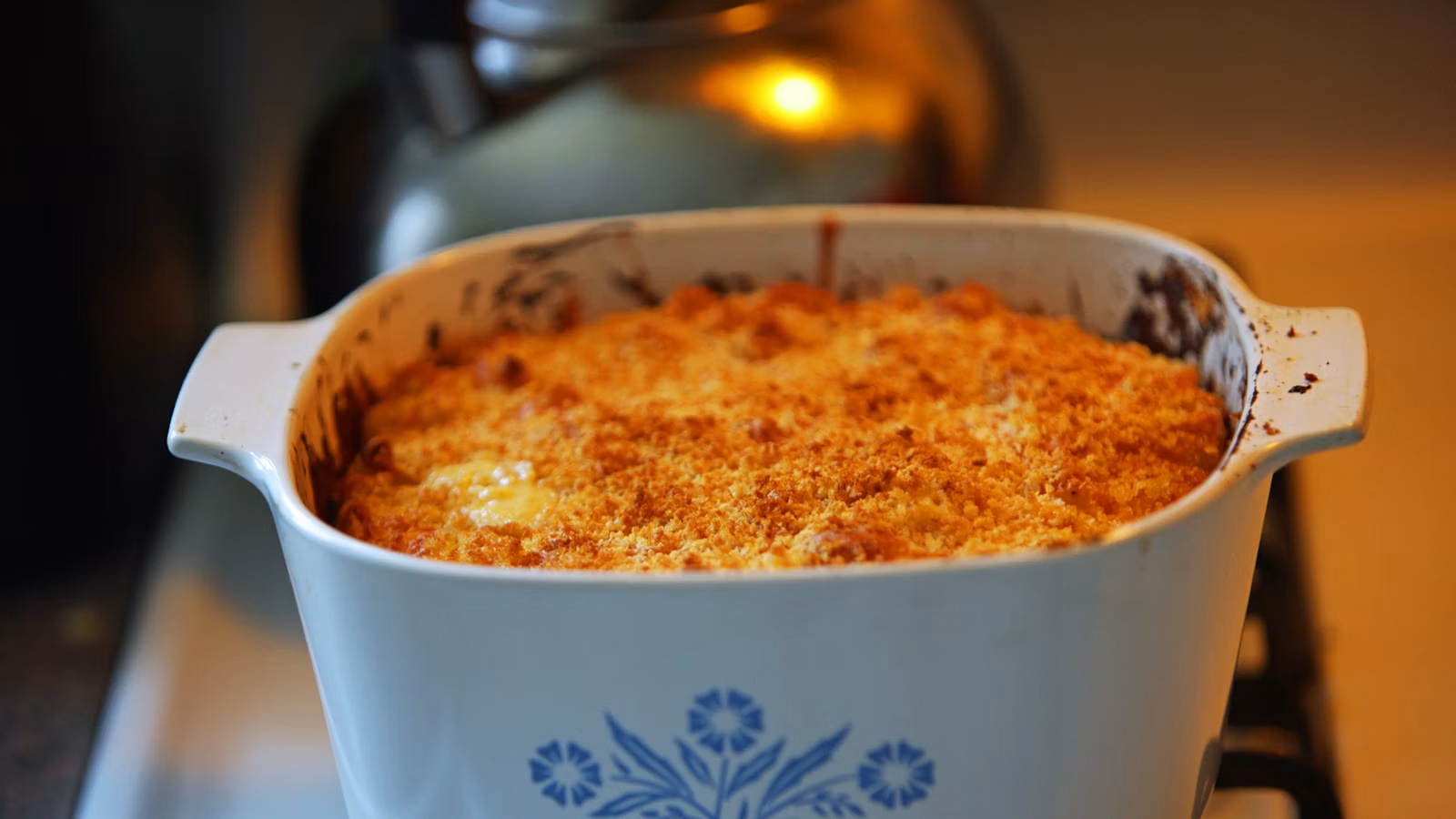
Build the sauces and layers without watery corners
Dice the vegetables small enough to disappear into the meat sauce. Brown the beef thoroughly and break it into fine crumbles so every forkful gets a little. USDA recommends cooking ground beef to 160°F (71°C); check a thicker pocket with a thermometer before adding the tomatoes. Keep raw-meat tools away from the cheese and cooked noodles—our cross-contamination guide covers the practical details.
For the béchamel, whisk the flour into melted butter and let it cook for a minute before adding warm milk gradually. If you pour all the milk in cold and at once, the whisk receives an unfair assignment. Continue cooking until the sauce coats a spoon but still flows easily. It will thicken further in the oven.
Spread a thin film of meat sauce in the baking dish before the first noodle layer. It prevents sticking and gives dry edges somewhere moist to land. Arrange three noodles per layer, trimming only if your brand is unusually long. Divide the sauces with a reasonably light hand; a towering middle is more likely to slide.
Cover the dish with foil for the first 30 minutes, greasing the underside so it does not claim the mozzarella as a souvenir. Uncover for another 15 to 20 minutes until the top browns in spots and the center reaches 165°F (74°C). If the cheese darkens too quickly, lay the foil back loosely over the pan.
Lasagne recipe
The complete card below includes grouped ingredients, equipment, temperatures, timing, storage guidance, and estimated nutrition. Read through once before beginning; the meat sauce and béchamel can be made side by side, but the lasagne is much calmer to assemble when both are ready.
Lasagne Recipe

Ingredients
- 2 tablespoons olive oil
- 1 medium yellow onion finely diced
- 1 medium carrot finely diced
- 2 celery stalks finely diced
- 3 garlic cloves minced
- 1 pound 85% lean ground beef
- 1 1/2 teaspoons kosher salt divided
- 1/2 teaspoon black pepper
- 2 tablespoons tomato paste
- 28 ounces crushed tomatoes
- 1 cup low-sodium beef broth
- 1 teaspoon dried oregano
- 4 tablespoons unsalted butter
- 1/4 cup all-purpose flour
- 3 1/2 cups whole milk warmed
- 3/4 teaspoon kosher salt
- 1/4 teaspoon ground nutmeg
- 12 dried lasagne noodles cooked according to the package and drained
- 12 ounces low-moisture mozzarella shredded
- 1/2 cup finely grated Parmesan
Equipment
- 1 Large Dutch oven or deep skillet for the meat sauce
- 1 medium saucepan for the béchamel
- 1 Whisk
- 1 9-by-13-inch baking dish
- 1 Instant-read thermometer
- 1 Sheet of foil lightly greased on the underside
Instructions
- Heat the olive oil in a large Dutch oven or deep skillet over medium heat. Add the onion, carrot, and celery and cook for 7 to 9 minutes, stirring often, until softened. Add the garlic and cook for 30 seconds.
- Add the ground beef, 1 teaspoon of the salt, and the pepper. Cook, breaking it into small crumbles, until no pink remains and the meat reaches 160°F (71°C). Spoon off excess fat if needed.
- Stir in the tomato paste and cook for 1 minute. Add the crushed tomatoes, broth, oregano, and remaining 1/2 teaspoon salt. Simmer uncovered for 30 to 35 minutes, stirring occasionally, until thick enough that a spoon dragged across the pan leaves a brief trail.
- Melt the butter in a medium saucepan over medium heat. Whisk in the flour and cook for 1 minute. Gradually whisk in the warm milk. Cook, whisking, for 6 to 8 minutes until the sauce coats the back of a spoon. Season with the salt and nutmeg.
- Heat the oven to 375°F (190°C). Lightly grease a 9-by-13-inch baking dish. Spread a thin layer of meat sauce over the bottom.
- Arrange 3 noodles over the sauce. Add one quarter of the remaining meat sauce, one quarter of the béchamel, and about one fifth of the mozzarella. Repeat to make four noodle layers, finishing with the remaining sauces, mozzarella, and all of the Parmesan.
- Cover with foil greased on the underside so the cheese does not stick. Bake for 30 minutes.
- Remove the foil and bake for 15 to 20 minutes more, until bubbling, browned in spots, and the center reaches 165°F (74°C).
- Let the lasagne rest for 20 minutes. This is not decorative patience: the sauces settle and the pasta finishes absorbing moisture, so the slices hold together.
- Cut into 8 portions and serve warm. Add a crisp salad or steamed greens if you want something fresh beside the rich layers.
Nutrition
Video
Notes
Tried this recipe?
Let us know how it turned out!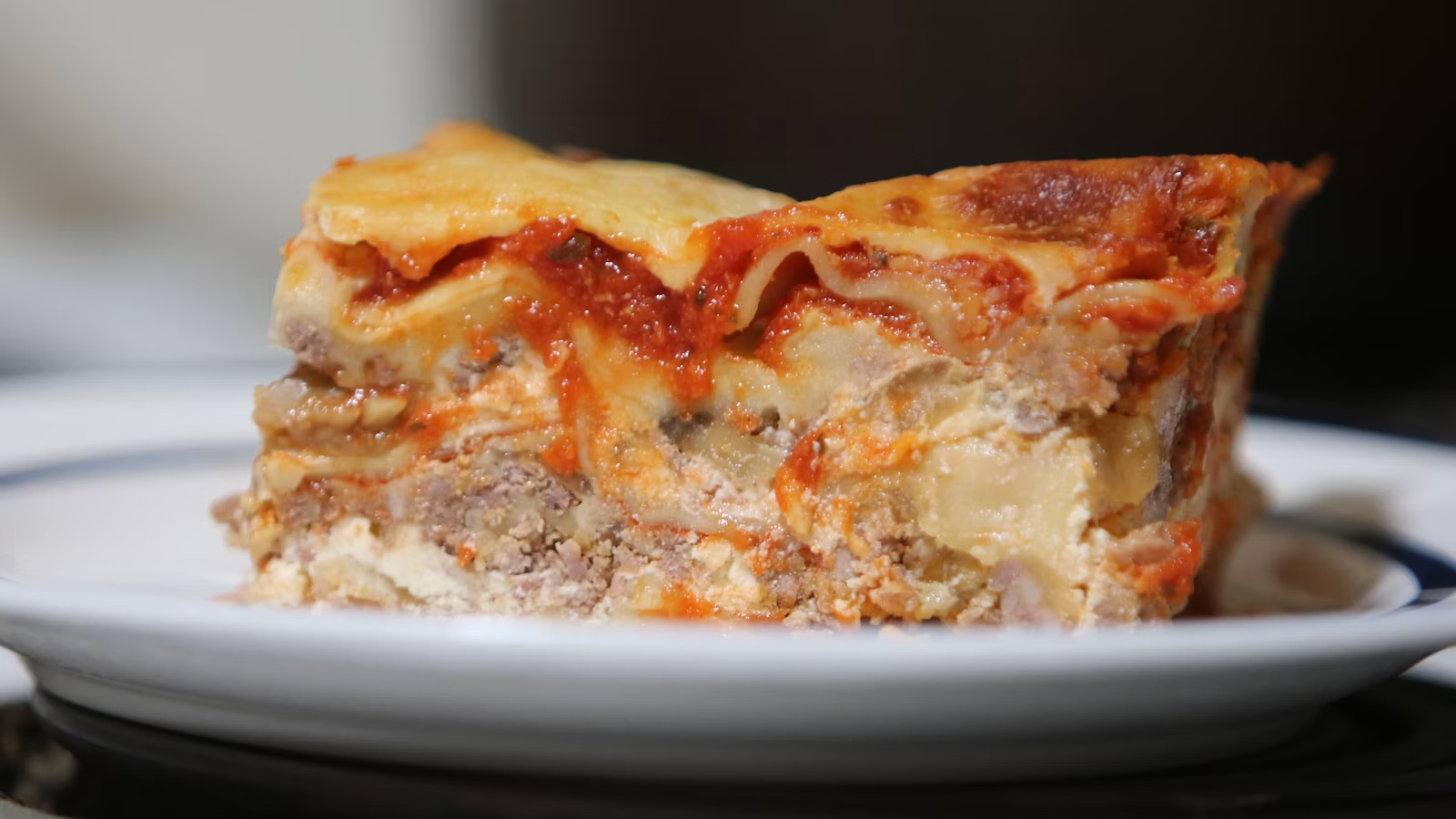
Make it ahead, freeze it, and reheat it well
You can assemble the lasagne, cover it, and refrigerate it for up to one day before baking. Let a glass or ceramic dish sit at room temperature while the oven heats so it does not go directly from cold refrigerator to hot oven, and expect a chilled lasagne to need extra baking time. Use the 165°F center temperature, not the clock, as the finish line.
For freezing, cool a baked lasagne completely, cut it into portions, and wrap each piece well. Individual portions thaw and reheat more evenly than one frozen block. You can also freeze the assembled unbaked dish if the pasta and baking dish are freezer-suitable; thaw it in the refrigerator before baking.
- Refrigerator: Cool leftovers within two hours and use within four days.
- Freezer: Keep tightly wrapped portions for up to three months for best quality.
- Oven reheating: Cover to protect the edges, add a spoonful of water or sauce if the slice seems dry, and heat to 165°F.
- Microwave reheating: Cover loosely, use medium power, and pause to rotate the portion so the center does not stay cold.
The rest after baking is not optional if you want clean layers. Set the pan somewhere safe, make the salad, and resist the knife. Lasagne is one of those rare dinners improved by everyone being asked to wait politely.
Sources
- USDA FSIS: Safe Minimum Internal Temperature Chart
- USDA FSIS: Leftovers and Food Safety
- FoodSafety.gov: Cold Food Storage Charts
- USDA FoodData Central
Hi, I’m Laura, the voice behind Tastiva. I’ve always believed that eating well should feel enjoyable, comforting, and realistic—not like another complicated rule to follow. I love creating recipes that fit into everyday life, sharing simple nutrition ideas, and finding small ways to make meals feel a little better without losing the pleasure of good food.