
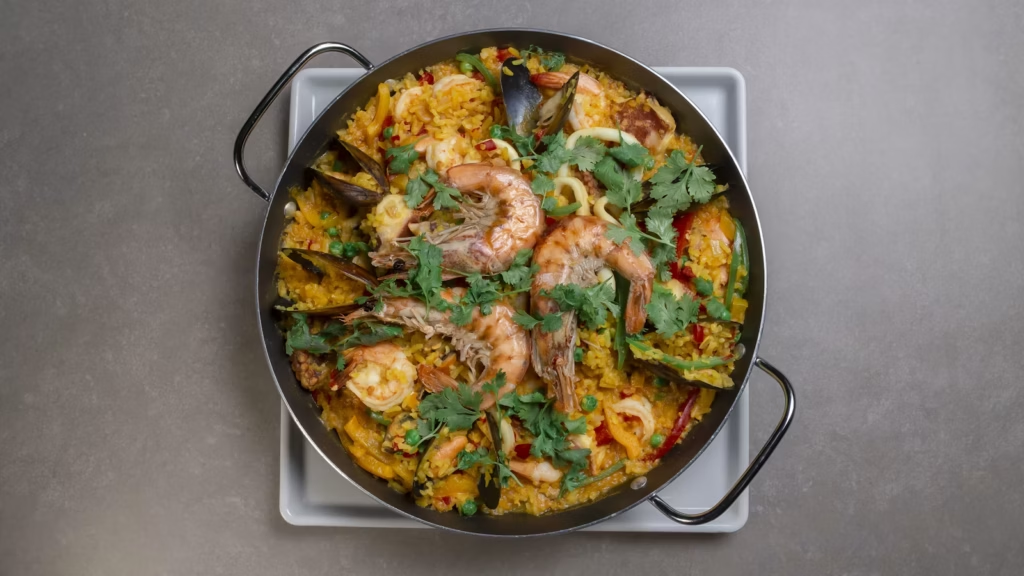
This paella recipe brings the defining ideas of the Spanish rice dish into a home kitchen: a wide, shallow pan; deeply flavored stock; short-grain rice; saffron; seafood; and a thin toasted layer underneath. Shrimp and mussels make it festive, while grated tomato, garlic, paprika, and peppers build the savory base. The crucial move is restraint. Once the stock goes in, the rice is spread evenly and left unstirred so it cooks as a thin layer rather than turning creamy like risotto.
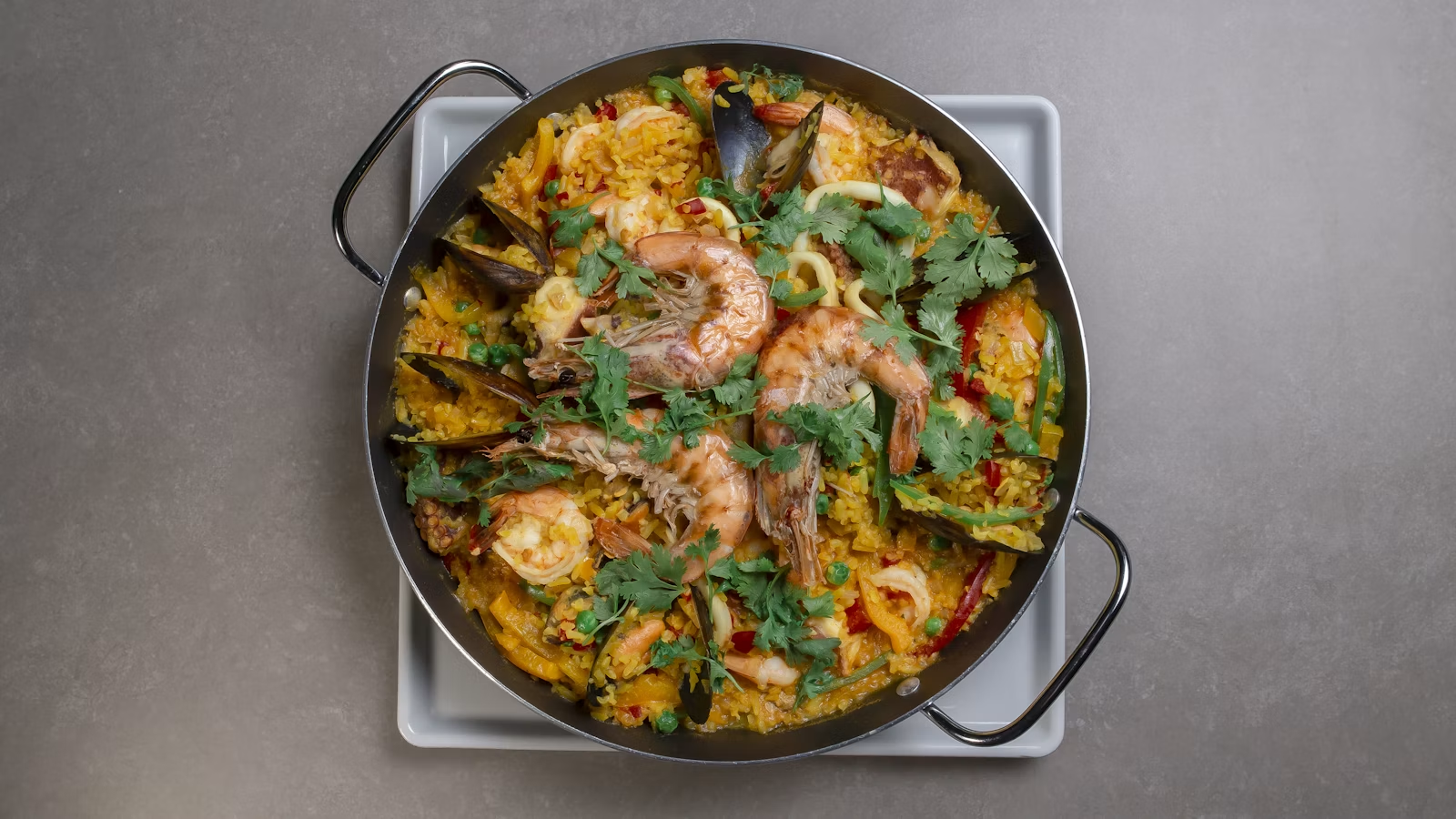
Paella rewards the cook who builds flavor early, spreads the rice once, and then lets the pan do its work.
What kind of paella recipe is this?
This is a home-friendly seafood paella, not a claim to strict Paella Valenciana. The Valencian Community describes the traditional inland version with chicken, rabbit, local green and white beans, tomato, paprika, saffron, olive oil, and Valencian rice. Coastal and modern variations use fish stock and seafood. Both traditions share the same essential geometry: rice cooked in a broad, shallow layer in the pan that gives the dish its name.
That distinction matters because “authentic” should not be a decorative label. This recipe keeps the classic technique while choosing shrimp and mussels that are practical for many cooks. It also avoids chorizo, which is common in some international versions but not necessary for a balanced saffron-and-seafood flavor.
Choose the right rice, saffron, and pan
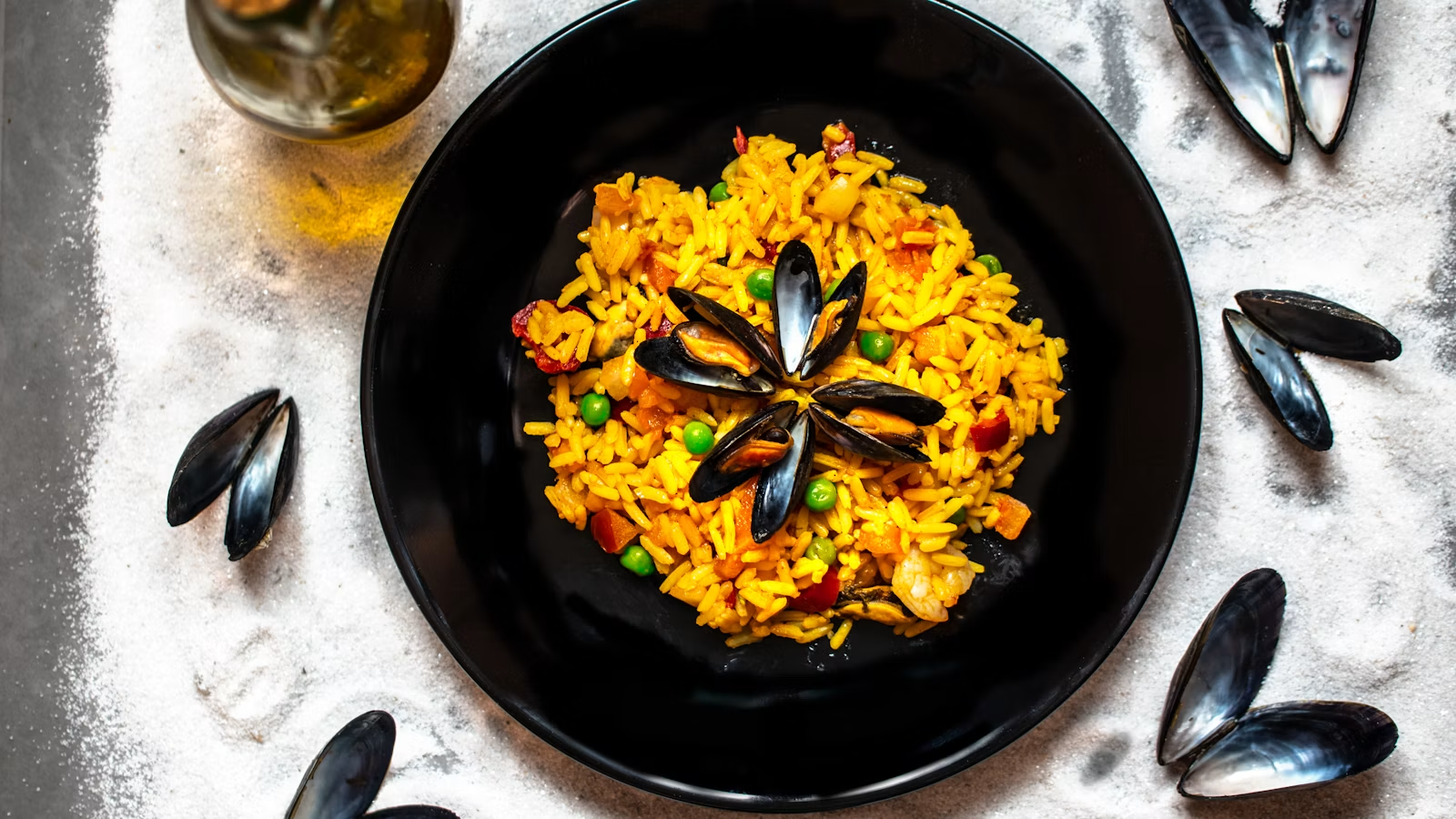
Bomba and other Spanish short-grain rices absorb flavorful liquid while keeping distinct grains. Do not substitute long-grain rice or rinse away the surface starch; both changes alter the texture and timing. Bloom crushed saffron in hot stock so its aroma and golden color disperse evenly. If you want to understand why a small amount matters, this guide to saffron explains how to buy and use it.
A 14- to 15-inch paella pan gives six servings enough surface area. A similarly wide, shallow skillet works, but a deep Dutch oven traps steam and creates a thick layer that cooks unevenly. If the pan extends beyond the burner, rotate it periodically instead of stirring the rice.
Build a concentrated sofrito
The tomato base should become thick and nearly dry before the rice arrives. Cook the pepper first, then add garlic, grated tomato, smoked paprika, and salt. Moisture evaporates, the tomato darkens, and the oil begins to show around the edges. This concentration prevents a watery paella and gives the rice flavor from below. Toast the rice in that base for one minute, add the saffron stock, and distribute the grains in one even layer.
Cook the rice once and finish the socarrat
Begin with a brisk boil to drive the stock through the rice, then lower the heat for steady absorption. Do not stir. Add mussels before shrimp because they need more time to open. When the rice is almost tender and the liquid is gone, raise the heat briefly. A dry crackle and a toasted aroma signal socarrat, the prized crisp rice on the bottom. Smoke or a sharply bitter smell means the pan is too hot.
Paella Recipe

Ingredients
- 4 cups low-sodium seafood stock
- 1/2 teaspoon saffron threads lightly crushed
- 3 tablespoons extra-virgin olive oil
- 1 red bell pepper cut into thin strips
- 4 cloves garlic finely chopped
- 2 ripe tomatoes grated, skins discarded
- 1 teaspoon smoked paprika
- 1 1/2 cups bomba or other Spanish short-grain rice do not rinse
- 1 teaspoon fine salt plus more to taste
- 1 pound large shrimp peeled and deveined, tails on
- 1 pound mussels scrubbed and debearded
- 1/2 cup frozen peas thawed
- 1 lemon cut into wedges
- 1/4 cup fresh parsley chopped
Equipment
- 1 14- to 15-inch paella pan or wide shallow skillet
- 1 Instant-read thermometer
Instructions
- Warm the seafood stock in a saucepan until steaming but not boiling. Stir in the saffron, cover, and keep warm over low heat for 10 minutes.
- Heat the paella pan over medium-high. Add the olive oil and bell pepper; cook for 4 minutes. Add the garlic, grated tomato, paprika, and half the salt. Cook for 6 to 8 minutes until thick, darkened, and nearly dry.
- Stir the rice through the sofrito for 1 minute. Pour in the saffron stock, add the remaining salt, and distribute the rice evenly. From this point, do not stir. Boil briskly for 8 minutes.
- Reduce to medium-low. Nestle in the mussels and simmer for 5 minutes, then arrange the shrimp and peas over the rice. Cook for 6 to 9 minutes more, rotating the pan as needed, until the rice is just tender, mussels open, and shrimp reach 145°F (63°C). Discard unopened mussels.
- Increase the heat to medium-high for 60 to 90 seconds. Listen for a dry crackle and smell for toasted rice; stop before it smells burnt. Remove from the heat, cover loosely with foil, and rest for 5 minutes.
- Scatter with parsley and serve directly from the pan with lemon wedges, scraping up the crisp socarrat from the bottom.
Nutrition
Video
Notes
Tried this recipe?
Let us know how it turned out!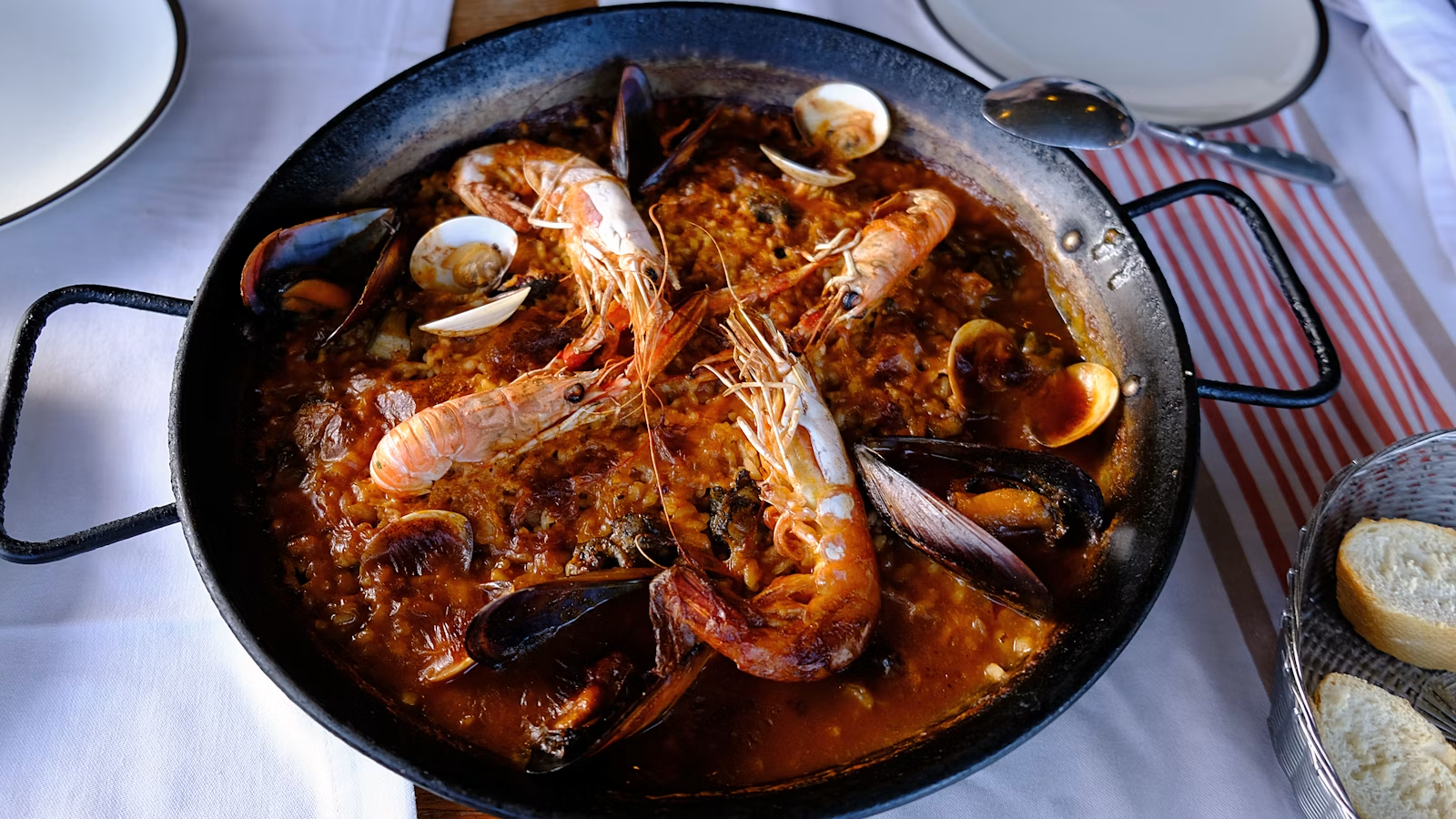
Serve paella safely and without delay
Shrimp should be opaque and reach 145°F (63°C); mussels should open fully, and any that stay closed after cooking should be discarded. Keep raw seafood and its utensils away from ready-to-eat garnishes, following the same separation principles in this guide to cross-contamination. Rest the pan for five minutes, then serve immediately with lemon while the socarrat is still crisp.
Paella is at its best fresh. Refrigerate leftovers within two hours in shallow containers and use them within two days. Reheat only once, adding a spoonful of stock to prevent dry rice, and heat until steaming throughout. The crust will soften, but the saffron, tomato, and seafood flavors remain excellent.
Before cooking, check that the pan can sit level and that the stock is hot. A tilted pan leaves one side dry and the other soupy, while cold stock interrupts the boil and makes timing unpredictable. Taste the stock for salt before it meets the rice; after that point, seasoning is harder to distribute without stirring. If your burner is small, move the pan through quarter-turns during simmering. Even heat matters more than owning a specialized outdoor paella burner.
Sources
- Comunitat Valenciana: Paella Valenciana ingredients and tradition
- Visit Valencia: Paella history, rice, and regional context
- Serious Eats: Paella pan design and cooking technique
- USDA FSIS: Safe minimum internal temperatures
Hi, I’m Laura, the voice behind Tastiva. I’ve always believed that eating well should feel enjoyable, comforting, and realistic—not like another complicated rule to follow. I love creating recipes that fit into everyday life, sharing simple nutrition ideas, and finding small ways to make meals feel a little better without losing the pleasure of good food.