
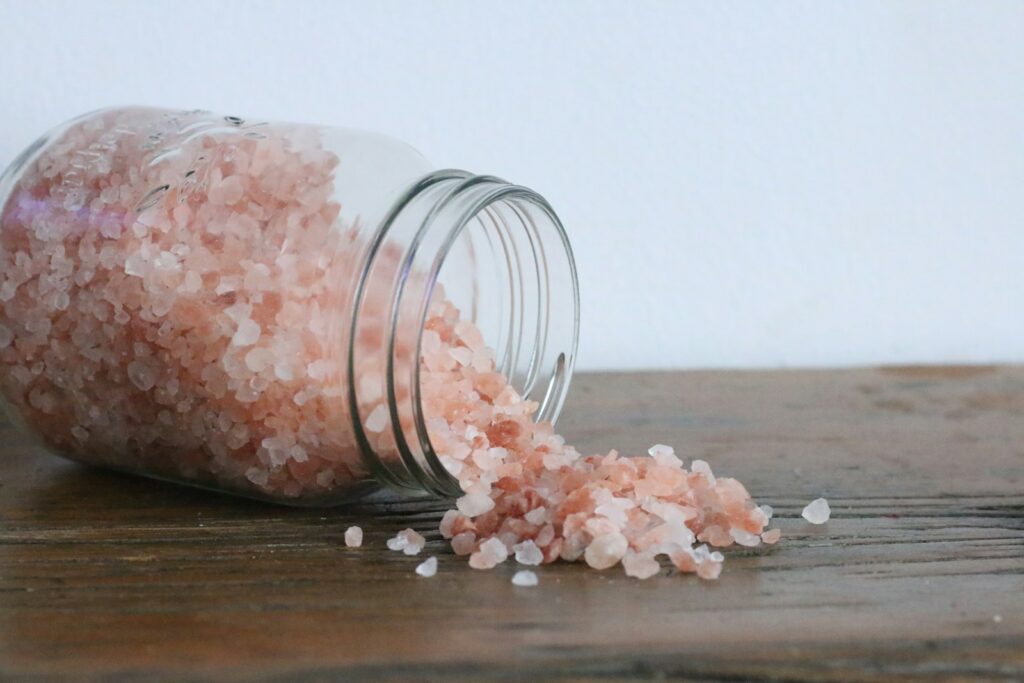
A grinder of pink salt looks different from the white salt in a shaker, but the main ingredient is still sodium chloride. Culinary pink salt, often sold as Himalayan pink salt, can offer a different grain size, color, and finishing texture. Its appearance doesn't establish a meaningful health advantage, and it shouldn't be confused with pink curing salt.
Choose culinary pink salt for the way it seasons food, and read the label carefully: color alone doesn't tell you the sodium, iodine, or intended use.
What pink salt changes on the plate
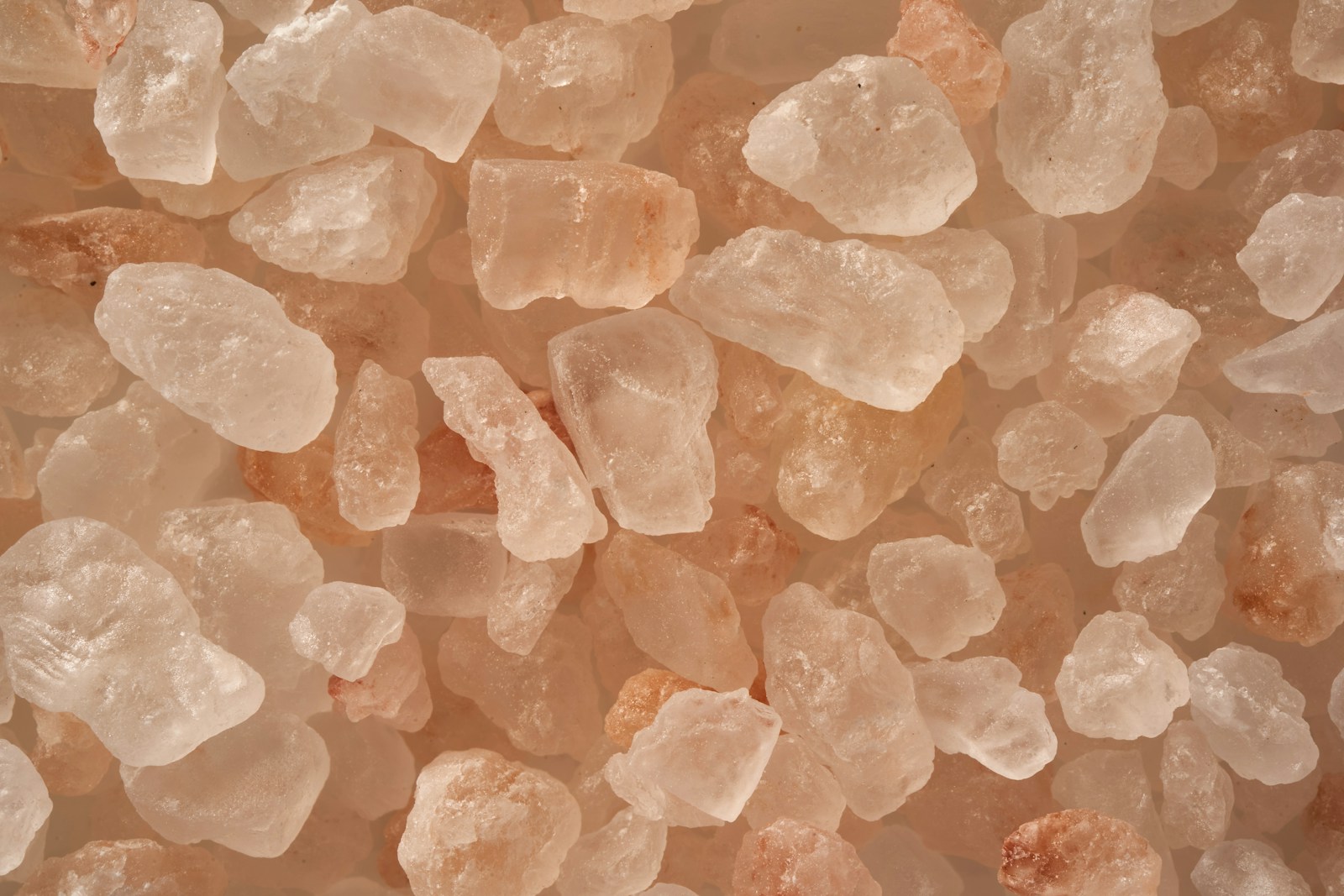
Pink salt usually refers to a rose-colored culinary rock salt. It may be sold finely ground, in coarse crystals, or in a grinder. Those physical differences matter: a fine grain disperses readily, while a larger crystal can provide a noticeable crunch when sprinkled onto a finished dish.
In soup or another dish where the salt dissolves completely, its crystal shape no longer contributes that finishing texture. If the reason you chose a particular salt is its crunch, use it where some texture can remain. The color may look appealing in the container without making a visible difference in the finished food.
I wouldn't pay extra for a salt because a label lists an impressive number of trace minerals without useful amounts. A mineral's presence and a nutritionally meaningful serving are different things. For cooking, grain size, clean flavor, price, and whether the container is convenient are easier qualities to assess.
Sodium and iodine deserve separate attention
Pink salt is still a concentrated sodium source. Harvard's Nutrition Source lists about 2,200 milligrams of sodium per teaspoon for pink Himalayan salt as an approximate example, close to its table-salt estimate. The actual amount depends on the product and how densely the crystals fill the spoon, so use the package's Nutrition Facts panel for your salt.
| Question | What to look for | Why it matters |
|---|---|---|
| Is it lower in sodium? | Sodium per serving, with the serving weight included | Different teaspoon weights can make salts appear less similar than they are |
| Does it supply iodine? | An explicit iodized or iodide statement | Specialty salts are not usually iodized |
| Is it a useful mineral supplement? | Actual nutrient quantities, not a long list of names | Tiny traces don't establish a useful nutritional dose |
| Is the portion comparable? | Grams as well as teaspoons | Coarse and fine salts pack differently |
NIH's Office of Dietary Supplements notes that specialty salts, including Himalayan salt, are not usually iodized. If your usual iodized salt is one of your iodine sources, switching to a non-iodized product changes that contribution. Don't solve the issue by eating more salt; consider the overall diet and seek advice if you're unsure about iodine needs.
For people managing sodium, the total from packaged foods, restaurant meals, sauces, and home seasoning matters more than the color of the shaker. A medical sodium target applies to pink salt too. Our guide to chicken bouillon illustrates why concentrated flavor ingredients deserve a label check before you add another pinch.
Substitute by weight when precision matters
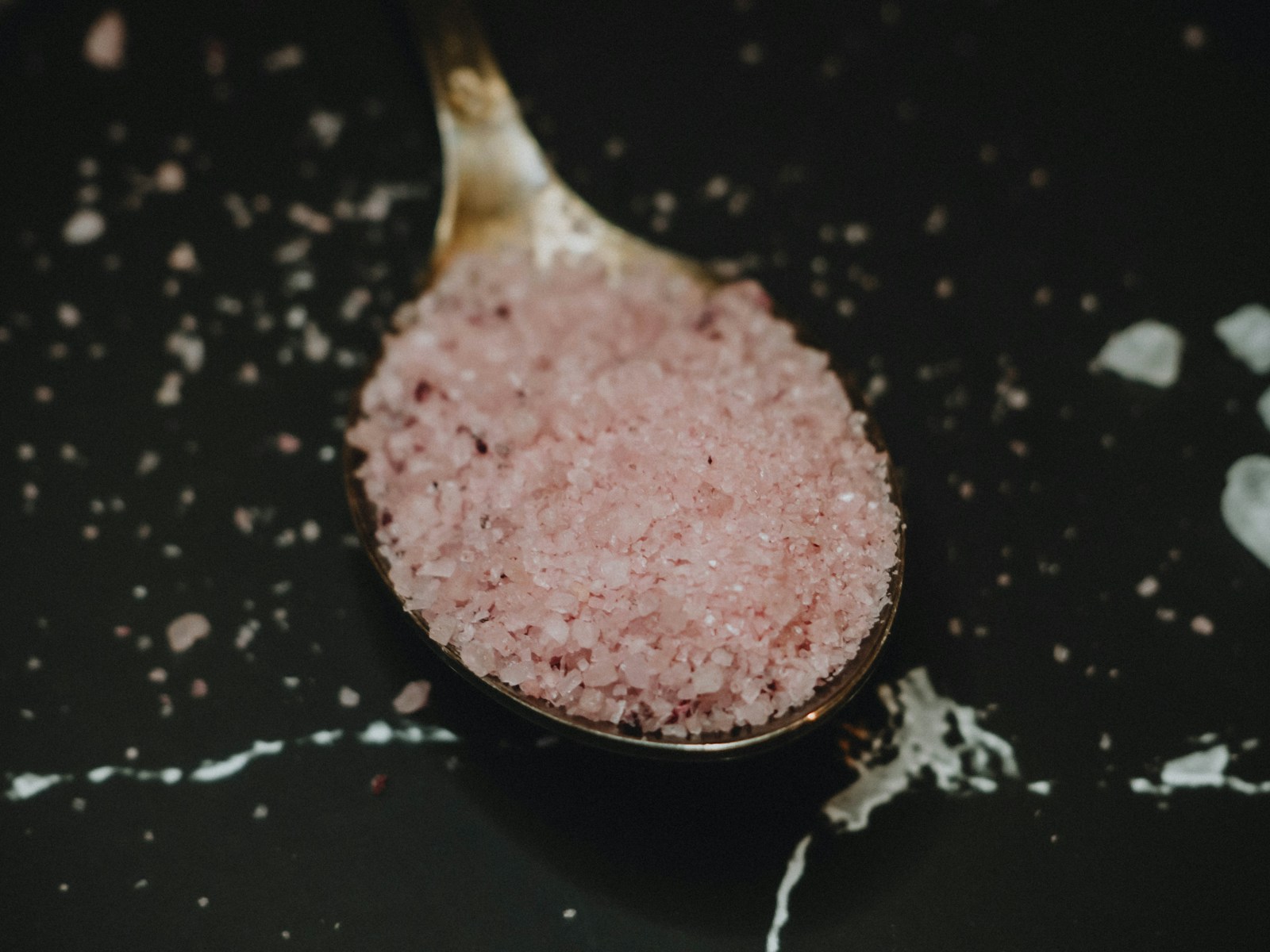
A teaspoon measures volume, not a fixed weight of salt. Large irregular crystals leave more empty space than a finely ground product, and different brands can vary. This is why swapping one salt for another spoon for spoon can change how salty a recipe tastes even when both are mainly sodium chloride.
- For baking: follow the salt type named in the recipe or use its gram weight when provided. Don't assume every teaspoon is equivalent.
- For everyday stovetop cooking: add gradually, allow the salt to dissolve, and taste the finished mixture before adding more, when tasting is safe for the ingredients involved.
- For finishing: use a small amount where the crystals can remain perceptible, such as over roasted vegetables or a sliced tomato.
- For a grinder: remember that a number of turns is not a standard measurement. Grinder settings and crystal size change the output.
- For preservation: use a tested recipe and its specified ingredients and weights. Seasoning by taste is not a preservation method.
My practical preference is to keep an inexpensive, predictable salt for routine measurements and use a finishing salt only when its texture adds something. That's a kitchen choice, not a nutritional ranking. You don't need several specialty salts to season food well.
If a soup is already salty from broth, cheese, or a prepared sauce, changing the final salt's color won't correct the balance. Taste the combination first. In dishes using feta cheese, for example, the cheese may supply much of the seasoning you need.
Pink curing salt is a different product
Pink curing salt is not ordinary pink table salt. Products such as Prague powder are specialized curing mixtures containing nitrite and, in some types, nitrate. They must not be sprinkled on finished food or exchanged with culinary Himalayan salt. Their color is not a reliable way to identify them; the label and intended use are essential.
University of Georgia's sausage-making guidance explains curing as a process using salt with nitrite and/or nitrate. Safe preservation depends on the correct product, a tested formulation, and precise handling. This is a different task from choosing a pleasant grain size for dinner.
Keep curing products clearly labeled and separate from everyday seasonings, and retain their original directions. For a salt grinder on the dinner table, choose a product explicitly sold as culinary salt. Once that distinction is clear, the decision can return to ordinary cooking: the amount needed, the texture you enjoy, and the price you're comfortable paying.
Sources
- Harvard Nutrition Source: salt types and sodium comparisons
- NIH Office of Dietary Supplements: iodine and specialty salts
- Mayo Clinic: salt texture, processing, and sodium by weight
- University of Georgia: curing ingredients and sausage-making safety
- The Spruce Eats: what Prague powder is

Hi, I’m Laura, the voice behind Tastiva. I’ve always believed that eating well should feel enjoyable, comforting, and realistic—not like another complicated rule to follow. I love creating recipes that fit into everyday life, sharing simple nutrition ideas, and finding small ways to make meals feel a little better without losing the pleasure of good food.