
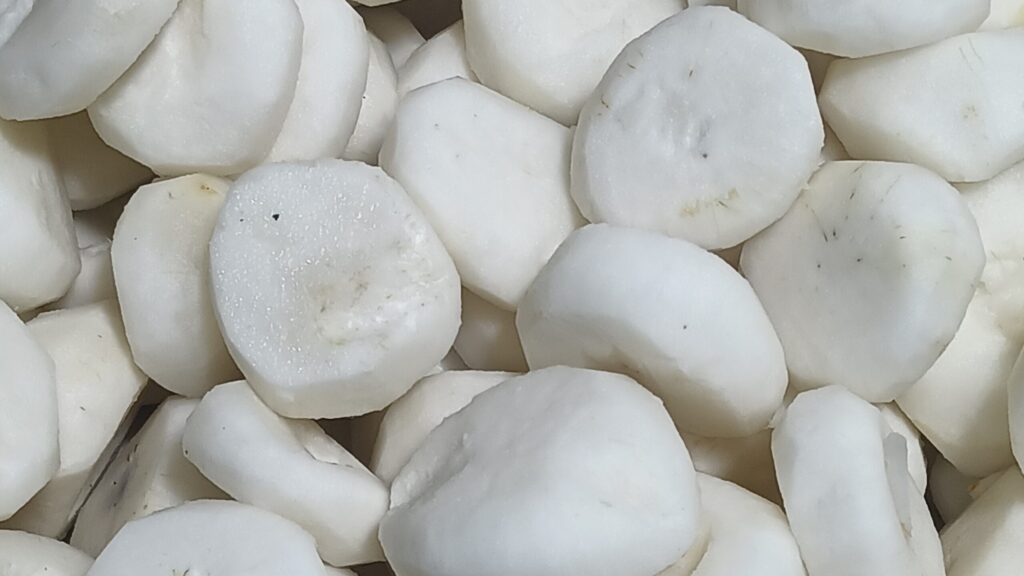
Those pale, crisp slices in a stir-fry are often water chestnuts. The Chinese water chestnut is an aquatic vegetable, not a tree nut: the part we eat is a corm, an underground storage stem. Canned versions make it easy to add a firm crunch to a dish, while fresh ones require a little more preparation.
Choose water chestnuts when a dish needs a distinct bite, then match the cut to the size of each mouthful.
What a water chestnut is, and what it isn't
The familiar Chinese water chestnut comes from Eleocharis dulcis, a plant grown in wet conditions. Fresh corms have dark skin around pale flesh; canned water chestnuts are usually peeled and sold whole, sliced, or diced. Their culinary appeal is the contrast they bring to softer ingredients, rather than a strong flavor that dominates the dish.
They are different from the brown tree chestnuts used for roasting. They're also different from water caltrops, whose horned fruits sometimes share the name water chestnut. If a recipe comes from a different culinary tradition, confirm which ingredient it means before choosing a substitute or comparing photographs.
| Ingredient or form | What you get | A useful buying clue |
|---|---|---|
| Fresh Chinese water chestnuts | Dark-skinned corms needing preparation | Confirm the produce name and look for sound, firm pieces |
| Canned whole water chestnuts | Peeled pieces you can cut yourself | Flexible when you want more than one shape |
| Canned sliced water chestnuts | Ready-cut rounds | Convenient for dishes needing visible slices |
| Canned diced water chestnuts | Smaller pieces | Useful for spreading crunch through a filling |
| Roasting chestnuts | A different food from a tree | Don't substitute on the strength of the shared name |
For an unfamiliar ingredient, I would start with a clearly labeled can. It removes the peeling step and makes the form obvious, leaving you free to decide whether the texture suits your meal. That's a practical starting point, not a claim that fresh and canned are identical.
Whole, sliced, or diced: let the dish decide
A whole water chestnut gives you control over the cut, but prepared slices or dice save time. Choose pieces that fit comfortably with the other ingredients. Large chunks can feel out of place in a small dumpling or a finely chopped dip, while tiny dice may disappear visually in a large vegetable stir-fry.
Reese's sliced product lists water chestnuts, water, and citric acid, and the manufacturer highlights their ability to remain crisp after cooking. Other products can differ, so check your own label for ingredients, serving information, and instructions. The can's total weight also includes liquid; it isn't necessarily the amount of drained vegetable a recipe requires.
- For a stir-fry: Slices make the ingredient easy to distribute and recognize among larger vegetable pieces.
- For a filling: Finely cut pieces spread the crunch without creating awkward lumps in a wrapper or small bite.
- For a dip: Match the dice to the dip's consistency so you can scoop it comfortably.
- For a skewer or wrapped appetizer: Whole pieces may be appropriate when the recipe specifically calls for them.
Drain canned water chestnuts as the recipe directs, and rinse when appropriate for that product and dish. Patting them dry can be useful when extra liquid would thin a filling or sauce. Don't assume the canning liquid belongs in the recipe simply because the vegetable does.
Prepare fresh water chestnuts with care
Fresh water chestnuts need washing, peeling, and cooking. Use produce sold for food, not an unidentified aquatic plant collected outdoors. The CDC advises cooking freshwater plants well because raw or undercooked contaminated plants can transmit certain parasites, particularly in affected regions of Asia. Peeling alone shouldn't be treated as a guaranteed safety step.
Follow a reliable recipe or supplier's preparation directions, including adequate cooking, rather than adding raw slices at the very last moment solely to preserve crunch. Canned water chestnuts have already undergone commercial processing, making them a convenient choice when a recipe expects a ready-to-use canned ingredient.
- Wash hands and use clean tools before preparing fresh produce.
- Remove the skin carefully on a stable board and inspect the flesh as you work.
- Discard spoiled, moldy, or badly deteriorated pieces rather than trimming away extensive damage.
- Keep cut produce refrigerated when it won't be used promptly, and follow safe handling instructions for the finished dish.
The name can cause another misunderstanding: being botanically different from a tree nut doesn't guarantee that every person can eat it or that a prepared dish is allergen-free. Check all ingredients and follow individual allergy guidance. A sauce or shared preparation area can matter as much as the featured vegetable.
Work the crunch into a complete meal
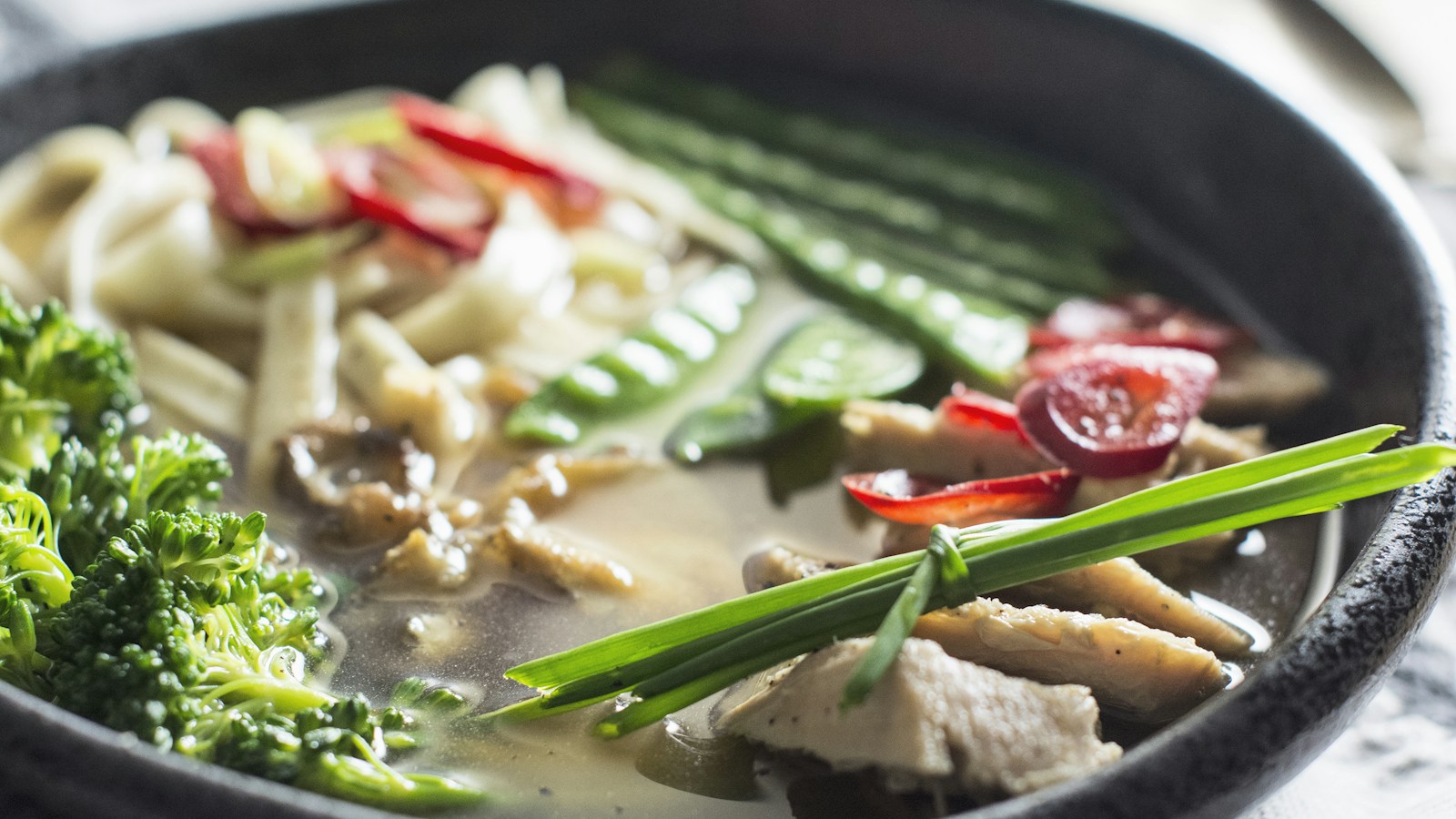
Water chestnuts are usually one component rather than the meal's main protein. Pair them with tofu, beans, meat, poultry, or another suitable protein, plus vegetables and a starch if you want one. Their texture can complement soft rice, a saucy noodle dish, or a tender filling without needing an elaborate separate recipe.
If you're choosing a sauce, our tamari guide explains label differences that may matter for gluten avoidance. For the protein component, what are legumes? offers a useful starting point. Neither choice has to be complicated; give each ingredient a job and keep the seasoning appropriate to the whole dish.
- Refrigerate unused canned water chestnuts after opening in a clean, covered container and follow the product's directions.
- Label leftovers so you remember when the can was opened.
- Plan the remaining portion for a second dish rather than repeatedly warming and cooling the whole supply.
- If substituting another crunchy vegetable, expect a different flavor and cooking behavior. Similar texture doesn't make it the same ingredient, especially in a traditional preparation.
Sources
- Reese: Sliced Water Chestnuts
- CDC: Fasciolopsis and Raw Freshwater Plants
- Eleocharis dulcis: Botanical Identification
- FoodSafety.gov: Four Steps to Food Safety

Hi, I’m Laura, the voice behind Tastiva. I’ve always believed that eating well should feel enjoyable, comforting, and realistic—not like another complicated rule to follow. I love creating recipes that fit into everyday life, sharing simple nutrition ideas, and finding small ways to make meals feel a little better without losing the pleasure of good food.