
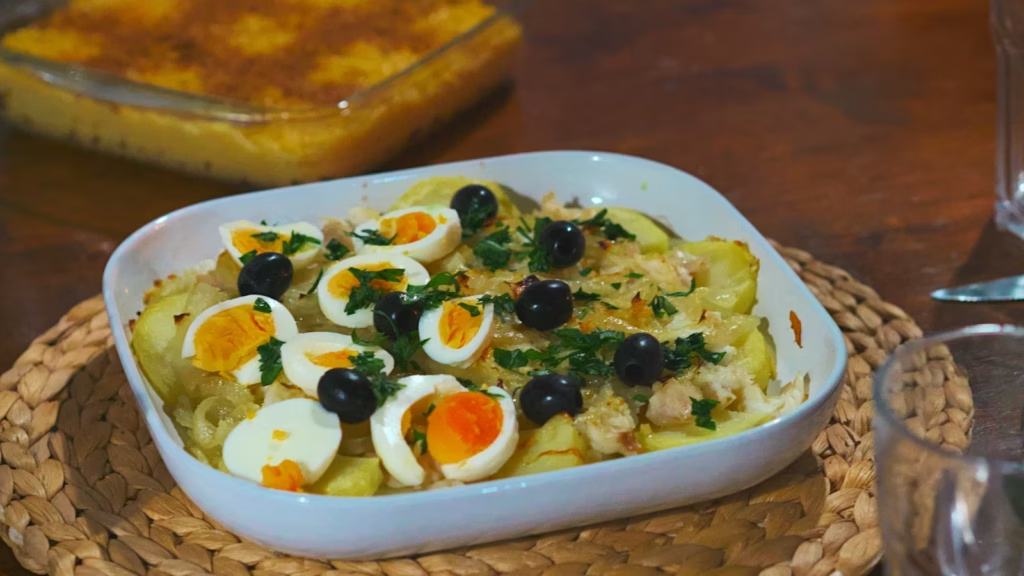
Bacalao is cod transformed by salt, time, and a little kitchen patience. In Spanish-speaking kitchens, the word can simply mean cod, but on a market label or in a traditional recipe it usually points to salted—often dried—cod. The fish looks stiff and unapologetically salty before soaking. After proper preparation, it becomes tender, flaky, and much more interesting than its beige first impression suggests.
Bacalao asks you to plan ahead, then pays you back with fish that flakes like it has something to prove.
Salt cod belongs to far more than one cuisine. Spain calls it bacalao; Portugal uses bacalhau; Italy has baccalà; Caribbean and Latin American cooks fold it into fritters, salads, stews, and breakfast plates. The names and preparations vary, but the useful idea is the same: curing preserves the fish while creating a firmer texture and concentrated savory flavor.
What is bacalao?
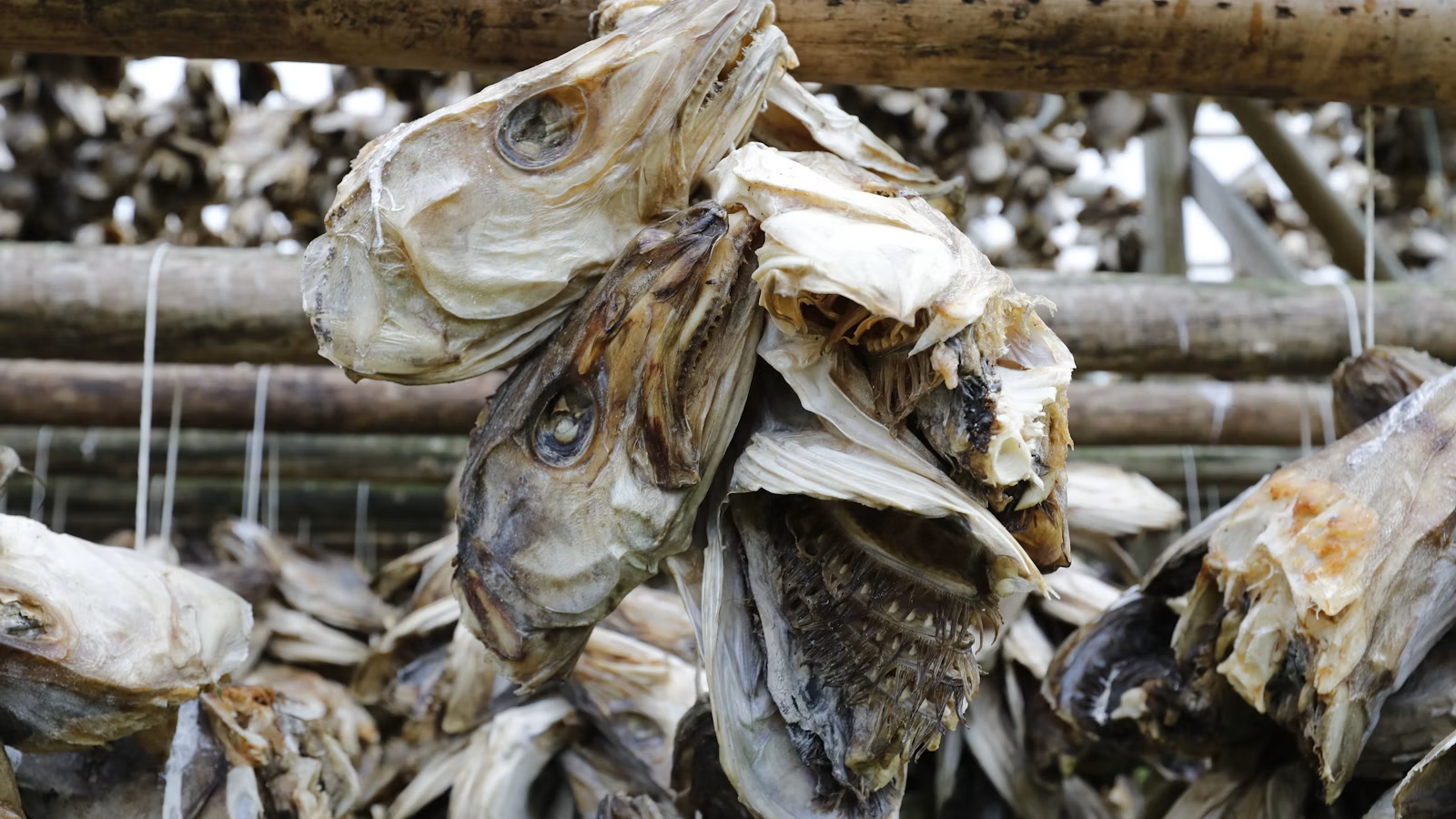
Bacalao is most often Atlantic cod that has been heavily salted and partially or fully dried. The FAO describes salting as a preservation method that lowers water activity, making the fish less hospitable to spoilage organisms. Traditional Portuguese cured cod goes through salting, drying, and resting stages that let moisture and salt rebalance through the flesh.
It is not the same as fresh cod with salt sprinkled on top. Curing tightens the proteins, concentrates flavor, and gives the cooked fish a distinctive fibrous flake. Nor is every dried fish bacalao. Check the species and product description, especially in markets where several salted fish sit together looking equally serious.
What does bacalao taste like?
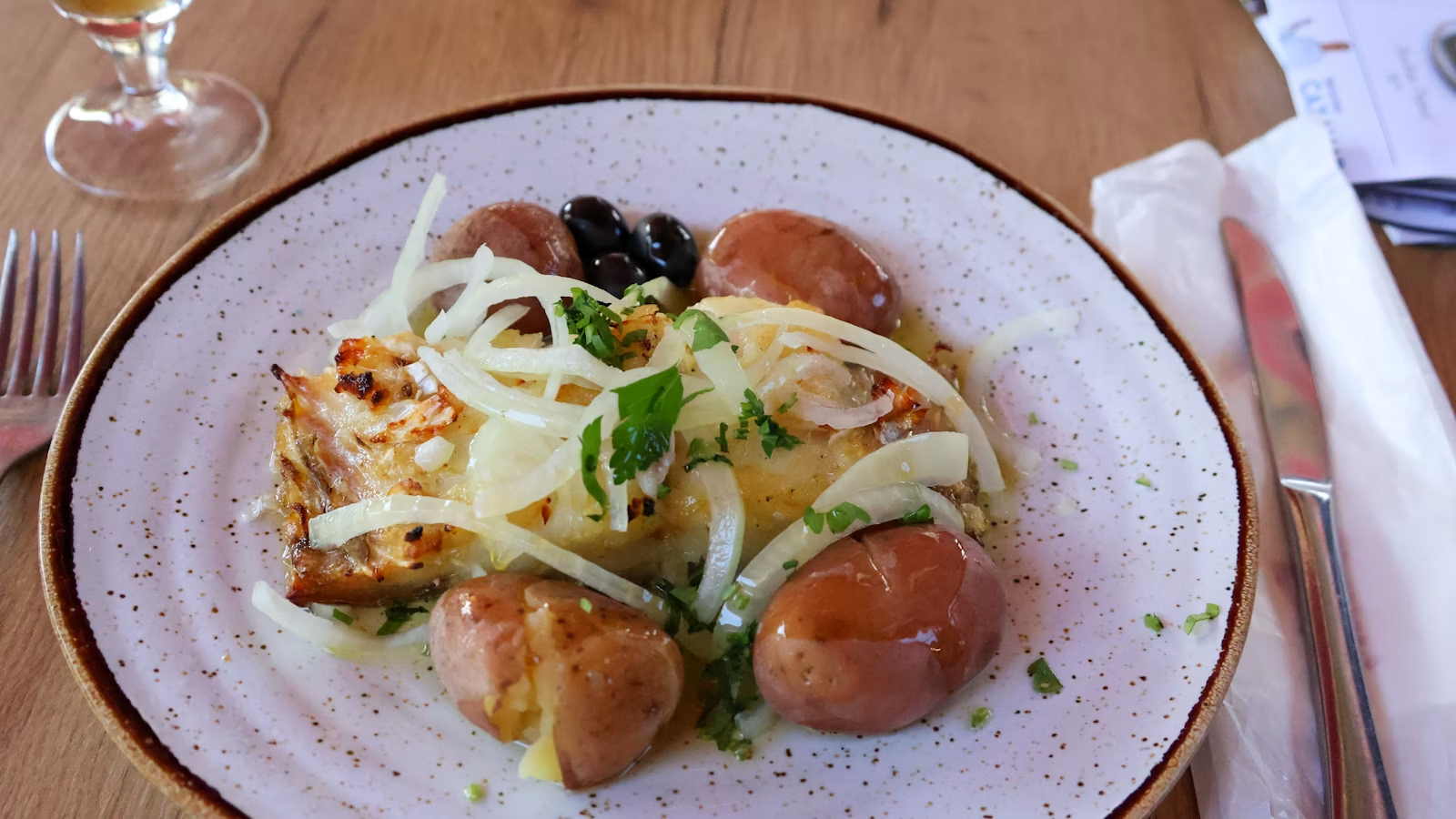
Properly desalted bacalao tastes clean, briny, and deeply savory rather than aggressively salty. The cure makes the cod flavor fuller and the flesh firmer than fresh fish. Thick pieces separate into juicy flakes; thinner shreds keep a pleasant chew in fritters or stews. Olive oil, garlic, tomato, potato, peppers, onions, and eggs all suit it because they soften and carry that concentrated flavor.
If you enjoy mild fish such as dorado or monkfish, bacalao will taste more assertive but not necessarily “fishier.” The bigger difference is texture. Cured cod has a purposeful bite that fresh fillets do not, which is why replacing it with ordinary cod changes more than the salt level.
How to desalt bacalao
Rinse loose surface salt from the fish, place it in a nonreactive container, and cover it generously with cold water. Refrigerate it while it soaks; do not leave fish on the counter. Change the water several times during the process. Thin pieces may be ready sooner, while thick loins can need 24 to 48 hours. The package directions should win whenever they differ.
Taste a tiny cooked flake before seasoning the whole dish. If it is still sharply salty, continue soaking in fresh cold water. The goal is not to erase every trace of salinity; it is to bring the fish into balance. Soaking changes the salt level, but it does not turn bacalao into a low-sodium food, so people managing sodium closely should check the label and their own dietary guidance.
How to cook salt cod
Once desalted, pat the fish dry and remove any skin or bones your recipe does not need. Cook it gently. Hard boiling can tighten the flakes and make them dry, while a quiet poach, slow braise, or moderate oven gives the flesh room to soften. For fritters, poach first, cool, and shred; for a stew, add the fish late enough that it stays in pieces.
Classic preparations show how flexible it is. Basque bacalao al pil-pil emulsifies olive oil with the fish’s gelatin. Portuguese bacalhau à Brás combines shreds with onions, thin potatoes, and eggs. Across the Caribbean, cooks make tomato-based stews, salads, and crisp fritters. A good vegetable stock can support a lighter stew, but hold the salt until the fish has spoken.
Buying and storing bacalao
Choose pieces that smell pleasantly marine, not sour or rancid. The flesh should look dry and firm, with no damp pockets, unusual discoloration, or damaged packaging. Boneless center-cut loins cost more but are convenient for neat portions; thinner tail pieces and trimmings are excellent for fritters, salads, and stews.
Storage depends on how the product was cured and packed, so follow its label. Some heavily dried, unopened salt cod is sold shelf-stable; other products require refrigeration. Once you begin soaking, keep the fish cold and cook it promptly after desalting. Refrigerate cooked leftovers in a covered container. Salt once helped this fish travel, but your modern refrigerator is still invited to dinner.
Chef John of Food Wishes puts salt cod to work in brandade, a French potato-and-garlic spread. This is one serving variation; use the refrigerated soaking guidance above and check a cooked flake before adding salt.
Sources
- Portugal DGADR: Traditional Portuguese cured cod
- FAO: Fish salting and preservation
- Real Academia de Gastronomía: Bacalao in Spanish cuisine
- Portugal DGADR: Bacalhau à Minhota

Hi, I’m Laura, the voice behind Tastiva. I’ve always believed that eating well should feel enjoyable, comforting, and realistic—not like another complicated rule to follow. I love creating recipes that fit into everyday life, sharing simple nutrition ideas, and finding small ways to make meals feel a little better without losing the pleasure of good food.