
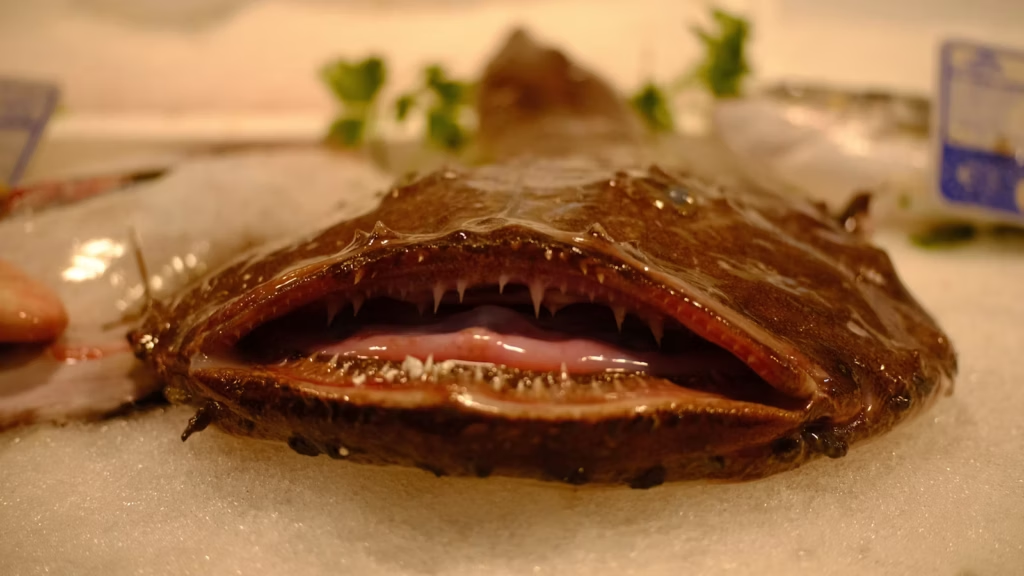
Monkfish looks intimidating in its whole form, but the tail meat is surprisingly approachable: pale, firm, mild, and dense enough to hold together in a skillet or stew. It is often compared with lobster, although the flavor is gentler and the texture is its own thing.
Laura’s kitchen note: Monkfish rewards restraint. Remove the membrane, season it simply, and stop cooking as soon as the center is done. One extra “just in case” minute can turn that lovely bounce into something stubborn.
That firmness is exactly why monkfish works in preparations that would make a delicate fillet fall apart. It can be roasted, seared, poached in sauce, or added to a seafood stew. The main trick is understanding the tail before heat ever enters the picture.
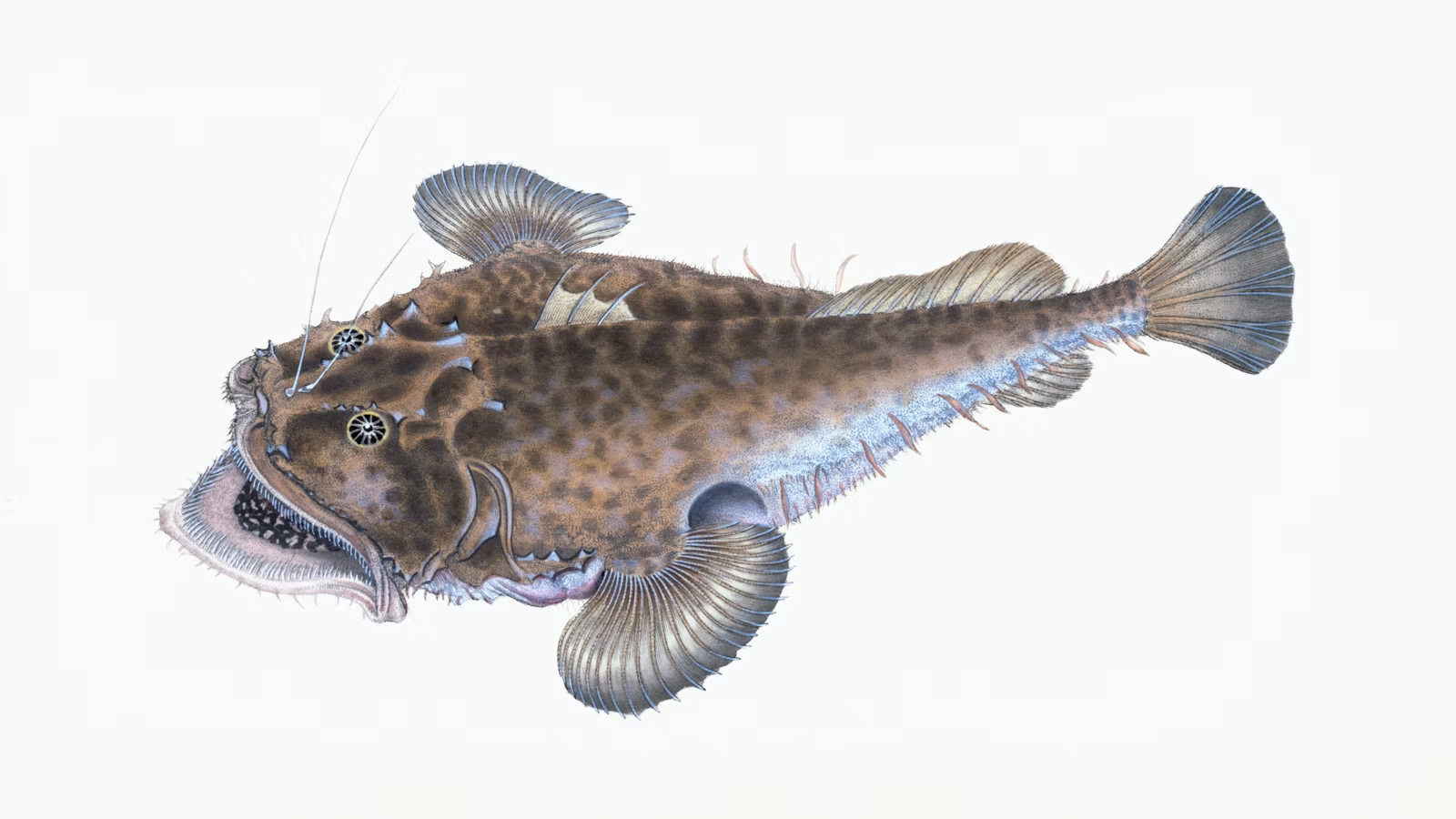
What monkfish tastes like—and why the tail gets the attention
Monkfish has a mild, slightly sweet flavor rather than a strong “fishy” one. Its flesh is dense and nonflaky, with a springy bite that explains the lobster comparison. Still, I would not buy it expecting a bargain lobster tail. Think of it as a sturdy white fish with enough personality to carry garlic, tomatoes, saffron, curry spices, or a bright squeeze of lemon.
At U.S. seafood counters, you will usually see skinned tail portions rather than the enormous head. The tail contains two long loins on either side of a central bone, so a fishmonger can sell it whole, as boneless fillets, or cut into medallions. Some markets also sell monkfish cheeks, which are small and tender but less common.
Compared with a flaky fish such as halibut, monkfish tolerates a little more handling. You can turn pieces in a pan or nestle them into sauce without watching dinner dissolve. That does not make it impossible to overcook, though; dense is not the same as indestructible.
How to buy and prep monkfish
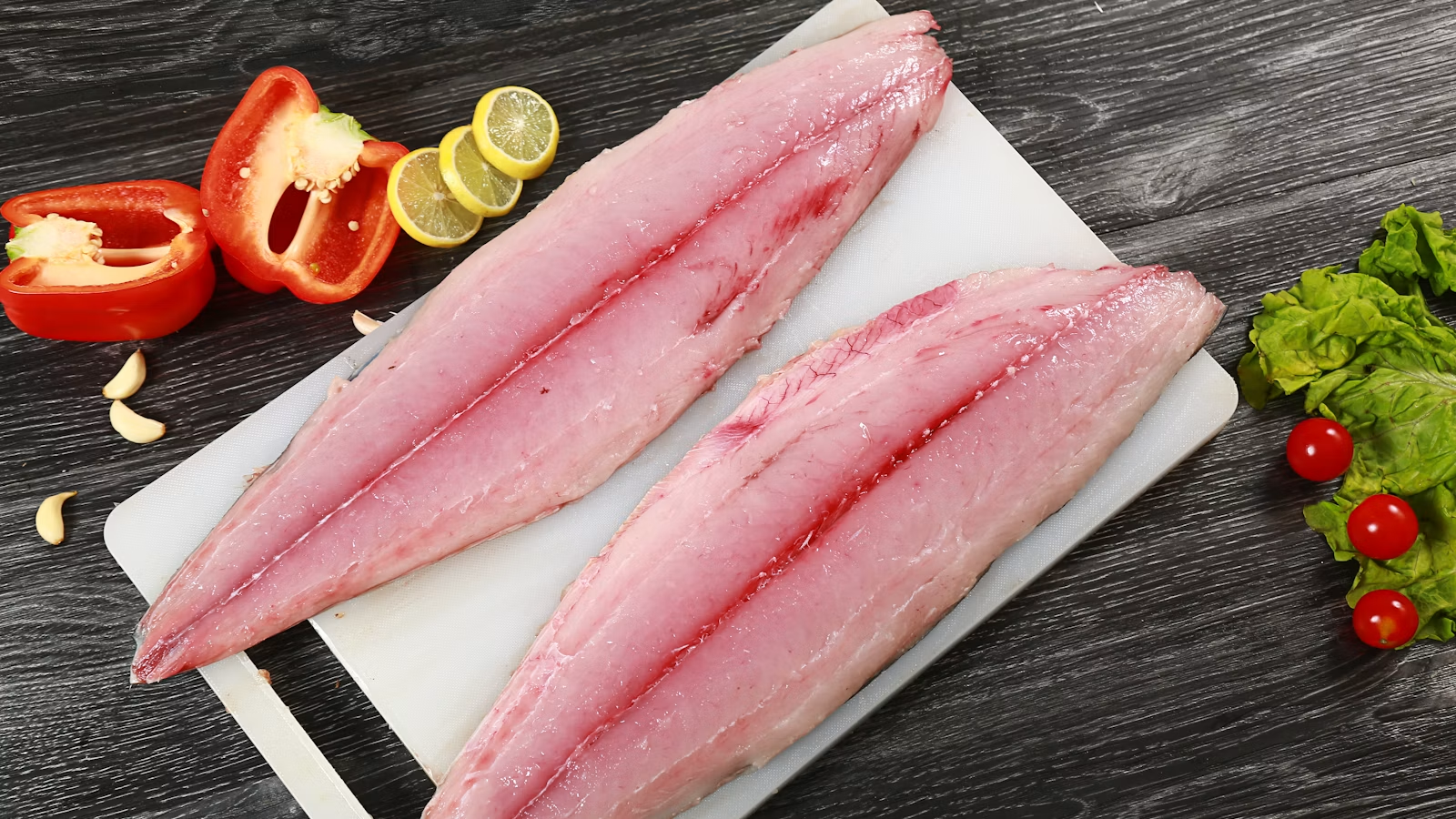
Look for flesh that appears moist and pearly, not dry, dull, or yellowing. Fresh fish should smell clean and mild. If the display has whole tail sections, ask whether the thin blue-gray membrane has been removed. NOAA notes that this membrane can make the fish curl and become tough during cooking, and it is the one prep detail I would not skip.
To remove it at home, slide a narrow sharp knife just under one edge, angle the blade slightly upward, and pull the membrane taut as you work. Trim away any obvious sinew, then pat the fish dry. A whole boneless loin can be roasted, while even medallions are better for quick stovetop cooking. Keeping pieces similar in thickness helps them finish together.
Season shortly before cooking with salt, pepper, and a little oil. Monkfish loves assertive aromatics, but they need not be complicated. A few crushed garlic cloves, lemon zest, paprika, or fresh herbs are plenty. If you marinate it in citrus, keep the soak brief so the acid does not tighten the surface before the center cooks.
The best ways to cook it without making it tough
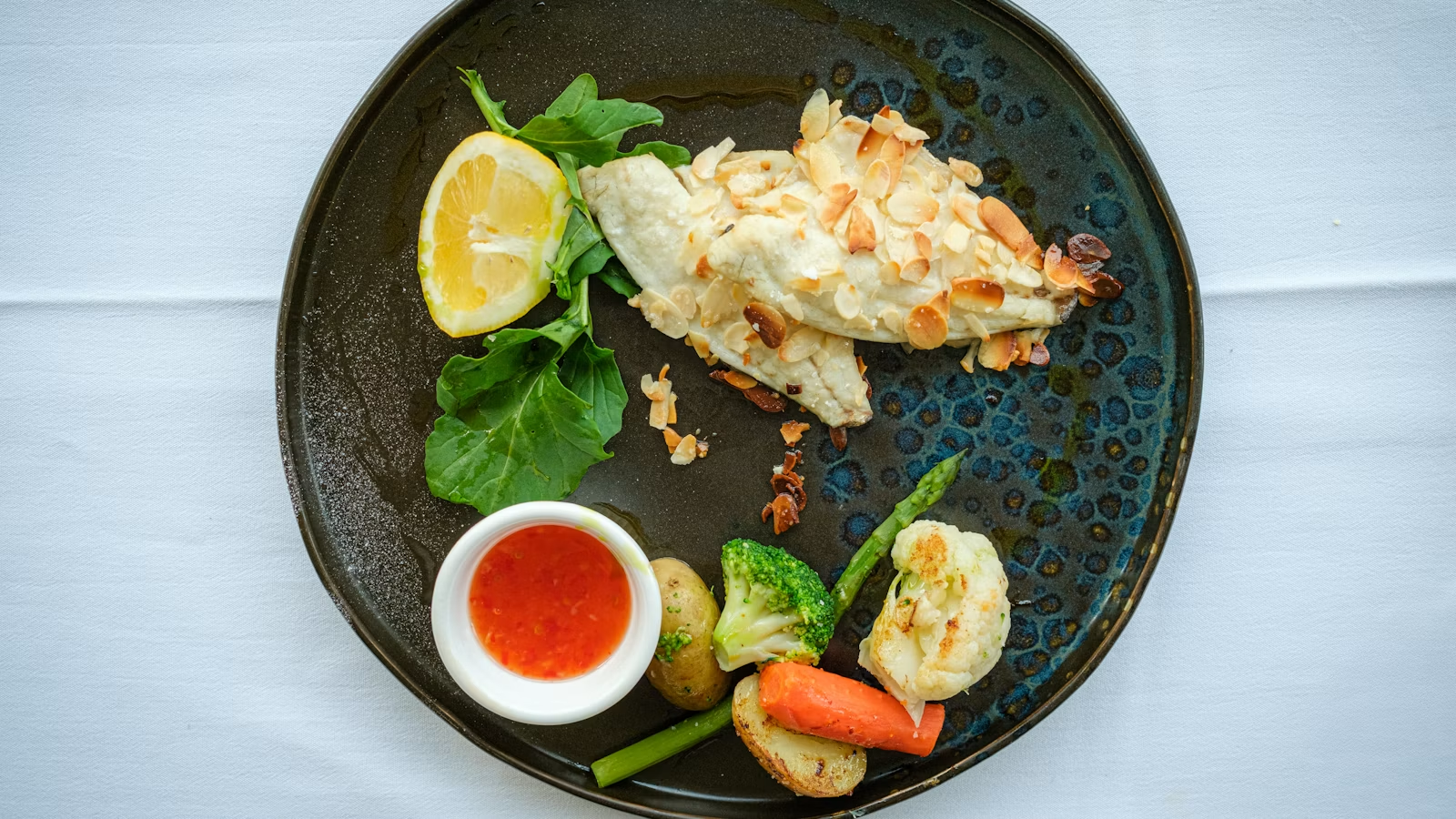
For medallions, heat a thin film of oil in a skillet over medium-high heat. Sear the fish until it releases easily and develops color, then lower the heat, turn it, and finish gently with butter and aromatics. Thick pieces may need a short spell in a moderate oven. A thermometer is far more useful than a rigid timer because thickness changes everything.
FoodSafety.gov lists 145°F (63°C) as the safe minimum internal temperature for most seafood. Check the thickest part, then let the fish rest briefly. The flesh should be opaque and moist, not dry around the edges. If you already use a thermometer for the best way to cook salmon, the same calm, temperature-first habit serves you well here.
Monkfish is also excellent in a tomatoey stew or coconut curry. Add chunks late enough that they cook through without simmering for ages. For roasting, rub a trimmed loin with oil and seasonings, set it on a sheet pan, and use temperature rather than browning alone as your guide. Because the flesh is lean, a spoonful of sauce or good olive oil at the table is welcome.
Storage, sustainability, and useful substitutions
Keep raw monkfish very cold and cook it promptly, following the package date and your retailer’s guidance. Store it in a covered container on the lowest refrigerator shelf so drips cannot reach other foods. Cooked leftovers should be chilled promptly in a shallow container and reheated gently; blasting them in the microwave is an efficient route to rubber.
NOAA describes U.S. wild-caught monkfish as responsibly harvested under fishery management measures. Seafood sourcing is specific to place and fishery, so ask where the fish was caught and check current local guidance when sustainability is a priority. “Monkfish” on a label tells you the species name, not the whole supply-chain story.
If monkfish is unavailable, choose a thick, firm white fish that suits your cooking method. Halibut is a good roasting or pan-searing substitute, while firm cod can work in a stew if you stir less. Shrimp or lobster changes the dish more noticeably but makes sense when the recipe leans into monkfish’s shellfish-friendly flavors. No substitute needs to impersonate monkfish perfectly; it only needs to behave well in the pan.
Tor the Fisherman demonstrates preparing a whole monkfish below. The tail-filleting steps offer a closer look at the prep work discussed here; the guide above focuses on buying and cooking the tail rather than using the cheeks or liver.
Sources
- NOAA Fisheries: Monkfish
- NOAA Fisheries: Monkfish Recipes
- FoodSafety.gov: Safe Minimum Internal Temperatures
- FoodSafety.gov: Safe Selection and Handling of Fish and Shellfish

Hi, I’m Laura, the voice behind Tastiva. I’ve always believed that eating well should feel enjoyable, comforting, and realistic—not like another complicated rule to follow. I love creating recipes that fit into everyday life, sharing simple nutrition ideas, and finding small ways to make meals feel a little better without losing the pleasure of good food.