
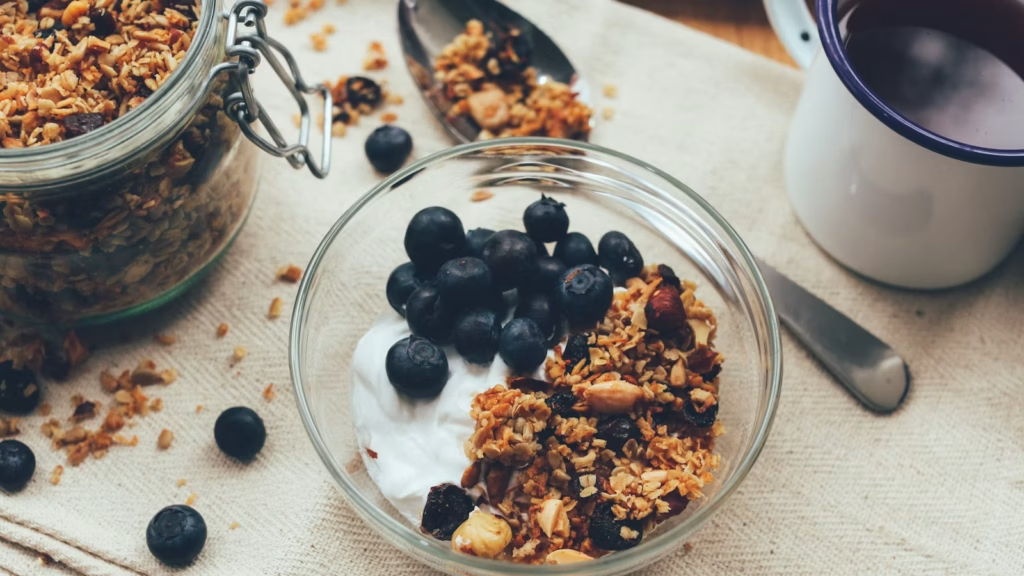
Granola has a health halo sturdy enough to survive chocolate chips, syrup, and a serving size that could fit in a teacup. That does not make it a bad breakfast. It simply means the front of the bag is not where the useful information lives.
Good granola should bring crunch and staying power—not make breakfast taste like hidden dessert.
I like it best as a supporting player: a crisp layer over yogurt, fruit, or warm oats. The right bag can add whole grains, nuts, seeds, and genuine pleasure. The wrong one leaves me hungry and wondering how three bites became a full serving.
What is granola?
At its simplest, granola is a toasted mixture built around rolled oats. Nuts, seeds, oil, spices, and a sweetener help it brown and form clusters. Some blends add puffed grains, coconut, chocolate, or dried fruit after baking.
That is different from muesli, which is usually an untoasted mix of grains, nuts, seeds, and fruit. It is also different from plain oatmeal. Toasting creates the crunch we love, but oil and sweetener make the finished cereal more concentrated than a bowl of oats cooked with water.
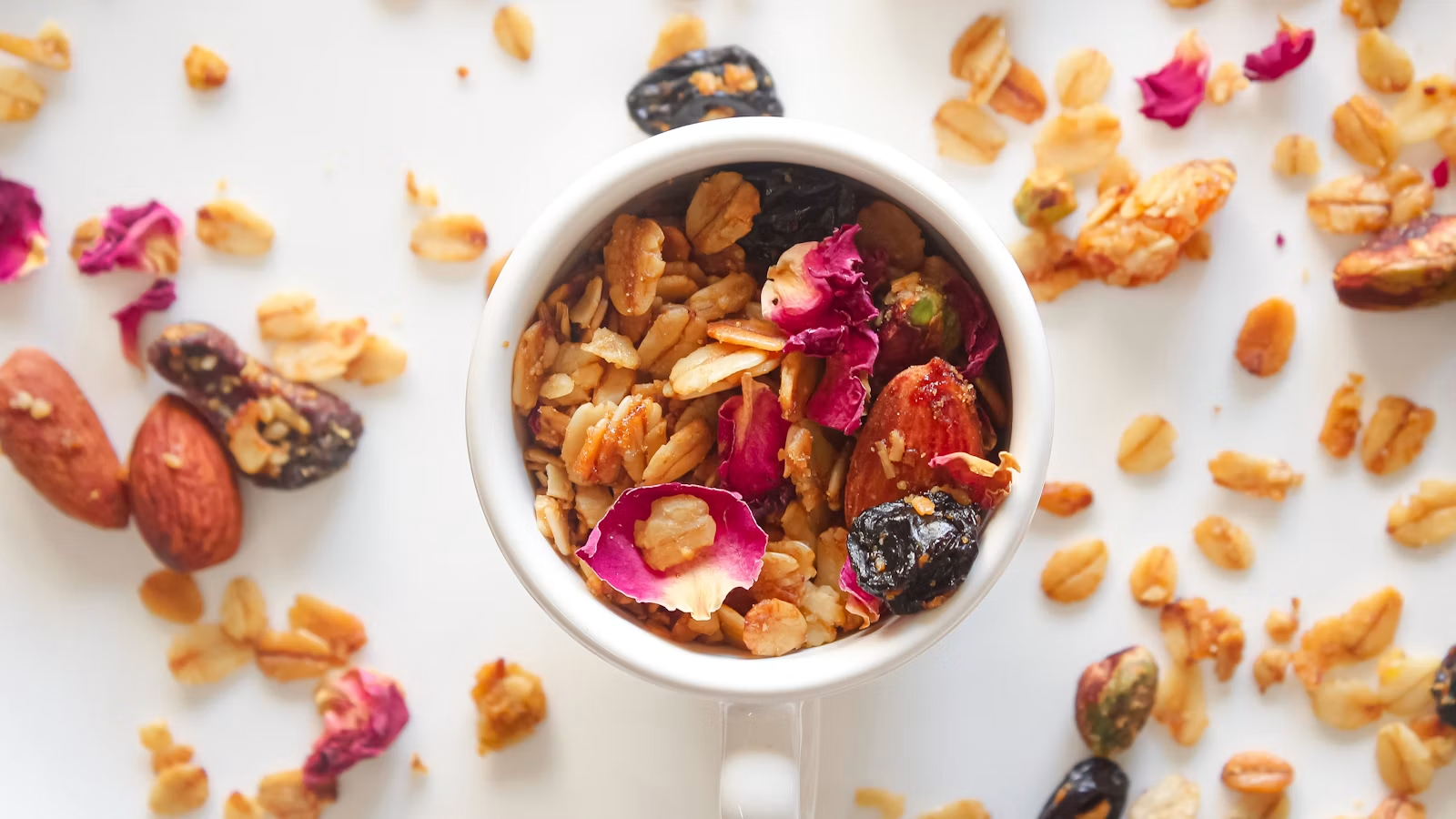
“Natural” does not mean unsweetened
Honey, maple syrup, coconut sugar, and date syrup may sound friendlier than white sugar, but when a manufacturer adds them, the FDA counts them as added sugars. The Nutrition Facts panel lists those grams separately from naturally occurring sugars, which makes comparison much easier.
A granola can still be a useful food when it contains added sugar. I look at the amount in context: Does the blend also provide fiber, protein, and ingredients I actually want? Will a modest portion taste satisfying with something plain? “No refined sugar” is marketing language, not a complete nutrition review.
5 label checks before you buy
- Start with the serving size. Nutrition numbers apply to that amount, and serving sizes vary among brands. Measure once at home so you know what the label’s portion looks like.
- Read the first few ingredients. Oats, nuts, and seeds near the top tell a different story from several sweeteners appearing early in the list.
- Compare added sugars. Use grams per equal weight when two products list different serving sizes.
- Check fiber and protein. They are not a purity contest, but they help you see whether the bag offers more than sweet crunch.
- Scan sodium and allergens. Nuts, peanuts, sesame, milk, and soy can appear in the recipe or through shared equipment, so people with allergies need the full label.
Remember that a labeled serving is a reference amount, not a personalized command. Your appetite and the rest of the meal matter. A small scoop over plain yogurt is different from filling a cereal bowl to the rim and adding sweetened milk.
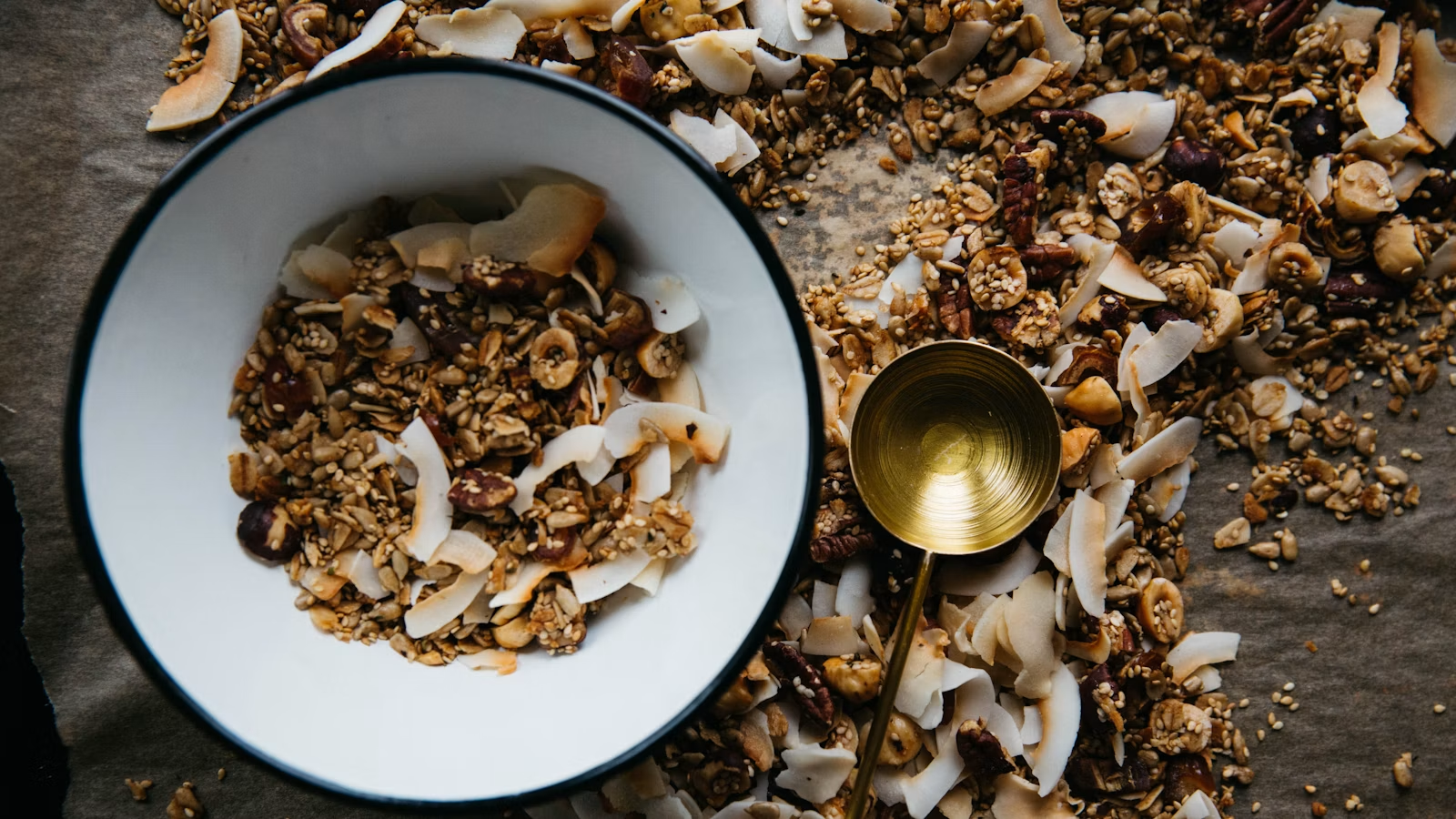
Build a breakfast that lasts
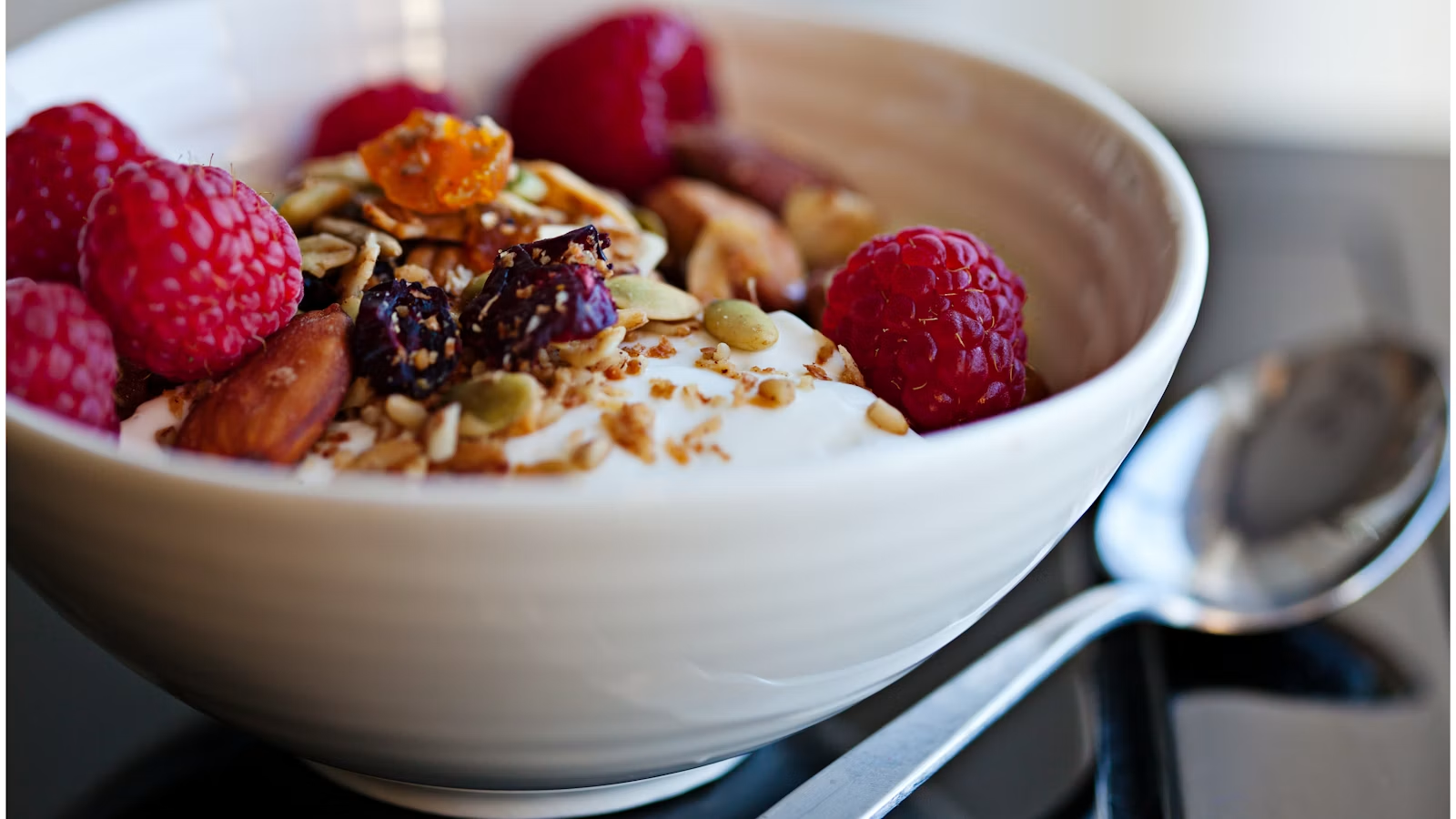
For a more complete bowl, pair granola with a protein-rich base and fresh fruit. Plain yogurt, skyr, kefir, milk, or fortified soy milk can provide the creamy part; berries, a banana, or chopped apple add volume and freshness. Then use the cereal for texture rather than asking it to do every job.
It is useful beyond breakfast too. Sprinkle it over baked fruit, carry a measured portion with an apple, or use a little on a smoothie bowl. I also crush a few clusters over nut butter toast when I want crunch without opening three different toppings.
Gluten-free and storage notes
Oats do not naturally contain wheat gluten, but cross-contact with wheat, barley, or rye can happen during growing and processing. If you need strict avoidance for celiac disease or another medical reason, choose a product labeled gluten-free rather than assuming any oat mixture qualifies. In the United States, that voluntary claim must meet the FDA standard of less than 20 parts per million of gluten.
For more context, our guide to gluten-free vs. grain-free explains why those terms are not interchangeable. Also read allergen statements every time; recipes and facilities can change.
Keep opened granola tightly sealed in a cool, dry cupboard. Heat, moisture, and air steal the crunch and can turn the fats in nuts and seeds rancid. A bitter, soapy, or paint-like smell is a reason to discard it. If you buy a large bag slowly, divide it and freeze the extra in an airtight container, then let it return to room temperature before opening so condensation stays out.
The Doctor’s Kitchen demonstrates a homemade granola in the video below. It offers a useful look at how the mixture comes together; the serving-size, added-sugar, and allergen checks above still matter for both homemade and packaged versions.
Sources
- U.S. Food and Drug Administration: Added sugars on the Nutrition Facts label
- FDA: Serving size on the Nutrition Facts label
- FDA: Gluten-free food labeling questions and answers
- FDA: Food allergies and label reading
- USDA FoodData Central

Hi, I’m Laura, the voice behind Tastiva. I’ve always believed that eating well should feel enjoyable, comforting, and realistic—not like another complicated rule to follow. I love creating recipes that fit into everyday life, sharing simple nutrition ideas, and finding small ways to make meals feel a little better without losing the pleasure of good food.